1. Motivation (研究动机)
1.1 问题背景
Autoregressive video diffusion 模型(如 Self Forcing)通过 sliding window + KV cache 实现逐帧流式生成,已经能够生成短视频(约 5 秒 / 50-81 帧)。然而,当生成长度远超训练长度时(如从 5s 外推到 60s+),会出现严重的 error accumulation 问题:
- Fidelity degradation: 颜色漂移、过饱和、纹理模糊
- Temporal repetition: 内容重复
- Motion deceleration: 运动逐渐停滞
1.2 现有方案的不足
- Self Forcing [Huang et al., 2025]: 使用 FIFO(先进先出)策略管理 KV cache,不区分 token 重要性,容易丢失关键上下文
- Training-based 方法(Rolling Forcing, LongLive): 需要额外训练/蒸馏来引入 attention sink,成本高
- StreamingLLM-style attention sink: 直接应用到 video diffusion 会导致 fidelity degradation 和 motion stagnation,因为 video diffusion 的 attention sink 行为与 LLM 不同
1.3 关键观察
作者发现预训练的 Self Forcing 模型天然具有 deep attention sink behavior:attention 不仅集中在最初几个 token,还显著关注序列中间位置的 token。这与 StreamingLLM 中只关注前几个 token 的浅层 sink 行为不同。
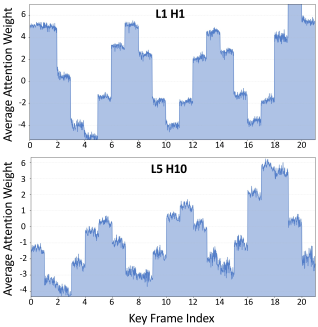 Figure 4 解读: 该图展示了新生成帧(frame 19-21)对 KV cache 中早期帧(frame 0-18)的 attention weight 分布。上图(L1 H1)和下图(L5 H10)分别展示了不同层和不同 head 的 attention 分布。关键发现是:attention weight 不仅集中在最早的几个 token(position 0-2),还在整个 context window 的中间部分维持了显著的 attention weight,说明中间帧对长视频生成同样重要。这为 Deep Sink(保留约一半 context window 作为 sink)提供了 motivation。
2. Idea (核心思想)
Deep Forcing 提出两个 training-free 的机制来解决 error accumulation:
- Deep Sink: 将 sliding window 的约一半(40-60%)分配为持久性 sink token,并通过 Temporal RoPE Adjustment 重新对齐其时间位置编码,稳定全局上下文
- Participative Compression (PC): 基于 attention importance 的 KV cache 剪枝,保留在 recent attention 中被频繁使用的 token,删除冗余的历史 token,减少 error accumulation
两者结合实现了 超过 12 倍的长度外推(5s 训练 → 60s+ 生成),无需任何 fine-tuning。
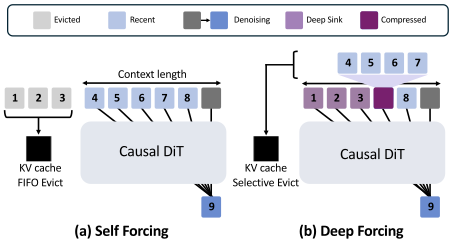 Figure 2 解读: 对比 Self Forcing 和 Deep Forcing 的 KV cache 管理策略。(a) Self Forcing 采用 FIFO 策略,不区分 token 重要性地驱逐最早的 token,经常丢失关键上下文。(b) Deep Forcing 通过 Deep Sink 保留前部的 sink token,结合 Selective Evict(Participative Compression)选择性地保留重要 token、删除冗余 token,形成 [Deep Sink | Compressed | Recent] 的三段式 cache 结构。
3. Method (方法)
3.1 整体框架
Deep Forcing 在 Self Forcing 基础上修改 KV cache 管理策略,整体框架如下:
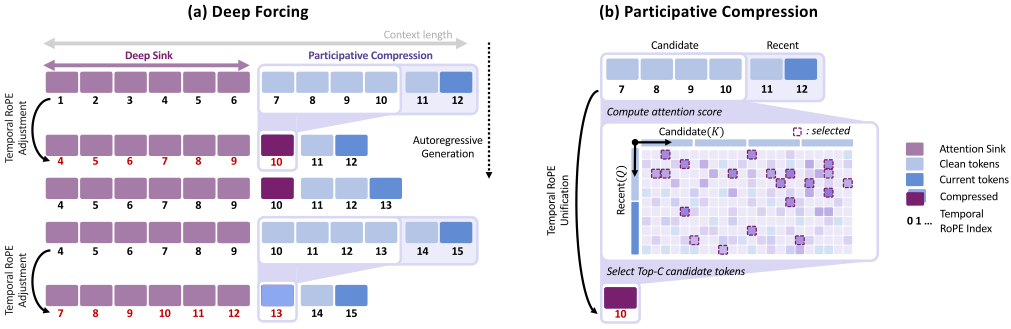 Figure 3 解读: (a) Deep Forcing 的整体流程:随着自回归生成的推进,KV cache 的前半部分始终保留为 Deep Sink(蓝色区域),后半部分通过 Participative Compression 进行压缩(绿色区域),最新生成的帧(Recent)始终保留。每次 rolling 时,通过 Temporal RoPE Unification 将 sink token 的时间位置编码重新对齐到当前时间线,保持时间连续性。(b) Participative Compression 的具体流程:计算 Recent query 与 Candidate key 之间的 attention score,聚合后选择 Top-C 最重要的 token 保留,其余驱逐。
3.2 Deep Sink
核心思想
Self Forcing 使用固定大小的 sliding window(如 21 帧),当 cache 满时 FIFO 驱逐最早的帧。Deep Sink 将 cache 分为两部分:
- Sink region (): 前 帧,始终保留
- Tail region (): 剩余帧,正常 rolling
Sink 大小 约占 context window 的 40-60%(默认 ,window=21)。
Temporal RoPE Adjustment
直接保留 sink token 会导致巨大的时间位置差异(如 vs ),破坏视频连续性。因此需要动态调整 sink token 的时间维度 RoPE:
- 计算时间差 (tail 首帧时间 - sink 末帧时间)
- 仅修改 的时间维度 RoPE,保持空间维度不变:
其中 是 RoPE 的时间频率向量, 是逐元素乘法。
# Pseudocode: Deep Sink with Temporal RoPE Adjustment
def deep_sink_forward(kv_cache, new_k, new_v, sink_size, frame_seqlen, freqs):
    """
    管理 KV cache 的 Deep Sink 策略
    Args:
        kv_cache: dict with 'k', 'v' tensors [B, cache_size, H, D]
        new_k, new_v: 新生成帧的 key/value
        sink_size: sink 帧数 S
        frame_seqlen: 每帧的 token 数 (1560 for Wan model)
        freqs: RoPE frequency tensor
    """
    sink_tokens = sink_size * frame_seqlen
    num_new = new_k.shape[1]
    cache_size = kv_cache['k'].shape[1]
    local_end = kv_cache['local_end_index'].item()

    # 当 cache 满时,需要 evict
    if num_new + local_end > cache_size:
        num_evicted = num_new + local_end - cache_size
        num_rolled = local_end - num_evicted - sink_tokens

        # 保留 sink, roll tail 部分
        # kv_cache['k'][:, :sink_tokens] 不动(sink 部分)
        kv_cache['k'][:, sink_tokens:sink_tokens + num_rolled] = \
            kv_cache['k'][:, sink_tokens + num_evicted:
                           sink_tokens + num_evicted + num_rolled].clone()

        # 插入新 token
        local_end_new = local_end + num_new - num_evicted
        kv_cache['k'][:, local_end_new - num_new:local_end_new] = new_k

        # === Temporal RoPE Adjustment ===
        # 计算 sink 区域需要的时间偏移
        tail_start_frame = current_start_frame - (local_end_new - sink_tokens) // frame_seqlen
        desired_sink_start = tail_start_frame - sink_size
        delta = desired_sink_start - kv_cache['sink_base_abs_start_frame']

        if delta != 0:
            # 仅旋转时间维度的 RoPE
            rope_time_delta_mul_(kv_cache['k'][:, :sink_tokens], freqs, delta)
            kv_cache['sink_base_abs_start_frame'] = desired_sink_start

    # 构建 attention window: [sink | tail]
    key_win = torch.cat([
        kv_cache['k'][:, :sink_tokens],       # Deep Sink
        kv_cache['k'][:, tail_start:tail_end]  # Recent tail
    ], dim=1)

return key_win, val_win代码映射: 上述逻辑对应 wan/modules/causal_model_DS.py 中 CausalWanSelfAttention.forward() 方法的 KV cache eviction 分支(约 line 238-300),以及 _rope_time_delta_mul_() 函数(line 26-58)。
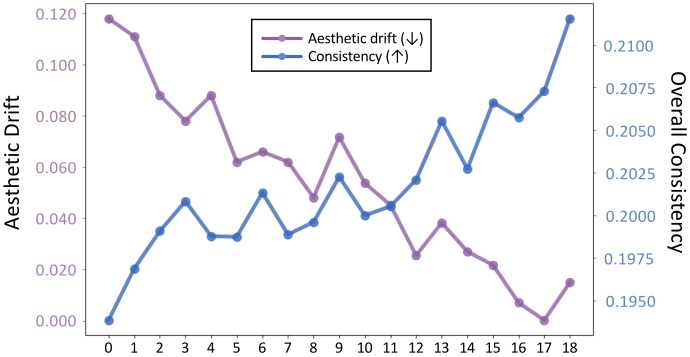 Figure 5 解读: Sink depth 对生成质量的影响。横轴为 sink 帧数(0-18),左侧纵轴为 Aesthetic Drift(越低越好),右侧纵轴为 Overall Consistency(越高越好)。随着 sink 大小增加到 10-15 帧,Aesthetic Drift 显著降低,Overall Consistency 明显提升。但过大的 sink(如 18 帧)会导致内容重复(early frames 被过度保留)。最优范围为 10-15 帧,约占 sliding window 的 40-60%。
3.3 Participative Compression
核心思想
Deep Sink 只解决了 fidelity degradation 的一部分。当外推到 12 倍以上长度时,KV cache 中仍然积累了大量冗余和质量退化的 token,导致 attention dilution 和 degeneration。
Participative Compression (PC) 在 token 级别进行重要性筛选:
-
将 KV cache 分为三个区域:
- Sink (): 前 帧,始终保留
- Recent (): 最近 帧,始终保留
- Candidate (): 中间部分,需要被压缩
-
对 Candidate 中的每个 token 计算 importance score:
其中 是 Recent 区域的 query, 是 Candidate 区域的第 个 key。
- 选择 Top-C 个最重要的 token 保留:
其中 是压缩后的 budget。
- 最终压缩后的 cache 结构:
Temporal RoPE Unification for Top-C
选出的 Top-C token 来自不同时间位置,需要通过 RoPE 调整统一其时间编码:
PC 的触发条件
PC 仅在两个条件同时满足时触发:(1) sliding window 已满;(2) 当前为第一个 diffusion timestep ()。选出的 token 在后续 denoising step 中保持固定。
# Pseudocode: Participative Compression (Algorithm 1 in paper)
def participative_compression(
    kv_cache,           # KV cache [K, V] of size M
    sink_size: int,     # S: sink 帧数
    recent: int,        # R: recent 帧数
    budget: int,        # N: 压缩后 token budget
    timestep: int,      # 当前 diffusion timestep
    first_timestep: int # T: 第一个 timestep
):
    """
    Input: KV cache [K, V] of size M; Sink size S; Recent R; Budget N
    """
    M = kv_cache['local_end_index']

    if M < MAX_WINDOW_LENGTH or timestep != first_timestep:
        return kv_cache['k'], kv_cache['v']  # No compression

    frame_seqlen = 1560  # tokens per frame
    S_tokens = sink_size * frame_seqlen
    R_tokens = recent * frame_seqlen

    # Partition cache into three regions
    I_sink = slice(0, S_tokens)                   # First S frames
    I_rct  = slice(M - R_tokens, M)               # Last R frames
    I_cand = slice(S_tokens, M - R_tokens)        # Candidate tokens

    C = budget - S_tokens - R_tokens  # Top-C capacity

    if C > 0 and (M - R_tokens - S_tokens) > 0:
        # Compute importance scores (Eq. 7)
        Q_rct = kv_cache['win_q'][:, -R_tokens:]  # Recent queries
        K_cand = kv_cache['k'][:, I_cand]         # Candidate keys

        # phi_j = sum_r q_r^T k_j  (aggregated attention score)
        phi = torch.zeros(K_cand.shape[1])
        for j in range(K_cand.shape[1]):
            for r in range(Q_rct.shape[1]):
                phi[j] += Q_rct[0, r] @ K_cand[0, j]

        # Select Top-C tokens (Eq. 8)
        _, top_indices = torch.topk(phi, k=C)
        K_top = K_cand[:, top_indices]
        V_top = V_cand[:, top_indices]

        # Temporal RoPE Unification for Top-C (Section 4.3)
        delta_top = s_top_desired - s_top_base
        K_top_time = K_top[..., :time_dim]
        K_top_time *= torch.exp(1j * omega_t * delta_top)

        # Assemble compressed cache (Eq. 9)
        K_compressed = torch.cat([K_sink, K_top, K_rct], dim=1)
        V_compressed = torch.cat([V_sink, V_top, V_rct], dim=1)

        return K_compressed, V_compressed

return kv_cache['k'], kv_cache['v']代码映射: Participative Compression 的核心实现在 wan/modules/causal_model.py 中:
PCConfig类(line 92-108):定义 PC 的超参数_mkv_select_indices()函数(line 121-180):基于 attention score 选择 Top-C token_mkv_prune_cache()函数(line 182-253):执行 cache 剪枝,将选中的 token 移动到 buffer 前部CausalWanSelfAttention.forward()中 PC 分支(line 440-525):整合 importance score 计算和 cache 压缩
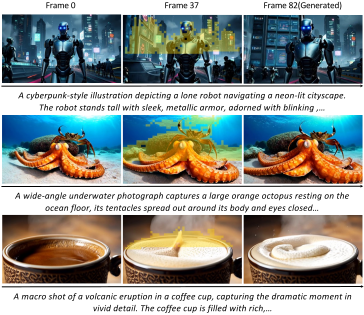 Figure 7 解读: Top-C token selection 的可视化。每个例子展示 Frame 0(原始帧)、Frame 37(中间帧)、和 Frame 82(生成帧,右侧)。黄色高亮区域表示被 Top-C 选中的 token 的空间位置。可以看到,被选中的 token 集中在语义上重要的区域:机器人的身体和背景建筑、章鱼的触手和螃蟹、咖啡杯的圆形结构。这说明 PC 能够有效识别和保留对后续生成具有语义重要性的 token。
3.4 完整算法
论文 Algorithm 1 给出了完整的 Participative Compression with Deep Sink 算法:
# Pseudocode: Complete Deep Forcing Algorithm
def deep_forcing_generate(model, prompt, num_frames, sink_size=10, budget=16, recent=4):
    """
    Deep Forcing: 完整的长视频生成流程
    基于 Self Forcing 的 chunk-wise autoregressive generation

    Args:
        model: 预训练的 Self Forcing 模型
        prompt: 文本 prompt
        num_frames: 目标生成帧数
        sink_size: Deep Sink 帧数 (S=10)
        budget: PC 压缩后每帧 token budget (N=16 frames)
        recent: PC 保留的 recent 帧数 (R=4)
    """
    # 初始化 KV cache (per-layer)
    kv_caches = [initialize_kv_cache() for _ in range(num_layers)]

    denoising_steps = [1000, 750, 500, 250, 0]  # 4-step diffusion schedule

    output_frames = []
    for frame_idx in range(num_frames):
        noise = torch.randn(1, 1, C, H, W)  # 每次生成 1 帧

        # Multi-step denoising
        for step_idx, t in enumerate(denoising_steps[:-1]):
            # Forward pass with KV cache
            pred = model(noise, t, kv_caches, current_start=frame_idx)

            # Add noise for next step
            t_next = denoising_steps[step_idx + 1]
            noise = scheduler.add_noise(pred, torch.randn_like(pred), t_next)

        # Final denoising step
        clean_frame = model(noise, denoising_steps[-1], kv_caches, current_start=frame_idx)
        output_frames.append(clean_frame)

        # Re-run with t=0 to update KV cache with clean context
        model(clean_frame, t=0, kv_caches, current_start=frame_idx)

        # KV cache management happens inside model.forward():
        # 1. Deep Sink: keep first S frames, FIFO evict in tail
        # 2. Temporal RoPE Adjustment: realign sink positions
        # 3. Participative Compression: at first timestep when cache is full,
        #    select Top-C important tokens from candidates

return decode_vae(output_frames)代码映射: 完整的 inference pipeline 在 pipeline/causal_inference.py 的 CausalInferencePipeline.inference() 方法中实现(line 54-283)。核心循环在 Step 3(line 187-251),包括 denoising loop(Step 3.1)、输出记录(Step 3.2)、clean context 更新(Step 3.3)。
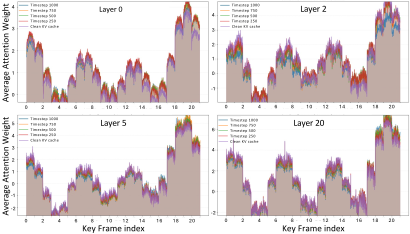 Figure 11 (Appendix) 解读: 验证了 PC 的设计决策 — 在不同 diffusion timestep()下,attention pattern 保持高度一致。这意味着在第一个 timestep () 进行 Top-C selection 后,选出的 token 在整个 denoising 过程中都保持 contextually relevant,因此不需要每步重新选择。
4. Experimental Setup (实验设置)
4.1 基础模型与配置
| 项目 | 设置 |
|---|---|
| Base model | Self Forcing (chunk-wise, Wan 1.3B) |
| 训练帧数 | ~50 帧 (约 5 秒) |
| 测试帧数 | 30 秒 / 60 秒 (300-840+ 帧) |
| Denoising steps | 4 步, schedule {1000, 750, 500, 250, 0} |
| Deep Sink | 10 帧 |
| PC Budget | 16 帧的 token 量 |
| PC Recent | 4 帧 |
| 每帧 token 数 | 1560 |
| Context window | 21 帧 (sliding window) |
4.2 评测
- VBench-Long: 128 prompts from MovieGen,评估 Overall Consistency、Imaging Quality、Aesthetic Quality、Subject Consistency、Background Consistency、Dynamic Degree、Motion Smoothness
- User study: 24 人,2AFC protocol,评估 Color Consistency、Dynamic Motion、Subject Consistency、Overall Quality
- VLM evaluation: Gemini 2.5-Pro 评估 Visual Stability
4.3 Baselines
- CausVid [Yin et al., 2025](无 attention sink 训练)
- Self Forcing [Huang et al., 2025](无 attention sink 训练)
- Rolling Forcing [Liu et al., 2025](有 attention sink 训练)
- LongLive [Yang et al., 2025](有 attention sink 训练)
5. Experimental Results (实验结果)
5.1 定量结果
Table 1: VBench-Long 30s 和 60s 生成对比
| Model | FPS | Dynamic Degree | Motion Smooth. | Overall Consist. | Imaging Quality | Aesthetic Quality | Subject Consist. | BG Consist. |
|---|---|---|---|---|---|---|---|---|
| 30 seconds | ||||||||
| Rolling Forcing | 15.79 | 30.71 | 98.75 | 20.99 | 70.58 | 60.24 | 98.12 | 96.91 |
| LongLive | 18.16 | 45.55 | 98.76 | 20.16 | 69.07 | 61.51 | 97.97 | 96.83 |
| CausVid | 15.78 | 47.21 | 98.08 | 19.15 | 66.36 | 59.77 | 97.92 | 96.77 |
| Self Forcing | 15.78 | 36.62 | 98.63 | 20.50 | 68.58 | 59.44 | 97.34 | 96.47 |
| Deep Forcing (Ours) | 15.75 | 57.56 | 98.27 | 20.54 | 69.31 | 60.68 | 97.34 | 96.48 |
| 60 seconds | ||||||||
| Rolling Forcing | 15.79 | 31.35 | 98.69 | 20.64 | 70.25 | 59.75 | 97.97 | 96.76 |
| LongLive | 18.16 | 43.49 | 98.75 | 20.29 | 69.11 | 61.29 | 97.85 | 96.74 |
| CausVid | 15.78 | 46.44 | 98.09 | 18.78 | 65.84 | 59.42 | 97.81 | 96.75 |
| Self Forcing | 15.78 | 31.98 | 98.21 | 18.63 | 66.33 | 56.45 | 96.82 | 96.31 |
| Deep Forcing (Ours) | 15.75 | 57.19 | 98.23 | 20.38 | 69.27 | 59.86 | 96.96 | 96.32 |
关键发现:
- Deep Forcing 在 Dynamic Degree 上大幅领先所有方法(57.56 vs 第二名 47.21),生成更加动态的视频
- Overall Consistency 与 training-based 方法持平或更优
- Imaging Quality 超过 Self Forcing 和 CausVid,接近 Rolling Forcing
- 60 秒生成时优势更加明显,Self Forcing baseline 严重退化而 Deep Forcing 保持稳定
5.2 User Study
Table 2: 用户偏好 Deep Forcing 的比例
| vs Baseline | Color Consist. | Dynamic Motion | Subject Consist. | Overall Quality |
|---|---|---|---|---|
| CausVid | 98.9% | 95.8% | 96.8% | 100% |
| Self Forcing | 85.9% | 86.9% | 84.8% | 87.9% |
| LongLive | 71.2% | 83.5% | 72.2% | 72.2% |
| Rolling Forcing | 76.7% | 76.7% | 80.0% | 78.9% |
用户研究显示 Deep Forcing 在所有维度上都显著优于 baselines。
5.3 Visual Stability (VLM Evaluation)
Table 3: Deep Forcing (75.44) 接近 training-based 的 LongLive (78.58) 和 Rolling Forcing (72.6),远超无 attention sink 训练的 Self Forcing (43.94) 和 CausVid (42.84)。
5.4 Ablation Study
Table 4: 组件消融
| Method | Dynamic Degree | Overall Consistency | Image Quality |
|---|---|---|---|
| SF (Baseline) | 36.62 | 20.50 | 68.58 |
| SF + DS | 48.58 | 20.54 | 68.54 |
| SF + DS + PC (Ours) | 57.56 | 20.54 | 69.31 |
每个组件都带来渐进式提升,Deep Sink 主要提升 Dynamic Degree 和 Consistency,PC 进一步提升 Dynamic Degree 和 Image Quality。
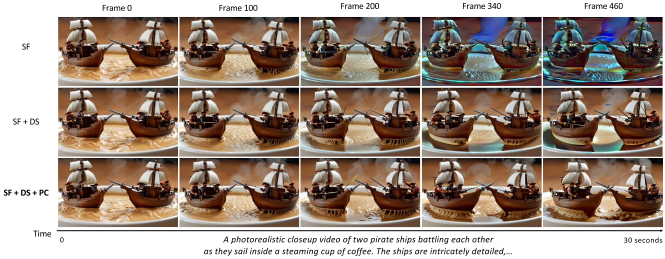 Figure 6 解读: 30 秒视频生成的定性消融对比。第一行 Self Forcing (SF):随时间推移出现严重的颜色漂移和过饱和。第二行 SF + Deep Sink:颜色保持更一致,但在 Frame 460 仍有轻微的颜色偏移和纹理模糊。第三行 SF + DS + PC (Deep Forcing):在整个生成过程中保持一致的视觉质量,色彩和细节均无明显退化。
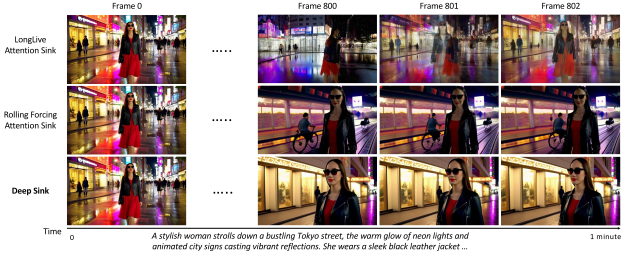 Figure 9 (Appendix) 解读: 三种 attention sink 策略的对比。LongLive Attention Sink(只保留前 3 帧,不调整 RoPE)在 frame 800 出现 fidelity degradation,frame 801 闪烁,frame 802 回滚到早期帧。Rolling Forcing Attention Sink(保留前 3 帧 + Dynamic RoPE)仍在 frame 800-801 出现严重退化。Deep Sink(保留前 10 帧 + Temporal RoPE Adjustment)在整个生成过程中保持稳定的视觉质量。
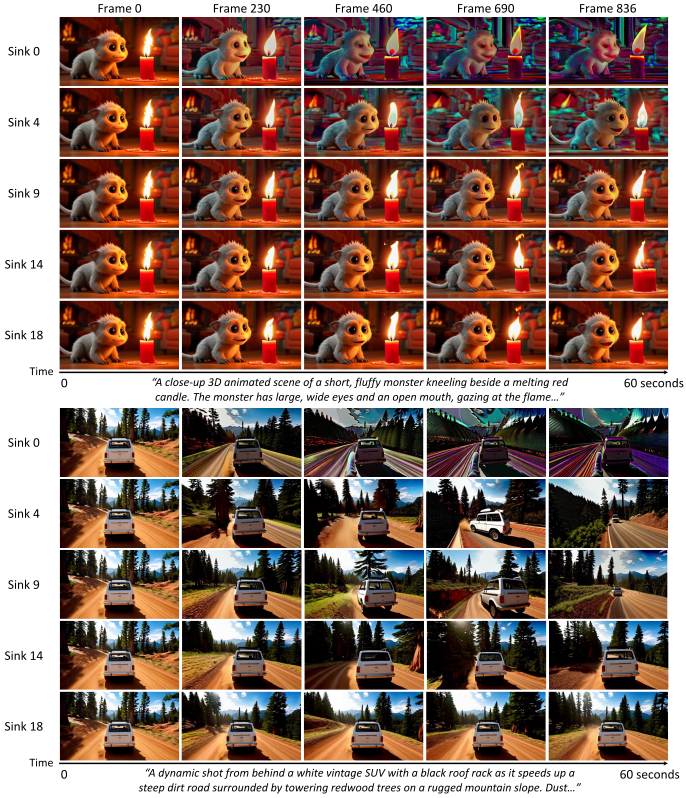 Figure 10 (Appendix) 解读: 不同 sink 大小在 60 秒视频上的定性对比。Sink 0(无 sink):快速退化,frame 230 开始颜色偏移,frame 690 完全崩溃。Sink 4 和 Sink 9:退化减少但细节仍有损失。Sink 14:退化大幅减少。Sink 18:过度保留导致内容重复。最优范围为 10-15 帧。
5.5 定性结果
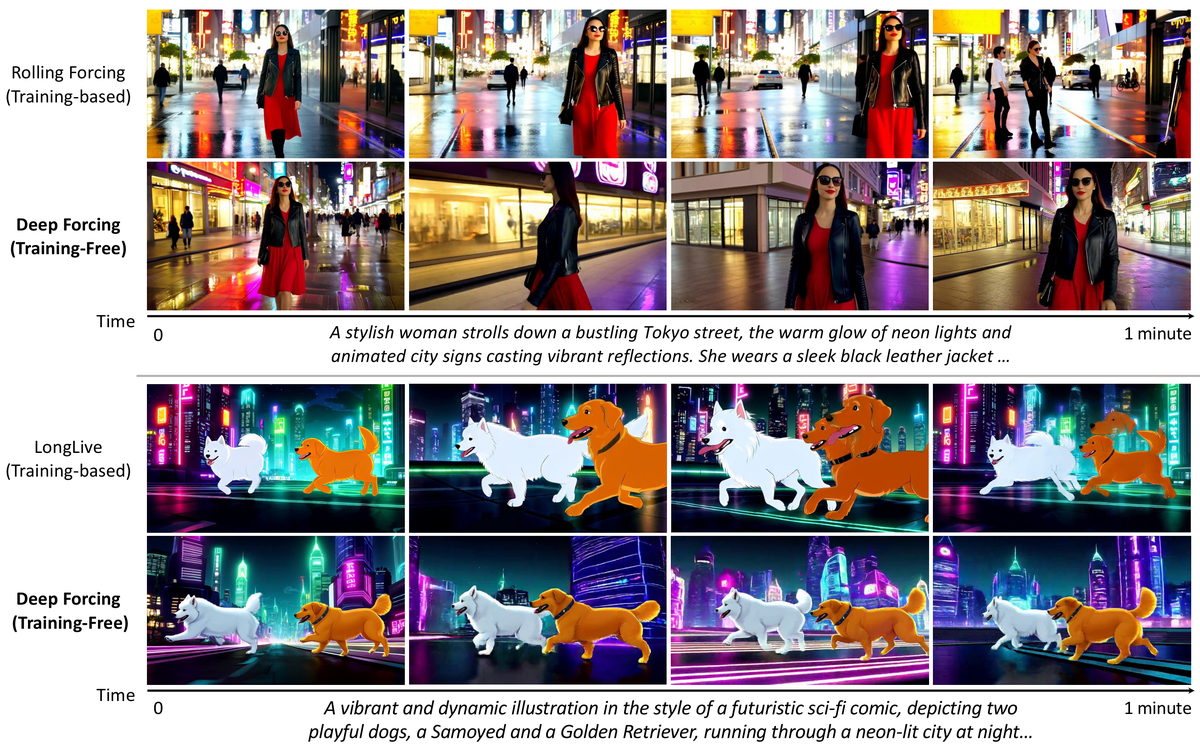 Figure 1 解读: Deep Forcing(training-free)与 training-based baselines 的定性对比。上半部分:Deep Forcing vs Rolling Forcing,在东京街头场景中 Deep Forcing 保持一致的视觉质量和细节。下半部分:Deep Forcing vs LongLive,在两只狗奔跑的场景中 Deep Forcing 保持更好的动态运动和一致性。
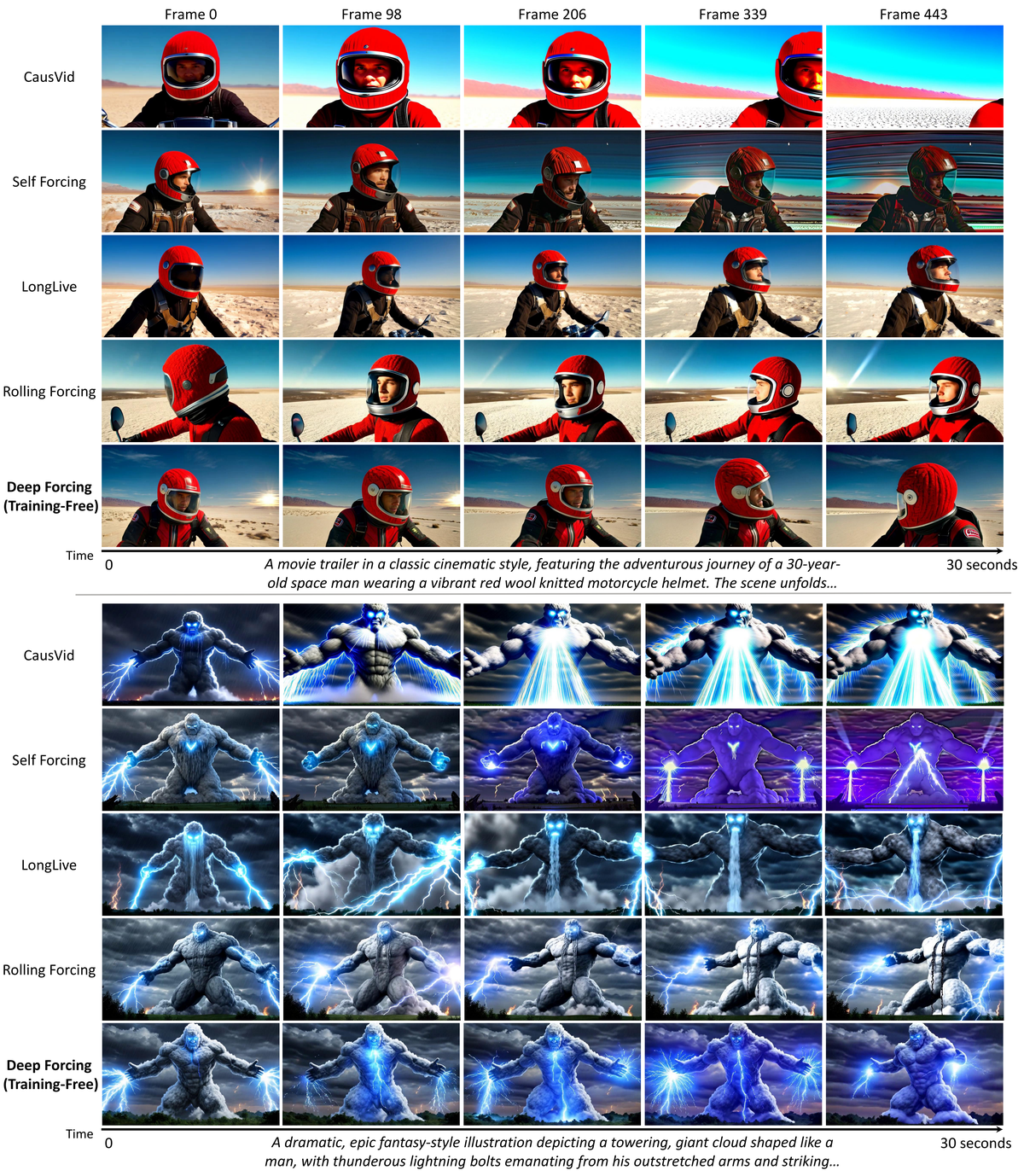 Figure 8 解读: 30 秒视频的逐帧对比。上半部分(太空人场景):CausVid 出现颜色偏移,Self Forcing 产生条纹伪影,LongLive 和 Rolling Forcing 保持较好但运动较少,Deep Forcing 保持高质量且运动丰富。下半部分(闪电场景):Deep Forcing 在保持主体一致性的同时生成更多动态变化。
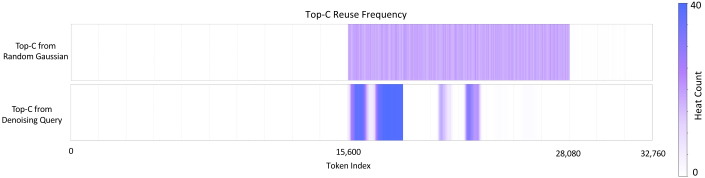 Figure 13 (Appendix) 解读: Token selection frequency heatmap,横轴为 token 位置(0-32,760),纵轴为生成过程中的时间。上图为 Gaussian random selection(随机基线),下图为 denoising query-based selection(PC 方法)。Random selection 均匀分布在所有 candidate 上,而 PC 方法高度集中在特定位置,尤其是 sink boundary(position 15,600)附近的 token 被持续选择,说明这些 token 是连接初始上下文和当前生成的语义桥梁。
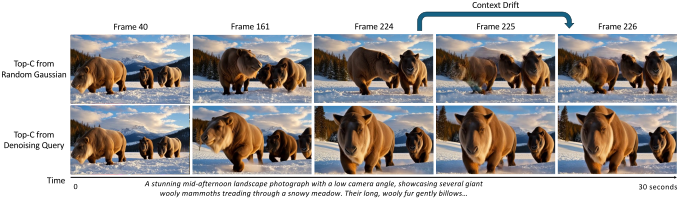 Figure 12 (Appendix) 解读: Random selection vs Denoising query-based selection 的对比。Random selection 导致严重的场景重复和上下文丢失(随机选择的 anchor 无法保持连贯的上下文信息)。Denoising query-based selection 生成具有更好主体一致性和上下文连贯性的视频。
 Figure 14 解读: 这张图展示了用户偏好调查的详细统计结果,与表格中的结论一致,Deep Forcing 在各 baseline 对比中通常获得更高的用户偏好比例。
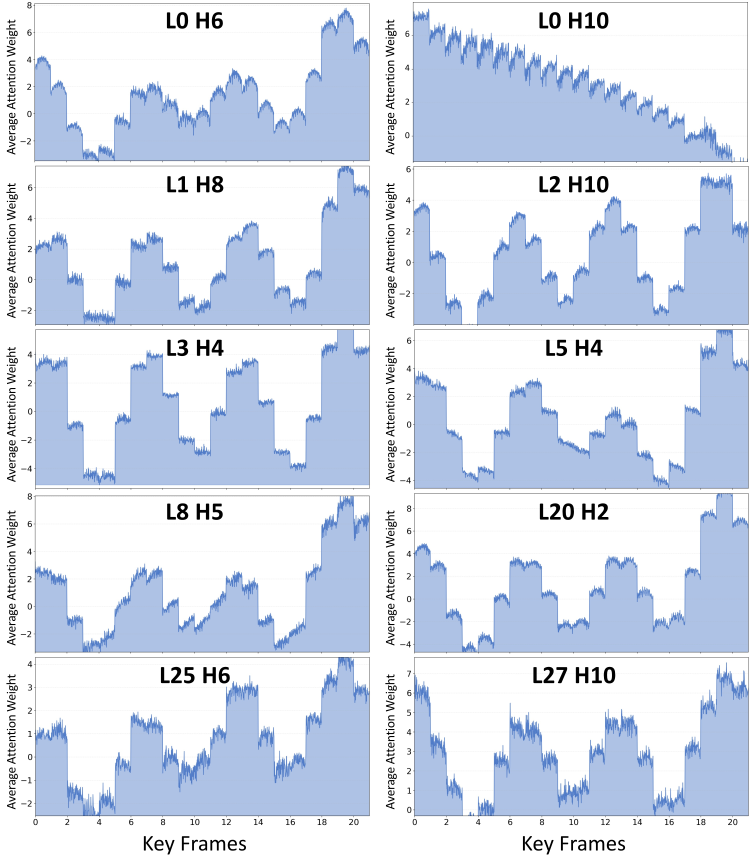 Figure 15 (Appendix) 解读: 这张图展示了更多 attention head 的可视化分析,进一步支持预训练 Self Forcing 模型中存在 deep attention sink behavior 的观察。
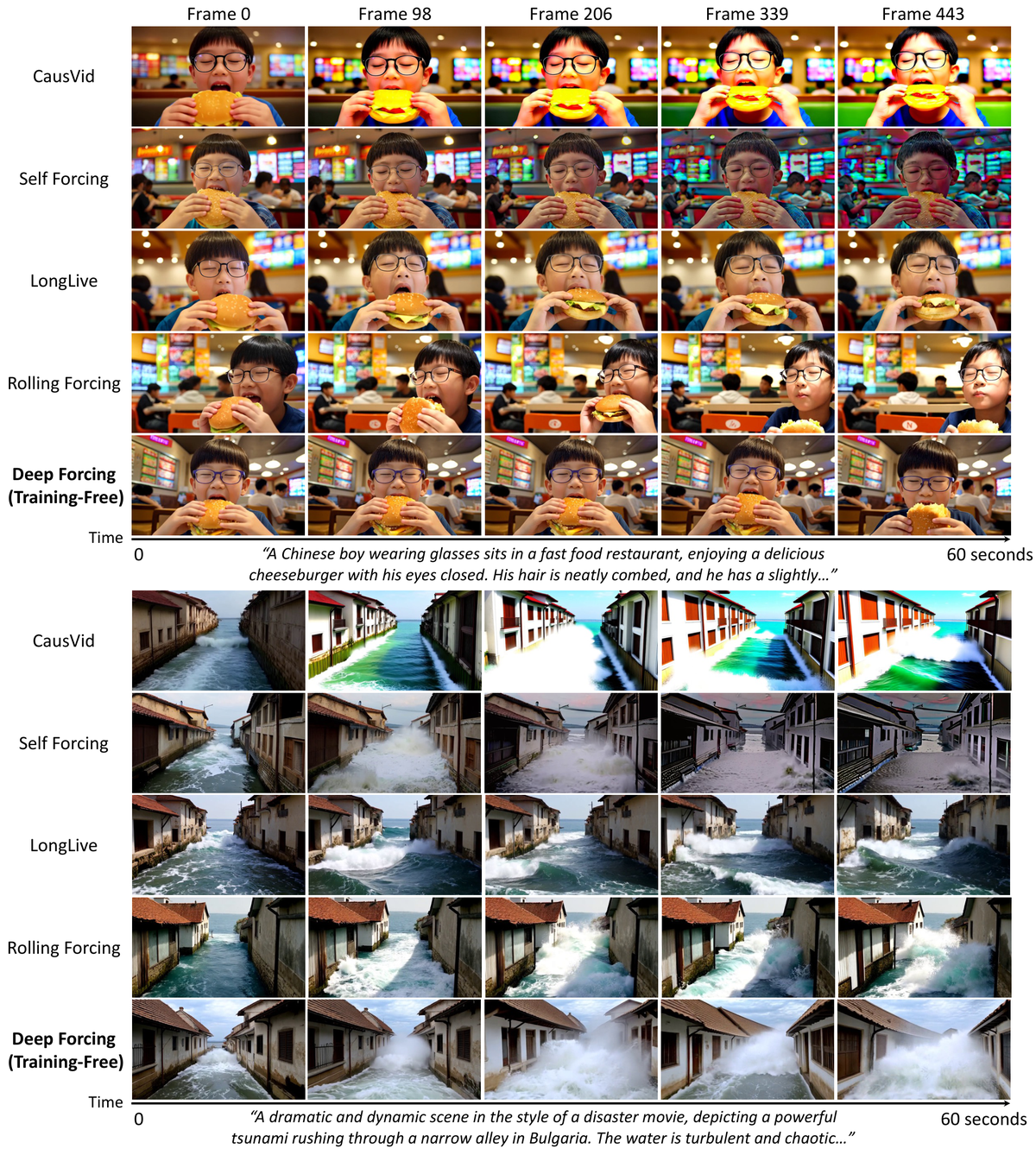 Figure 16 (Appendix) 解读: 这张图展示了额外的定性对比样本之一,用于补充说明 Deep Forcing 在不同场景下的生成质量与稳定性。
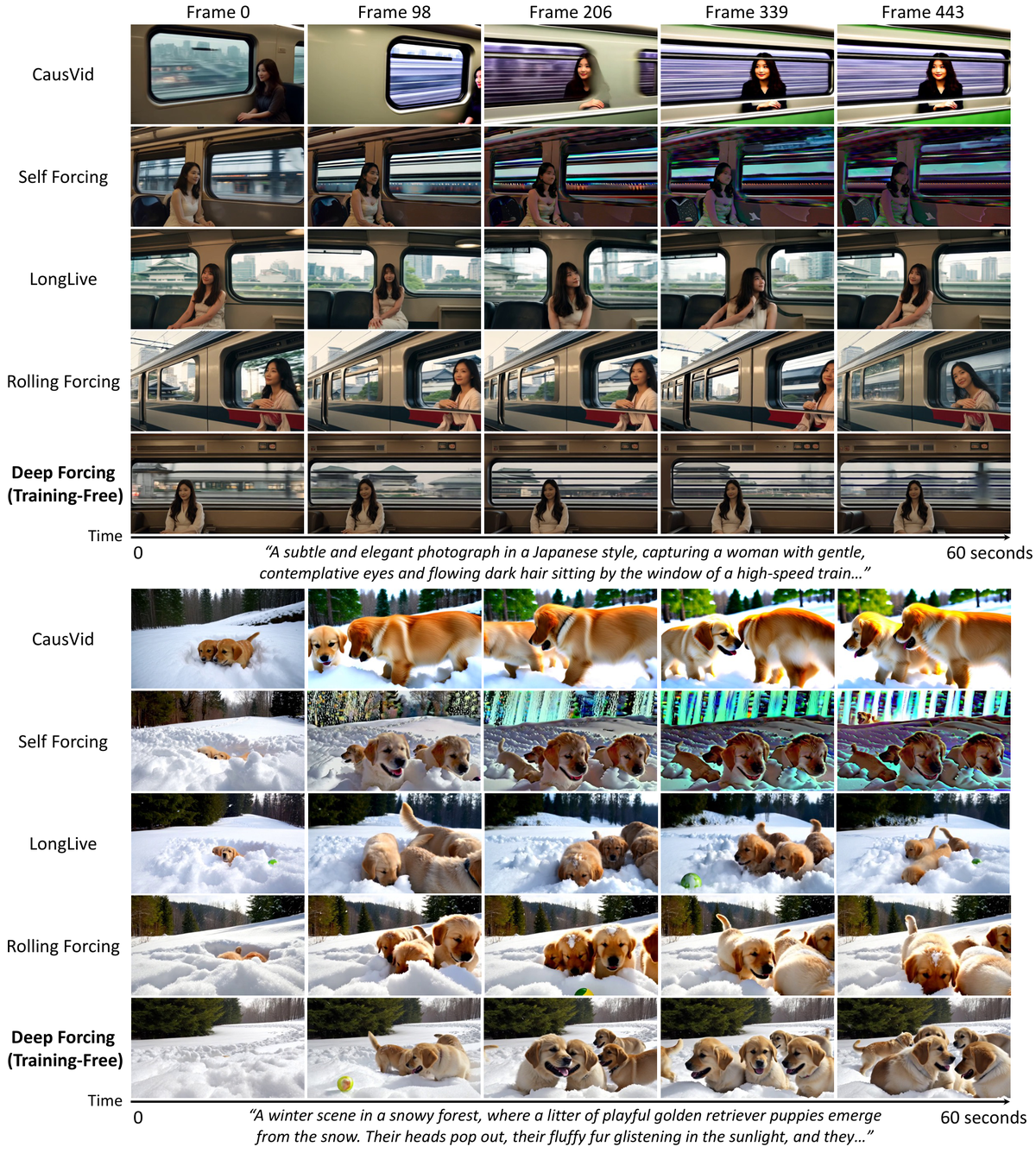 Figure 17 (Appendix) 解读: 这张图继续展示额外的定性对比样本,与上一张一起补充说明 Deep Forcing 在多种场景中的稳定生成表现。
5.6 总结
Deep Forcing 的核心贡献在于发现预训练 autoregressive video diffusion 模型中天然存在 deep attention sink behavior,并据此设计了两个 training-free 的 KV cache 管理策略。Deep Sink 通过保留约一半 context window 作为持久 sink + Temporal RoPE Adjustment 解决时间位置不匹配问题;Participative Compression 通过 importance-aware token selection 消除冗余 token、降低 attention dilution。两者结合实现了 12 倍以上的长度外推,在多项指标上匹配甚至超越需要额外训练的方法。该工作证明了 training-free 的 KV cache 管理可以是解决 autoregressive long video generation 中 error accumulation 问题的有效路径。
5.7 局限性
- 受限于 frozen backbone 的能力和 bias
- 缺乏显式的 long-term memory,在极长序列中出现重复遮挡时可能仍有 gradual drift
- 未来方向:引入 hierarchical memory modules,扩展到更广泛的视频生成场景