Being-H0.5: Scaling Human-Centric Robot Learning for Cross-Embodiment Generalization
Paper: arXiv:2601.12993 Code: BeingBeyond/Being-H Code reference:
main@66b959e0(2026-05-04)
1. Motivation (研究动机)
当前 VLA 的核心瓶颈不是单个机器人上能不能学会,而是跨 embodiment 时会出现“physical gap”:不同机器人在 DoF、末端执行器、关节限制、控制频率、传感器视角、动作单位上都不一致,直接混训会把同一个语义动作映射成彼此冲突的控制向量。已有做法常用平台专属 action head 或只在少数高资源机器人上训练,这会让模型停留在“硬件方言”的专家,而不是能迁移物理常识的通用策略。
本文要解决的具体问题是:如何把 human hand motion、单臂/双臂/灵巧手/移动底盘等异构数据放进一个可训练、可执行的统一 VLA 框架,并让低资源机器人能够借助人类交互数据和高资源机器人数据完成 few-shot adaptation。为此,论文提出 UniHand-2.0 数据配方、Unified State-Action Space、Mixture-of-Transformers/Mixture-of-Flow 架构,以及面向真实部署延迟的 MPG/UAC 稳定化机制。
这个问题值得研究,因为 robotics 的数据规模远小于 NLP/vision;如果每种机器人都需要从头采集大规模演示,VLA 很难扩展。Being-H0.5 的路线把人类交互轨迹当作 physical interaction 的“mother tongue”,目标是让模型学习抓取、接触、搬运、避障等跨形态共享的物理语法,再把这些能力映射到具体机器人。
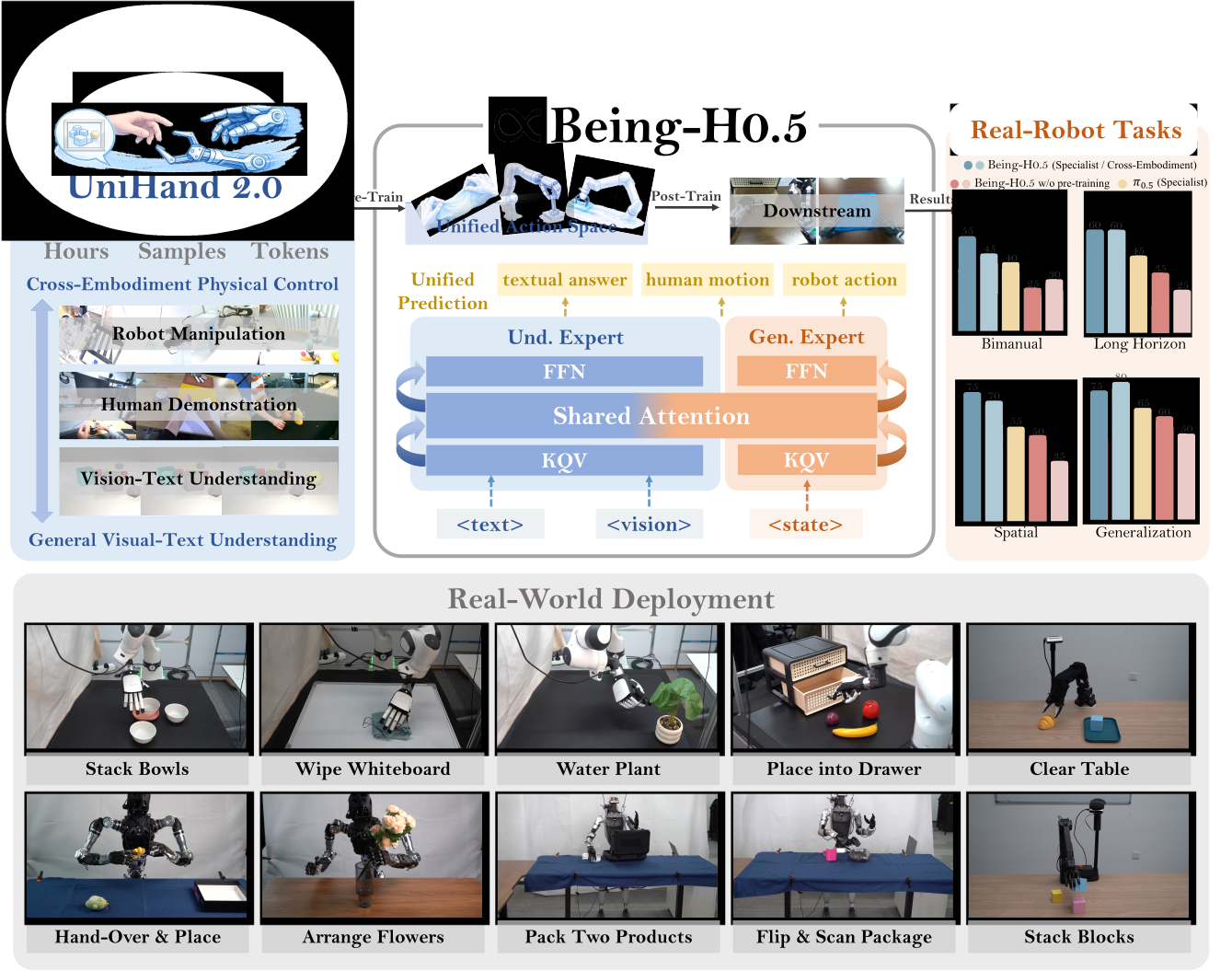
Figure 1 解读:这张总览图把论文的逻辑串起来:左侧是 UniHand-2.0 的规模化数据,包含 human motion、robot manipulation 和 visual-text understanding;中间是 Unified Action Space 与 Being-H0.5 的 Und. Expert / Gen. Expert;右侧展示一个 checkpoint 跨 PND Adam-U、Franka+Inspire、Unitree G1、BeingBeyond D1、LeRobot SO-101 等平台部署。图中强调的不是“又一个机器人策略”,而是用统一动作语言把多种 embodiment 的控制问题压到同一建模接口内。
2. Idea (核心思想)
核心 insight:不同机器人虽然机械结构不同,但很多交互技能共享同一套物理语义,例如靠近、对齐、接触、夹持、运输、放置。与其为每种机器人学习独立动作头,不如把人手和机器人动作都投影到语义槽位一致的 Unified Action Space,让模型在同一个 token 序列里同时学习视觉-语言理解和连续动作生成。
关键创新有三层:第一,UniHand-2.0 提供 35,000+ 小时、400M samples、30 embodiments 的 human-centric pre-training recipe;第二,Being-H0.5 用 MoT/MoF 把 multimodal understanding 与 action generation 解耦但共享 attention;第三,MPG 和 UAC 分别处理 sensory shift 下的动作流形漂移与真实机器人上 inference latency/action chunking 的时间错配。
与 、GR00T-N1、OpenVLA 等方法相比,Being-H0.5 的差别在于它不是只把 image/text/state 拼给 action head,而是显式构造跨 embodiment 的 slot-level state/action vocabulary,并把 human hand motion 作为一个“广义 embodiment”。与平台专属 action head 相比,Unified Action Space 试图让动作维度的语义对齐先于模型学习发生,从源头减少 negative transfer。
3. Method (方法)
3.1 Overall framework
Being-H0.5 的整体框架可以分成四个环节:
- Data:UniHand-2.0 把 16K hours human、14K hours robot,再加上 visual-text understanding 数据合成 35K+ hours / 400M samples 的训练配方;UniCraftor 则提供多视角 RGBD、pedal-triggered event 和 semi-automatic annotation 的数据采集系统。
- Representation:Unified State-Action Space 用 把 embodiment-specific state/action 投影到全局稀疏槽位;未使用槽位置零,使 human wrist、finger articulation、robot EEF、joint、base velocity 可以共存。
- Architecture:MoT backbone 中 Und. Expert 处理 multimodal reasoning,Act. Expert 处理 flow-based action generation;共享 self-attention 保证动作生成能被视觉/语言上下文充分条件化。
- Deployment:MPG 根据 observation/action embedding 的分布差异调节上下文残差强度,UAC 让不同控制频率/延迟预算的机器人都能安全执行 chunked actions。
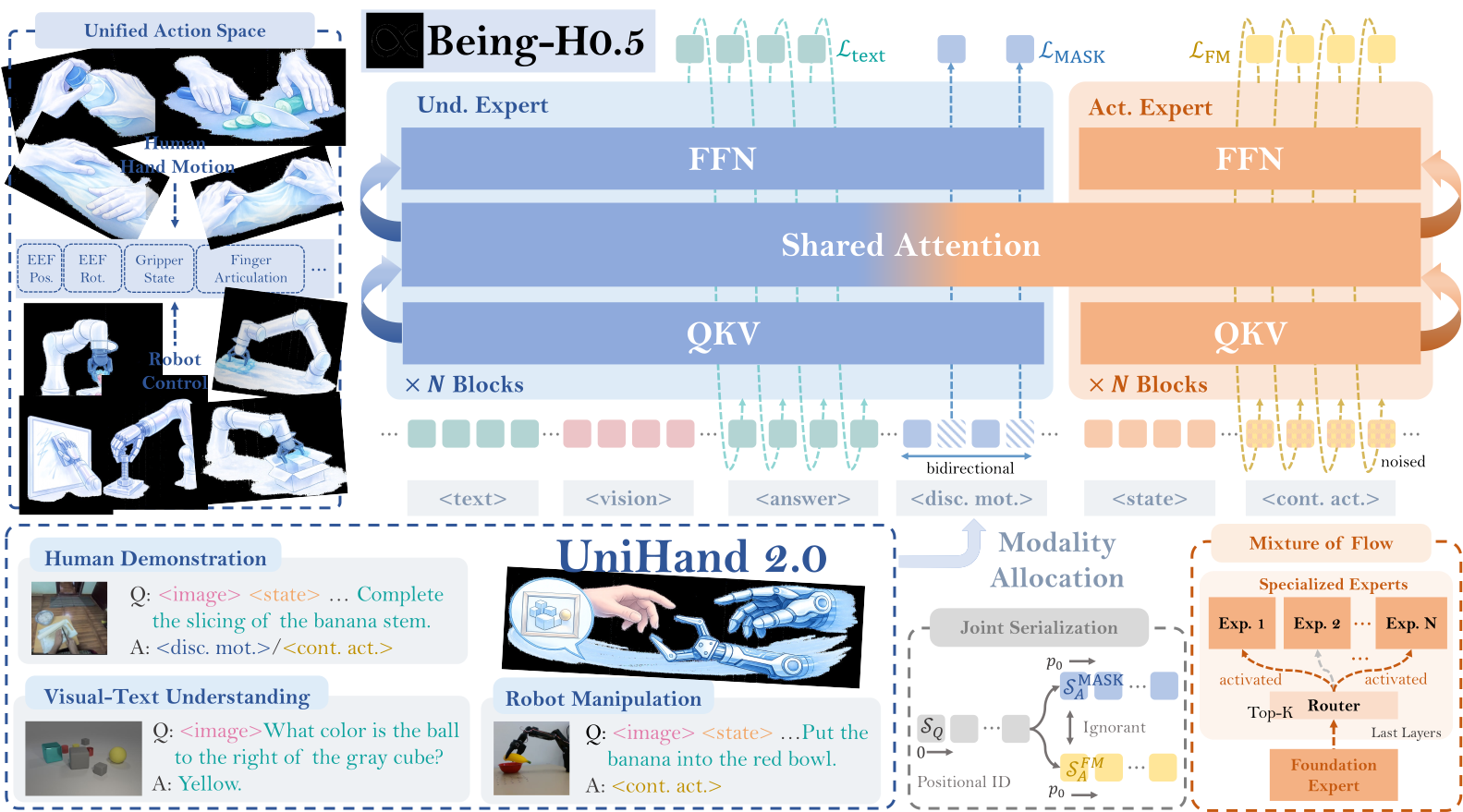
Figure 6 解读:图中把 Being-H0.5 的方法拆成三条主线:上方是 Unified State-Action Space,将 human hand 与多种 robot action 映射到统一槽位;中间是 UniHand-2.0 的 QA-style serialization,使 vision/text/state/action 都作为序列片段进入模型;右侧是 Mixture-of-Flow,在 action expert 内先学习 shared motor primitives,再通过 routed specialized experts 适配 embodiment/task-specific dynamics。Und. Expert 和 Act. Expert 不是完全隔离的两套网络,而是在 MoT 中共享 attention,因此 action generation 能直接利用视觉语义上下文。
3.2 UniHand-2.0 与 UniCraftor
UniHand-2.0 的作用是把 human-centric interaction prior 引入 VLA 预训练。论文报告其配方为 400M samples、35,000+ hours,其中包含约 16,000 小时 human data、14,000 小时 robot data,并覆盖 30 distinct robotic embodiments。它不只是机器人轨迹库,还包含 cross-embodiment physical control 与 general visual-text understanding,使模型能在同一个序列建模任务里学习“描述”和“动作”。
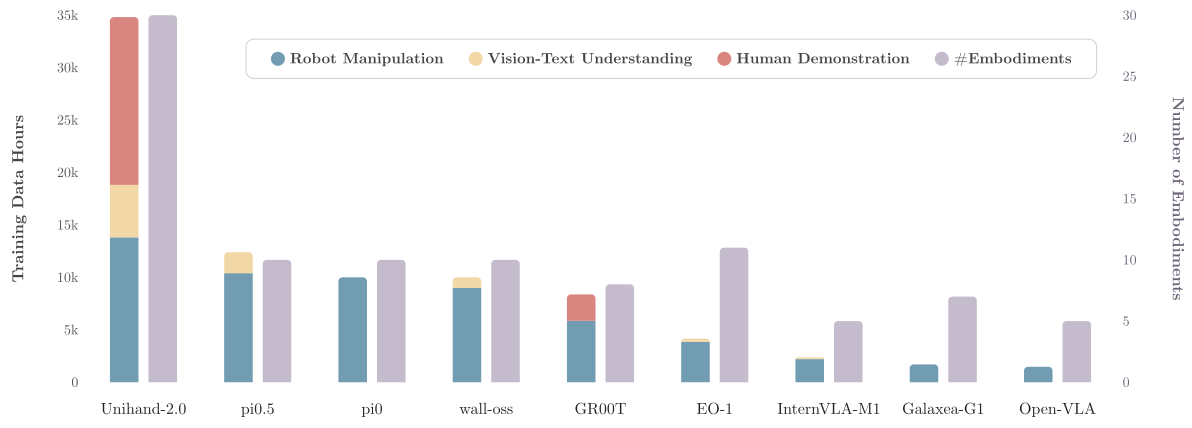
Figure 2 解读:该图展示 UniHand-2.0 的数据规模定位:论文将其作为 largest embodied pre-training recipe,强调 hours、samples、embodiments 三个维度同时扩展。对阅读本文最重要的是理解:human data 不是附加数据增强,而是被当作跨形态 physical prior 的主干来源。
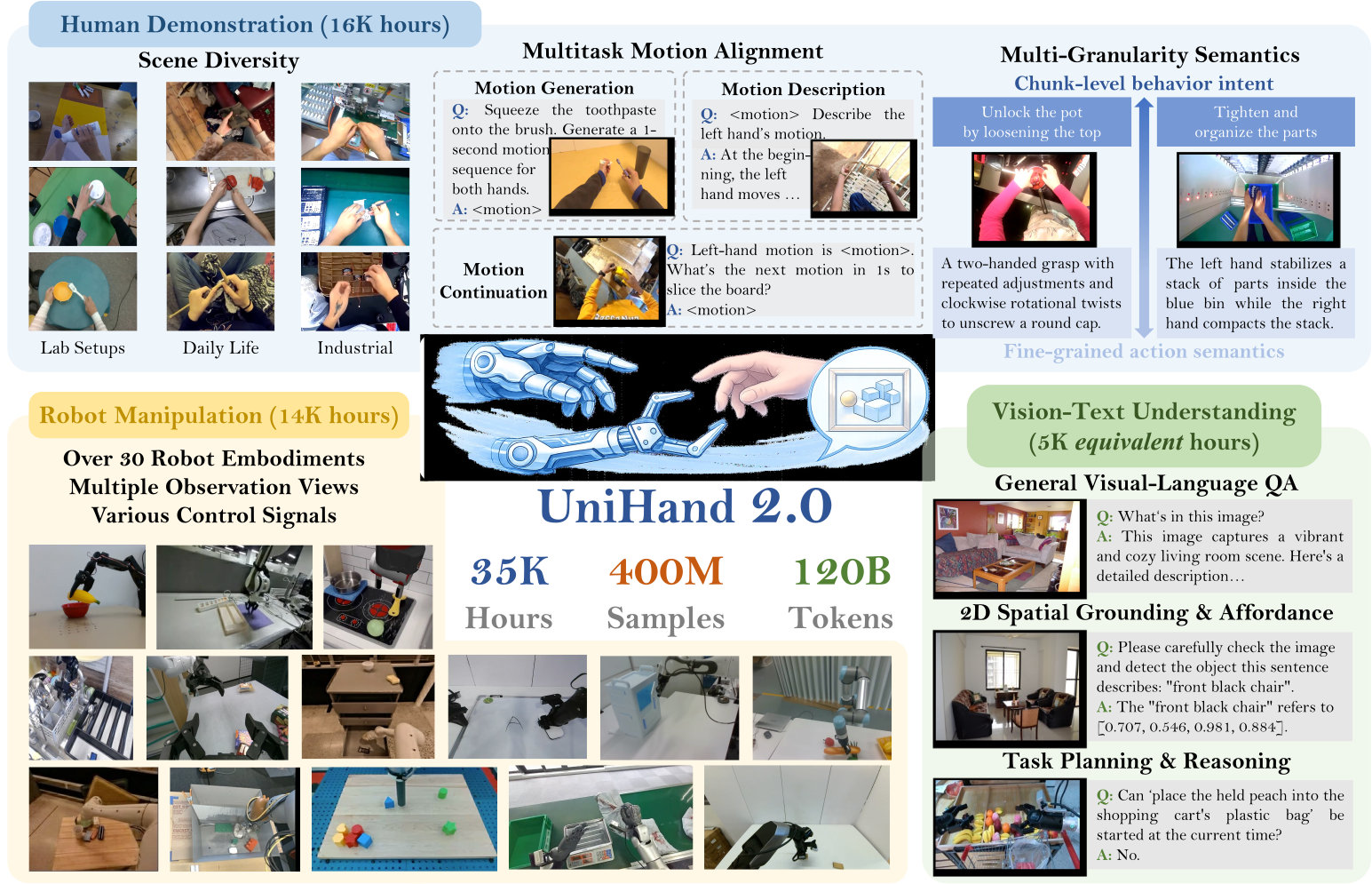
Figure 3 解读:图中细化了 UniHand-2.0 的组成:human interaction traces、robot demonstrations、visual-language data 共同形成预训练 mixture。论文的假设是 human motion 中包含丰富接触与操控语义,低资源机器人可以通过统一动作空间继承这些 priors。
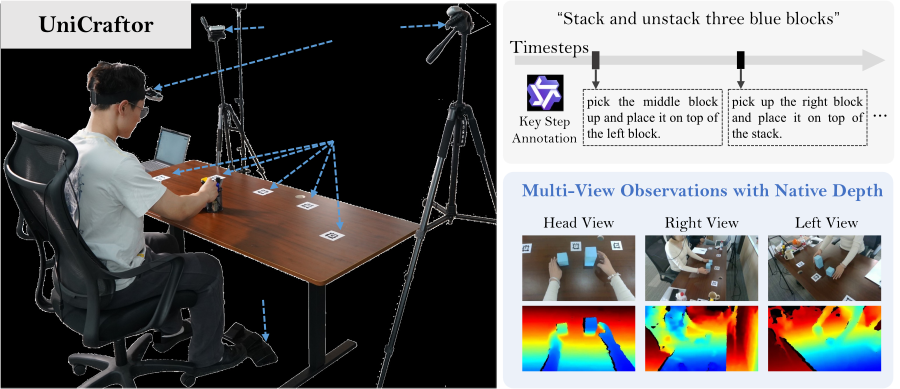
Figure 5 解读:UniCraftor 是数据采集系统:多视角 observation、native depth、pedal 事件信号和自动/人工校验的 annotation pipeline 共同减少数据标注成本。它对应论文中“可持续扩展 human/robot data”的工程支撑。
3.3 Unified State-Action Space
论文把每个 embodiment 的原始状态和动作分别映射到全局向量:
其中 是稀疏槽位路由:相关信号进入对应 global slot,未使用 slot 置零。训练样本再序列化为 modality-tagged segments:
直觉上,这一步把“不同机器人动作维度不一样”的问题转成“同一语义槽位是否被当前 embodiment 使用”的问题。比如 human wrist pose 对齐到 robot EEF subspace,finger articulation 映射到 fine-manipulation slots;Cartesian action 使用 relative delta displacement,rotation 使用 Axis-Angle,joint-space 使用 absolute radian。这样模型看到的是可解释物理量,而不是每个平台自定义的一组归一化编号。
3.4 Flow Matching、MoF、MPG 与 UAC
连续动作生成使用 Flow Matching。对 target action 、噪声 和 ,论文定义线性路径:
理想速度场为:
Flow Matching loss 为:
MoF 把 action expert 分成 shared foundation layers 与 routed specialized experts。前者学习 reaching、grasping、collision avoidance 等跨 embodiment motor primitives;后者通过 gating 处理 embodiment/task-specific dynamics。这个设计的直觉是:多机器人共享低层物理规律,但高层动作流形和约束不同;如果所有层完全共享,容易出现 inter-embodiment interference;如果所有层完全隔离,又丢失迁移。
MPG 的目标是让 sensory shift 下的 action flow 不被异常 observation features 拉出动作流形。设 为 suffix token features, 为 zero-noise action-token embeddings,。论文用 Sliced Wasserstein Distance 估计 observation/action embedding discrepancy:
其中 ,。门控为:
与普通 output gating 不同,MPG 在投影前缩放 feature-conditioned residual,并保留 ungated learned prior offset;因此 gate 抖动时不会同时放大 bias,轨迹更平滑。
UAC 解决 action chunking 的延迟错配。对 embodiment ,控制周期为 ,期望 inference latency budget 为 ,有效延迟步数按:
缩放。训练时采样:
将 chunk 切为 committed prefix 和 predicted postfix ,loss 只作用在 postfix。部署时,论文要求:
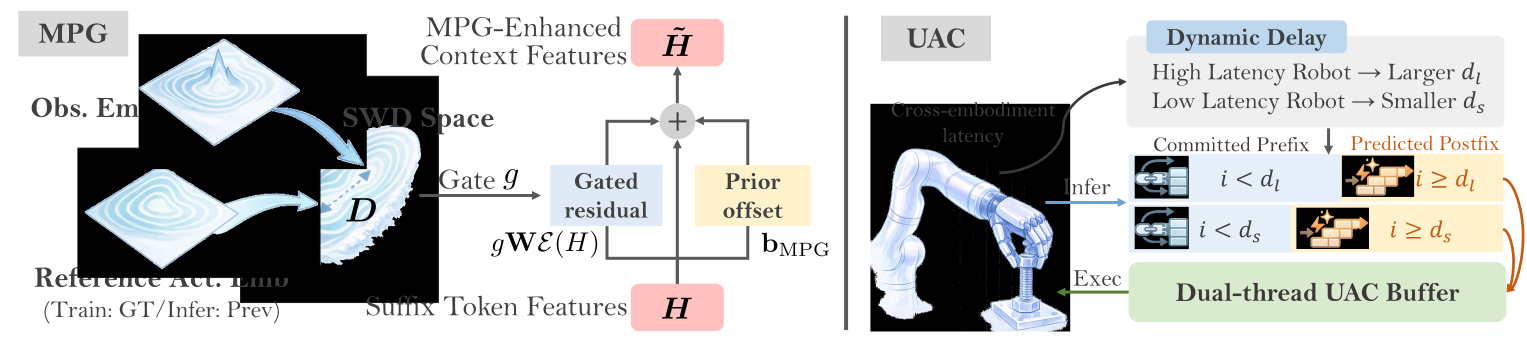
Figure 7 解读:左半部分是 MPG:把 observation embedding 与 action prior embedding 投到 SWD 空间,得到 discrepancy-guided gate ;右半部分是 UAC:根据 embodiment-specific delay 把 action chunk 分成 prefix/postfix,prefix 已经在执行队列中,因此 denoising 时必须锁住,只更新 postfix。这个图解释了为什么 Being-H0.5 不只关注离线 benchmark,还把真实控制系统的 latency 和 jitter 纳入训练/推理协议。
3.5 Real-world deployment infrastructure
真实部署中,机器人持续执行,而模型间歇生成 chunk。Being-H0.5 使用 dual-thread buffer,把 inference thread 和 execution thread 解耦。MPG 在低步数 denoising 下尤其重要,因为部署时为了实时性通常不能跑很多 refinement steps;UAC 则保证新 chunk 只覆盖尚未执行的 postfix,避免控制 stutter。
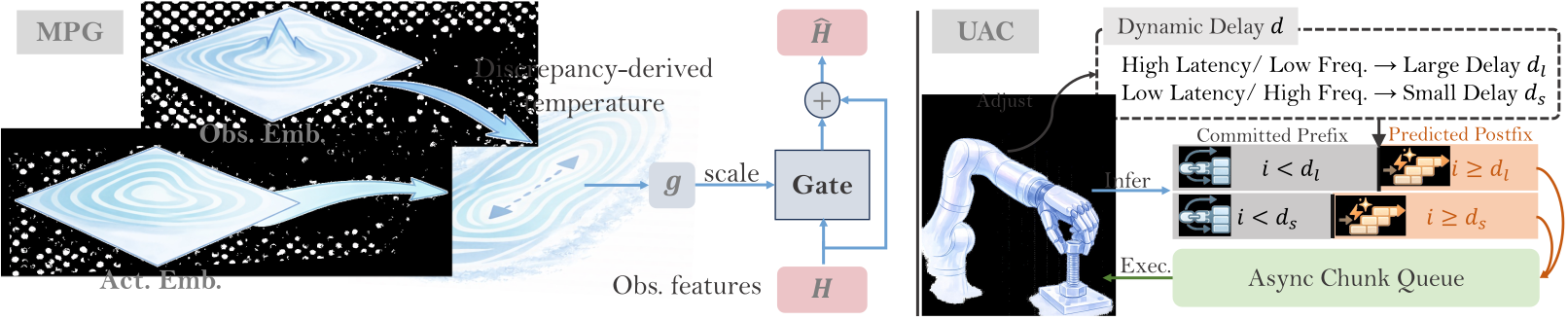
Figure 8 解读:部署图展示了从 perception、policy inference 到 robot execution 的闭环。关键点是 action buffer 的 prefix commitment:已经发给控制器的动作不再被新推理结果重写,只有 postfix 能被 stitched back。这使同一 VLA 可以适配不同 robot control frequency。
3.6 Pseudocode (based on released code)
论文公式与 released code 实现差异:论文实验文字说 LIBERO 使用 chunk size 8、45k steps、4×A800;released example Being-H05/scripts/train/train_libero_example.sh 使用 ACTION_CHUNK_LENGTH=16、MAX_STEPS=60000、4 GPUs。论文强调 Unified Action Space 保留 raw physical magnitude,但 released StateActionTransform 同时支持 quantile / meanstd / minmax / abs / binary 等 normalization modes,具体是否归一化取决于 dataset config。代码中 BeingH 固定 unified_state_dim=200、unified_action_dim=200。
import torch
import torch.nn.functional as F


def unified_slot_project(raw_state, raw_action, embodiment_map, state_dim=200, action_dim=200):
    """Sketch of Phi_e used by Being-H05 data path."""
    state = torch.zeros(state_dim, dtype=raw_state.dtype, device=raw_state.device)
    action = torch.zeros(action_dim, dtype=raw_action.dtype, device=raw_action.device)
    for src_slice, dst_slice in embodiment_map["state"]:
        state[dst_slice] = raw_state[src_slice]
    for src_slice, dst_slice in embodiment_map["action"]:
        action[dst_slice] = raw_action[src_slice]
    return state, action
import torch
def beingh_flow_train_step(model, batch, use_training_time_rtc=False, max_delay=0):
"""Mirrors BeingH.forward: sample noise/time, encode action tokens, predict velocity."""
actions = batch["padded_action"] # [B * chunk, 200]
states = batch["padded_state"] # [B, 200]
B = actions.shape[0] // model.action_chunk_length
noise = torch.randn_like(actions)
if use_training_time_rtc:
base_t = model.sample_time(B, actions.device, actions.dtype)
delays = torch.randint(0, max_delay + 1, (B,), device=actions.device)
t = torch.zeros(B * model.action_chunk_length, device=actions.device, dtype=actions.dtype)
postfix_mask = torch.ones_like(t, dtype=torch.bool)
for b in range(B):
lo, hi = b * model.action_chunk_length, (b + 1) * model.action_chunk_length
d = min(int(delays[b]), model.action_chunk_length)
t[lo:lo + d] = 1.0 # clean committed prefix
t[lo + d:hi] = base_t[b] # noisy postfix
postfix_mask[lo:lo + d] = False
else:
t = model.sample_time(B, actions.device, actions.dtype)
t = t[:, None].expand(B, model.action_chunk_length).reshape(-1)
postfix_mask = torch.ones_like(t, dtype=torch.bool)
noisy = (1.0 - t[:, None]) * noise + t[:, None] * actions
velocity_target = actions - noise
action_features = model.action_encoder(noisy.view(B, model.action_chunk_length, -1), t[:B])
pred_velocity = model.forward_action_branch(states, action_features, batch)
loss = ((pred_velocity.reshape_as(actions) - velocity_target) ** 2)[postfix_mask].mean()
return lossimport torch
def mpg_enhance_context(H, clean_action_emb, obs_proj, act_proj, residual, tau=1.0, lam=0.1, num_proj=32):
"""MPG logic reflected by BeingH model/layers.py: SWD gate + gated residual."""
z_bar = clean_action_emb.mean(dim=1)
H_hat = torch.nn.functional.layer_norm(obs_proj(H), obs_proj(H).shape[-1:])
Z_hat = torch.nn.functional.layer_norm(act_proj(z_bar), act_proj(z_bar).shape[-1:])
dirs = torch.randn(num_proj, H_hat.shape[-1], device=H.device)
dirs = dirs / dirs.norm(dim=-1, keepdim=True).clamp_min(1e-6)
h_sorted = torch.sort(H_hat @ dirs.T, dim=0).values
z_sorted = torch.sort(Z_hat @ dirs.T, dim=0).values
D = ((h_sorted - z_sorted) ** 2).mean()
g = torch.exp(-D / tau).clamp(max=1.0)
return H + lam * g * residual(H)import torch
@torch.no_grad()
def beingh_iterative_action_inference(model, batch, prev_chunk=None, prefix_mask=None, num_steps=10):
"""Mirrors BeingH.get_action: iterative velocity updates with optional prefix overwrite."""
B = batch["padded_state"].shape[0]
actions = torch.randn(B, model.action_chunk_length, model.unified_action_dim, device=batch["padded_state"].device)
dt = 1.0 / num_steps
predicted_clean_emb = None
for step in range(num_steps):
t = torch.full((B,), step / num_steps, device=actions.device)
action_features = model.action_encoder(actions, t)
if model.use_mpg and predicted_clean_emb is not None:
action_features = model.apply_mpg(batch["padded_state"], action_features, predicted_clean_emb)
pred_velocity = model.predict_velocity(batch, action_features, t)
actions = actions + dt * pred_velocity
if prev_chunk is not None and prefix_mask is not None:
actions = torch.where(prefix_mask[..., None], prev_chunk, actions)
predicted_clean_emb = model.action_encoder(actions, torch.zeros_like(t))
return actionsCode reference:
main@66b959e0(2026-05-04) — pseudocode and mapping based on this commit
| Paper Concept | Source File | Key Class/Function |
|---|---|---|
| MoT + Being-H model wrapper | Being-H05/BeingH/model/beingvla.py | BeingHConfig, BeingH.forward, BeingH.get_action |
| Flow Matching action encoder/decoder | Being-H05/BeingH/model/beingvla.py, Being-H05/BeingH/model/layers.py | ActionEncoder, SimpleMLP, velocity target construction |
| Unified state/action dimensions | Being-H05/BeingH/model/beingvla.py | unified_state_dim=200, unified_action_dim=200 |
| MPG / SWD gate | Being-H05/BeingH/model/layers.py, Being-H05/BeingH/model/beingvla.py | SlicedWassersteinDistance, MPG projection/enhancement logic |
| UAC / RTC-style delay | Being-H05/BeingH/model/beingvla.py | use_training_time_rtc, simulated_delay, prefix mask, inference prefix overwrite |
| Dataset and state/action transforms | Being-H05/BeingH/dataset/datasets/vla_dataset.py, Being-H05/BeingH/dataset/transform/state_action.py | LeRobotIterableDataset, StateActionTransform, Normalizer |
| Training launch config | Being-H05/scripts/train/train_libero_example.sh | 4 GPUs, MAX_STEPS=60000, ACTION_CHUNK_LENGTH=16, MPG flags |
4. Experimental Setup (实验设置)
Datasets
- UniHand-2.0 pre-training recipe:400M samples,35,000+ hours,30 embodiments;论文摘要/贡献中明确分解为 16,000 hours human、14,000 hours robot,并包含 general visual-text understanding 数据。
- Simulation:LIBERO 与 RoboCasa。LIBERO 使用 4 suites(L-Spatial、L-Object、L-Goal、L-Long),每 task 50 evaluation episodes;RoboCasa 使用 24 long-horizon household tasks,Human-50 few-shot setting,每 task 50 human demonstrations,5 held-out scenes,每 task 50 trials。
- Real-world:5 个真实平台,论文列出 PND Adam-U、Franka+Inspire、Unitree G1、BeingBeyond D1、LeRobot SO-101;每个 task 收集 30–60 minutes real-robot demonstrations。
Baselines
LIBERO 对比 Diffusion Policy、OpenVLA、SpatialVLA、CoT-VLA、-Fast、GR00T-N1、、F1、InternVLA-M1、Discrete Diffusion VLA、、OpenVLA-OFT、X-VLA、EO1。RoboCasa 对比 3DA、DP3、GWM、BC、GR00T-N1、、。few-shot adaptation 对比 Native VLM initialization 与 Human-Centric pretraining initialization。
Metrics
- Success Rate (%):任务完成比例,simulation 表格按 suite/category 平均。
- LIBERO Avg. / RoboCasa Total Avg.:跨 suites 或 task categories 的平均 success rate。
- Few-shot adaptation gain :Human-Centric 初始化相对 Native VLM 初始化的绝对百分点提升。
Training config
论文实验配置:
- LIBERO:RGB-only 224×224,2B backbone,multi-view RGB observations,action chunk size 8,packed sequences 7,680 tokens/GPU,effective batch size 128;specialist 45k steps on 4×A800;generalist 为 LIBERO+RoboCasa joint mixture,约 2× steps;evaluation 每 suite 500 trials。
- RoboCasa:RGB-only 224×224,不用 depth/point cloud;specialist 与 LIBERO 相同训练预算,generalist 2× steps。
Released code config anchor:
- Config path:
Being-H05/scripts/train/train_libero_example.sh - Hardware / launch:
NUM_GPUS=4,torchrun --nproc_per_node=4 - Optimization:
MAX_STEPS=60000,LEARNING_RATE=1e-4,WEIGHT_DECAY=1e-5,WARMUP_RATIO=0.05,lr_scheduler=cosine,gradient_accumulation_steps=1 - Input / sequence:
FORCE_IMAGE_SIZE=224,MAX_NUM_TOKENS=8704,EXPECTED_NUM_TOKENS=8192,ATTN_MODE=causal - Action / MPG / RTC:
ACTION_CHUNK_LENGTH=16,USE_MPG=True,MPG_LAMBDA=0.1,MPG_NUM_PROJECTIONS=32,MPG_REFINEMENT_ITERS=1,USE_TRAINING_TIME_RTC=False,SIMULATED_DELAY=0
5. Experimental Results (实验结果)
Main simulation results
LIBERO success rate (%)
| Method | L-Spatial | L-Object | L-Goal | L-Long | Avg. |
|---|---|---|---|---|---|
| GR00T-N1 | 94.4 | 97.6 | 93.0 | 90.6 | 93.9 |
| 98.8 | 98.2 | 98.0 | 92.4 | 96.9 | |
| X-VLA | 98.2 | 98.6 | 97.8 | 97.6 | 98.1 |
| EO1 | 99.7 | 99.8 | 99.2 | 94.8 | 98.2 |
| Being-H0.5 (generalist) | 97.0 | 98.2 | 99.0 | 96.2 | 97.6 |
| Being-H0.5 (specialist) | 99.2 | 99.6 | 99.4 | 97.4 | 98.9 |
Being-H0.5 specialist 达到 98.9% average,且 LIBERO-Long 为 97.4%;generalist 单 checkpoint 在 LIBERO+RoboCasa joint training 后仍有 97.6% average,说明跨 benchmark 容量竞争没有显著破坏 LIBERO 表现。
RoboCasa 24-task success rate (%)
| Modality / Method | Pick & Place | Doors/Drawers | Others | Total Avg. |
|---|---|---|---|---|
| 3D 3DA | 0.0 | 2.3 | 13.1 | 5.5 |
| 3D DP3 | 1.5 | 41.7 | 32.0 | 22.8 |
| 3D GWM | 14.8 | 54.3 | 49.8 | 39.3 |
| RGB BC | 4.3 | 47.0 | 42.2 | 28.9 |
| RGB GR00T-N1 | 18.6 | 50.2 | 39.1 | 36.0 |
| RGB | 21.5 | 57.8 | 44.9 | 41.4 |
| RGB | 14.0 | 53.1 | 58.5 | 42.4 |
| Being-H0.5 (generalist) | 40.0 | 73.0 | 52.0 | 53.3 |
| Being-H0.5 (specialist) | 36.0 | 71.7 | 57.6 | 53.9 |
RoboCasa 的关键结论是:Being-H0.5 只用 224×224 RGB 就超过 3D/multimodal baselines,总平均达到 53.9%,generalist 也保持 53.3%。这支持论文关于 Unified Action Space + human-centric pretraining 能处理 long-horizon kitchen interactions 的主张。
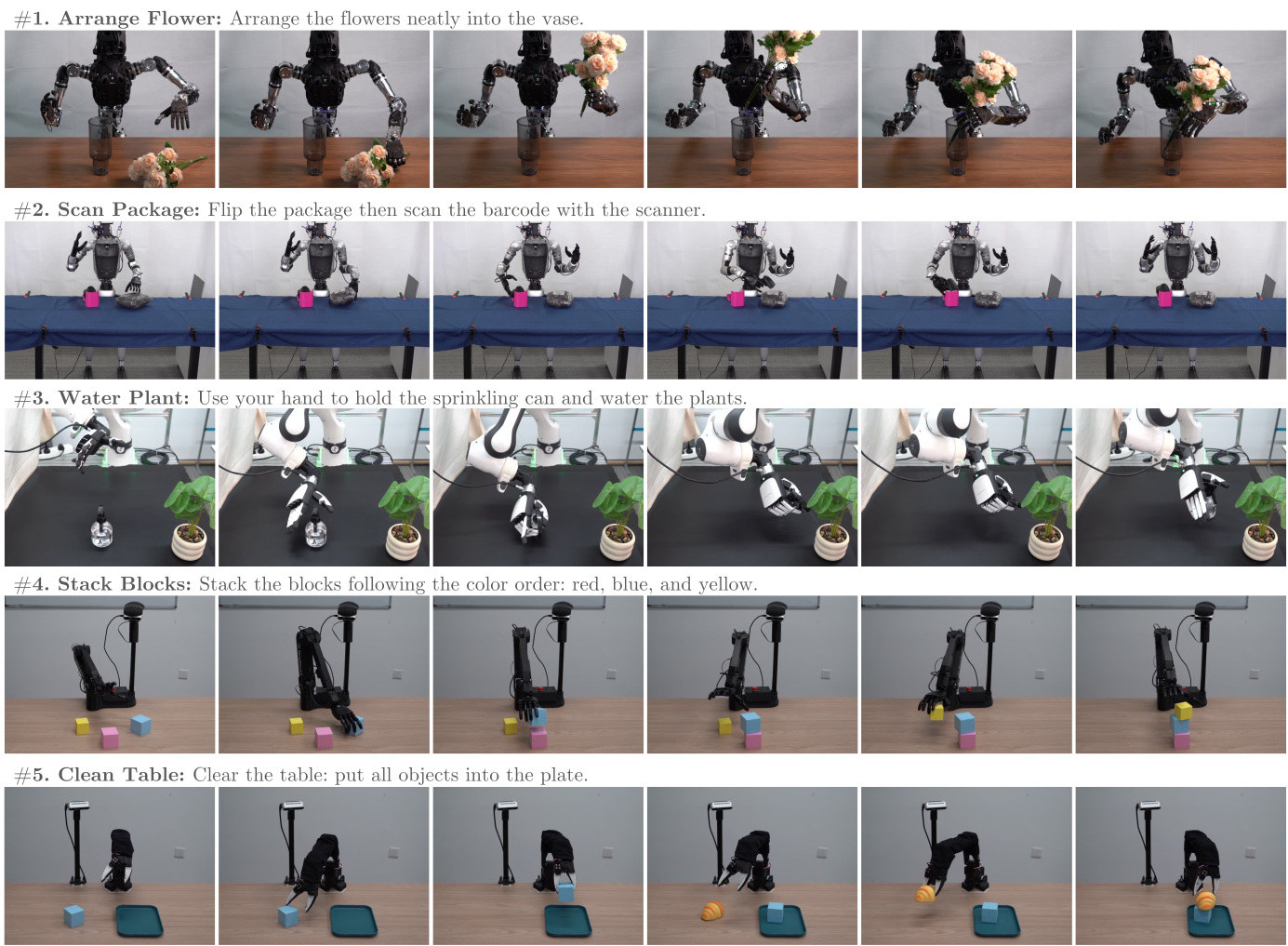
Figure 9 解读:该图展示 simulation trajectory / benchmark 表现趋势,补充表格中的平均数。它强调 Being-H0.5 在需要多步空间推理和长程动作连贯性的任务上优势更明显,而不是只在短 horizon pick-and-place 上提升。
Human-centric pretraining ablations
Single-task LIBERO 5-shot adaptation:当冻结 Und+Proj+ViT 时,Human-Centric 初始化 Avg. 69.0%,Native VLM 为 57.9%,提升 +11.1;冻结 Und+ViT 时提升最大,Avg. 从 51.3% 到 77.1%,;Full FT 时 Avg. 从 77.2% 到 81.8%,。
Multi-task-suite LIBERO 5-shot adaptation:冻结 Und+Proj+ViT 时 Avg. 从 60.7% 到 72.4%,;冻结 Und Only 时 Avg. 从 72.8% 到 82.1%,;Full FT 时 Avg. 从 84.1% 到 85.1%,。
这些结果说明 human-centric pretraining 在参数受限和 low-shot 设置下最有价值;当 full fine-tuning 放开全部参数时,初始化优势仍在但变小。
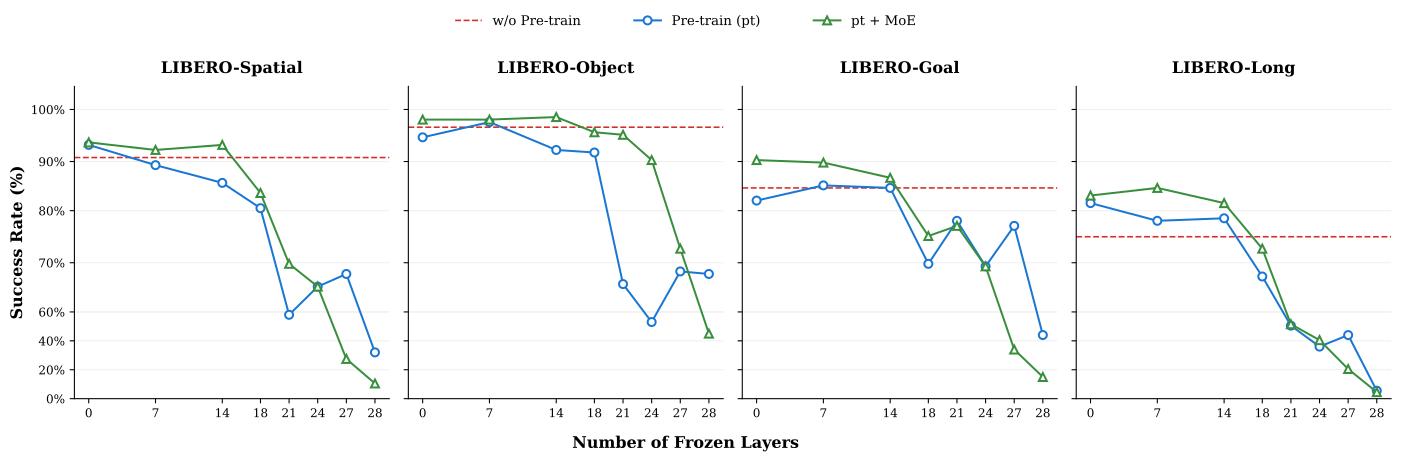
Figure 12 解读:Action Expert 冻结层数越多,模型越难把 human-centric prior 转换成目标 embodiment 动作。论文指出冻结 0–7 层影响较小,多数 suite 仍超过 80%;超过 14 层后性能快速下降,完整冻结时跌到 20% 以下。这支持 MoF 中“shared lower motor primitives + trainable upper specialization”的设计。
Real-world deployment
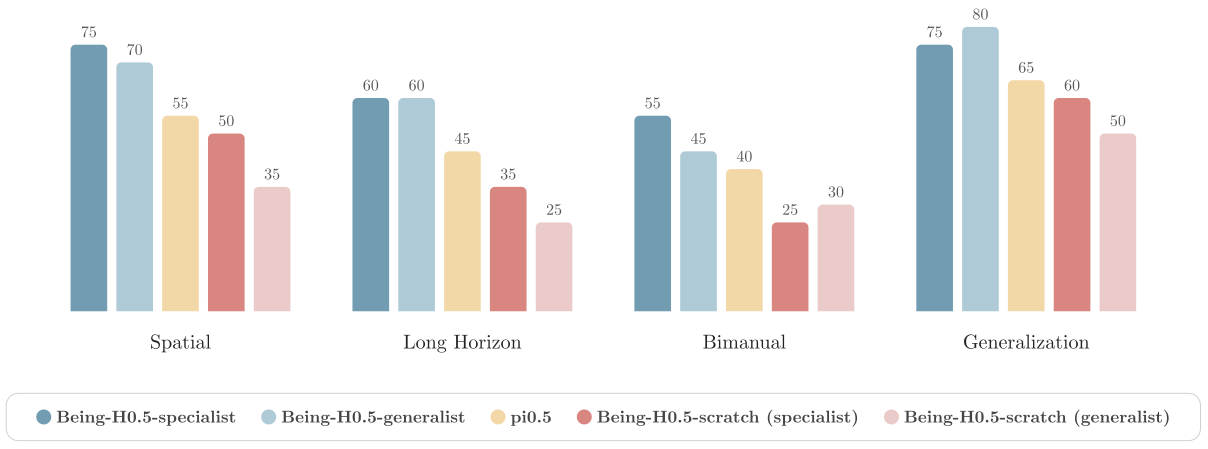
Figure 10 解读:真实机器人结果以不同能力维度展示,Being-H0.5 在 Spatial、Long Horizon、Bimanual、Generalization 等维度上相对 和无预训练版本都有优势。该图对应论文最核心的外推结论:human-centric data 与 Unified Action Space 对 cross-embodiment few-shot adaptation 有实际部署收益。
Limitations
论文没有把所有真实部署细节和完整 35K hours 数据全部开源到可复现实验级别;released repo 提供训练/推理 pipeline、simulation scripts、weights/data release 入口,但 paper-level pretraining recipe 与真实机器人 deployment infrastructure 的完整复现仍依赖外部资产。另一个限制是 UAS 需要人工定义或维护 embodiment slot mapping;当新硬件的动作语义无法自然落入现有槽位时,仍可能需要扩展 global state/action schema。