Scaling World-Model Reinforcement Learning Through Diffusion Policy Optimization
Paper: arXiv:2605.26282 Code: Edmond1Cheng/MBDPO Code reference:
main@97c290bb(2026-05-27)
1. Motivation (研究动机)
现有 World Model RL 的可扩展性瓶颈不只是常见的 model bias / error compounding。论文指出,更结构性的矛盾是:许多基于 TD-MPC / TD-MPC2 的方法用 replay buffer 中的非搜索策略 来训练 value function ,但真正和环境交互时又用 MPPI/CEM 这类 search policy 在 learned world model 中最大化 。也就是说,value learning 的数据分布和 policy improvement 的行动分布并不一致。
这个错位会产生两个连锁问题。第一, 在 分布附近被训练,但 search 会主动寻找 的高值区域;如果这些高值来自 out-of-distribution 过估计,Bellman backup 会反复 bootstrap 错误峰值。论文把这个 gap 写成: 第二,MPPI/CEM 的 search 本质上是一次性 planner,不等价于一个被持续训练、受信赖域约束的 policy。随着 search policy 偏离 replay-buffer policy ,action drift 变大,value approximation error 又被进一步放大。对 offline pretraining 尤其危险:offline 数据固定,策略不能通过新环境交互快速修正偏移。
论文要解决的具体目标是:在 learned world model 内,把 trajectory search、value learning 和 policy optimization 统一成一个可扩展的 diffusion policy optimization 过程,让 policy improvement 不再是外置 heuristic planner,而是一个和 world model / value function 联合训练、并被 implicit energy / KL trust region 约束的生成式策略。
这个问题值得研究,因为如果 world model RL 想像 LLM / diffusion model 一样靠更大模型和更多任务持续 scaling,policy improvement 必须能随模型容量一起稳定变好。论文的实验证据覆盖 online-from-scratch、multi-task offline pretraining 和 offline-to-online adaptation:MBDPO 在小模型上尤其能缓解 world model 不准时的 policy drift,在大模型上还能保持随参数量提升的 monotonic scaling。
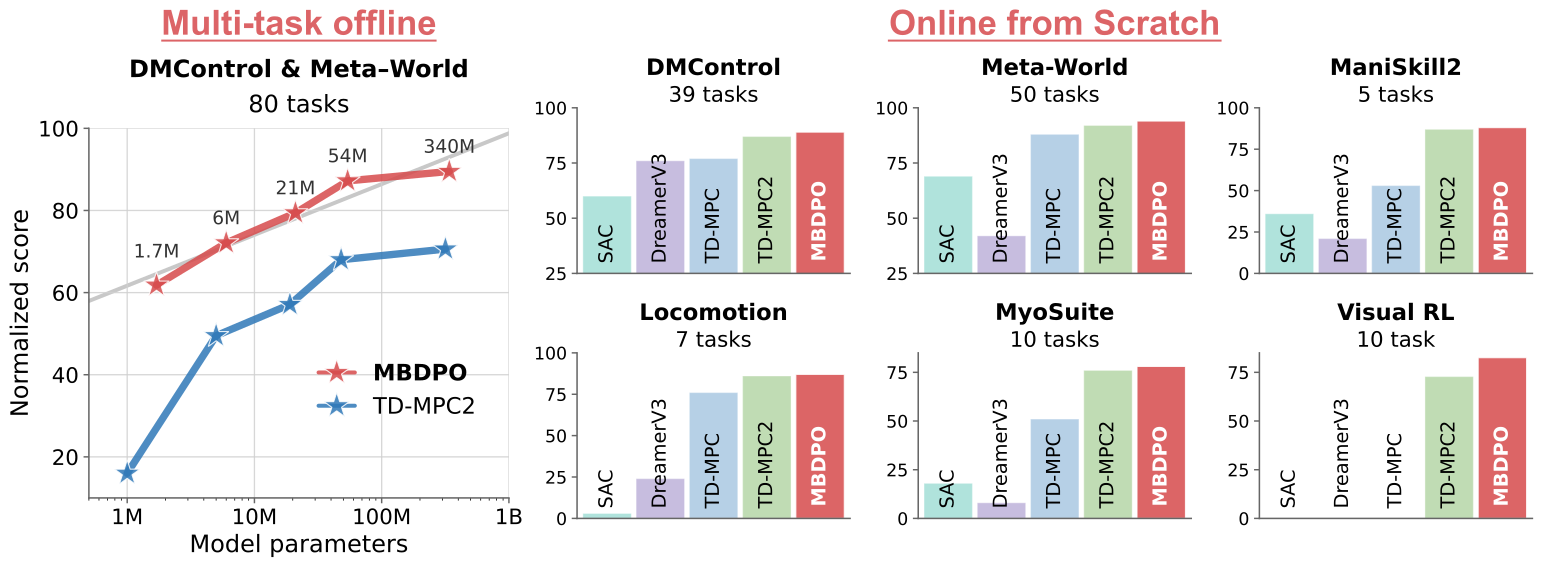
Figure 1 解读:左侧展示 multi-task offline pretraining 中,MBDPO 随参数量从 M 到 M 增大而呈现更清晰的 scaling 行为;右侧展示 online-from-scratch 中,MBDPO 在 DMControl、MetaWorld、ManiSkill2、MyoSuite 等控制任务上相对 TD-MPC2/SAC/DreamerV3 更稳定。它不是单个 benchmark 的小改进,而是在不同训练范式下都试图修正同一个“search-value mismatch”。
2. Idea (核心思想)
核心 insight 是:把 world model 中的 policy search 改写为 diffusion denoising 过程,并用 value-induced energy 与 behavior-policy energy 共同塑形 score field。这样,action sequence 从 Gaussian prior 逐步 denoise 成高价值轨迹时,不只是贪心追逐 ,还会被 replay buffer / behavior distribution 约束在可信区域附近。
MBDPO 的关键创新有三点。第一,它把 MPC 式的 action-sequence search 写成 DDPM reverse process,优化对象是 horizon 内的 action sequence 。第二,它引入 implicit energy function ,用 buffer action 作为正样本、策略/随机动作作为 hard negative,让 diffusion 的目标分布近似“高 return 但不偏离行为分布”的 Gibbs policy。第三,它把 world model update、value iteration、energy learning 和 diffusion score fitting 放在同一个交替训练循环里。
和 TD-MPC2 的根本差别是:TD-MPC2 仍依赖 MPPI planner 在每一步从候选轨迹里挑高值 action,planner 和 actor/value 的训练目标并没有严格对齐;MBDPO 则把“搜索”本身变成一个可训练的 diffusion policy distribution,并用 KL-style constraint 显式约束 到 的偏移。它更接近把 offline RL 的 conservatism、TRPO/PPO 的 trust region、world-model rollout 的 trajectory evaluation 合在一个 score-based policy refinement 框架里。
3. Method (方法)
3.1 Overall framework:从 latent world model 到 diffusion action sequence
MBDPO 仍然使用 TD-MPC2 风格的 latent world model。观测 先被 encoder 映射到 latent state ;latent dynamics 预测 ;reward head 预测即时奖励; 提供 bootstrap value;implicit energy 约束 action distribution;score network 或 analytic model-based score 负责 denoising action sequence。
组件映射可以写成:
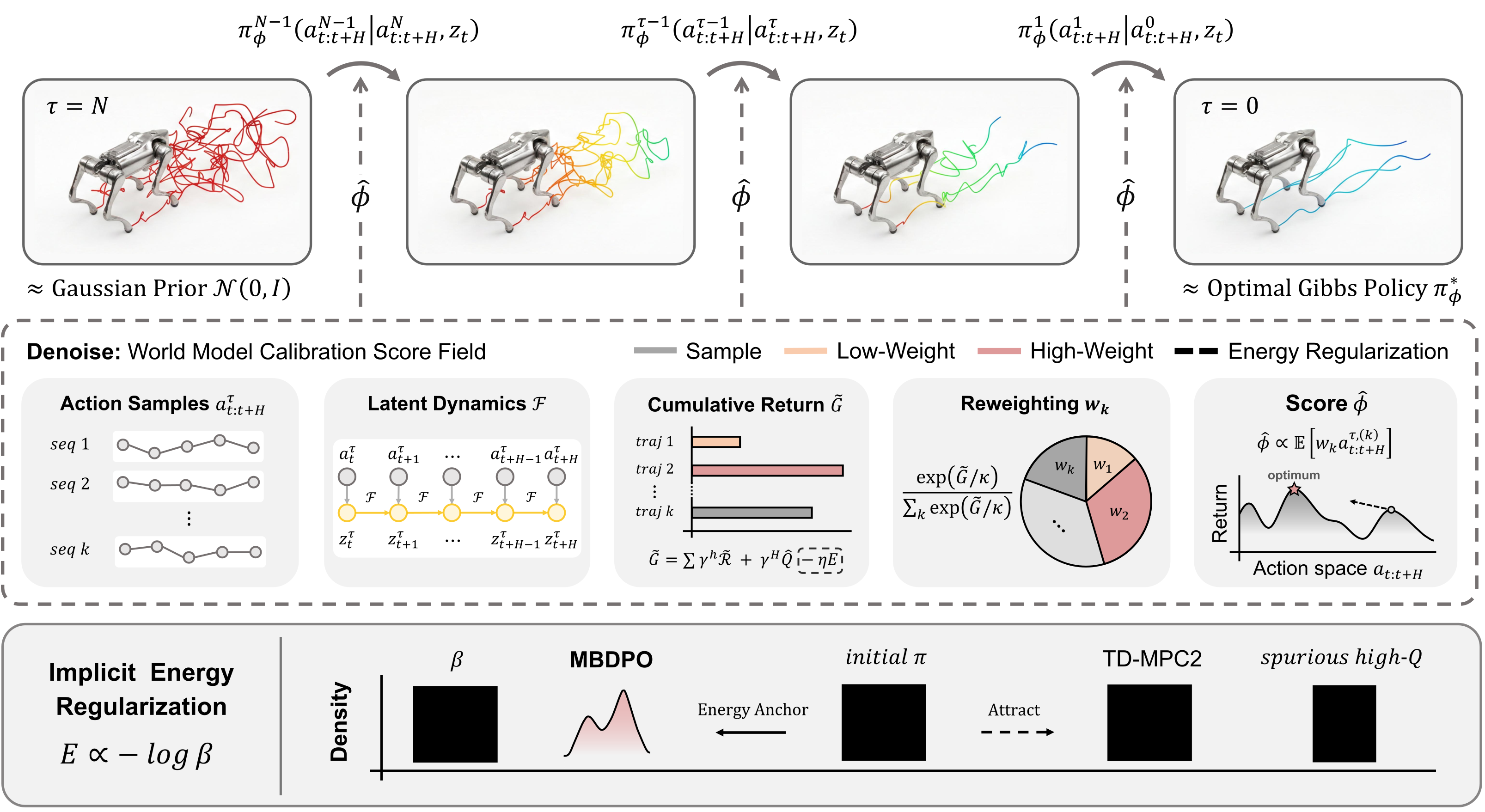
Figure 2 解读:这张图是 MBDPO 的核心机制。上半部分表示在 learned world model 中 rollout 多条 action sequence;每条 sequence 由 reward/value 评估得到 return 。下半部分把这些 trajectory return 转成 diffusion score 的权重,让 action sequence 从 noise 逐步 denoise 到高价值、低 drift 的策略分布。implicit energy 相当于把 replay buffer 的行为分布注入 score field,避免策略只沿着 的过估计方向漂移。
直觉上,MBDPO 有效的原因不是“diffusion 比 Gaussian policy 更强”这么简单,而是 diffusion 的多步 refinement 给了 policy improvement 一个可控的路径:每个 denoising step 都可以用 imagined rollout 的 return 重新加权,同时被 behavior energy 拉回可信区域。这样 policy 不会像 MPPI 一样每次临时搜索出一个和 actor/value training distribution 脱节的 action,而是把搜索结果沉淀进一个持续优化的 policy distribution。
3.2 Misalignment analysis:为什么 search 和 value learning 会错位
论文把 replay-buffer policy 记作 ,search-induced policy 记作 。如果 value function 在 生成的数据上训练,却在 Bellman update 或 action selection 中被 使用,就会出现 operator gap: 这个式子的含义是:只要 search policy 和 behavior/replay policy 的最大 KL divergence 增大,value update 的 mismatch upper bound 就会变大。MPPI 会选择 高的候选动作,但这些动作未必在 buffer 分布附近;如果 在这些区域过估计,planner 会更频繁访问错误区域,Bellman target 又会把错误扩散回 value network。

Figure 3 解读:左侧 cross TD error 显示 MBDPO 比 TD-MPC2 更低、更稳定,说明它减少了 与 的错位。右侧 action drift 用 统计策略偏移;MPPI/TD-MPC2 的 drift 持续较大,而带 contrastive energy 的 MBDPO(论文强调 )更接近当前 policy distribution,训练到约 M steps 后 drift 接近稳定。
3.3 Diffusion policy:把 action refinement 写成 reverse diffusion
MBDPO 不是直接输出单步 action,而是优化一个 horizon 为 的 action sequence: DDPM reverse process 从 Gaussian noise 开始,经过 个 denoising step 得到 clean action sequence: 每个 reverse step 的 transition kernel 由 score function 控制: 实际采样形式是:
3.4 Implicit energy:把 KL trust region 写进 score field
论文用 implicit energy function 来近似行为分布约束。训练目标是一个二分类/contrastive 形式:buffer action 是正样本,负样本 来自策略或随机动作: 在 KL-constrained policy optimization 中,MBDPO 形式化为: \begin{split} \max_{\pi_\phi}\quad &\mathbb E_{a_{t:t+H}\sim\pi_\phi(\cdot|z_t)}[G(z_t,a_{t:t+H})]\\ \text{s.t.}\quad &D_{\mathrm{KL}}(\pi_\phi(\cdot|z_t)\|\beta(\cdot|z_t))\le\varepsilon,\\ &z_{h+1}=\mathcal F(z_h,a_h),\quad h=t,\dots,t+H-1. \end{split} Theorem 1 的结论是:上述 KL-constrained optimum 可以写成一个 Gibbs distribution: 这说明目标策略既偏好高 return trajectory,又乘上行为策略密度作为 trust-region anchor。 是 temperature:越小越强调高 return,越大越平滑。
3.5 Score estimation:用 imagined trajectories 做 Monte Carlo score target
MBDPO 不必先做 forward diffusion data corruption;它可以在 learned world model 中直接从 noisy action sequence 的 posterior 采样 clean candidates,并用 return-weighted average 估计 score: 其中: score network 的 supervised fitting loss 是: 论文还给出 Monte Carlo 近似,并说明相对于目标 Gibbs distribution 的 distributional error 以 速率下降,其中 是 diffusion steps, 是 Monte Carlo samples, 是 score function 的 Lipschitz constant。
3.6 Practical training loop:world model、value、energy、score 联合训练
MBDPO 的 joint loss 同时更新 world model、value 和 energy: 训练范式分三种:online from scratch 先随机 warmup 收集 replay buffer,再循环执行 diffusion action、环境交互、world model/value/energy update、score fitting;multi-task offline pretraining 将 replay buffer 初始化为静态 offline dataset 并省略环境交互;offline-to-online fine-tuning 则加载 offline pretrained world model / score network,跳过 warmup 后用少量新交互微调。
3.7 Released code implementation notes:论文公式与 released code 实现差异
论文公式与 released code 实现差异:论文 Algorithm 1 把 score network 作为核心输入,并在 Step 3 中更新 score network;released code 的 cfgs/config.yaml 默认 use_score_network: false。因此 MBDPO/diffusion.py::Diffusion.plan 默认走 analytic model-based score score_mb,只有显式打开 use_score_network=true 时才调用 WorldModel.score 并启用 MBDPO._mc_score_target / score_loss 路径。
论文公式与 released code 实现差异:论文 Appendix Table 4 写 energy regularized factor ,但 released cfgs/config.yaml 中对应的 contrastive_eta 默认是 0.01,cfgs/online_parallel_config.yaml 没有覆盖它。复现实验时应检查 checkpoint/config 中是否显式 override 到论文值;否则代码默认行为和论文表格存在差异。
另外,released implementation 中 WorldModel.F 是一个 contrastive behavior score head;MBDPO._estimate_value 将它归一化后作为 shaped reward 的一部分:shaped_reward = reward + contrastive_eta * f_norm。这和论文中 “implicit energy anchors policy updates” 的思想一致,但代码层面不是单独命名为 EnergyNetwork,而是放在 world_model.py 的 _F head 与 mbdpo.py 的 contrastive loss / reward shaping 中。
3.8 Pseudocode from released implementation
Diffusion planning / inference (MBDPO/diffusion.py)
import torch
import torch.nn.functional as F

def diffusion_plan(agent, obs, cfg, task=None):
    z0 = agent.model.encode(obs, task)
    x_tau = torch.zeros(cfg.horizon, cfg.action_dim, device=obs.device)
    betas = torch.linspace(cfg.diffusion_beta0, cfg.diffusion_betaT, cfg.diffusion_steps, device=obs.device)
    alphas = 1.0 - betas
    alpha_bar = torch.cumprod(alphas, dim=0)

    for tau in reversed(range(1, cfg.diffusion_steps)):
        alpha_bar_tau = alpha_bar[tau]
        a0_samples = (x_tau / torch.sqrt(alpha_bar_tau))[None] + torch.sqrt((1.0 - alpha_bar_tau) / alpha_bar_tau) * torch.randn(
            cfg.diffusion_num_samples, cfg.horizon, cfg.action_dim, device=obs.device
        )
        a0_samples = a0_samples.clamp(-1, 1)
        values = agent._estimate_value(z0.repeat(cfg.diffusion_num_samples, 1), a0_samples.permute(1, 0, 2), task).nan_to_num(0.0).squeeze(-1)
        logits = (values - values.mean()) / (values.std() + 1e-6)
        a_bar = (torch.softmax(logits / cfg.diffusion_temperature, dim=0)[:, None, None] * a0_samples).sum(dim=0)
        score_mb = (-x_tau + torch.sqrt(alpha_bar_tau) * a_bar) / (1.0 - alpha_bar_tau + 1e-8)
        score = agent.model.score(z0, x_tau[None], torch.tensor([tau], device=obs.device), task)[0] if cfg.use_score_network else score_mb
        x_tau = (x_tau + (1.0 - alpha_bar_tau) * score) / torch.sqrt(alphas[tau])

    return x_tau.clamp(-1, 1)[0]
Monte Carlo score target (MBDPO/mbdpo.py::_mc_score_target)
def monte_carlo_score_target(agent, z0, task):
    betas = torch.linspace(agent.cfg.diffusion_beta0, agent.cfg.diffusion_betaT, agent.cfg.diffusion_steps, device=z0.device)
    alphas = 1.0 - betas
    alpha_bar = torch.cumprod(alphas, dim=0)
    tau = torch.randint(1, agent.cfg.diffusion_steps, (1,), device=z0.device)
    alpha_bar_tau = alpha_bar[tau].squeeze(0)
    x_tau = torch.randn(agent.cfg.horizon, agent.cfg.action_dim, device=z0.device)
    a0_samples = (x_tau / torch.sqrt(alpha_bar_tau))[None] + torch.sqrt((1.0 - alpha_bar_tau) / alpha_bar_tau) * torch.randn(
        agent.cfg.diffusion_num_samples_mf, agent.cfg.horizon, agent.cfg.action_dim, device=z0.device
    )
    values = agent._estimate_value(z0.repeat(len(a0_samples), 1), a0_samples.permute(1, 0, 2), task).nan_to_num(0.0)
    logits = (values.reshape(len(a0_samples), -1).mean(dim=-1) - values.mean()) / (values.std() + 1e-6)
    weights = torch.softmax(logits / agent.cfg.diffusion_temperature, dim=0)
    a_bar = (weights[:, None, None] * a0_samples).sum(dim=0)
    return x_tau, tau, (-x_tau + torch.sqrt(alpha_bar_tau) * a_bar) / (1.0 - alpha_bar_tau + 1e-8)
Contrastive implicit energy / behavior score (MBDPO/mbdpo.py::_contrastive_loss)
def contrastive_energy_loss(model, z_seq, buffer_actions, task, noise_scale=0.5):
    z_flat = z_seq.reshape(-1, z_seq.shape[-1]).detach()
    a_pos = buffer_actions.permute(1, 0, 2).reshape(-1, buffer_actions.shape[-1])
    pos_logits = model.F(z_flat, a_pos, task)
    loss_pos = F.binary_cross_entropy_with_logits(pos_logits, torch.ones_like(pos_logits))

    with torch.no_grad():
        pi_action, _ = model.pi(z_flat, task)
        noisy_action = (pi_action + noise_scale * torch.randn_like(pi_action)).clamp(-1, 1)
        random_action = (2.0 * torch.rand_like(pi_action) - 1.0).clamp(-1, 1)
        candidates = torch.stack([pi_action, noisy_action, random_action], dim=1)
        candidate_logits = model.F(z_flat[:, None].expand(-1, 3, -1).reshape(-1, z_flat.shape[-1]), candidates.reshape(-1, candidates.shape[-1]), task).reshape(-1, 3)
        hard_neg = candidates[torch.arange(candidates.shape[0]), candidate_logits.argmax(dim=1)]

    neg_logits = model.F(z_flat, hard_neg, task)
    loss_neg = F.binary_cross_entropy_with_logits(neg_logits, torch.zeros_like(neg_logits))
    return 0.5 * (loss_pos + loss_neg)
Joint update (MBDPO/mbdpo.py::_update_core + _update)
def train_update(agent, replay_batch):
    obs, action, reward, terminated, task = replay_batch
    next_z = agent.model.encode(obs[1:], task).detach()
    td_targets = agent._td_target(next_z, reward, terminated, task)
    z = agent.model.encode(obs[0], task)
    zs, consistency_loss = [z], 0.0
    for t, (a_t, next_z_t) in enumerate(zip(action.unbind(0), next_z.unbind(0))):
        z = agent.model.next(z, a_t, task)
        consistency_loss = consistency_loss + F.mse_loss(z, next_z_t) * (agent.cfg.rho ** t)
        zs.append(z)
    zs = torch.stack(zs)
    reward_loss = reward_prediction_loss(agent.model.reward(zs[:-1], action, task), reward)
    value_loss = td_loss(agent.model.Q(zs[:-1], action, task, return_type="all"), td_targets)
    energy_loss = contrastive_energy_loss(agent.model, zs[:-1], action, task)
    total_loss = agent.cfg.consistency_coef * consistency_loss + agent.cfg.reward_coef * reward_loss + agent.cfg.value_coef * value_loss + agent._contrastive_coef * energy_loss
    if agent.cfg.use_score_network:
        x_tau, tau, target_score = agent._mc_score_target(zs[0, 0:1], task)
        pred_score = agent.model.score(zs[0, 0:1], x_tau[None], tau, task)[0]
        total_loss = total_loss + agent.cfg.score_loss_coef * F.mse_loss(pred_score, target_score.detach())
    total_loss.backward(); agent.optim.step()
    pi_info = agent.update_pi(zs.detach(), task)
    agent.model.soft_update_target_Q()
    return pi_info
3.9 Code-to-paper mapping
Code reference:
main@97c290bb(2026-05-27) — pseudocode and mapping based on this commit
| Paper Concept | Source File | Key Class/Function |
|---|---|---|
| Latent world model | MBDPO/common/world_model.py | WorldModel.encode, next, reward, Q |
| Gaussian policy prior / actor | MBDPO/common/world_model.py | WorldModel.pi |
| Implicit energy / behavior score | MBDPO/common/world_model.py, MBDPO/mbdpo.py | WorldModel.F, MBDPO._contrastive_loss, MBDPO._estimate_value |
| Diffusion planner / reverse denoising | MBDPO/diffusion.py | Diffusion.plan |
| Monte Carlo score target | MBDPO/mbdpo.py | MBDPO._mc_score_target |
| Joint model/value/energy/score update | MBDPO/mbdpo.py | MBDPO._update_core, MBDPO._update, MBDPO.update |
| Online and offline launch paths | scripts/train.py, scripts/online_parallel_train.py, scripts/offline_to_online.py | train, parallel launcher, O2O fine-tuning entry |
| Experiment config values | cfgs/config.yaml, cfgs/online_parallel_config.yaml | horizon, diffusion steps, samples, LR, batch size, steps/seeds |
4. Experimental Setup (实验设置)
4.1 Benchmarks and task scale
论文评测 MBDPO 在四类主要 control benchmarks 上的表现,覆盖 paper text 所述的 个 diverse control tasks:DMControl、MetaWorld、ManiSkill2、MyoSuite。profiling table 另列 MetaWorld 、DMControl 、ManiSkill2 、MyoSuite 、Visual RL 个 tasks;论文还包含 Locomotion、PickYCB 等高维变体。
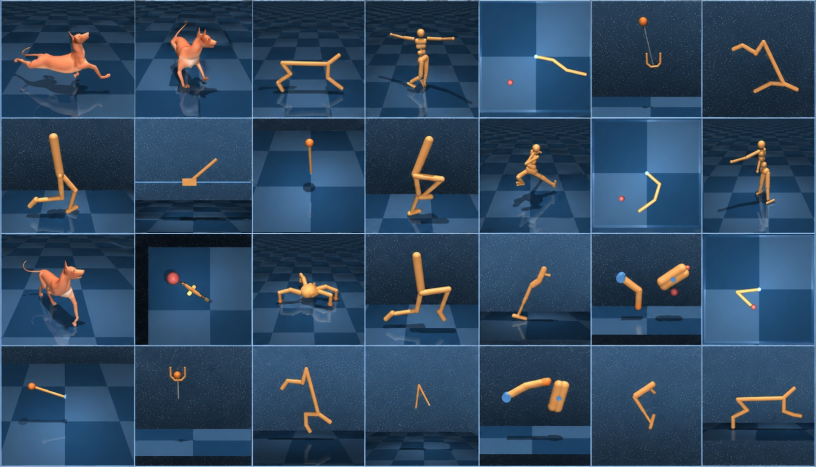
Figure 12 解读:DMControl demo 展示典型低维状态控制任务,包括 locomotion、reacher、cartpole、finger 等,主要考察样本效率和连续控制稳定性。
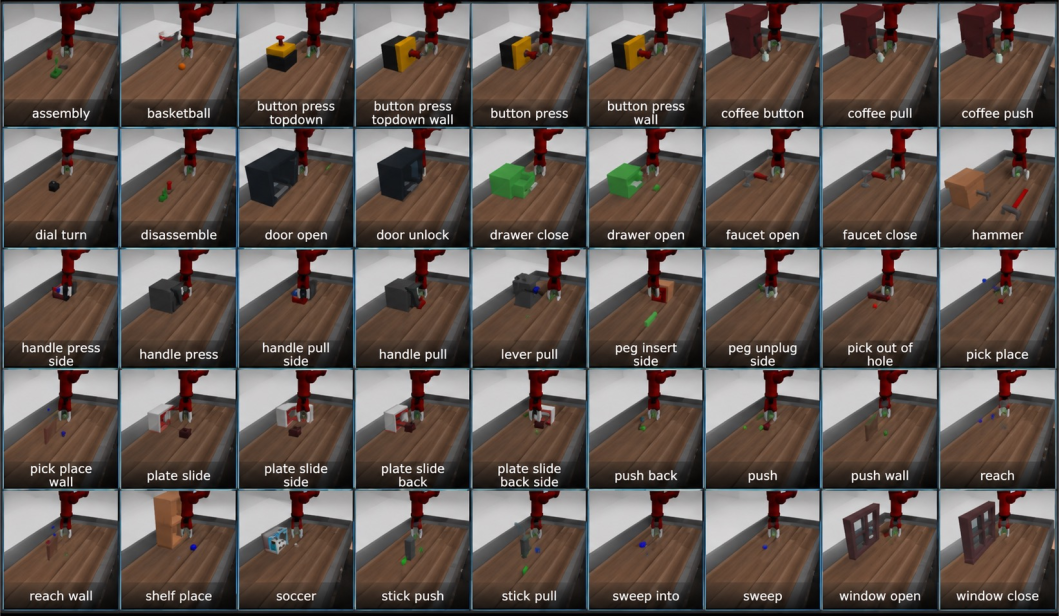
Figure 13 解读:MetaWorld demo 覆盖按钮、抽屉、门、咖啡机、peg insertion 等机器人操作任务;这些任务对 goal-conditioned latent representation 和 sparse success signal 更敏感。
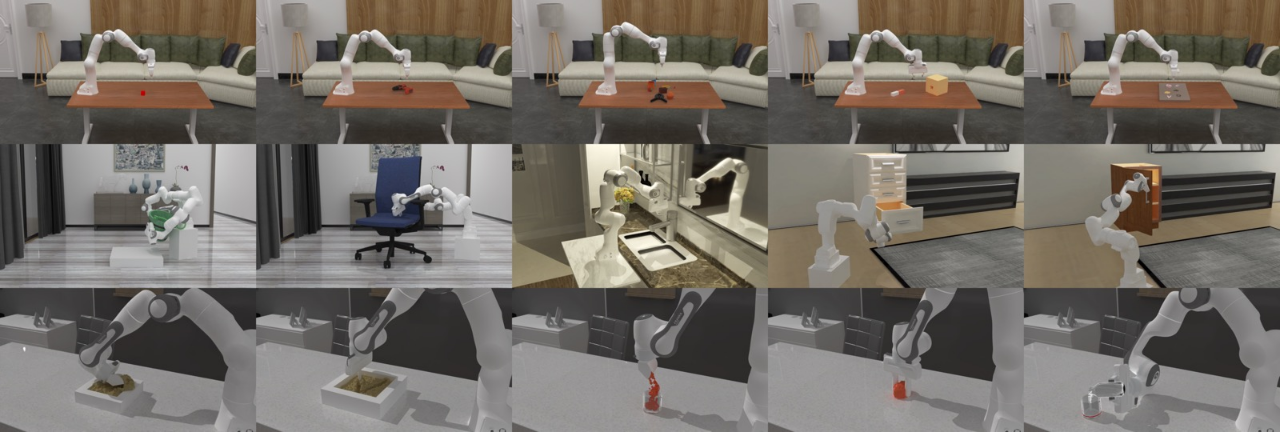
Figure 14 解读:ManiSkill2 demo 包含立方体堆叠、抓取、插接等复杂接触操作,是检验 learned world model 是否能处理 object-centric interaction 的重要补充。
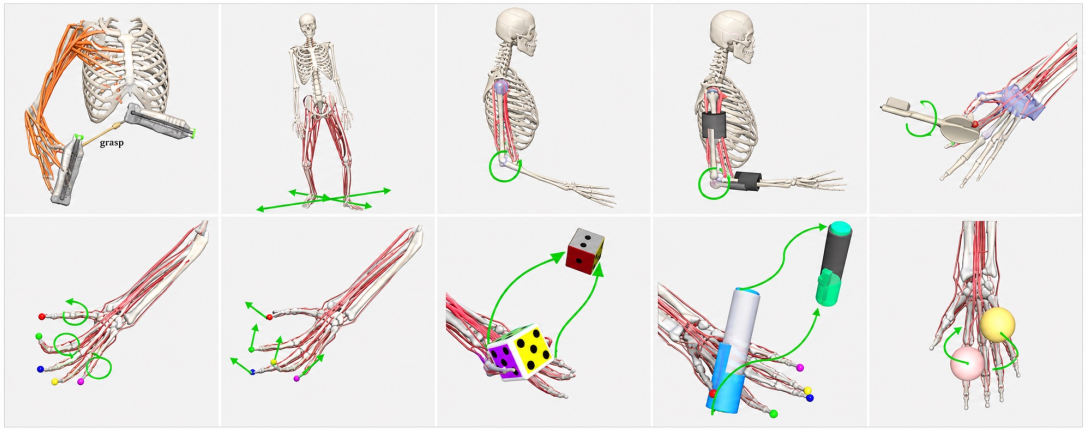
Figure 15 解读:MyoSuite demo 使用肌骨手部控制任务,action/state 维度高且动力学更复杂;它说明论文不是只在常规 MuJoCo locomotion 上验证。
4.2 Baselines and metrics
Baselines 包括 SAC、DreamerV3、TD-MPC、TD-MPC2。Metrics 包括 episode return、success rate、cross TD error、relative action drift、training wall-clock profiling。对 MetaWorld / manipulation 任务,success rate 是关键指标;对 DMControl / MyoSuite / locomotion,episode return 更常用。Action drift 用 log-likelihood ratio 统计 与 的偏移,cross TD error 用来检验 value iteration gap 是否被放大。
4.3 Training config and hardware
论文 Appendix Table 4 给出的默认 6M online model 配置如下;released code 中对应主配置文件是 cfgs/config.yaml,parallel online dispatch 由 cfgs/online_parallel_config.yaml 生成每个任务/seed 的 scripts/train.py 调用。
- Diffusion search:;diffusion steps 为 –(released default
diffusion_steps: 20);Monte Carlo samples ;temperature ;论文表格 ,released defaultcontrastive_eta: 0.01。 - Replay / optimization:buffer capacity ;uniform sampling;batch size online / offline ;Adam;learning rate ;encoder LR 约 ;gradient clip norm 。
- Default 6M architecture:encoder dim ,MLP dim ,latent dim ,task embedding dim , 个 functions,LayerNorm + Mish, dropout 。
- Scaling configs / hardware:multi-task 模型为 M / M / M / M / M;online profiling 在单张 NVIDIA A800-80GB 上测量,offline 10M-step profiling 在单张 NVIDIA H200 上测量。
5. Experimental Results (实验结果)
5.1 Online-from-scratch:总体 benchmark 曲线

Figure 4 解读:该图汇总 online setting 下 DMControl、MetaWorld、ManiSkill2、MyoSuite 的 aggregate performance。论文未把每条曲线的最终数值整理成表格,但图中趋势显示 MBDPO 在多个 benchmark 上相对 TD-MPC2/SAC/DreamerV3 更快达到高 reward / success rate,并且早期训练方差更低。作者把这归因于 diffusion policy refinement 与 value/world model 同步更新,而不是每步临时调用外置 planner。
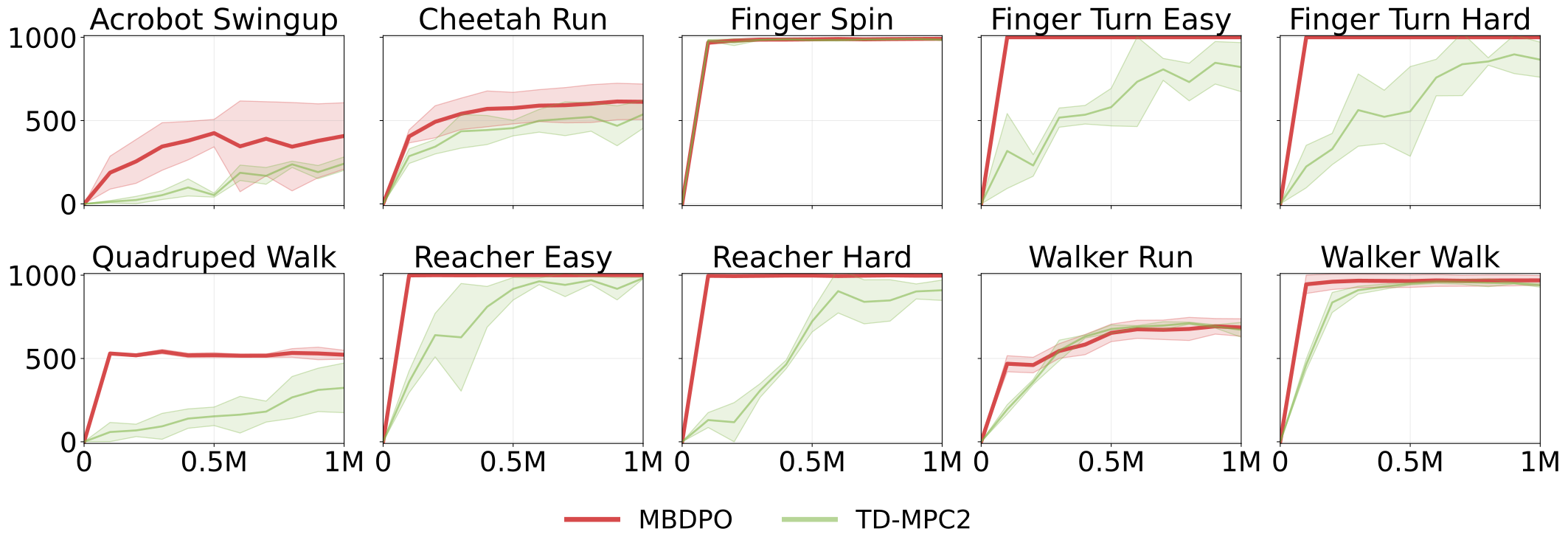
Figure 5 解读:Visual RL 的 个 image-based control tasks 每个用 个 seeds 平均。MBDPO 在高维视觉输入下提升明显,说明 diffusion policy optimization 不只是低维 state-based control 的技巧;当 observation encoder 更难学时,policy drift 约束和 trajectory-level denoising 仍能提供稳定收益。
5.2 Multi-task offline pretraining:scaling behavior
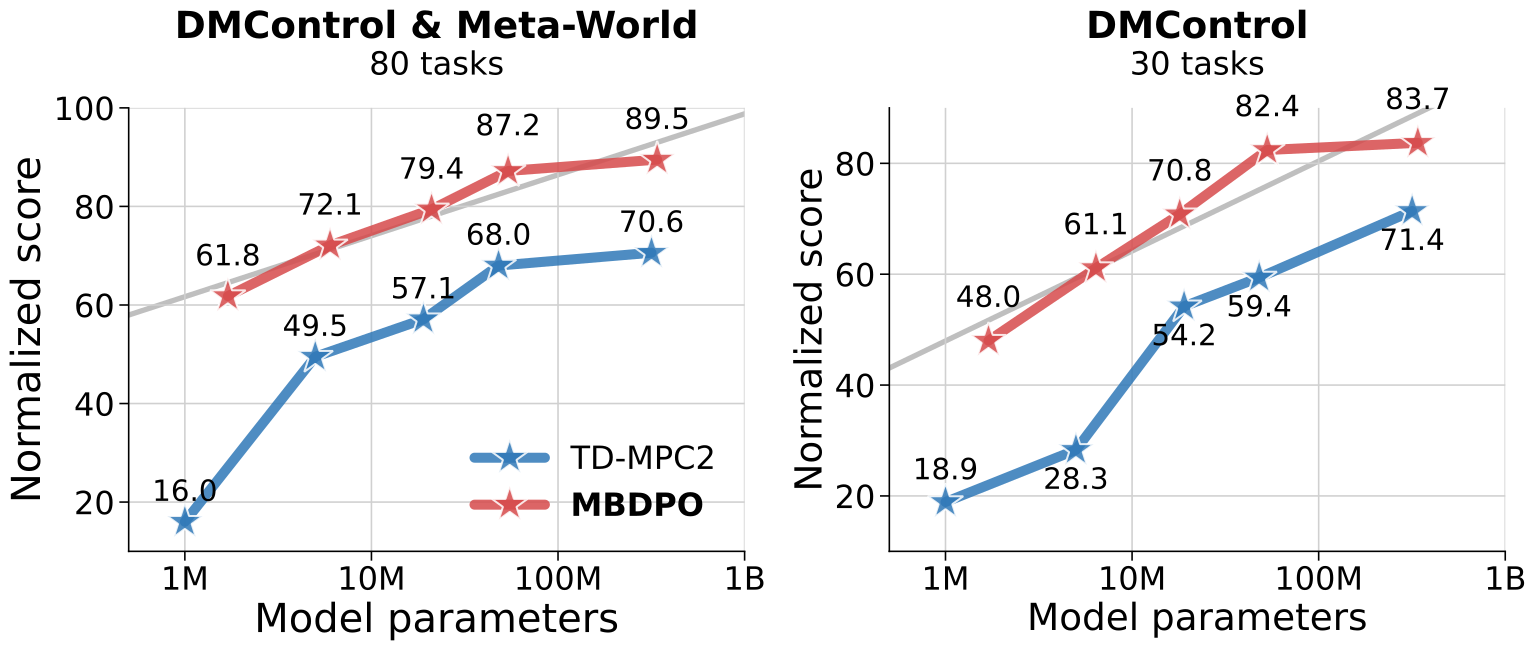
Figure 6 解读:offline pretraining 中,MBDPO 展示从 M 到 M 的 monotonic scaling。小模型上 MBDPO 相对 TD-MPC2 优势更明显,因为 world model 不够准时,MPPI 更容易利用 value overestimation;MBDPO 的 implicit KL / energy constraint 能防止 policy 过度偏离 offline data。随着模型变大,TD-MPC2 也受益于更准确的 world model,因此 gap 缩小;论文还观察到 M 在 tasks 设置下可能受 dataset capacity saturation 影响。
5.3 Offline-to-online:70 tasks pretrain + 10 unseen tasks fine-tune
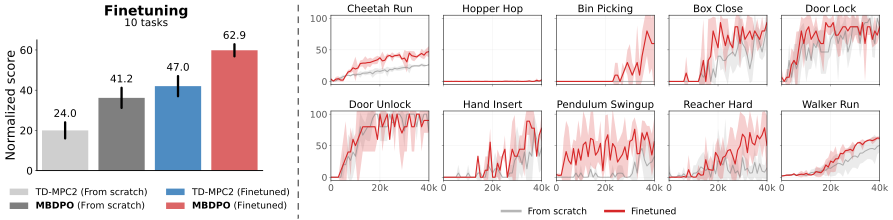
Figure 7 解读:O2O 设置先在 个 tasks 上预训练 generalist agent,再在 个 unseen tasks 上每个只用 interactions fine-tune。右侧曲线表明 fine-tuning 明显优于 from-scratch,说明 MBDPO 学到的 latent representation 和 diffusion policy prior 能快速适配新任务,而不只是 memorizing offline tasks。
5.4 Bottleneck verification:TD error and action drift
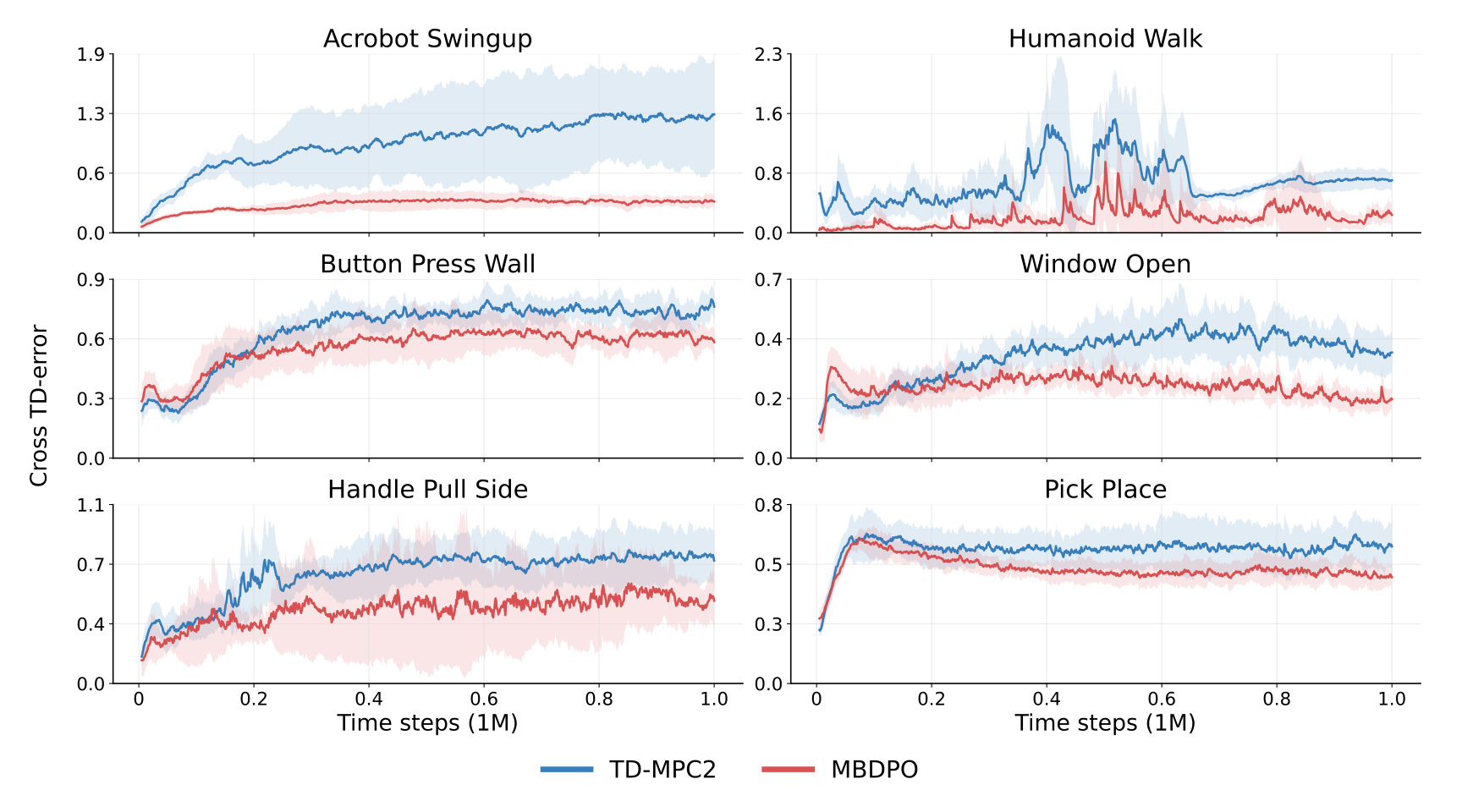
Figure 21 解读:per-task cross TD-error 曲线补充了 Figure 3 左侧的 aggregate 结论。MBDPO 在多个任务上保持较低 TD error,支持论文对 Problem 1 的判断:search/value mismatch 会放大 Bellman operator gap,而 diffusion policy + energy anchor 能缓解这个问题。
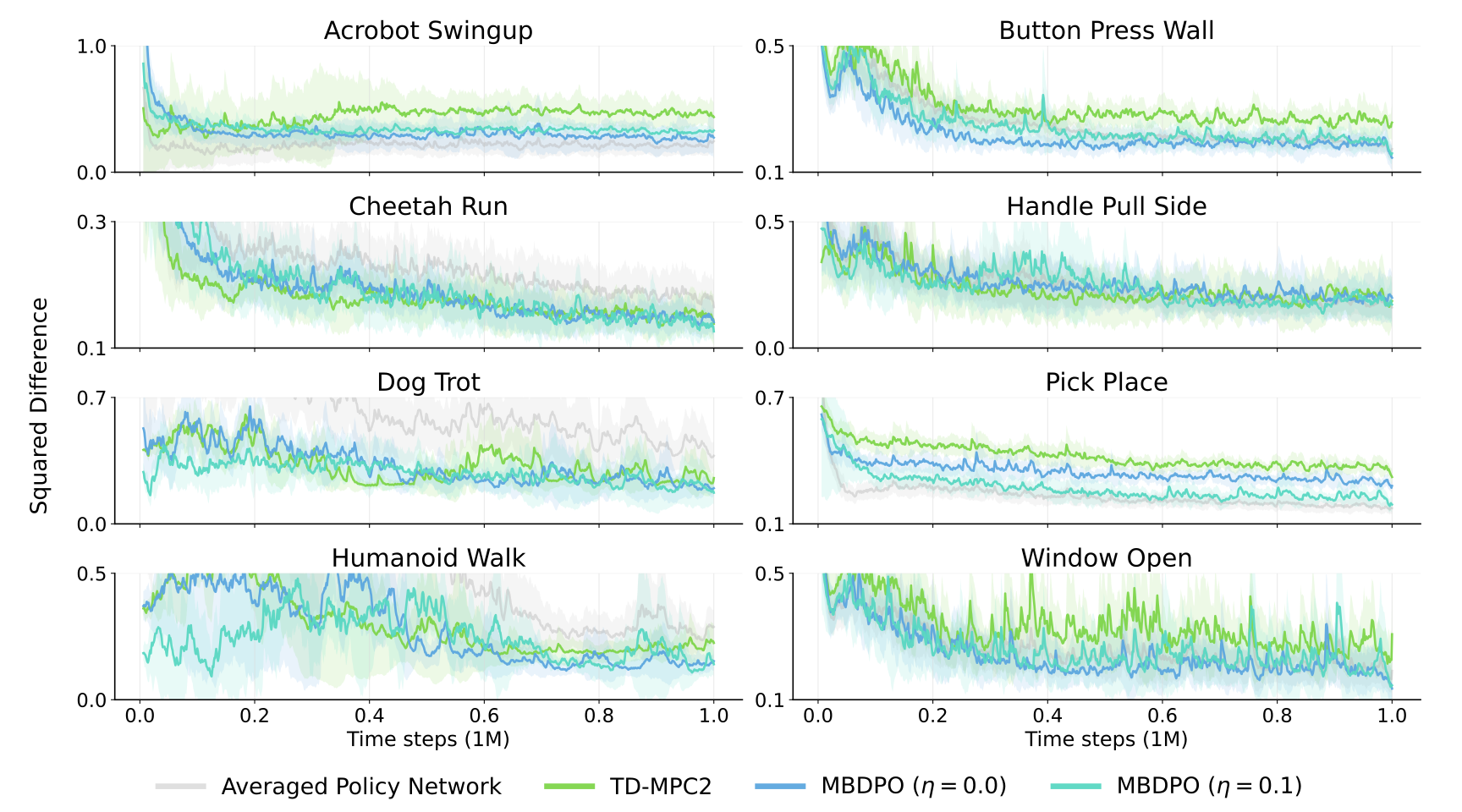
Figure 22 解读:per-task action drift 展示不同 search / policy variants 的漂移分布。MPPI 风格 search drift 更大;带 contrastive energy 的 MBDPO 更接近 behavior / policy distribution。这个实验对应 Problem 2:外置 heuristic search 不能保证稳定 policy improvement。
5.5 Ablations:、Monte Carlo samples、diffusion steps
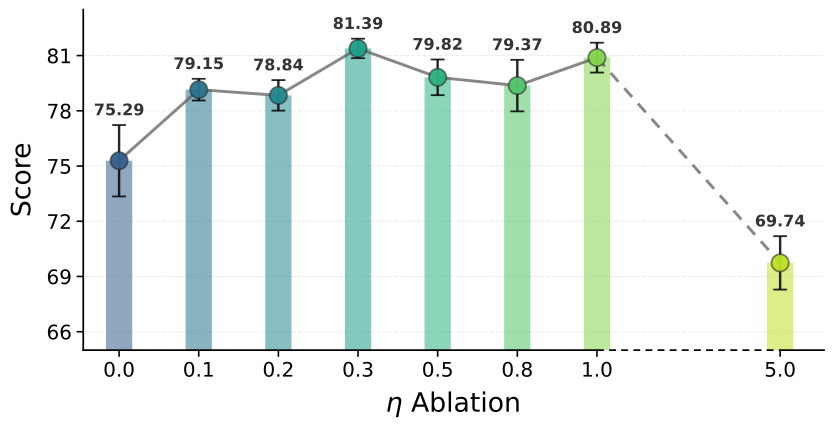
Figure 8 解读: 控制 implicit energy / behavior constraint 的强度。论文报告在 内性能较稳定; 时 performance 低于 ,因为 behavior cloning 约束太强,限制了 policy 探索 high-value regions。一个关键数值是:即使 ,MBDPO 仍优于 TD-MPC2( vs. ),说明 diffusion policy optimization 本身也比 heuristic search 更稳定;但 energy term 对最优表现仍重要。
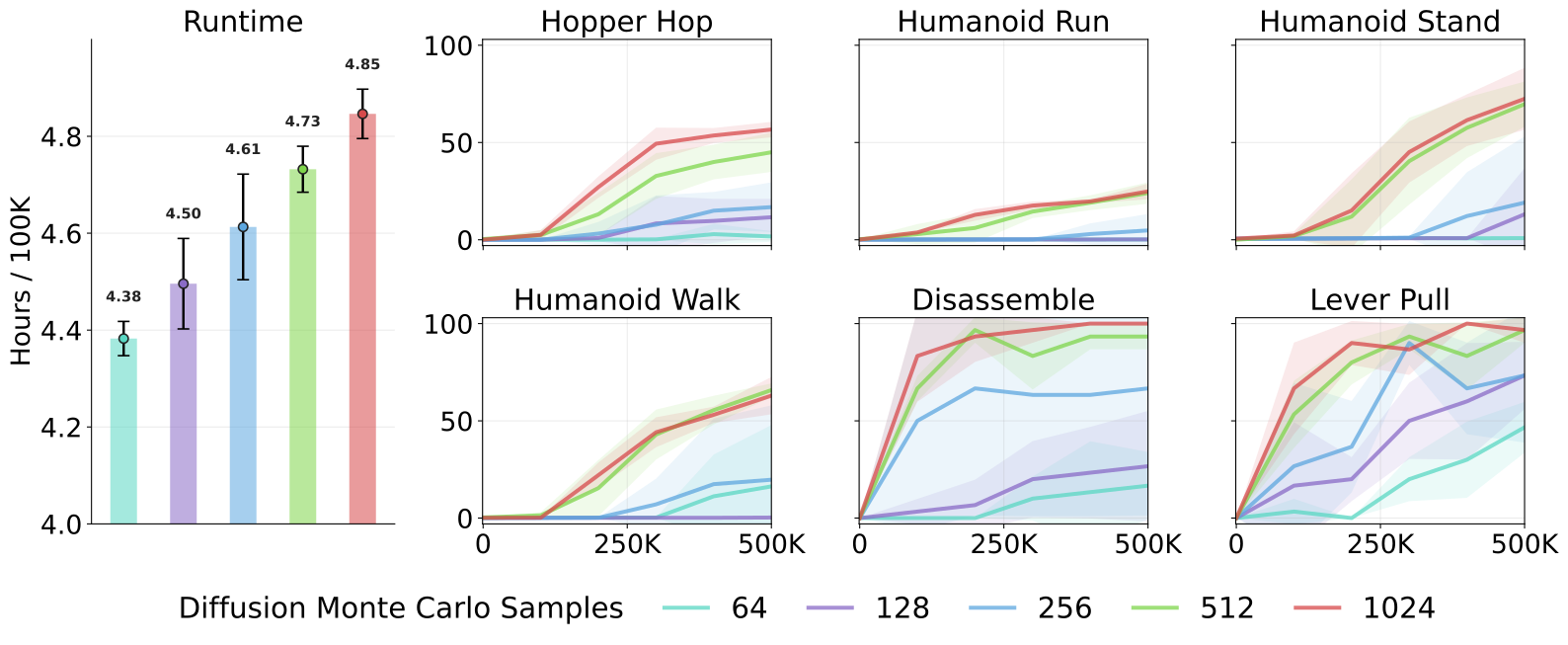
Figure 9 解读:Monte Carlo samples 增大时,return-weighted score estimate 更稳定,性能随之提高。由于 维度可以并行,论文认为增加 对实际 runtime 的边际影响比增加 diffusion steps 更小。
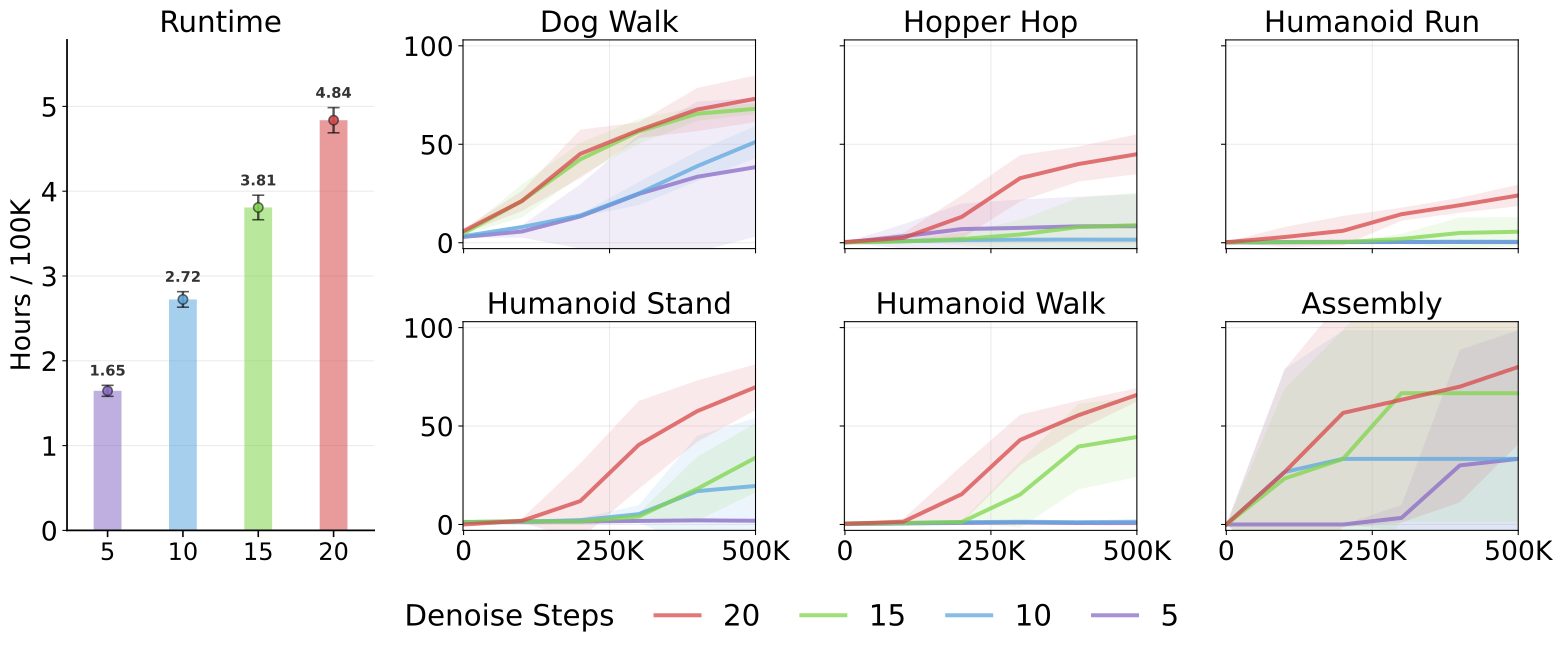
Figure 10 解读:diffusion denoise timesteps 增大时,reverse process 有更多 refinement 机会,因此性能提升;代价是 inference runtime 随 近似线性增长。论文把这个现象和理论中的 error decay 对应起来。
5.6 Latent representation:物理结构是否被学出来
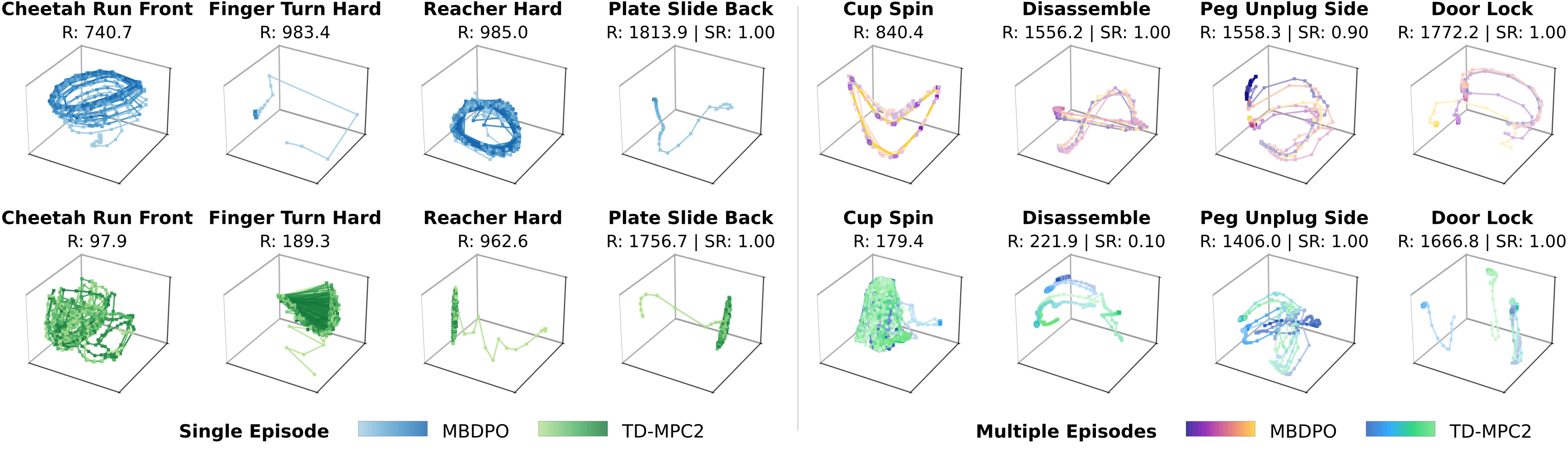
Figure 11 解读:latent trajectory visualization 用 locally linear embedding 展示 controlled latent rollouts。循环任务如 Cheetah Run Front、Reacher Hard、Cup Spin 中,MBDPO 的 latent trajectory 呈现更清晰的 closed-loop manifold;MetaWorld 顺序操作任务中,trajectory 更像从 initial state 到 target goal 的 directed path。TD-MPC2 对比更 noisy,说明 MBDPO 的 joint optimization 不只提高 reward,还让 representation 更符合物理/因果结构。
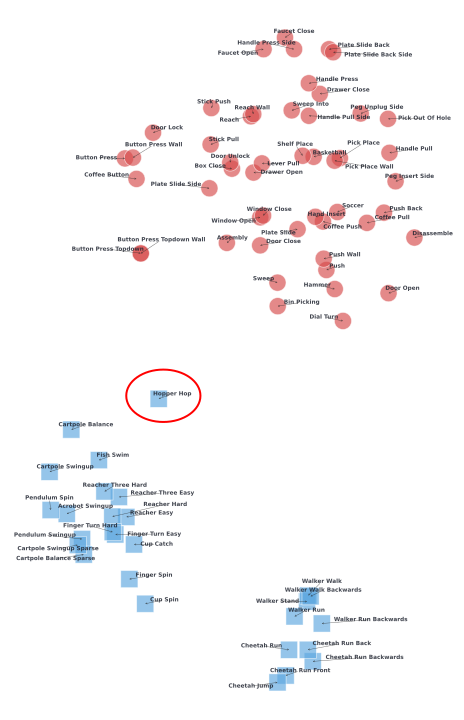
Figure 23 解读:Embedding 可视化说明 representation quality 是 MBDPO 的关键前提。论文特别提到 Hopper Hop 的失败与 latent embedding distribution deviation 有关:如果 representation 本身错位,diffusion policy 即使有 search / score mechanism,也很难在错误 latent space 中采样出有效 action。
5.7 Training efficiency and profiling
论文 Table 1 的 exact profiling numbers 如下。
Online-from-scratch training time(ms / env step,单张 NVIDIA A800-80GB):
| Domain | # tasks | TD-MPC2 | MBDPO |
|---|---|---|---|
| MetaWorld | 50 | ||
| DMControl | 39 | ||
| ManiSkill2 | 5 | ||
| MyoSuite | 10 | ||
| Visual RL | 10 |
Multi-task offline training time(10M steps,hours,单张 NVIDIA H200):
| Parameters | 30 tasks | 80 tasks | 80/30 |
|---|---|---|---|
| 1.7M | |||
| 6M | |||
| 21M | |||
| 54M | |||
| 340M |
这些 profiling 结果说明 MBDPO 的主要额外成本没有吞掉收益:online 单步训练时间和 TD-MPC2 基本同量级,Visual RL 还从 ms 降到 ms;offline 从 tasks 扩到 tasks 的时间倍率为 –,M 时几乎不增加( vs. hours)。
5.8 Limitations and conclusions
作者明确列出三类未来方向。第一,受计算资源限制,MBDPO 尚未扩展到 foundation-model-scale 的参数量,真正的 scaling limit 还未验证。第二,实验集中在 simulated environments;真实机器人部署是检验 transferability 和 robustness 的关键下一步。第三,作者认为更强的 pretrained representation(例如 visual / multimodal foundation encoders)可能进一步改善 latent space,从而推动 large-scale RL within world models。
总体结论是:MBDPO 把 world model、value learning、policy optimization 和 behavior-distribution constraint 合成一个 diffusion policy optimization 框架,缓解了 TD-MPC 系列中 search/value mismatch 导致的 value error amplification 与 action drift。它的优势不仅体现在 online reward 曲线,也体现在 offline scaling、O2O transfer、action drift / TD error diagnostics 和 latent trajectory structure 上。