Reconstruction or Semantics? What Makes a Latent Space Useful for Robotic World Models
Paper: arXiv:2605.06388 Code: chandar-lab/semantic-wm Code reference:
main@3ebaff23(2026-05-12)
1. Motivation (研究动机)
这篇论文问的是一个很具体、但对 robotic world model 很关键的问题:当 action-conditioned video world model 采用 Latent Diffusion Model (LDM) 时,应该在什么样的 latent space 里建模 dynamics?传统视频 LDM 通常默认使用 VAE / autoencoder latent,因为它们重建图像稳定、解码器可靠;但机器人控制并不只关心“下一帧像不像”,还关心 latent 是否保留动作导致的物体位姿、接触、夹爪运动、任务进度与可规划性。
当前方法的核心瓶颈是:visual reconstruction quality 经常被当成 world model quality 的代理指标,但对于机器人策略评估可能是误导性的。一个模型可以生成 SSIM/LPIPS 看起来不错的帧,却把动作差异、接触状态或任务成功/失败边界抹掉;反过来,语义表征可能牺牲部分像素细节,但更容易让 transition model 维护 action-relevant structure。因此,仅用 FID/SSIM/LPIPS 评价 world model,不能回答“这个模型能否替代真实环境去评估/改进 policy”。
论文的目标是把“latent choice”从经验偏好变成受控实验:固定 dataset、history length、action conditioning、DiT transition architecture、optimizer 和 training schedule,只改变 encoder-defined latent interface,即 encoder 、可选 adapter 、decoder path。这样可以隔离 reconstruction-aligned latents 与 semantics-aligned latents 对 robotic world model 的影响。
这个问题值得研究,因为如果 semantic latent space 确实更适合 policy-facing world model,那么后续机器人世界模型不应只沿着更强的 pixel autoencoder 或更大 video generator 去扩展,而应该把 latent representation 设计为 action-controllable、task-informative、visually decodable、planning-useful 的多目标接口。论文最终给出的经验结论是:semantic latents 通常比 reconstruction latents 更适合 policy evaluation 和 planning,即使 reconstruction latents 在某些 pixel-level 指标上持平或更好。
2. Idea (核心思想)
核心洞见:对机器人 world model 来说,“好的 latent space”不是最会重建图像的 latent,而是最能让 action-conditioned transition model 保留任务相关因果结构的 latent。论文把 latent 的 usefulness 分成三条轴:visual fidelity、latent/action recoverability、policy/planning performance,并证明这三条轴并不等价。
关键创新不是提出一个全新的 encoder,而是做了一个受控评测框架:同一个 DiT latent transition model 在 Bridge V2 上从头训练,分别接入 VAE/VA-VAE/Cosmos 这类 reconstruction-aligned latent,以及 V-JEPA 2.1/Web-DINO/SigLIP 2 这类 semantics-aligned latent;对于高维 semantic latent,再测试原生高维 latent 与 S-VAE adapter 压缩到 的版本。这样可以直接比较 latent representation 本身对 robotic dynamics modeling 的作用。
与典型 LDM 选择 VAE latent 的做法不同,本文不把“decoder reconstruction ceiling”当作最终目标;它更接近 DINO-WM / V-JEPA-style semantic world model 的思路,但仍保留 LDM/DiT 的 action-conditioned video generation 形态。因此它回答的是:在同一个 latent diffusion world model 框架内,semantic representation 是否比 reconstruction representation 更适合机器人控制。
3. Method (方法)
3.1 Overall framework:固定 transition,只替换 latent interface
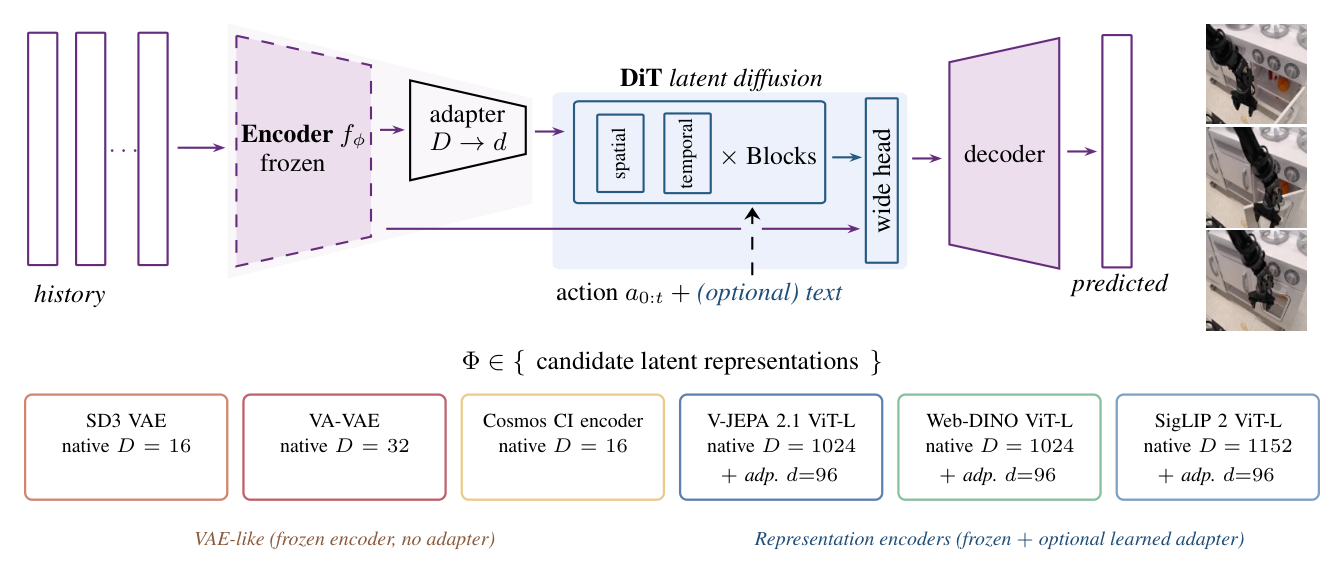
Figure 1 解读:这张图是论文最重要的控制变量设计。左侧 history frames 经过 frozen encoder ,semantic encoder 可再通过 adapter 从原始维度 压缩到 ;中间的 DiT latent diffusion 负责在 latent space 里用 action (论文设置中训练时不使用 language conditioning)预测未来 latent;右侧 decoder 只负责把 latent rollout 显示成像素帧。底部的候选 latent representations 明确分成 VAE-like reconstruction encoders 与 representation encoders,论文真正比较的是“latent interface”,而不是换 transition backbone 或换数据。
形式化地,数据为 其中 是 RGB observation, 是连续机器人动作, 是语言指令, 是 episode success label。目标 predictive distribution 是 论文在 latent space 中建模这一分布: 并训练 transition model 预测 latent 再由 decoder 映射回像素: 直觉上,decoder 只是把 world model 的内部状态可视化;如果 latent dynamics 已经丢失动作结构,即使 decoder 生成了漂亮图片,也不能支持 policy evaluation。反过来,如果 semantic latent 把动作相关几何结构变得线性可读,transition model 更容易学习“动作如何改变状态”,policy-in-the-loop 指标也更可能改善。
3.2 Latent spaces:reconstruction-aligned vs semantics-aligned
论文比较两类 frozen encoder:
- Reconstruction-aligned encoders:SD3 VAE ()、VA-VAE ()、Cosmos CI encoder ()。这些 latent 主要为 pixel reconstruction/decoding 服务,adapter 为 identity,即 。
- Semantics-aligned encoders:V-JEPA 2.1 ViT-L ()、Web-DINO ViT-L / WebSSL ()、SigLIP 2 ViT-L ()。它们本身来自 representation learning / vision-language pretraining,不以像素重建为唯一目标。
- Optional S-VAE adapter:对 semantic encoders,论文同时测试 native high-dimensional latents 与 compact latents。S-VAE adapter 把 ,其中 ,并配套一个 lightweight pixel decoder。
Adapter 的训练目标是既保留 semantic feature fidelity,又让 compact latent 可解码到像素: 其中 , 是沿 spatial-token axis 的 1-D FFT magnitude loss,pixel loss 包含 MSE、LPIPS 与 。论文采用 ,adapter 训练中 在前 20% optimizer steps 线性 warmup 到 ,,。
3.3 DiT transition model 与 flow matching objective
所有 transition models 都是 DiT,训练于 Bridge V2,使用 flow matching。每个 DiT layer 把 attention 分解为 frame 内 spatial block 与跨时间 causal temporal block。论文设置为每隔一帧采样, frames, history frames,预测 8 个 future frames;训练 DiT 时不使用 language instruction conditioning。推理时模型用 10-frame sliding context autoregressively rollout。
对于 future frame ,采样 与 ,在 data latent 与 noise 之间线性插值: DiT 预测 velocity field: 目标 velocity 为: 因此训练损失是: 历史帧作为 clean context,不作为 prediction target;论文还对 history latent 加小 Gaussian augmentation,降低模型对完美 teacher-forced context 的过拟合。
一个重要工程细节是 token 数被控制住:DiT-L 使用 24 layers、hidden size 1024、16 heads;VAE latent 为 且 patch size ,semantic/Cosmos/VA-VAE 使用 token grid 且 ,所以所有模型每帧 token 数都是: 这解释了为什么 high-dimensional semantic latent 不会显著增加 DiT block compute:Transformer 主体看到的 token count 与 hidden width 不变,latent channel dimension 主要影响 input/output projections。对于 native high-dimensional semantic latents,论文使用 shallow-wide DDT head:backbone 不变,readout width 为 2048,给 final patch prediction 层前增加轻量 spatial refinement。
3.4 Evaluation suite:三条轴而不是单一 pixel metric
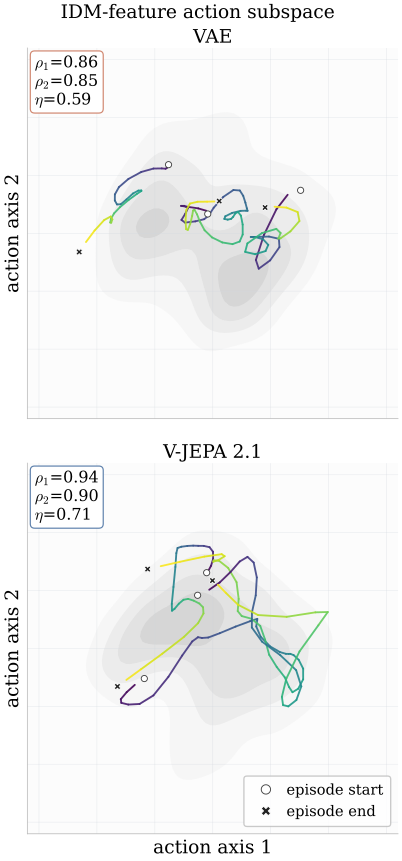
Figure 2 解读:这张图把 encoder latent 诱导出的 action trajectory geometry 投影到与真实动作最相关的 top-2 canonical-correlation directions。VAE 与 V-JEPA 的轨迹形状不同,说明 latent space 本身会改变动作变化是否“显式可读”。这也是论文后续使用 IDM Pearson 、CEM error、success probe 的动机:要测 latent 是否保留控制相关结构,而不是只看像素。
论文的 evaluation 被设计成三组:
- Latent representation quality:训练 Inverse Dynamics Model (IDM),从 encoder latent pairs 预测 action chunk ,评估 的 Pearson ;再训练 success classifier,从 SOAR latent trajectory 与语言指令预测 success/failure。
- Pixel fidelity and scene geometry:报告 PSNR、SSIM、LPIPS、FID、FVD、temporal LPIPS、PCK coverage,以及 World Arena 风格的 image/aesthetic/subject consistency/depth/motion scores。
- Planning and policy performance:用 CEM 在 latent model 中优化 action,报告 one-step / multi-step controllability error;把 Open-VLA policy rollout 放进 world model,用多个 VLM 判断 success,并测试 OOD distractor 与 OOD instruction robustness。
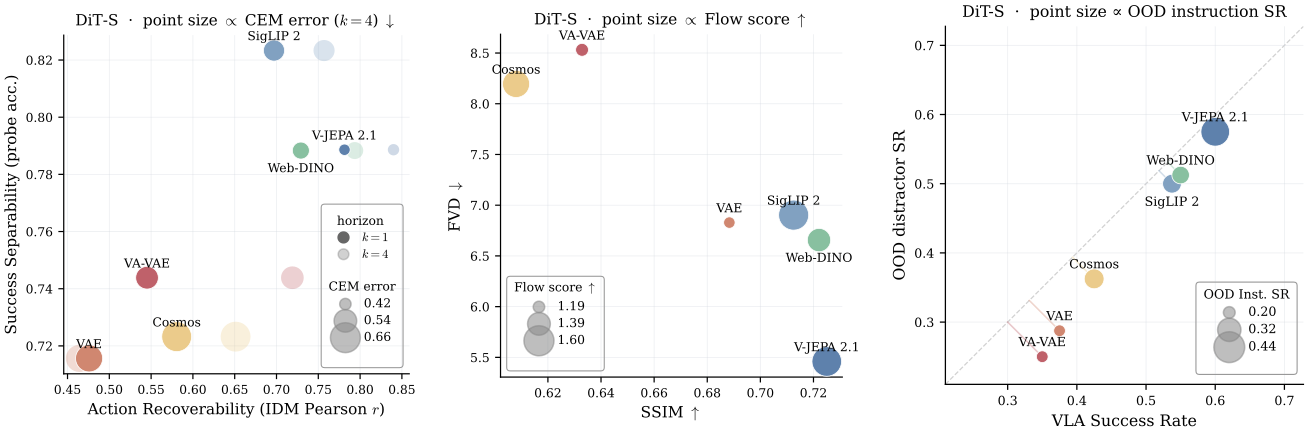
Figure 3a–3c 解读:三个子图共同说明 latent choice 的 trade-off。Figure 3a 中 semantic encoders 在 action recoverability、task-success separability、CEM planning error 上更有利;Figure 3b 说明 low-level visual fidelity 与 downstream performance 不是同一个方向;Figure 3c 则显示 policy-in-the-loop 与 OOD robustness 更偏向 semantic latents。这个图是论文结论的压缩版:视觉质量是必要但不充分的,latent dynamics 的 action/task structure 更关键。
3.5 Implementation-grounded pseudocode
下面伪代码按 released code main@3ebaff23 的结构重写,不是直接照搬论文公式;代码参考以 main@3ebaff23 为准。
3.5.1 Encoder + optional adapter latent interface
import torch

@torch.no_grad()
def encode_latent(autoencoder, adapter, video, use_adapter: bool):
    # video: [B, T, C, H, W] from Bridge V2 clips
    z = autoencoder.encode(video)              # frozen encoder f_phi(o_t)
    if use_adapter:
        z_tilde = adapter.encode(z)            # S-VAE / MLP / identity adapter alpha_psi(z)
    else:
        z_tilde = z
    return z, z_tilde
3.5.2 Flow-matching DiT world-model update
import torch
import torch.nn.functional as F

def flow_matching_loss(model, latents, actions, num_history, sample_t):
    # latents: [B, T, H, W, C] after encoder/adapter
    history = latents[:, :num_history]
    future = latents[:, num_history:]

    # Code path: src/training/diffusion.py::FlowMatching.loss_fn
    t_future = sample_t(future.shape[0], future.shape[1], future.dtype, future.device)
    noise = torch.randn_like(future)
    x_t_future = torch.lerp(future, noise, t_future.view(future.shape[0], future.shape[1], 1, 1, 1))

    # History frames are clean context; code may add small history_aug during training.
    x_t = torch.cat([history, x_t_future], dim=1)
    t_history = torch.zeros(latents.shape[0], num_history, dtype=latents.dtype, device=latents.device)
    t = torch.cat([t_history, t_future], dim=1)

    pred_v = model(x_t, t, actions)
    target_v = noise - future
    return F.mse_loss(pred_v[:, num_history:], target_v)
3.5.3 DiT forward pass with action conditioning
import torch

class ActionConditionedDiT(torch.nn.Module):
    def forward(self, x_t, t, action):
        # Code path: src/models/model.py::DiT.forward
        x = self.patchify(x_t)                         # Conv2d patch projection per frame
        time_cond = self.timestep_mlp(self.timestep_embedding(t))
        action_cond = self.action_embedder(action)     # action dropout may replace action by null action
        cond = time_cond + action_cond

        for block in self.blocks:
            x = block(x, cond, num_views=self.num_views)  # spatial block + temporal block

        if self.wide_head:
            head_cond = self.s_projector(torch.nn.functional.silu(x + time_cond[:, :, None, None]))
            x = self.head_final_layer(head_cond, head_cond.mean(dim=(2, 3)))
        else:
            x = self.final_layer(x, cond)
        return self.unpatchify(x)
3.5.4 IDM / success-probe evaluation logic
import torch

@torch.no_grad()
def evaluate_latent_action_structure(idm, success_probe, encoder, world_model, batch):
    obs, actions, instruction, success = batch
    z_real = encoder.encode(obs)
    z_world = world_model.rollout(z_real[:, :2], actions)  # H=2 context in paper setup

    pred_action_real = idm(z_real)
    pred_action_world = idm(z_world)
    idm_r_real = pearson_r(pred_action_real, actions)
    idm_r_world = pearson_r(pred_action_world, actions)

    success_logits_real = success_probe(z_real, instruction)
    success_logits_world = success_probe(z_world, instruction)
    return {
        "idm_real": idm_r_real,
        "idm_world": idm_r_world,
        "success_real_acc": accuracy(success_logits_real, success),
        "success_world_acc": accuracy(success_logits_world, success),
    }
Code reference:
main@3ebaff23(2026-05-12) — pseudocode and mapping based on this commit
| Paper Concept | Source File | Key Class/Function |
|---|---|---|
| DiT latent transition model | src/models/model.py | DiT, Block, DiTBlock, Attention, FinalLayer |
| Flow matching / DDPM diffusion objective | src/training/diffusion.py | FlowMatching.loss_fn, Diffusion.loss_fn, generate |
| World-model training loop | src/training/train.py | train_wm, create_autoencoder, create_adapter, EMA/checkpoint utilities |
| S-VAE / MLP / identity adapter | src/models/adapters.py | SVAEAdapter, MLPAdapter, IdentityAdapter, kl_divergence, create_adapter |
| Frozen encoder abstraction | src/models/base_autoencoder.py, src/models/encoders/* | BaseAutoencoder, encoder_config_from_args, create_autoencoder |
| Pixel decoder for semantic latents | src/models/pixel_decoder.py | LDM-style decoder modules used by adapter validation/eval |
| IDM / latent controllability evaluation | src/evaluation/controllability.py, src/evaluation/probe.py | action-recovery and success-probe evaluators |
| Visual / policy evaluation | src/evaluation/evaluate.py, src/evaluation/metrics.py | reconstruction ceilings, rollout metrics, plots |
| Launch configuration | src/launch.py, src/launch_adapter.py, src/launch_eval.py | CLI args for DiT/adapters/evaluation |
论文公式与 released code 实现差异:论文正文/附录说明 Bridge V2 动作为 7 DoF,并且 world-model training 使用 7-dimensional actions;released code 的 src/launch.py 默认 --action_dim=10,src/launch_adapter.py 也默认 --action_dim=10。如果要复现实验,应显式传入 paper setting(例如 --action_dim 7),不能直接把 launch script 默认值当成论文配置。另一个差异是代码保留 ddpm 与 flow_matching 两条 objective path,而论文报告实验使用 flow matching;笔记中的伪代码按 FlowMatching 路径写。
4. Experimental Setup (实验设置)
4.1 Datasets and evaluation episodes
- Bridge V2:主要 world-model 训练与评估数据集,论文描述为约 条 WidowX 250 demonstrations,覆盖 13 个 task families。每个 episode 包含 RGB observations、7 DoF end-effector actions(position、rotation、gripper)和 language instruction。
- SOAR:用于 trajectory success classifier,论文描述为约 条 WidowX 250 success/failure class episodes,class split 约为 。
- Policy-facing/OOD evaluation subset:VLA/OOD 评估使用共享 task episodes;附录统计检验提到 20 shared task episodes,OOD distractor 设置从 10 个 task 中等比例按难度抽样,并用 ChatGPT Images 2.0 加入 distractor objects。
4.2 Baselines / compared latent interfaces
| Family | Encoders / latent variants |
|---|---|
| Reconstruction-aligned | SD3 VAE (), VA-VAE (), Cosmos CI encoder () |
| Semantics-aligned native | V-JEPA 2.1 (), Web-DINO / WebSSL (), SigLIP 2 () |
| Semantics-aligned compact | V-JEPA 2.1, Web-DINO, SigLIP 2 via S-VAE adapter |
| Model scale | DiT-S, DiT-B, DiT-L |
4.3 Metrics
| Axis | Metrics | Meaning |
|---|---|---|
| Visual fidelity | PSNR, SSIM, LPIPS, FID, FVD, t-LPIPS | 图像/视频重建质量与 temporal consistency;PSNR/SSIM 越高越好,LPIPS/FID/FVD/t-LPIPS 越低越好 |
| Geometry / motion | PCK coverage, depth AbsRel, dynamic degree, flow score | 检查点跟踪、深度/运动质量,避免只看静态像素 |
| Latent action structure | IDM Pearson at | 从 latent pair 预测 action chunk,越高表示 latent 更保留 action-relevant geometry |
| Task semantics | success classifier accuracy | latent trajectory 是否保留成功/失败可分性 |
| Policy/planning | VLA success rate, Borda rank, OOD SR, CEM error | world model 是否能支持 Open-VLA rollout 评估、OOD robustness 与 action planning |
4.4 Training configuration
论文报告的 world-model training 使用 Bridge V2 clips resized to , frames, history frames,frame skip 2,7-dimensional actions。单视角 runs 使用 4 H100 GPUs 的 DDP,DiT-S per-GPU batch size 16,DiT-L per-GPU batch size 5,bfloat16 autocast 和 torch.compile。Optimizer 是 AdamW,LR ,betas ,weight decay ,,global grad clipping 1.0,EMA decay 0.9995;LR schedule 为 3 epochs linear warmup 后 cosine decay 到 base LR 的 ,总共 100 epochs。
Adapter training 中 encoder 全程 frozen;单视角 adapter 在 Bridge V2 上训练 200 epochs,per-GPU batch size 16,bfloat16 autocast。Optimizer 是 AdamW,betas ,weight decay ;base adapter LR ,pixel decoder 联合训练时使用 LR multiplier;multi-view adapter fine-tuning 使用 LR 。LPIPS 启用时在 50k-sample perceptual warmup 后用 float32 计算。
DiT size presets:DiT-S hidden size 384、depth 12、heads 6;DiT-B hidden size 768、depth 12、heads 12;DiT-L hidden size 1024、depth 24、heads 16;head dim 均为 64。训练时间大致为 DiT-S 每个 run 6–7 小时(4 H100),DiT-L 约 34 小时,adapter/pixel-decoder 约 55 小时。
5. Experimental Results (实验结果)
5.1 Policy-facing metrics:semantic latents 优势最明显
| Encoder | VLA SR↑ | Borda rank↓ | PCK↑ | OOD distract.↑ | OOD instr.↑ | CEM k=1↓ | CEM k=4↓ |
|---|---|---|---|---|---|---|---|
| VAE | 0.169 | 25 | 0.719 | 0.287 | 0.200 | 0.111 | 0.612 |
| VA-VAE | 0.175 | 23 | 0.715 | 0.250 | 0.200 | 0.097 | 0.543 |
| Cosmos | 0.244 | 16 | 0.707 | 0.362 | 0.275 | 0.112 | 0.661 |
| V-JEPA 2.1 | 0.344 | 6 | 0.735 | 0.575 | 0.400 | 0.084 | 0.424 |
| V-JEPA 2.1 | 0.362 | 8 | 0.735 | 0.537 | 0.250 | 0.089 | 0.548 |
| Web-DINO | 0.212 | 21 | 0.735 | 0.512 | 0.250 | 0.090 | 0.474 |
| Web-DINO | 0.300 | 11 | 0.732 | 0.512 | 0.275 | 0.090 | 0.531 |
| SigLIP 2 | 0.325 | 9 | 0.730 | 0.500 | 0.263 | 0.082 | 0.523 |
| SigLIP 2 | 0.331 | 15 | 0.731 | 0.588 | 0.312 | 0.086 | 0.537 |
最直接的结论是:semantic latent family 在 policy-facing metrics 上整体领先。V-JEPA 2.1 的 VLA SR 最高(0.362),SigLIP 2 的 one-step CEM error 最低(0.082),SigLIP 2 的 OOD distractor SR 最高(0.588)。相比之下,VAE/VA-VAE 虽然 reconstruction-friendly,但 VLA SR 只有 0.169/0.175,Borda rank 也更差。
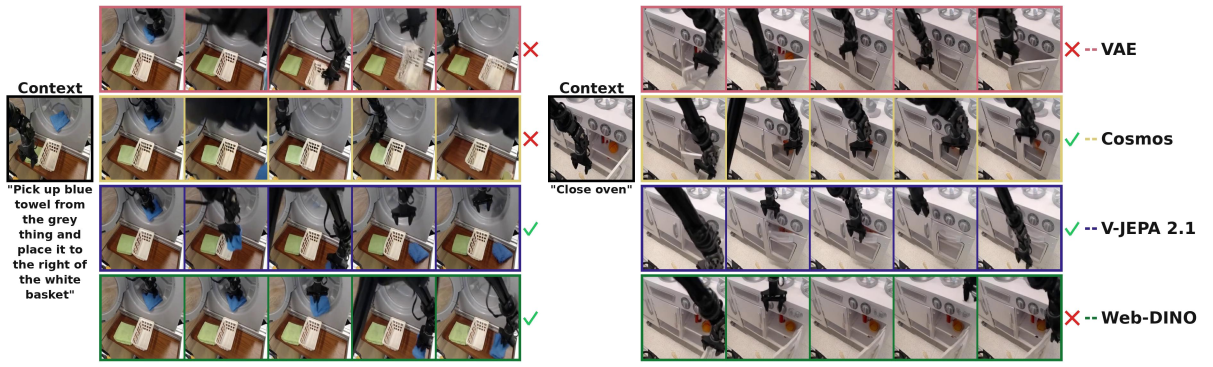
Figure 4 解读:这张 qualitative comparison 展示同一 Open-VLA policy 在不同 world model rollout 中的成败差异。绿色/红色标记来自 InternVL 3.5 VLM 对轨迹成功与失败的判定。它直观说明 pixel rollout 看起来不一定完全崩坏,但 policy 是否完成任务仍会因 latent dynamics 是否保留 action/task structure 而变化。
统计检验也支持 family-level 结论:semantic encoders 相对 reconstruction encoders 在 VLA SR 上高 ,95% paired bootstrap interval 为 ,one-sided sign-flip test ;在 OOD SR 上高 ,95% interval ,;在 CEM one-step error 上低 ,interval ,。
5.2 Visual fidelity 不是 downstream success 的充分条件
| Encoder | SSIM↑ | LPIPS↓ | FID↓ | FVD↓ | t-LPIPS↓ | JEPA sim.↑ | Subject consist.↑ |
|---|---|---|---|---|---|---|---|
| VAE | 0.688 | 0.218 | 17.428 | 6.829 | 0.0264 | 0.871 | 0.810 |
| VA-VAE | 0.633 | 0.226 | 15.488 | 8.531 | 0.0253 | 0.783 | 0.817 |
| Cosmos | 0.608 | 0.245 | 16.947 | 8.195 | 0.0223 | 0.517 | 0.793 |
| V-JEPA 2.1 | 0.725 | 0.176 | 6.771 | 5.459 | 0.0197 | 0.929 | 0.841 |
| V-JEPA 2.1 | 0.729 | 0.179 | 6.302 | 5.224 | 0.0212 | 0.928 | 0.841 |
| Web-DINO | 0.722 | 0.199 | 7.626 | 6.656 | 0.0234 | 0.938 | 0.849 |
| Web-DINO | 0.728 | 0.181 | 5.998 | 5.510 | 0.0195 | 0.944 | 0.841 |
| SigLIP 2 | 0.738 | 0.179 | 6.881 | 6.005 | 0.0223 | 0.938 | 0.843 |
这些数值反而削弱了“VAE 重建最好所以最适合 world model”的直觉。DiT-S 下,多个 semantic latent 在 SSIM、LPIPS、FID、FVD 上不差甚至更强;但论文的重点不是 semantic 一定在所有 visual metrics 上赢,而是 visual metrics 无法解释 policy-facing metrics。比如 VAE 的 pixel-level 指标可以接受,但 CEM、VLA SR、OOD SR 更弱。
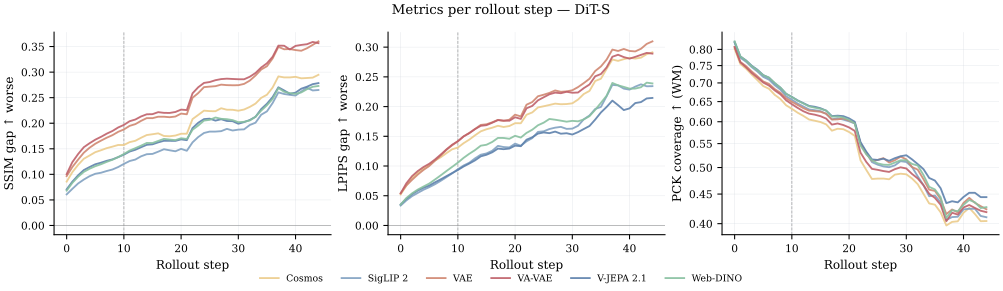
Figure 5 解读:这张 rollout gap 曲线展示长 horizon 下 compounding error 如何逐步扩大。所有模型随 rollout step 增长都会出现 SSIM/LPIPS degradation,但 semantic latent(如 SigLIP 2、V-JEPA 2.1、Web-DINO)在超过训练时 10-frame horizon 后仍然更能保持若干 motion/semantic 指标。它支持论文关于“短期像素重建不足以预测长期 action-faithful rollout”的观点。
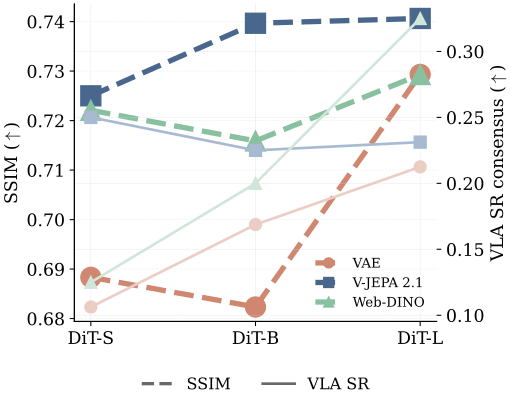
Figure 6 解读:这张图按 DiT size 分组展示 SSIM 等指标随模型规模变化的情况。扩大 DiT 可以缩小部分 visual/policy gap,尤其让 VAE/Cosmos 的视觉质量受益,但论文指出 action-centric gaps 没有完全消失:在 DiT-L 下,VAE 与 Cosmos 仍在 CEM、IDM 、success classifier 上落后于 semantic encoders。
5.3 Latent action recoverability:semantic latents 更容易恢复动作
| Encoder | IDM Enc. ↑ | IDM Enc. ↑ | IDM WM ↑ | IDM WM ↑ | Success Enc.↑ | Success WM↑ |
|---|---|---|---|---|---|---|
| VAE | 0.507 | 0.478 | 0.476 | 0.464 | 0.835 | 0.716 |
| VA-VAE | 0.549 | 0.744 | 0.545 | 0.719 | 0.868 | 0.744 |
| Cosmos | 0.626 | 0.673 | 0.581 | 0.651 | 0.851 | 0.723 |
| V-JEPA 2.1 | 0.829 | 0.865 | 0.781 | 0.840 | 0.905 | 0.789 |
| Web-DINO | 0.820 | 0.845 | 0.729 | 0.794 | 0.906 | 0.788 |
| SigLIP 2 | 0.772 | 0.793 | 0.697 | 0.757 | 0.903 | 0.823 |
IDM 结果是整篇论文最能解释 policy-facing gains 的证据:semantic latent 的 action-recovery Pearson 显著更高,且从 real encoder latent 到 generated WM latent 的 degradation 较可控。V-JEPA 2.1 在 IDM Enc./WM 的 上都最高;SigLIP 2 在 generated latent success classifier 上最高(0.823)。这说明 semantic representation 不是只让图像看起来更好,而是让动作导致的状态变化在 latent geometry 中更可恢复。
5.4 Adapter / multi-view / qualitative robustness
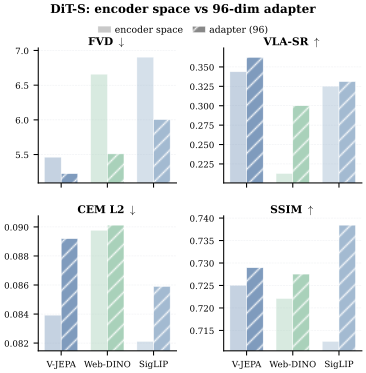
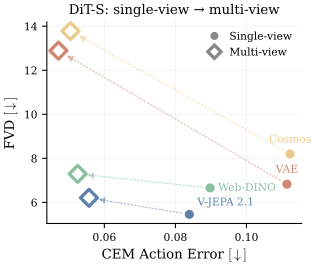
Figure 7 解读:左图对比 native semantic latent 与 adapter-compressed latent,右图展示 single-view 与 multi-view 设置。adapter 往往改善高层 task completion / denoising 类指标,但可能伤害需要精细 action geometry 的 CEM/OOD/PCK 类指标;multi-view 可以改善几何与 controllability,但代价是单样本更重、batch size 更低、adapter fine-tuning 更复杂。
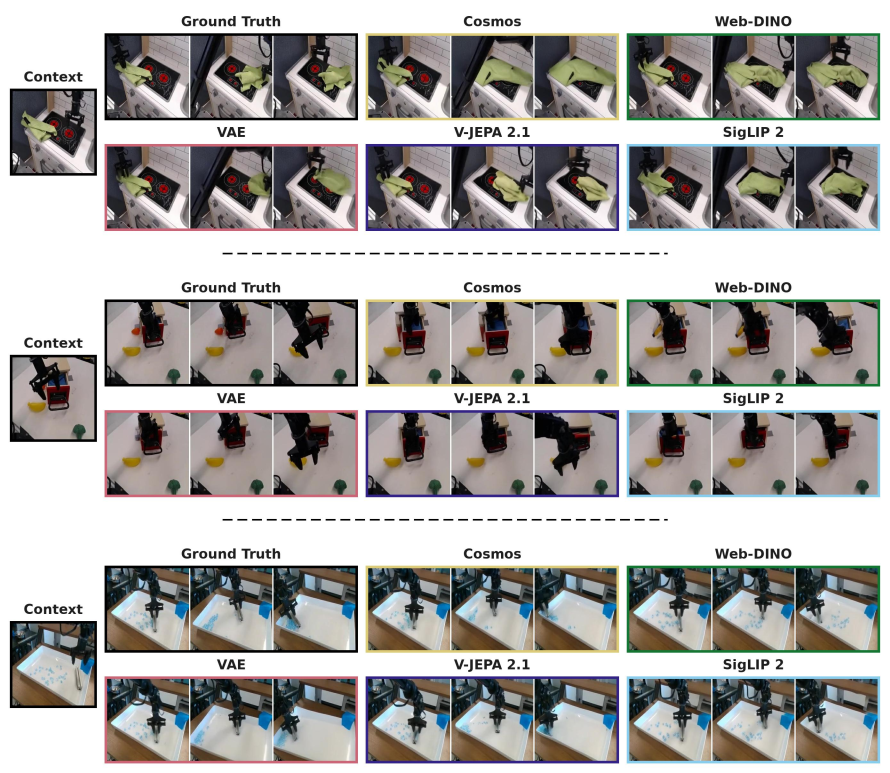
Figure 8 解读:这个 qualitative rollout comparison 展示多种 episode 上不同 latent interface 的生成帧。它帮助读者看到:一些失败并不是纯粹的低清晰度问题,而是 rollout 中物体状态、夹爪接触或任务进展偏离了真实动作意图。
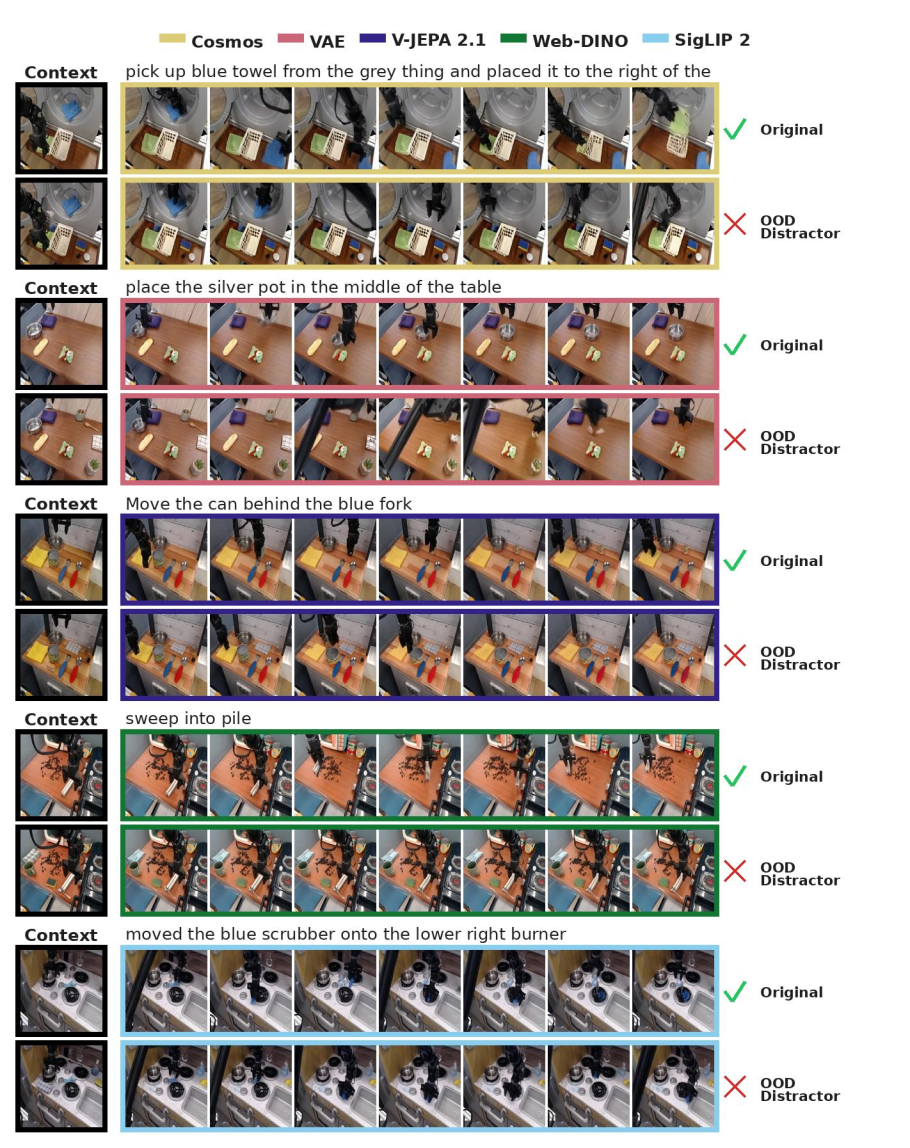
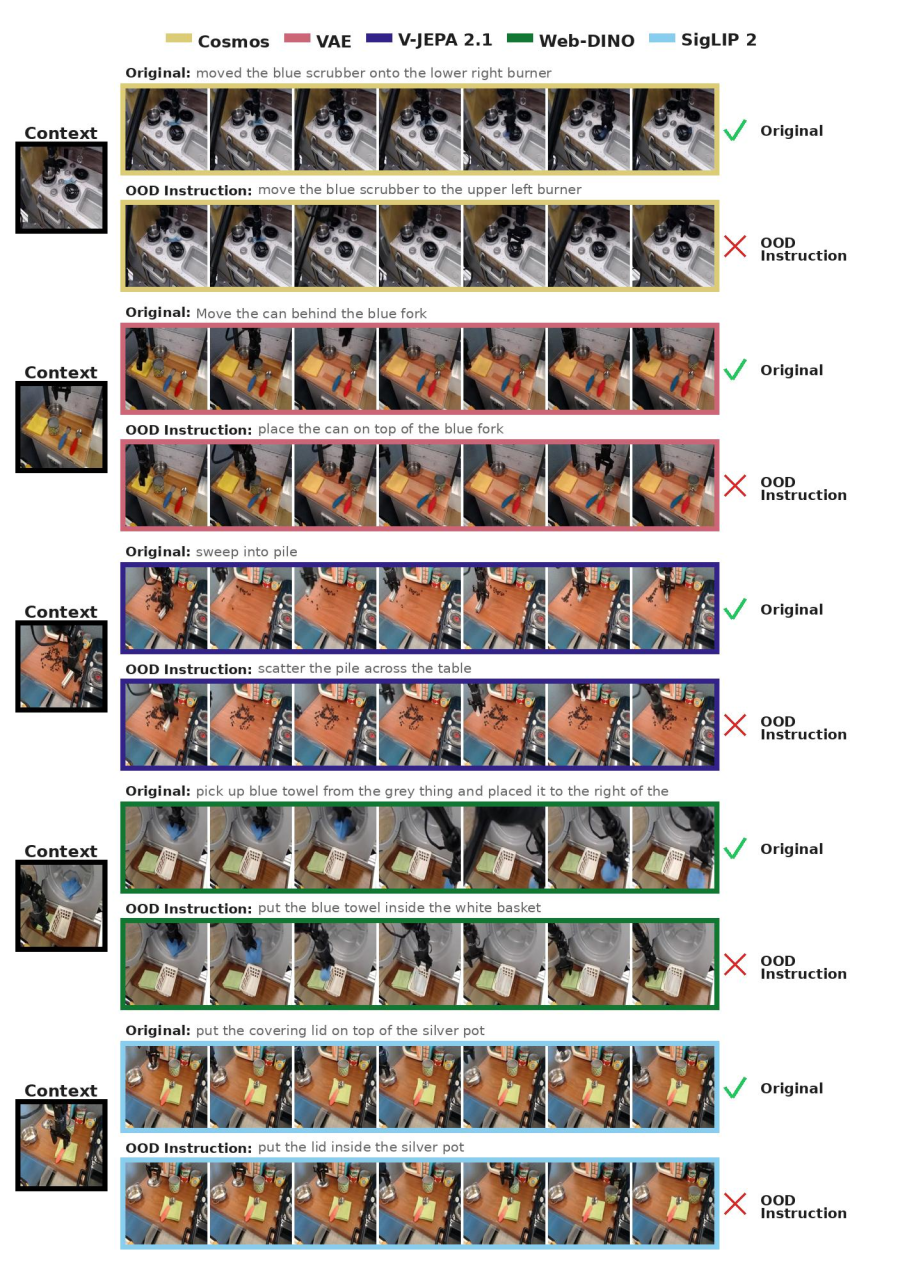
Figure 9 解读:这组图展示 OOD distractor 与 OOD instruction 下的 failure cases。semantic latents 在 OOD SR 上普遍更强,说明它们不只是记住训练分布的外观,而是在一定程度上保留了任务与动作的抽象结构;不过 OOD instruction 仍显著更难,尤其对 adapter-compressed variants 会出现 fine-grained control 信息损失。
5.5 Compute and scaling
架构/compute 表说明 high-dimensional semantic latent 的代价没有直觉上那么大。以 DiT-L 为例,SD-VAE 总 GFLOPs/frame 为 1207.5,Cosmos 为 465.9,V-JEPA 2.1 native 为 901.7,V-JEPA 2.1 为 910.1,Web-DINO native 为 902.8,Web-DINO 为 911.2,SigLIP 2 native 为 959.0,SigLIP 2 为 969.5。native semantic 与 adapter semantic 的 DiT GFLOPs 几乎相同,主要差异来自 frozen encoder/decoder,而不是 DiT backbone。
Scaling 的结论也比较细:DiT-L 会缩小 VAE/Cosmos 与 semantic latents 在 VLA success/OOD robustness 上的差距,因为更强 transition model 改善了视觉质量;但 action-centric 指标(CEM、IDM、success classifier)仍显示 reconstruction-aligned latents 落后。这意味着更大模型不能完全弥补 latent representation 的结构缺陷。
5.6 Limitations and takeaways
作者的结论可以概括为四点:
- Visual fidelity does not imply downstream performance:pixel metrics 只能解释一部分;policy evaluation 需要 action/task-preserving latent dynamics。
- Semantic latents are generally better for robotics world models:V-JEPA/Web-DINO/SigLIP 在 IDM、success probe、CEM、VLA/OOD 上整体更强。
- Adapter is a trade-off, not free compression: 的 S-VAE adapter 降低 latent width 并支持 decoding,但可能压缩掉精细动作信息;什么时候用 native latent、什么时候用 compact latent,要看任务是偏 task completion 还是精细 planning。
- Scope limitation:实验故意限制在固定 LDM/DiT 框架内,用来隔离 latent choice;论文没有声称 semantic latent diffusion 一定优于所有 non-diffusion semantic world models,也没有穷尽 per-encoder hyperparameter tuning。OOD 评估依赖 VLM scoring 与生成式 distractor construction,虽然做了 bootstrap/sign-flip 统计检验,仍应视为 policy-facing proxy,而非真实机器人闭环部署的最终证据。