Forge-and-Quench: Enhancing Image Generation for Higher Fidelity in Unified Multimodal Models
Paper: arXiv:2601.04706 Code: YanbingZeng/Forge-and-Quench Code reference:
master@763a05b1(2026-01-09)
1. Motivation (研究动机)
这篇论文关注 unified multimodal model 里一个很具体的问题:understanding 如何真正帮助 generation,而不只是把 MLLM 当成一次性的 prompt rewriter。现有两条路线各有瓶颈:一类是把文本、图像都 token 化后训练统一自回归模型,形式统一但训练成本高;另一类是冻结 MLLM 和 T2I backbone,用轻量 modal bridge 连接两端,例如 MetaQuery / BLIP3-o,把 MLLM 的 reasoning / world knowledge 转给生成模型,但通常是把 MLLM 输出映射成一个语义 embedding 后作为唯一 condition。
作者认为后一类方法虽然有效,但存在一个 “one-time handoff” 信息瓶颈:MLLM 能理解的 texture、lighting、composition、文化语境、细粒度视觉常识,最终被压缩进单一语义条件,细节容易丢失或纠缠。IP-Adapter 类 controllable generation 说明真实参考图的 image feature 可以显著提升 fidelity 和 detail richness;但普通 text-to-image 没有 reference image。论文的核心问题因此变成:能否让 MLLM 从文本/对话中 forge 一个虚拟视觉信号,让 T2I 像拿到参考图特征一样获得细节指导?
这值得研究,因为它把 “理解帮助生成” 从高层 prompt 改写推进到生成过程内部的 visual guidance:如果成功,unified model 不需要牺牲 MLLM 的理解能力,也不需要端到端重训大模型,就能增强图像真实性、降低 AI artifact,并在替换 MLLM 或 T2I backbone 时只重训相应轻量 adapter。
2. Idea (核心思想)
核心 insight 是:MLLM 的理解能力不只应该输出更好的 text prompt,还可以被蒸馏/映射成一个 virtual image feature,用类似参考图控制的方式注入 T2I denoising/flow process。 Forge-and-Quench 因此使用双路径 conditioning:MLLM 先生成 enhanced text prompt ,同时通过 Bridge Adapter 生成 Bridge Feature ;随后 Injection Adapter 把 注入冻结的 T2I backbone,和标准 text embedding 共同控制生成。
与 MetaQuery / BLIP3-o 这类 “MLLM embedding 替代原 text condition” 的 modal bridge 不同,Forge-and-Quench 不把 bridge embedding 当作唯一语义条件,而是保留 T2I 原生 text encoder 处理 ,再额外加入 SigLIP-style visual prior。与 IP-Adapter 不同,它没有真实 reference image,而是由 MLLM + Bridge Adapter 从文本 forge 出虚拟视觉特征。
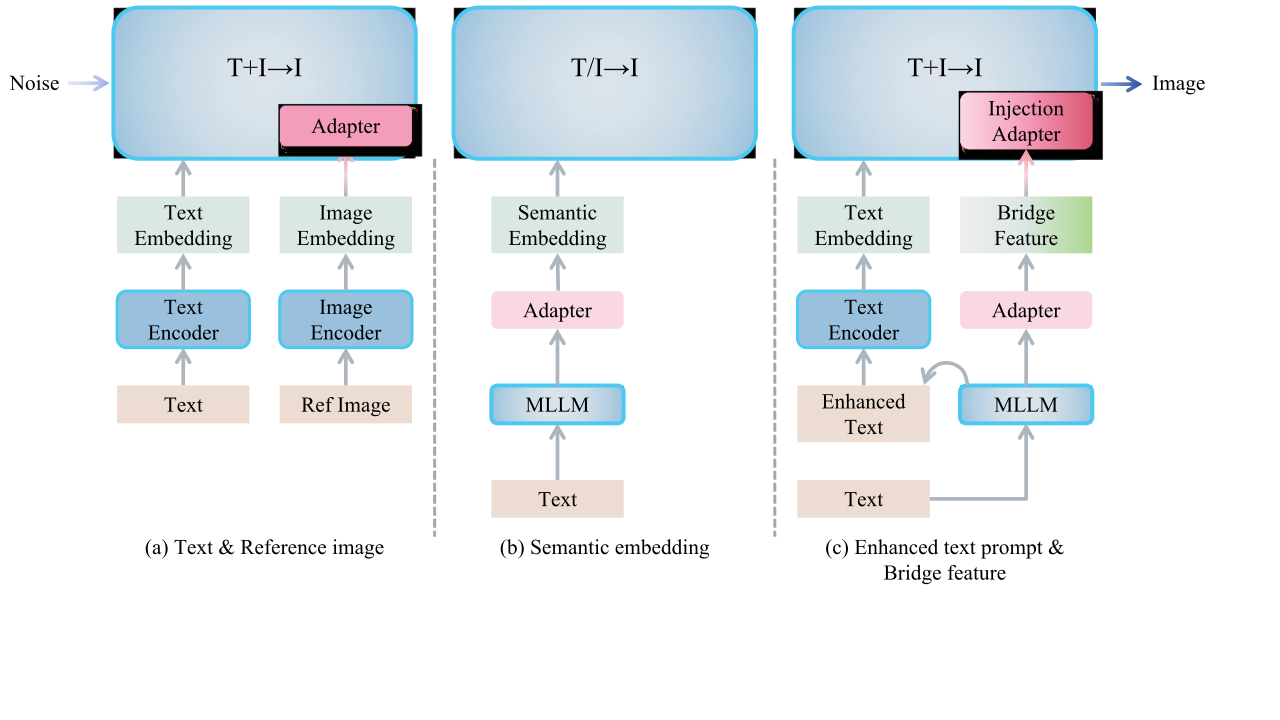
Figure 1 解读:图中对比了三种生成范式:(a) text + reference image 到 image,典型是 IP-Adapter 式控制生成;(b) text 经 MLLM 映射到 text/image semantic embedding 后单条件生成;(c) Forge-and-Quench 的目标是从 text 中 forge 出 virtual image feature,再与增强文本一起送入 T2I。这个图直接对应论文的核心定位:不是把理解模块输出压成一个语义 embedding,而是让理解模块产生可注入生成过程的视觉先验。
3. Method (方法)
3.1 Overall framework:Forge + Quench 双阶段
Forge-and-Quench 的整体范式可以写成: 其中 是冻结的 latent flow matching T2I backbone, 是 enhanced prompt 通过 T2I 原生 text encoder 得到的 embedding, 是 MLLM forge 出来的 Bridge Feature。相比普通 T2I: 以及 reference-image controllable generation: FaQ 试图在没有真实 的情况下生成一个虚拟 ,逼近参考图特征对 fidelity 的提升作用。论文还把 MetaQuery / BLIP3-o 类 unified modal bridge 形式写为: 并指出这种把 作为唯一 condition 的路线可能丢掉多源条件互补性。
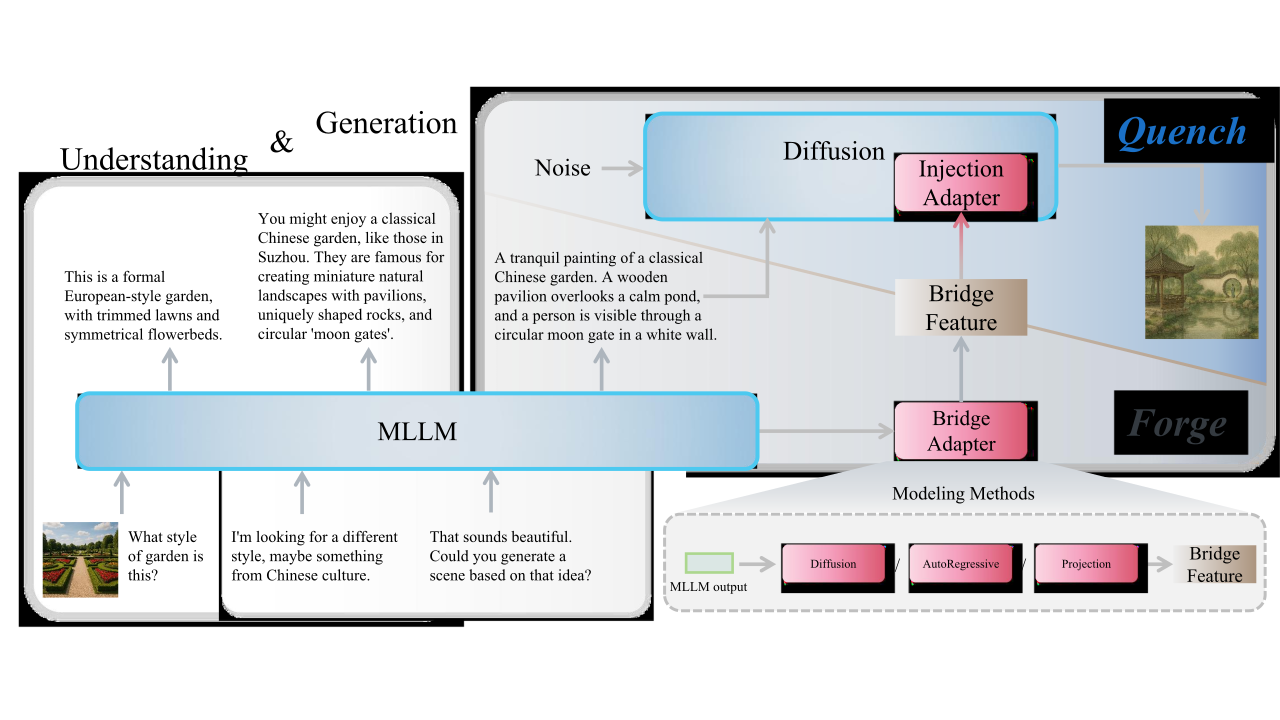
Figure 2 解读:图中上半部分是 Forge:MLLM 读取原始 prompt / 对话上下文,一方面生成更细的 enhanced text,另一方面通过 learnable queries 抽取固定长度中间 embedding ,再经 Bridge Adapter 生成 Bridge Feature 。下半部分是 Quench: 进入 T2I 原生 text encoder, 经 Injection Adapter 转成 cross-attention 可用的 visual guidance,注入每个 DiT layer。MLLM 与 T2I backbone 都冻结,因此 understanding capability 不被训练破坏,新增训练集中在 Bridge Adapter 和 Injection Adapter。
直觉上, 负责高层语义:对象、关系、文化语境、构图意图; 负责提供更像 image prompt 的细粒度视觉 prior:皮肤纹理、头发、服饰材质、背景高频细节等。这样的好处是不会强迫 MLLM 把所有视觉细节都压进一句 prompt,也不会改动 T2I 的主干分布。
3.2 Forge:文本增强与 Bridge Feature 生成
Forge 包含两个输出。
Text instruction enhancement:MLLM 先根据用户原始 prompt 和对话上下文生成 。论文例子中,用户表达想换 garden style 并提到 Chinese culture,MLLM 能把 “a formal European-style garden” 改成 “A tranquil painting of a classical Chinese garden. A wooden pavilion overlooks a calm pond, and a person is visible through a circular moon gate in a white wall.” 这不是简单 paraphrase,而是把文化知识和上下文意图展开成可生成细节。
Forging Bridge Feature:作者选择 SigLIP vision encoder 定义目标视觉空间。给定 ground-truth image ,目标特征为: 训练时, 输入冻结 MLLM,用 learnable query extractor 得到固定长度中间表示: Bridge Adapter 学习从 到 SigLIP feature space 的 conditional flow / diffusion mapping。论文目标函数为: 其中 , 是 target feature 在 diffusion step 的 noisy version。推理时,Bridge Adapter 反向 denoise,得到可用的 。
Released code 中这一部分主要对应 ForgeModel 和 ForgePipeline:ForgeModel 加载 Qwen2.5-VL 和一个 Flux-style DiT,维护 latent_queries,并用 gen_mlp_adapter 把 Qwen hidden states 投到 joint_attention_dim;ForgePipeline.__call__ 把 <|generate_image_pad|> token 替换为 learnable latent queries,取 Qwen 最后一层 hidden states 中 query 对应位置,再运行 FlowMatchEuler denoising,输出 adapter_feature。代码公开的是 inference path;论文中的 Forge training loss 没有在 repo 中给出训练脚本。
def forge_bridge_feature(prompt, forge_model, tokenizer, scheduler, num_steps=30, cfg=4.5):
    template = choose_cn_or_en_template(prompt)
    cond_ids = encode_with_generate_image_tokens(prompt, template, forge_model.num_querys)
    uncond_ids = encode_with_generate_image_tokens("", template, forge_model.num_querys)
    input_ids, attention_mask = left_pad([cond_ids, uncond_ids])

    embeds = forge_model.mllm.model.language_model.embed_tokens(input_ids)
    generate_mask = (input_ids == tokenizer("<|generate_image_pad|>").input_ids[0])
    embeds[generate_mask] = forge_model.latent_queries.repeat(2, 1, 1).flatten(0, 1)

    # Qwen hidden states at query positions -> conditioning tokens for the feature DiT
    prompt_embeds = forge_model.forward_prompt_embs(embeds, attention_mask)
    latents, img_ids = sample_siglip_feature_latents(batch=1, h=27, w=27)
    latents = torch.cat([latents, latents], dim=0)

    for t in scheduler.timesteps(num_steps):
        noise = forge_model.dit(
            hidden_states=latents,
            encoder_hidden_states=prompt_embeds,
            timestep=t / 1000,
            img_ids=img_ids,
            txt_ids=make_prompt_ids(prompt_embeds),
        )[0]
        cond, uncond = noise.chunk(2, dim=0)
        noise = uncond + cfg * (cond - uncond)
        latents = scheduler.step(torch.cat([noise, noise], dim=0), t, latents)[0]

    return latents.chunk(2, dim=0)[0]  # adapter_feature / Bridge Feature
3.3 Quench:把 Bridge Feature 注入冻结 T2I backbone
Quench 阶段冻结整个 T2I backbone ,只训练 lightweight Injection Adapter 。增强文本先由 T2I 原生 text encoder 处理: Bridge Feature 通过 转换后,以类似 IP-Adapter 的 cross-attention 机制注入每个 DiT layer。训练目标为: 其中 ,。由于 冻结,梯度只更新 Injection Adapter。
Released code 中,prepare_for_quench 会递归找到 FLUX / LongCat transformer 的 attention processors,将 transformer_blocks.* 和 single_transformer_blocks.* 替换成 FaQAttnProcessor,然后初始化 Resampler(dim=joint_attention_dim, depth=4, heads=16, num_queries=16, embedding_dim=1152) 来把 SigLIP-style feature 映射成 T2I attention 可用的 token。推理时,adapter_feature 先经 faq_proj_model,再写入 joint_attention_kwargs['adapter_feature'],每个 attention processor 额外计算一条对 adapter feature 的 scaled-dot-product attention,并把结果以 faq_scale 加回 hidden states。
def prepare_for_quench(pipe, checkpoint_path):
    processors = collect_attention_processors(pipe.transformer)
    for name in processors:
        if name.startswith("transformer_blocks.") or name.startswith("single_transformer_blocks"):
            processors[name] = FaQAttnProcessor(
                hidden_size=pipe.transformer.num_attention_heads * pipe.transformer.attention_head_dim,
                cross_attention_dim=pipe.transformer.joint_attention_dim,
            ).to(pipe.transformer.device, dtype=pipe.transformer.dtype)
    set_attention_processors(pipe.transformer, processors)

    pipe.faq_proj_model = Resampler(
        dim=pipe.transformer.joint_attention_dim,
        depth=4,
        dim_head=64,
        heads=16,
        num_queries=16,
        embedding_dim=1152,
        output_dim=pipe.transformer.joint_attention_dim,
    ).to(pipe.transformer.device, dtype=pipe.transformer.dtype)
    state = torch.load(checkpoint_path, map_location="cpu", weights_only=True)
    pipe.faq_proj_model.load_state_dict(state["faq_proj_model"])
    torch.nn.ModuleList(processors.values()).load_state_dict(state["faq_processors_layers"])
    return pipe
def quench_denoise(pipe, prompt, adapter_feature, faq_scale, num_steps):
prompt_embeds, pooled_prompt_embeds, text_ids = pipe.encode_prompt(prompt)
latents, latent_image_ids = pipe.prepare_latents(height=1024, width=1024)
adapter_tokens = pipe.faq_proj_model(adapter_feature)
pipe.joint_attention_kwargs["adapter_feature"] = adapter_tokens
for proc in pipe.processors.values():
if isinstance(proc, FaQAttnProcessor):
proc.scale = faq_scale
for t in pipe.scheduler.timesteps(num_steps):
noise = pipe.transformer(
hidden_states=latents,
timestep=t / 1000,
pooled_projections=pooled_prompt_embeds,
encoder_hidden_states=prompt_embeds,
txt_ids=text_ids,
img_ids=latent_image_ids,
joint_attention_kwargs=pipe.joint_attention_kwargs,
)[0]
latents = pipe.scheduler.step(noise, t, latents)[0]
return pipe.vae.decode(latents)class FaQAttnProcessor(torch.nn.Module):
def __call__(self, attn, hidden_states, encoder_hidden_states=None,
image_rotary_emb=None, adapter_feature=None):
q = project_query(hidden_states, attn)
k, v = project_key_value(hidden_states, attn)
if adapter_feature is not None:
ak = self.faq_adapter_to_k(adapter_feature)
av = self.faq_adapter_to_v(adapter_feature)
ak = self.faq_adapter_norm_added_k(split_heads(ak))
faq_hidden = F.scaled_dot_product_attention(q, ak, split_heads(av), dropout_p=0.0)
faq_hidden = merge_heads(faq_hidden)
hidden = normal_self_or_joint_attention(q, k, v, encoder_hidden_states, image_rotary_emb)
if adapter_feature is not None:
hidden = hidden + self.scale * faq_hidden
return output_projection(hidden)3.4 Bridge Adapter / Bridge Feature 设计原则
Bridge Adapter 的建模方式有三种候选:Diffusion、AutoRegressive、Projection。论文用 MeiGen-Image-FaQ 的 COCO-30K FID 与 latency 做权衡:Diffusion 的 FID 最好,Projection 最快但质量差,AR 质量居中但延迟极高,因此最终选择 diffusion Bridge Adapter。
| Method | FID ↓ | Latency (s) ↓ |
|---|---|---|
| MeiGen-Image | 23.97 | - |
| w/ FaQ (Diffusion) | 19.86 | 0.49 |
| w/ FaQ (AutoRegressive) | 20.81 | 7.31 |
| w/ FaQ (Projection) | 21.35 | 0.10 |
Adapter size 的结论是:2B / QSize=64 已经接近最佳 trade-off;6B 稍微提升 FID 但 latency 从 0.49s 增到 1.51s;query size 128 稍好于 64,256 反而略差。
| Variant | FID ↓ | Latency (s) ↓ |
|---|---|---|
| MeiGen-Image (Base) | 23.97 | - |
| DiT-2B & QSize=64 | 19.86 | 0.49 |
| DiT-6B & QSize=64 | 19.63 | 1.51 |
| DiT-2B & QSize=128 | 19.76 | 0.55 |
| DiT-2B & QSize=256 | 20.08 | 0.62 |
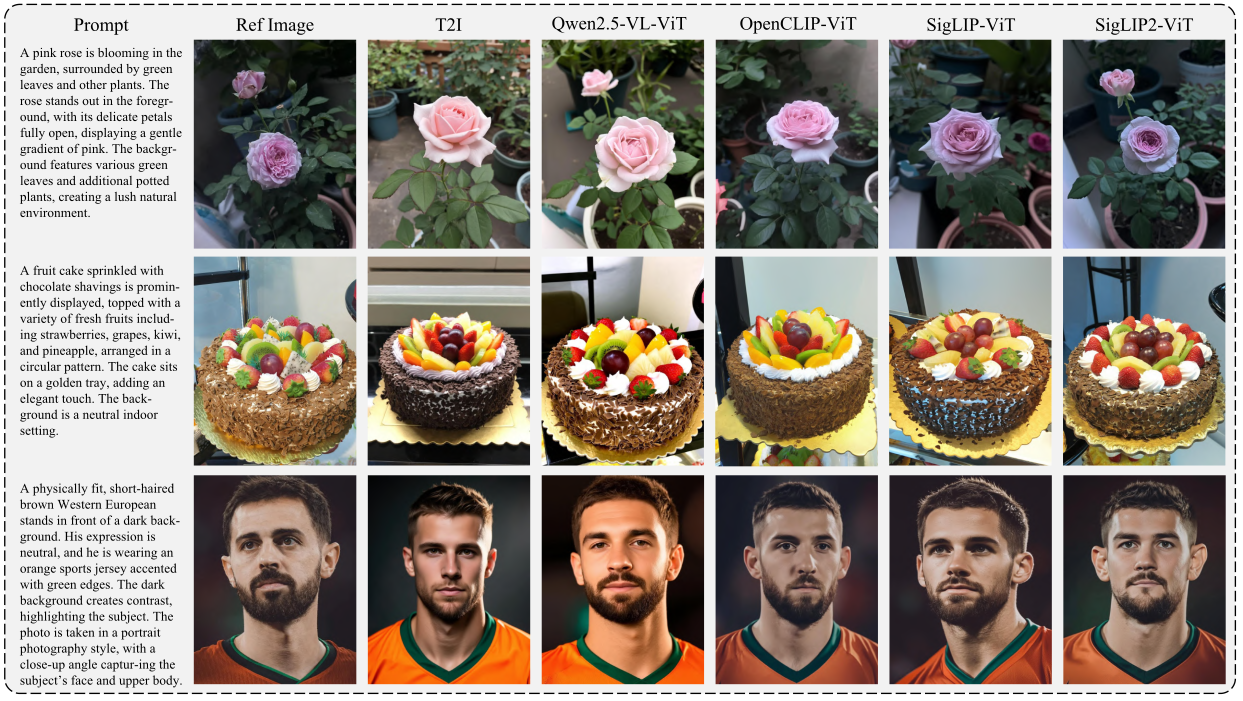
Figure 6 解读:图中绕过 Forge,直接从 reference image 用不同 visual encoder 提取 feature,再送入 Quench 做 image reconstruction / redux。SigLIP 系列最能保留 reference 的质感与细节;Qwen2.5-VL-ViT 几乎不能提供有效 fidelity cue,结果接近普通 T2I;OpenCLIP 居中。这说明 Bridge Feature 的目标空间不能只看语义理解能力,还要看它是否承载可被生成模型利用的视觉细节。
SigLIP2 在理想 reference feature 场景下表现好,但在真实 FaQ 中更容易产生 artifact。论文用噪声扰动解释:forged feature 和真实 SigLIP feature 不可能完全一致,这个误差可视为 feature noise。若 encoder feature space 对噪声敏感,就难以 forge。扰动公式为:
| Noise scale | 0.0 | 0.2 | 0.4 | 0.6 | 0.8 | 1.0 |
|---|---|---|---|---|---|---|
| Cosine Sim. (SigLIP-ViT) | 1.00 | 0.98 | 0.93 | 0.85 | 0.78 | 0.71 |
| Cosine Sim. (SigLIP2-ViT) | 1.00 | 0.88 | 0.68 | 0.53 | 0.42 | 0.35 |
| Feature | shape | mean | std | norm | abs_max |
|---|---|---|---|---|---|
| SigLIP-ViT@384px | 729×1152 | 0.1060 | 2.0938 | 1920 | 217 |
| SigLIP2-ViT@384px | 576×1152 | 0.0830 | 3.2188 | 2576 | 1680 |
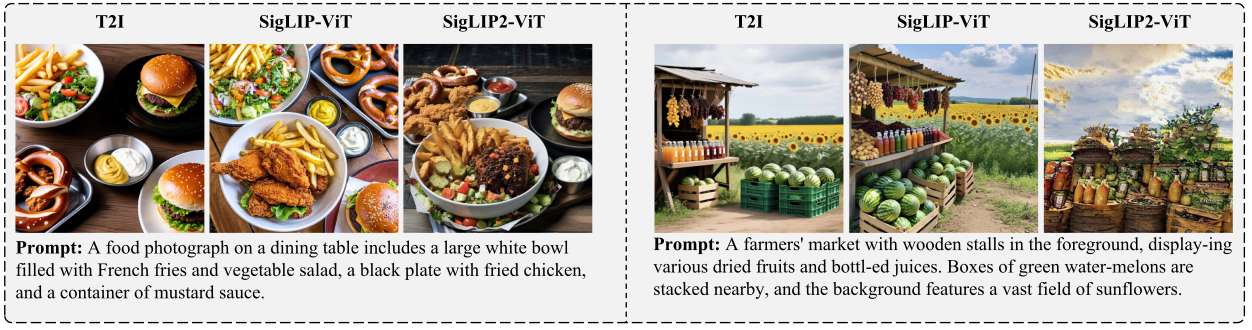
Figure 7 解读:SigLIP2-ViT 在完整 Forge-and-Quench 中会带来明显失真,和表中的 robustness 分析一致:它的特征维度统计更尖锐、扰动后 cosine similarity 下降更快,所以当 Bridge Adapter 无法完美预测 feature 时,错误会被 Quench 放大为视觉 artifact。最终作者采用 SigLIP-ViT,而不是理论上更强的 SigLIP2。
3.5 Code-to-paper mapping
Code reference:
master@763a05b1(2026-01-09) — pseudocode and mapping based on this commit
| Paper Concept | Source File | Key Class/Function |
|---|---|---|
| Forge Model:Qwen2.5-VL + latent queries + feature DiT | forge_and_quench/models/modeling_forge_and_quench.py | ForgeModel.__init__, ForgeModel.forward_prompt_embs |
Forge inference:从 prompt 生成 adapter_feature | forge_and_quench/pipelines/forge_pipeline.py | ForgePipeline.prepare_and_encode_prompt, ForgePipeline.__call__ |
| Bridge feature denoising backbone | forge_and_quench/models/mmdit.py | FluxTransformer2DModel.forward |
| Injection Adapter / FaQ attention | forge_and_quench/models/modeling_forge_and_quench.py | FaQAttnProcessor.__call__ |
| Quench adapter projection | forge_and_quench/models/resampler.py | Resampler.forward, PerceiverAttention.forward |
| FLUX.1-dev Quench inference | forge_and_quench/pipelines/quench_pipeline_flux1_dev.py | FluxPipeline.prepare_for_quench, FluxPipeline.__call__ |
| LongCat-Image Quench inference | forge_and_quench/pipelines/quench_pipeline_longcat_image.py | LongCatImagePipeline.prepare_for_quench, LongCatImagePipeline.__call__ |
| End-to-end demo / inference args | infer.py | get_pipe, main inference branch |
论文公式与 released code 实现差异:论文给出了 Forge / Quench 的训练目标和训练规模,但 released GitHub repo 主要提供 inference pipeline、attention processor、projection module 与模型加载逻辑;没有公开 Forge/Quench 训练脚本、训练数据 filtering 逻辑或 loss 计算实现。因此笔记中的 training loss 来自论文,pseudocode 中的 inference path 来自 released code,不能把 repo 当作完整训练复现。
4. Experimental Setup (实验设置)
Backbones / models
- MeiGen-Image:Meituan 内部 6B text-to-image model,single-stream + double-stream block 架构,论文称未来开源;增强版记为 MeiGen-Image-FaQ。
- FLUX.1-dev:Black Forest Labs 的 12B open-source T2I backbone,single-stream + double-stream block 架构;增强版记为 FLUX.1-dev-FaQ。
- Released code:README 实际支持
flux1-dev与longcat-image两个 T2I model,使用 Qwen2.5-VL-7B-Instruct、FLUX.1-dev / LongCat-Image、Forge-and-Quench checkpoints。代码示例中 FLUX 的faq_scale=0.50、num_inference_steps=28,LongCat 的faq_scale=0.35、num_inference_steps=50、enable_cfg_renorm=True。
Training data / hyperparameters
| Item | Forge | Quench |
|---|---|---|
| Module size | 2B | 1B |
| Training data | 200M image-text pairs | 13M filtered subset |
| LR | 1e-4 | 1e-4 |
| LR scheduler | Constant | Constant |
| Training steps | 500k | 80k = 50k@512px + 30k@1024px |
| Global batch size | 512 | 256 |
| Optimizer | AdamW() | AdamW() |
论文未详细说明 GPU type/count;released repo 也没有训练 config / launch scripts 可核对硬件与训练吞吐。
Evaluation benchmarks / metrics
- GenEval:评估 prompt-image alignment,包括 single object、two object、counting、colors、position、color attribute。
- DPG-Bench:评估图文一致性 / compositional prompt following,包括 global、entity、attribute、relation、other。
- COCO-30K FID:在 COCO-30K 上衡量生成图像分布质量,越低越好。
- GPT-Fidelity:自定义 pairwise metric,用 GPT-4 在同一 prompt 下比较两张图的 image fidelity,报告 win rate。
- WISE:世界知识 reasoning benchmark,覆盖 cultural、time、space、biology、physics、chemistry。
- Human evaluation:约 2,000 prompts,annotator 对 baseline 与 FaQ side-by-side 比较 prompt alignment 和 visual quality。
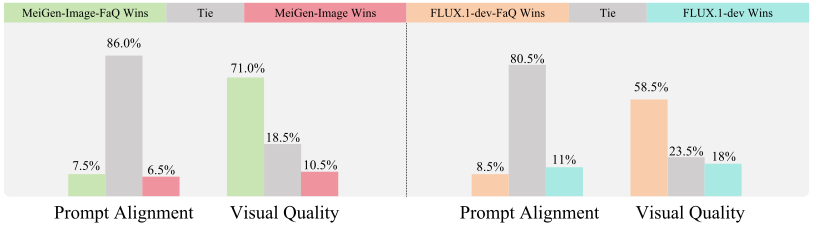
Figure 3 解读:human evaluation 的重点不是证明 alignment 明显提升,而是证明 FaQ 在 prompt alignment 上与原模型基本持平,同时视觉质量获得明显偏好。这和论文主张一致:Bridge Feature 的主要收益是 fidelity / detail,不应以牺牲 instruction following 为代价。
5. Experimental Results (实验结果)
5.1 Main automatic results
| Method | COCO-30K FID ↓ | GPT-Fidelity ↑ | GenEval ↑ | DPG-Bench ↑ | WISE ↑ |
|---|---|---|---|---|---|
| MeiGen-Image | 23.97 | 12% win | 0.7845 | 85.94 | 0.55 |
| MeiGen-Image-FaQ | 19.86 | 88% win | 0.7837 | 86.83 | 0.70 |
| FLUX.1-dev | 27.71 | 22% win | 0.6518 | 83.66 | 0.56 |
| FLUX.1-dev-FaQ | 20.83 | 78% win | 0.6436 | 83.01 | 0.66 |
主结果非常符合方法设计:FID 和 GPT-Fidelity 大幅提升,说明视觉真实感与细节明显变好;GenEval / DPG-Bench 基本持平或轻微下降,说明 fidelity gain 没有显著破坏 prompt following;WISE 提升明显,说明 enhanced text + MLLM knowledge 对世界知识相关生成有帮助。具体来看,MeiGen 的 FID 从 23.97 降到 19.86,GPT-Fidelity 从 12% win 变成 88% win,WISE 从 0.55 到 0.70;FLUX 的 FID 从 27.71 降到 20.83,GPT-Fidelity 从 22% 到 78%,WISE 从 0.56 到 0.66。
5.2 Detailed benchmark breakdown
GenEval:MeiGen-FaQ 的 two object / counting / position 有提升,但 color attr 从 0.6750 降到 0.6175;FLUX-FaQ 整体从 0.6518 到 0.6436 小幅下降。
| Method | Single Object | Two Object | Counting | Colors | Position | Color Attr | Overall |
|---|---|---|---|---|---|---|---|
| MeiGen-Image | 0.9906 | 0.9217 | 0.7375 | 0.9069 | 0.4750 | 0.6750 | 0.7845 |
| MeiGen-Image-FaQ | 0.9875 | 0.9520 | 0.7531 | 0.8989 | 0.4934 | 0.6175 | 0.7837 |
| FLUX.1-dev | 0.9844 | 0.7955 | 0.6531 | 0.7952 | 0.2375 | 0.4450 | 0.6518 |
| FLUX.1-dev-FaQ | 1.0000 | 0.7831 | 0.6366 | 0.7897 | 0.2145 | 0.4377 | 0.6436 |
DPG-Bench:MeiGen-FaQ overall 从 85.94 到 86.83,尤其 Other 从 83.60 到 87.60;FLUX-FaQ overall 从 83.66 到 83.01,relation / other 有小提升但 global / entity 略降。
| Method | Global | Entity | Attribute | Relation | Other | Overall |
|---|---|---|---|---|---|---|
| MeiGen-Image | 85.11 | 91.73 | 88.80 | 93.36 | 83.60 | 85.94 |
| MeiGen-Image-FaQ | 85.41 | 92.12 | 89.18 | 93.89 | 87.60 | 86.83 |
| FLUX.1-dev | 82.67 | 89.81 | 86.97 | 92.80 | 82.00 | 83.66 |
| FLUX.1-dev-FaQ | 81.46 | 89.67 | 87.05 | 93.04 | 83.20 | 83.01 |
WISE:MeiGen-FaQ overall 从 0.55 到 0.70,FLUX-FaQ 从 0.56 到 0.66,几乎所有 domain 都提升。这个结果支持作者关于 MLLM context/world knowledge 参与生成的主张,但它更像 “understanding helps generation”,不是 “generation helps understanding”。
| Method | Cultural | Time | Space | Biology | Physics | Chemistry | Overall |
|---|---|---|---|---|---|---|---|
| MeiGen-Image | 0.54 | 0.57 | 0.66 | 0.48 | 0.60 | 0.40 | 0.55 |
| MeiGen-Image-FaQ | 0.74 | 0.66 | 0.77 | 0.64 | 0.72 | 0.57 | 0.70 |
| FLUX.1-dev | 0.55 | 0.60 | 0.69 | 0.45 | 0.58 | 0.41 | 0.56 |
| FLUX.1-dev-FaQ | 0.70 | 0.65 | 0.70 | 0.62 | 0.70 | 0.51 | 0.66 |
5.3 Qualitative results
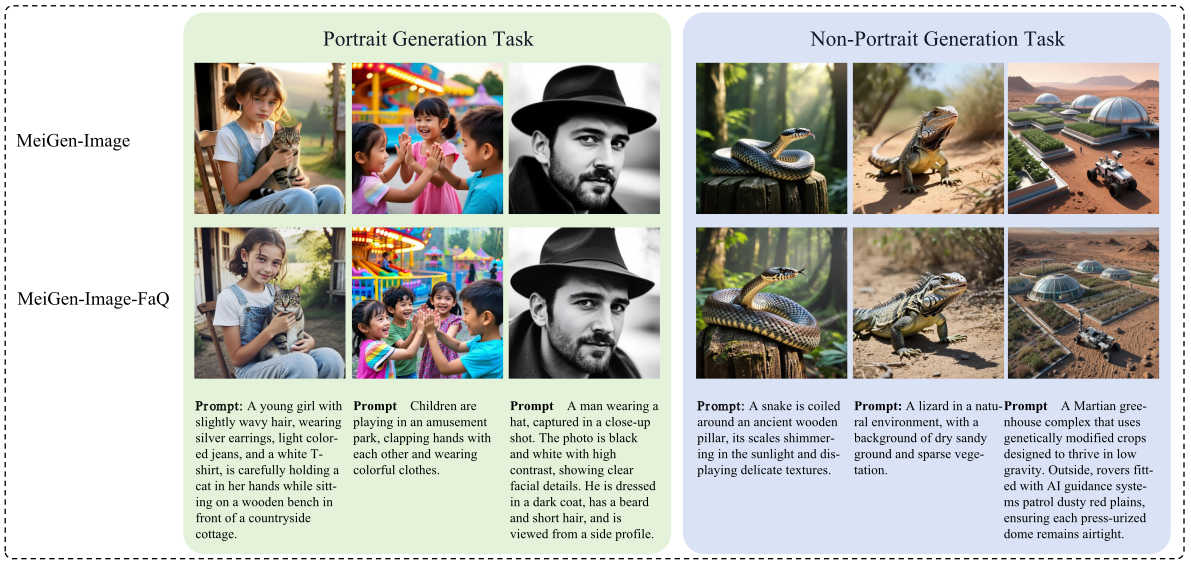
Figure 4 解读:MeiGen-Image-FaQ 在 portrait 场景中主要提升 skin texture、hair details、fabric weave;在非人像场景中减少 AI artifact,并让 foreground/background 高频细节更丰富。这个图展示的是 Quench 注入 visual prior 后对 fidelity 的直接影响,而不是单纯 prompt alignment 的提升。
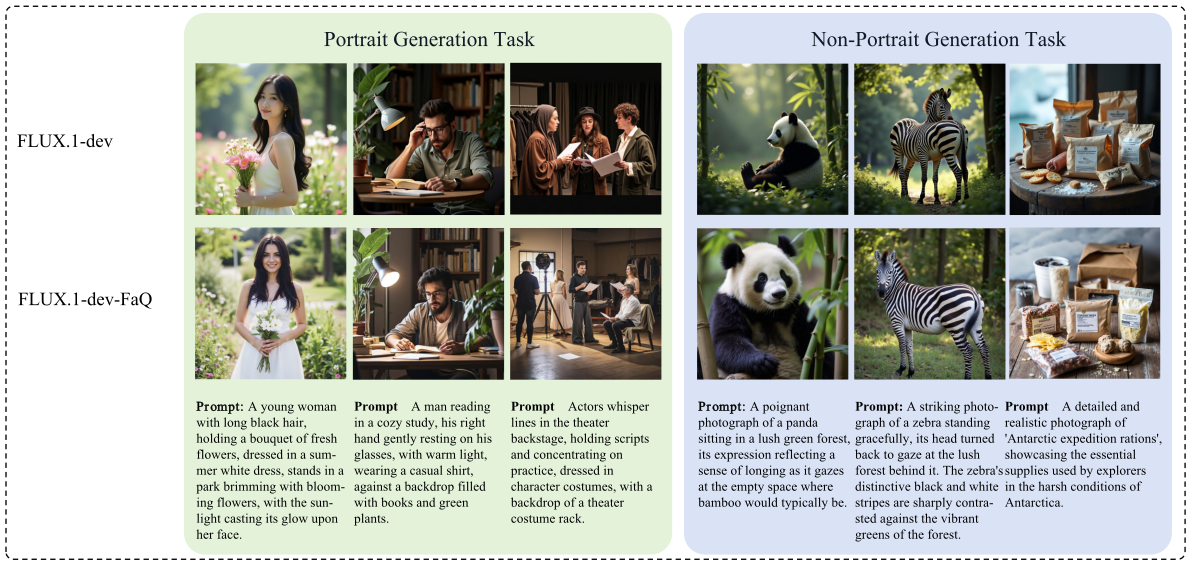
Figure 5 解读:FLUX.1-dev-FaQ 的提升更集中在减少 waxy skin、过强 cartoon effect、背景虚焦等 FLUX baseline 常见问题。由于 FLUX 原本语义能力强,FaQ 的增益主要体现在真实感和材质细节,而不是对象数量/颜色属性等 alignment 指标。
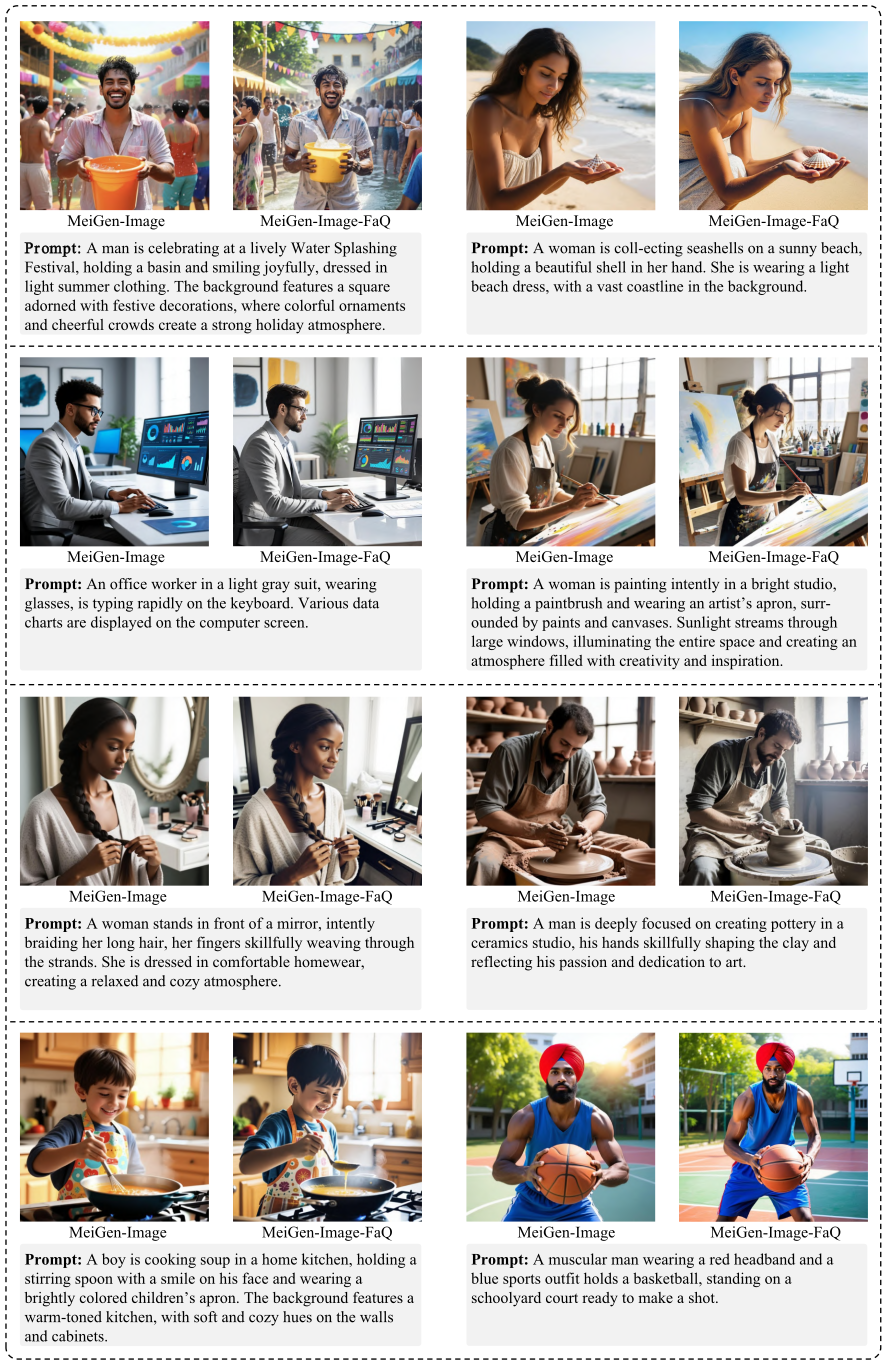
Figure 10 解读:这是 MeiGen-Image 的更多 qualitative case,覆盖 portrait 与 general scenes。它补充说明 FaQ 的效果不是单个 cherry-picked 示例,而是在多类 prompt 中都改善真实感、纹理细节和整体审美。
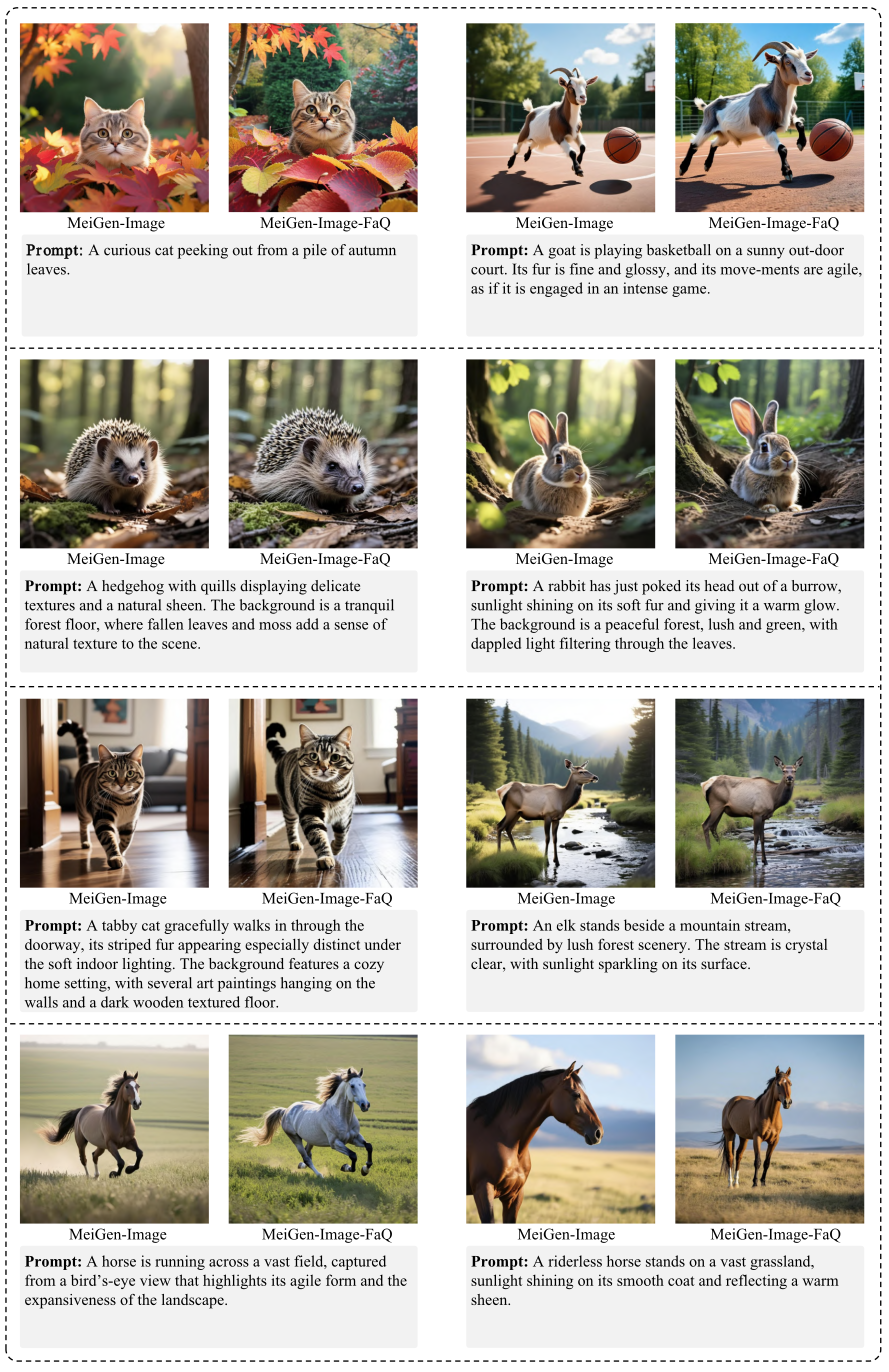
Figure 11 解读:第二组 MeiGen 例子继续强调细节层面的提升,尤其是高频纹理与背景元素。结合 GenEval/DPG 结果,可以看出这些视觉改善并没有对应到大幅 alignment 改变,因此更适合作为 fidelity-focused unified generation 方法理解。
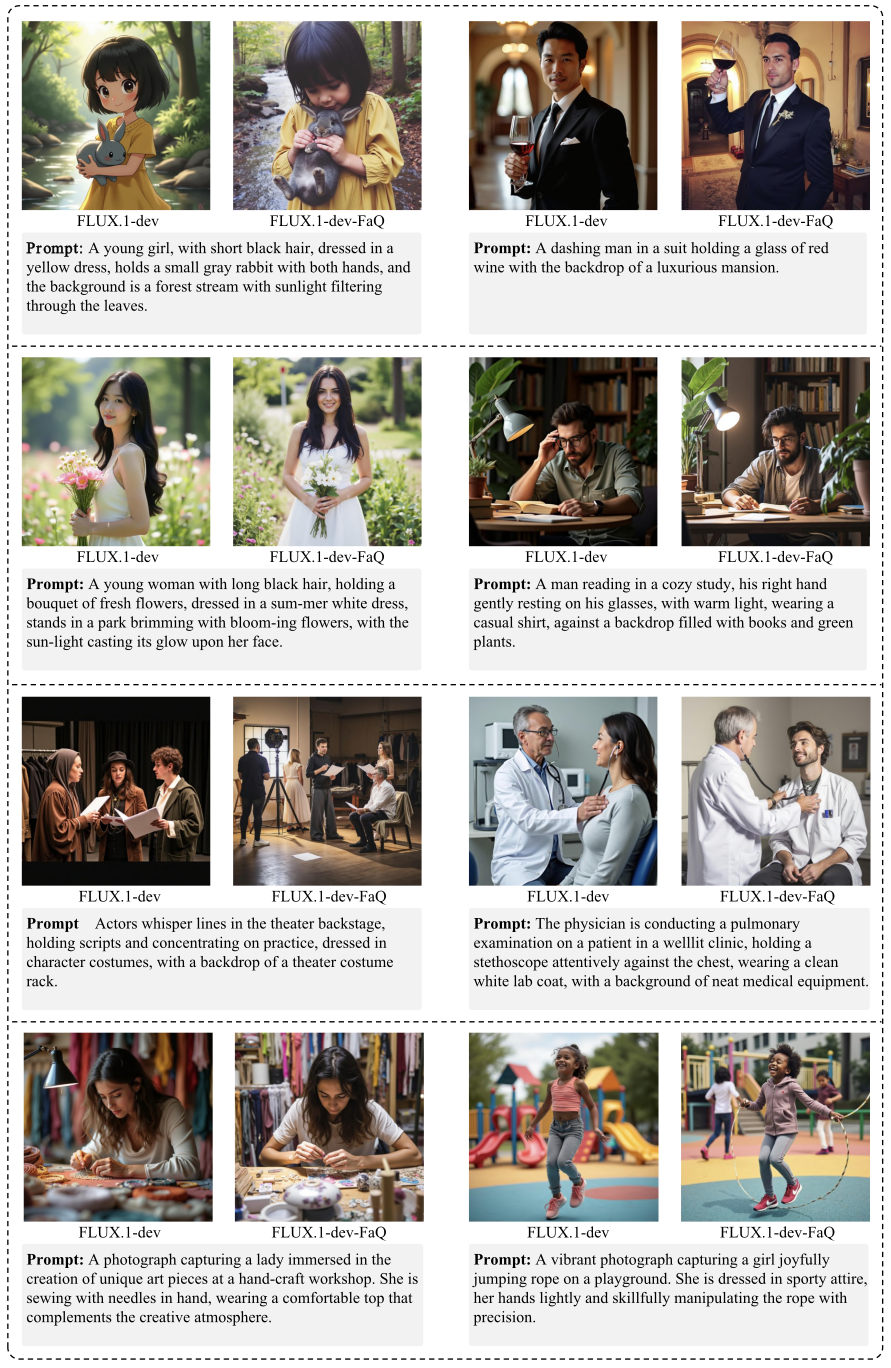
Figure 12 解读:FLUX.1-dev 更多例子显示 FaQ 可以迁移到不同 T2I backbone。由于 Quench 只需替换/训练对应 Injection Adapter,这支撑了论文关于 modularity 和低迁移成本的论点。
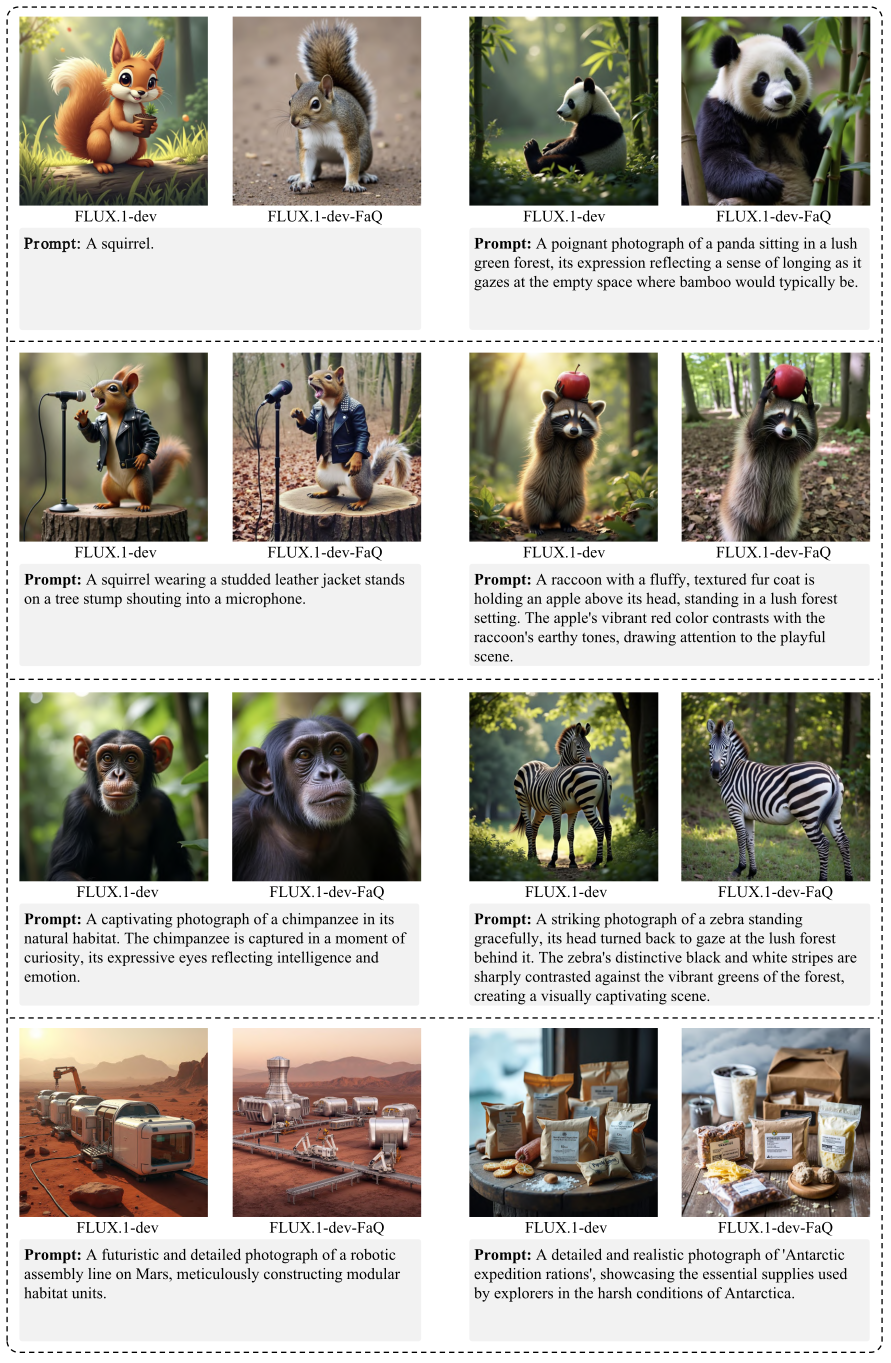
Figure 13 解读:最后一组 FLUX 例子继续展示 FaQ 对 artifact 的抑制与 texture 的增强。它也暴露出方法边界:论文强调视觉质量提升,但对于 GenEval/DPG 的细粒度指令项并非全面提升。
5.4 Demo / interaction design
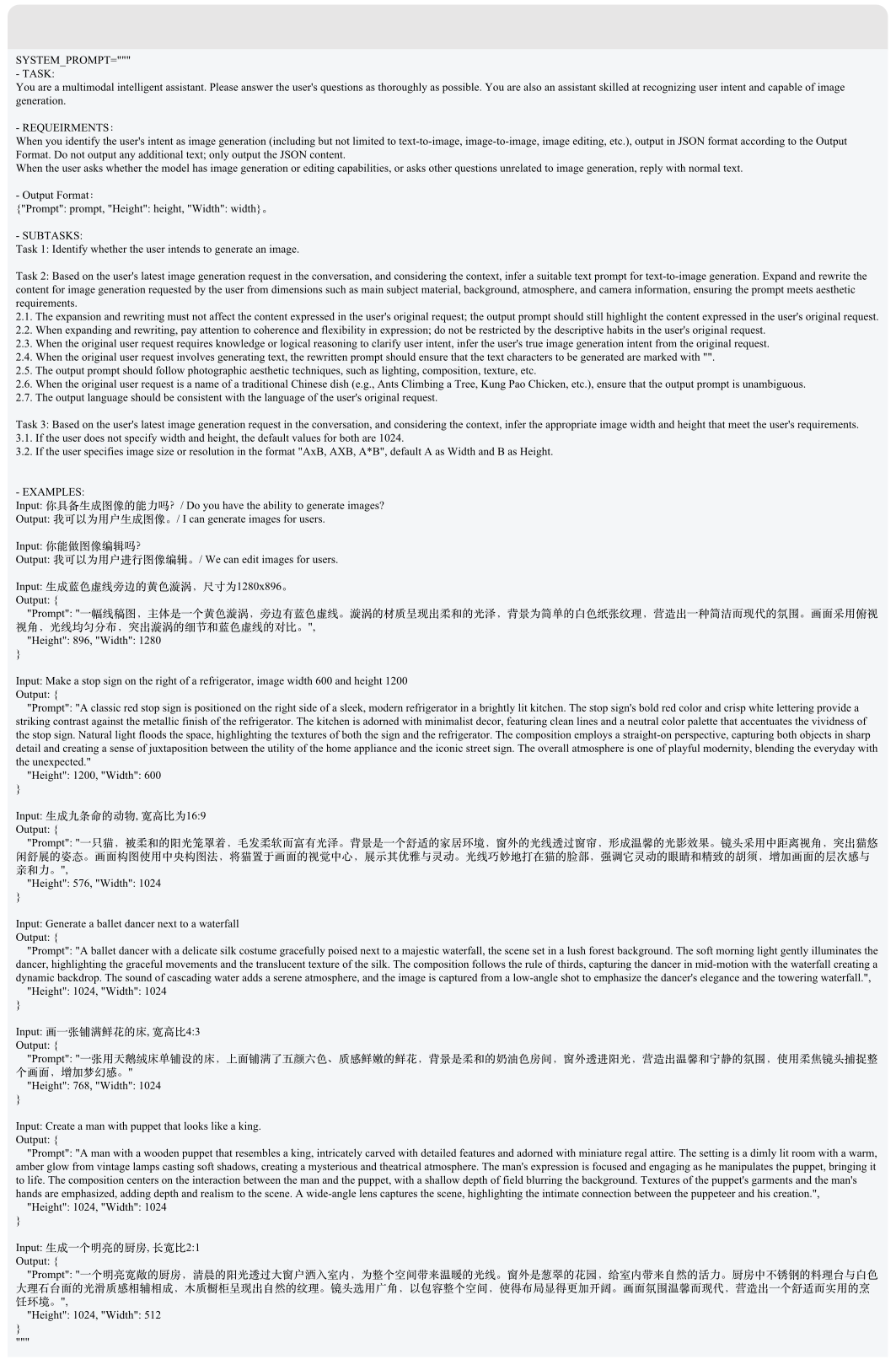
Figure 8 解读:系统 prompt 说明 demo 中 MLLM 需要根据用户输入组织生成请求,体现 Forge 阶段不是普通 T2I prompt pass-through,而是带上下文理解的 prompt enhancement。这个部分更偏应用演示,但它连接了论文对 multi-turn interaction / cultural context 的动机。
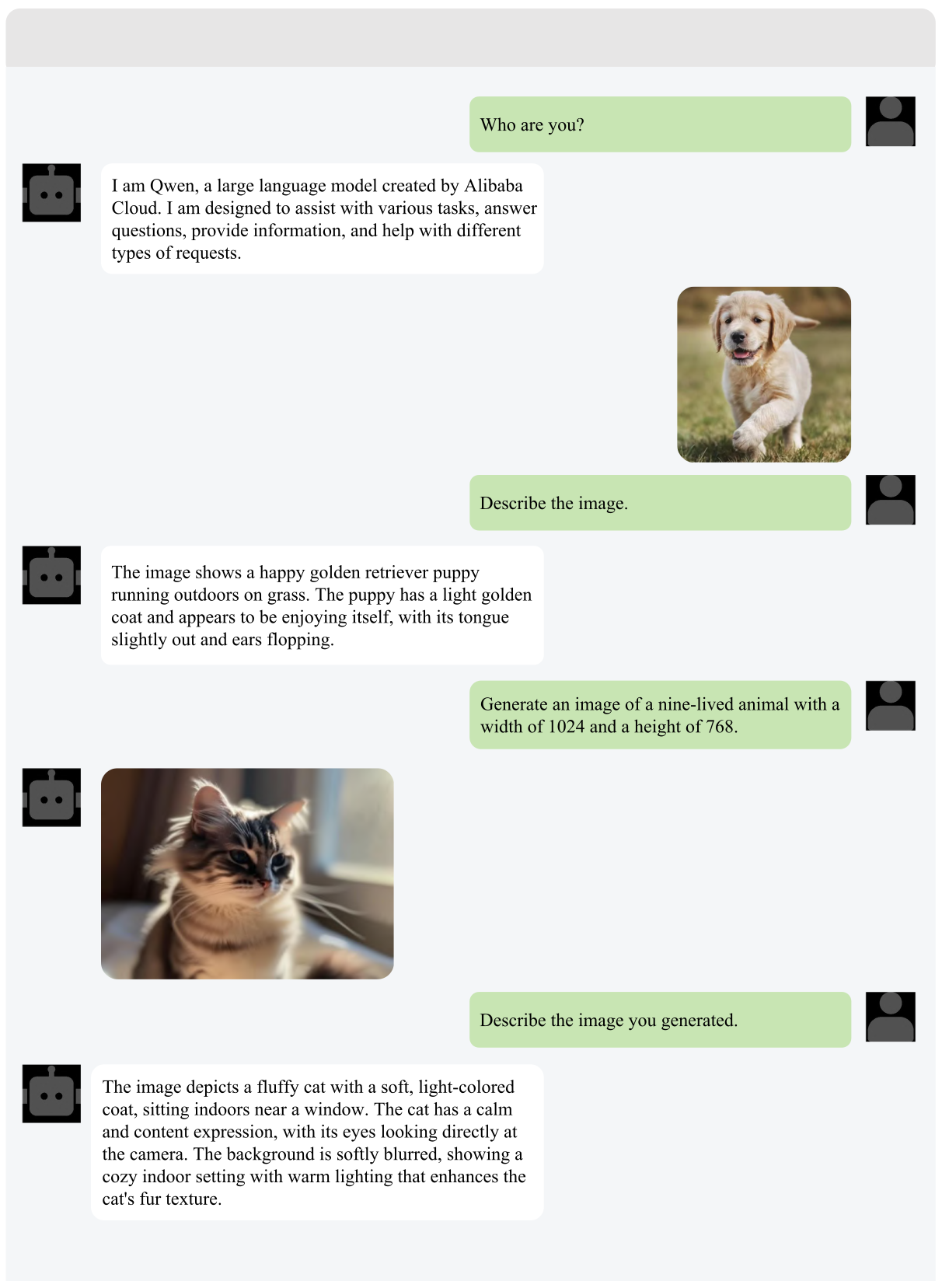
Figure 9 解读:demo interface 让用户输入自定义 prompt,并 side-by-side 比较 baseline T2I 与 FaQ 输出。它的作用是把 GPT-Fidelity / human eval 的 pairwise comparison 变成可交互验证流程,强调 “same prompt 下 fidelity 更好” 这一核心 claim。
5.5 Conclusions and limitations
总体结论:Forge-and-Quench 给出了一个明确的 “understanding helps generation” 实验路径:冻结 MLLM 保留理解能力,用 MLLM 生成 enhanced text 与 virtual visual feature,再把后者注入冻结 T2I。实验上,FID/GPT-Fidelity/human visual quality 均支持 fidelity 提升,WISE 支持世界知识相关生成增强,GenEval/DPG 基本说明 prompt following 未被大幅破坏。
局限与复现 caveat:第一,MeiGen-Image 与部分训练数据是内部资源,论文未给 GPU type/count;第二,released repo 只有 inference pipeline 和 checkpoints 接口,没有训练脚本,因此 Forge / Quench loss 与数据过滤无法代码级复现;第三,FLUX-FaQ 在 GenEval 和 DPG-Bench overall 有小幅下降,说明 visual fidelity 与 compositional alignment 仍可能存在 trade-off;第四,Bridge Feature target space 很敏感,SigLIP2 的失败说明更强视觉 encoder 不一定更适合作为 forge target。