LocateAnything: Fast and High-Quality Vision-Language Grounding with Parallel Box Decoding
Paper: arXiv:2605.27365 Code: nvidia/LocateAnything-3B Project/GitHub: NVlabs/Eagle/Embodied Code reference: HF
main@7a81d810(2026-05-27); GitHub projectmain@c3c08afe(2026-05-27)
1. Motivation (研究动机)
现有 VLM grounding 的核心问题
当前很多 Vision-Language Model (VLM) 把 visual grounding / detection 写成一个 generative coordinate-token problem:模型先读图像和文本 query,然后像生成普通文本一样逐 token 输出坐标。常见坐标表示有两类:
- Textual Digits:把坐标值当成字符序列,例如
1024被拆成1, 0, 2, 4; - Quantized Tokens:把坐标离散到
[0, 1000]之类的空间,再按$x_1 \rightarrow y_1 \rightarrow x_2 \rightarrow y_2$顺序生成。
这两类方法的共同缺陷是:一个二维几何对象被强行序列化成一维 token stream。bounding box 的四个坐标并不是彼此独立的文本 token;它们共同决定一个空间区域。逐 token decoding 会带来两个直接问题:
- 几何耦合被破坏:
x_1, y_1, x_2, y_2本应作为一个 atomic geometric unit 被预测,序列化之后模型可能在局部 token 上高置信,但整体 box 形状、大小、边界不协调,尤其在 high-IoU 阈值下表现差。 - 推理延迟高:每个 box 至少需要多个自回归 step;多目标检测时,目标数越多,coordinate token 越长,strictly sequential generation 会成为 inference bottleneck。
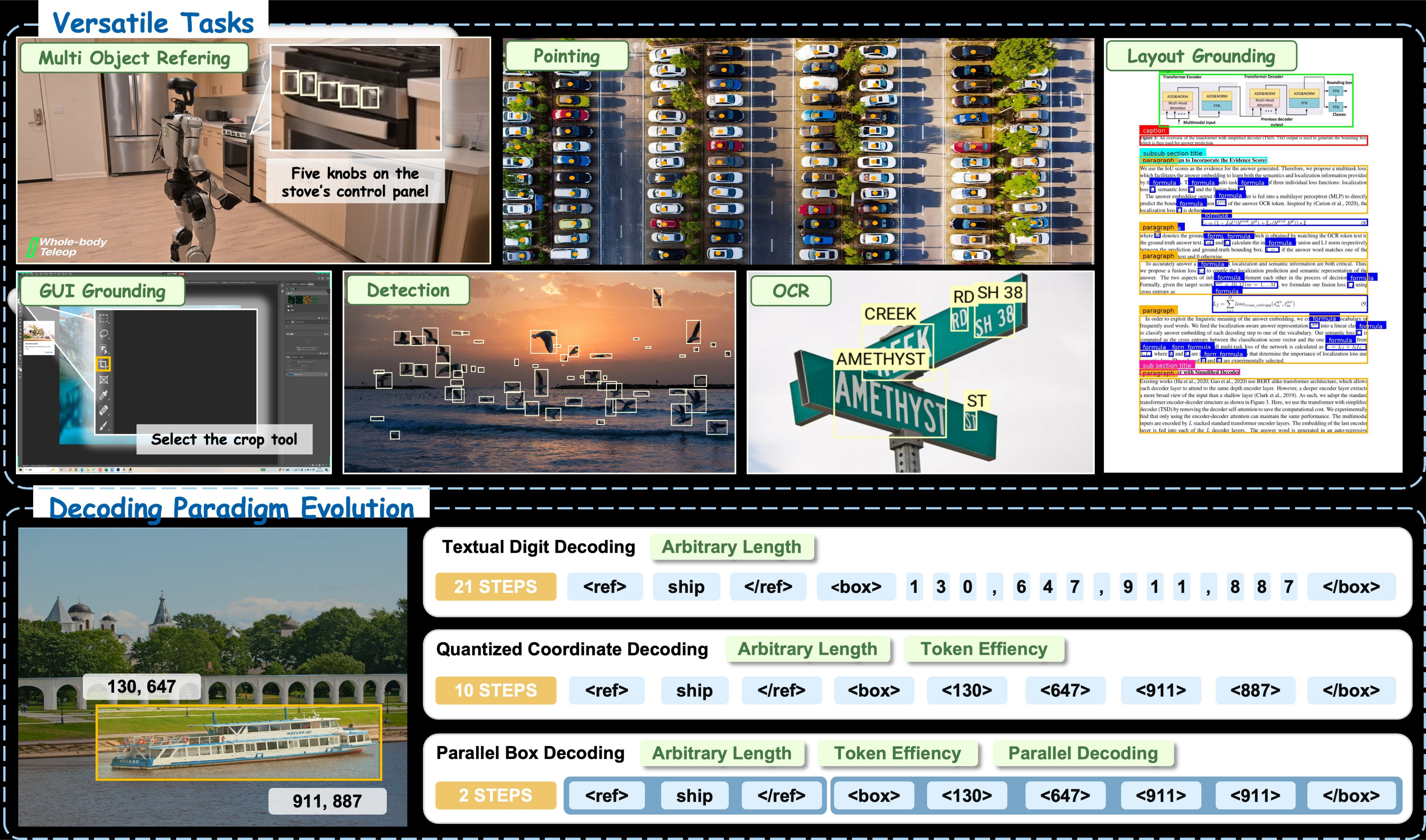
Figure 1 解读:上半部分展示 LocateAnything 支持的任务范围,包括 object detection、referring grounding、OCR/text localization、GUI grounding、pointing 等;下半部分对比三种坐标 decoding。Textual digits 和 quantized coordinates 都是逐 token 生成,而 Parallel Box Decoding 把一个 box / point 当成一个几何单元一次性生成,因此目标不是“让语言模型更会写坐标”,而是让输出结构本身更贴近几何对象。
论文要解决的具体目标
本文要解决的不是单一 benchmark 上的检测精度,而是一个更系统的问题:如何让 VLM 在统一 generative 框架内,同时做到高质量 localization 和高吞吐 coordinate decoding。换句话说,作者希望同一个模型既能处理开放词表、多任务、自由文本 query,又不牺牲 detection/grounding 对 box precision 和 inference speed 的要求。
该目标有两个技术约束:
- 不能退回传统 specialized detector,因为它们虽然快,但 instruction following 和开放语义覆盖不如 VLM;
- 不能简单套用普通 Multi-Token Prediction (MTP),因为任意 chunk 的并行 token 预测不理解 box 边界,会产生 irregular / incoherent coordinate pattern。
为什么值得研究
如果 VLM 可以低延迟、高精度地输出 boxes / points,它就能成为 embodied agent、GUI agent、robot perception、document understanding、scene-text localization 的统一 perception interface。对交互系统而言,grounding 不只是“识别物体”,而是把自然语言意图绑定到可执行空间位置:点击按钮、抓取目标、定位文字块、在拥挤场景中区分相邻实例。LocateAnything 的价值在于把这个能力放进一个 generalist VLM,同时用 Parallel Box Decoding 降低 coordinate generation 的成本。
2. Idea (核心思想)
一句话核心洞察
LocateAnything 的核心洞察是:box / point 不是一串普通 token,而是一个固定长度、几何耦合的 atomic block;只要训练目标和 attention mask 都按 block 对齐,MTP 就可以并行生成完整几何单元,而不是破坏坐标结构。
关键创新
本文提出 Parallel Box Decoding (PBD):把输出序列重组为 fixed-length box-aligned blocks,每个 block 长度为 $L=6$,可表示 semantic text、box、negative 或 end 状态。训练时同时优化标准 Next-Token Prediction (NTP) 和 block-wise Multi-Token Prediction (MTP):NTP 保留语言模型的 causal reasoning,MTP 学会一次预测一个 box 内的多个坐标 token。推理时提供 Slow / Fast / Hybrid 三种 mode,其中 Hybrid 默认用 MTP,但在 format irregularity 或 spatial ambiguity 出现时回退到 NTP 重新解码问题 block。
与已有方法的本质区别
与 Rex-Omni / Kosmos / Ferret 等逐 token 坐标生成不同,PBD 不把 $x_1, y_1, x_2, y_2$ 看成四个独立时间步;与普通 MTP / block diffusion 不同,PBD 的 block 边界与 box / point 语义边界对齐。普通 MTP 可能把一个 box 的坐标和结构 token 随机切在同一 chunk 里,产生不规则分布;PBD 则显式定义 Semantic / Box / Negative / End blocks,让并行预测的最小单位就是几何对象。
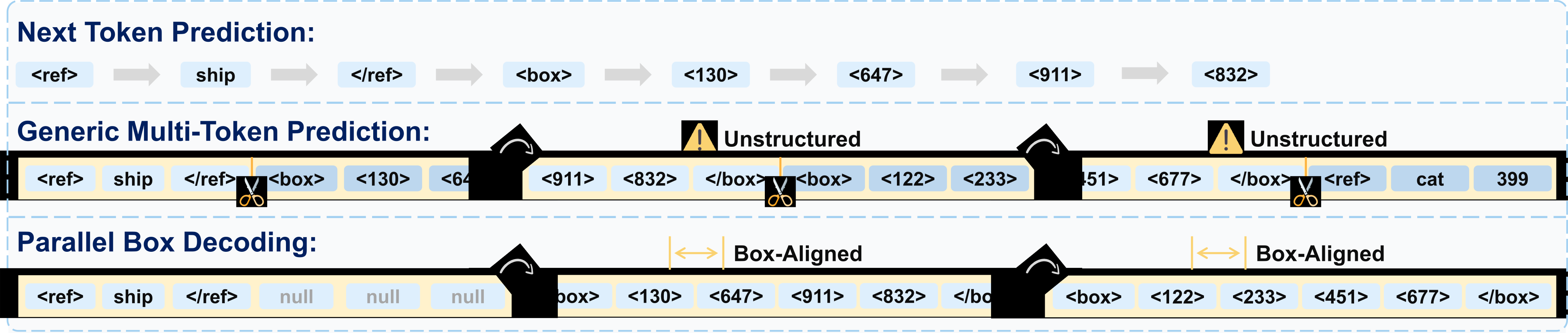
Figure 2 解读:NTP 是最稳但最慢的方案;普通 MTP 虽然并行,但 block 与几何结构不对齐,因此容易出现不连贯 token pattern;PBD 的关键是把 block 与 box / point 对齐,使并行化不再是任意 token chunking,而是结构化 coordinate unit prediction。
3. Method (方法)
3.1 Overall framework:native-resolution VLM + box-aligned blocks
LocateAnything 构建在 native-resolution VLM 之上。paper source 中的 architecture 描述为:Moon-ViT vision encoder 提取原始分辨率下的视觉 tokens $Z = \mathrm{Encoder}(\mathcal{I})$,MLP projector 连接到 Qwen2.5 language decoder,然后 decoder 直接生成 box-aligned block sequence。HF model card 对应实现为 3B 参数模型:vision encoder 是 MoonViT,language model 是 Qwen2.5-3B-Instruct,multimodal projector 是 MLP。
形式化地,连续坐标先被归一化到 [0, 1000] 并离散为 coordinate tokens。输出不再是普通 token 序列,而是 blocks:
其中 $\mathcal{E}$ 是文本 query。每个 $b_i$ 是长度 $L=6$ 的 atomic unit;空位用 <null> padding,保证 MTP 预测时 tensor shape 固定。
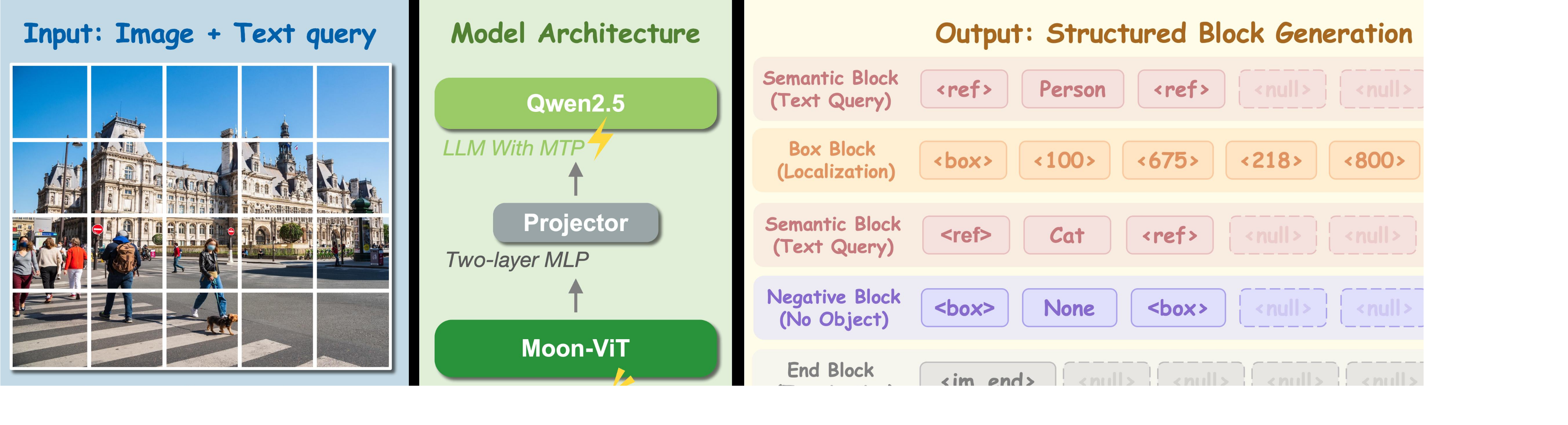
Figure 3 解读:图中最重要的是 block-based output representation。LocateAnything 定义四类 block:Semantic Block 表示目标类别或自然语言片段;Box Block 表示 <box> 加四个量化坐标再加 </box>;Negative Block 表示 query 对应目标不存在;End Block 表示输出终止。这个设计把“检测结果的语义”和“检测结果的几何”放进统一 token grammar,同时让每个 box 的四个坐标在同一并行 block 内被联合预测。
四类 block 的作用
- Semantic Block:编码 linguistic identity;如果表达式超过一个 block 容量,会拆到多个连续 semantic blocks。
- Box Block:编码四个 quantized coordinates,代表一个 bounding box;pointing task 中也可用两个坐标加结构 token 表示 point。
- Negative Block:显式表示 queried object 不存在,避免模型在负样本上 hallucinate boxes。
- End Block:表示 generation process 结束。
这个 block grammar 的直觉是:模型不应该在“生成到 $x_2$ 时才知道 $x_1$ 是什么”,而应该在一个局部 fully connected block 内同时考虑四个坐标的相互约束。这样做对 high-IoU localization 特别重要,因为 IoU=0.95 对 box 边界误差非常敏感。
3.2 Dual-formulation training:同时保留 NTP 与 MTP
直接把输出改成并行 block 会破坏 language model 原有的 causal generation 习惯。LocateAnything 因此采用 dual-formulation training:同一份 ground truth 被写成两种形式,一种是标准 token-level NTP sequence,另一种是 block-level MTP sequence。
训练输入为:
其中 $x_{\text{vis}}$ 和 $x_{\text{q}}$ 是共享上下文,$x_{\text{ntp}}$ 是标准自回归输出,$x_{\text{blk}}$ 是按照 block rules 构造的 MTP 输入。构造 $x_{\text{blk}}$ 时,作者从左到右遍历 $x_{\text{ntp}}$,按 block 边界 split / pad;每个 block 保留第一个 token 作为 prediction context,其余 token 替换成 [mask],让模型一次预测同 block 内的所有 masked tokens。若 block size 退化到 1,这个 MTP formulation 就等价于 NTP。
训练目标是两项交叉熵之和:
$\mathcal{L}_{\mathrm{ntp}}$ 保留顺序语言建模能力,$\mathcal{L}_{\mathrm{mtp}}$ 让模型学习 box-aligned parallel prediction。两者不是冗余:只有 MTP 会快但不稳,只有 NTP 会稳但慢;联合训练把“会按语言顺序解释 query”和“会按几何单位输出坐标”绑定在一起。
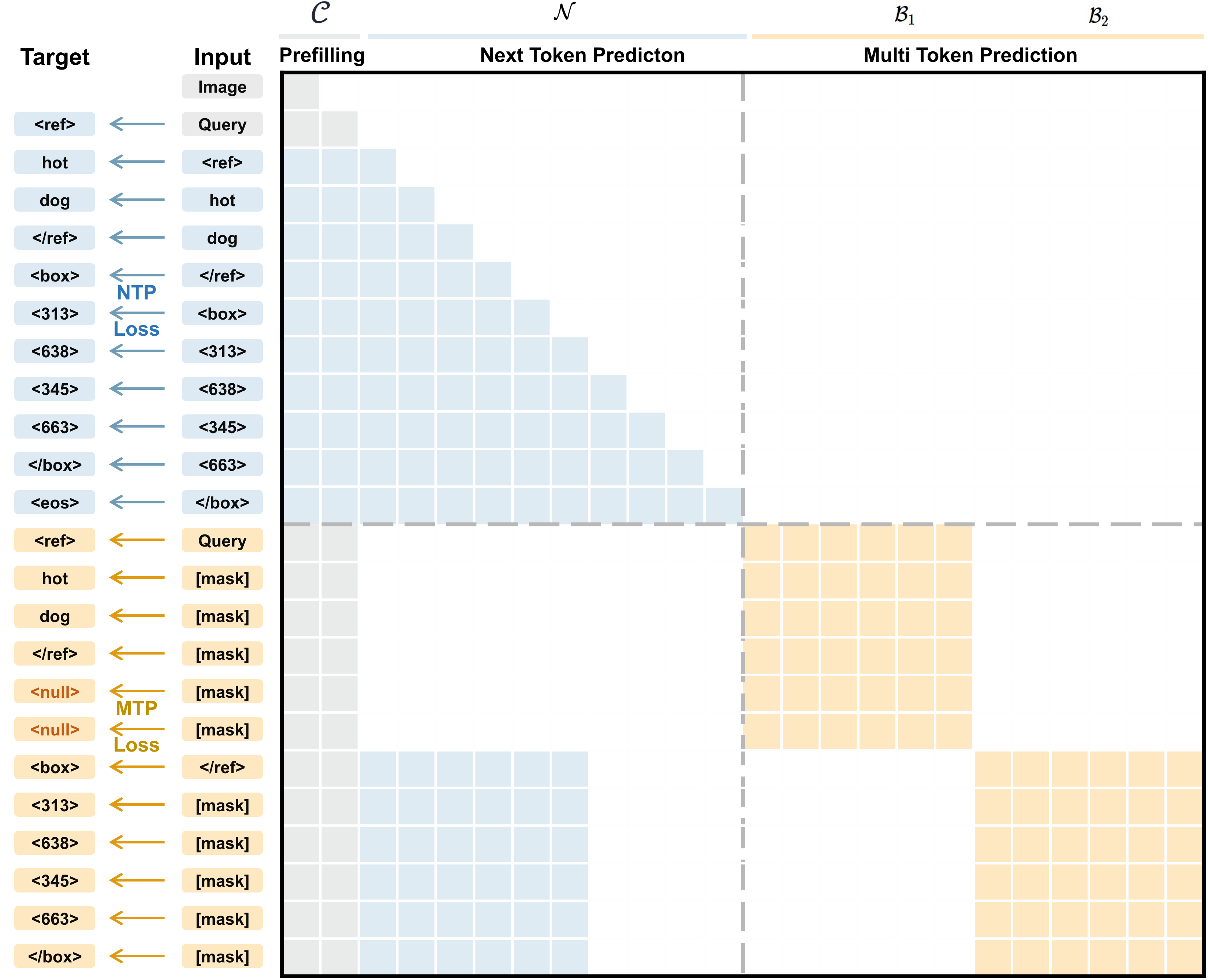
Figure 4 解读:attention mask 是 dual-formulation training 能成立的关键。shared context 和 NTP stream 使用 causal attention;MTP blocks 之间是 block-causal,即当前 block 只能看之前 blocks;同一 MTP block 内部是 bidirectional attention,使坐标 token 能互相通信。NTP 与 MTP stream 被隔离,避免答案泄漏,但二者都能 attend 到共享视觉和 query context。
3.3 Attention mask 与推理时 KV cache 一致性
PBD 的 attention 不是普通 causal mask。训练时同一 block 内要双向可见,以捕获 $x_1, y_1, x_2, y_2$ 的几何依赖;block 与 block 之间仍保持 causal order,保证第 $i$ 个目标不能偷看未来输出。推理时,每个 MTP decoding step 的 mask 复用训练时的 block-causal pattern:已经 committed 的 prefix 保持标准 causal attention;当前 $n_{\text{future}}$ tokens 彼此双向 attend,并能看历史 blocks。
HF released code 中,modeling_locateanything.py::generate() 的默认 n_future_tokens=6,对应 paper 的 block length $L=6$。代码会把当前最后一个 token、未来 mask tokens 拼到 generated_with_mask,并调整最后 $n_{\text{future}}$ 个 position ids,让同一 decoding window 使用一致位置。每次 MTP forward 后,代码会 truncate KV cache,只保留 committed tokens,移除 mask tokens 和 duplicated anchor,避免 cache 状态与训练时 causal prefix 不一致。
3.4 On-demand inference modes:Slow / Fast / Hybrid
PBD 提供三种推理 mode:
- Slow Mode:纯 NTP / AR,逐 token 生成。最慢,但复杂场景最稳。
- Fast Mode:纯 MTP,始终按 box-aligned block 并行生成;吞吐最高,但在密集场景或类别边界处可能出错。
- Hybrid Mode:默认使用 MTP;一旦检测到 format irregularity 或 spatial ambiguity,就丢弃当前问题 block,回到上一个 verified prefix,用 NTP 重新生成该 block;block 完成后再切回 MTP。
论文中定义的两类失败模式是:
- Format Irregularity:复杂场景中存在多个类别和实例时,模型可能在 block 内混入错误结构 token,例如
<box><211></ref><911><887></box>。 - Spatial Ambiguity:物体呈网格或密集排列时,MTP 可能在两个相邻物体之间输出中间坐标,导致 IoU 下降。
论文文字给出的 ambiguity trigger 是:top-1 coordinate token probability 低于 0.7,且 top-5 coordinate tokens 的 max-min 差值在 [0,1000] 归一化空间内超过 80。released HF code 与论文有一个实现差异:generate_utils.py::decode_bbox_avg() 中实际使用的是 first_valid_probs < 0.9 且 (valid_max - valid_min) > 60,论文阈值 0.7 / 80 保留在注释里。
论文公式与 released code 实现差异:Hybrid Mode 的 spatial ambiguity 阈值在论文正文中写作 prob < 0.7 且 spread > 80,但 HF snapshot 7a81d810 的 generate_utils.py 实际执行 prob < 0.9 且 spread > 60。因此笔记中的伪代码以 released code 为准,并在实验解释中把论文阈值视为报告描述而非当前代码默认值。
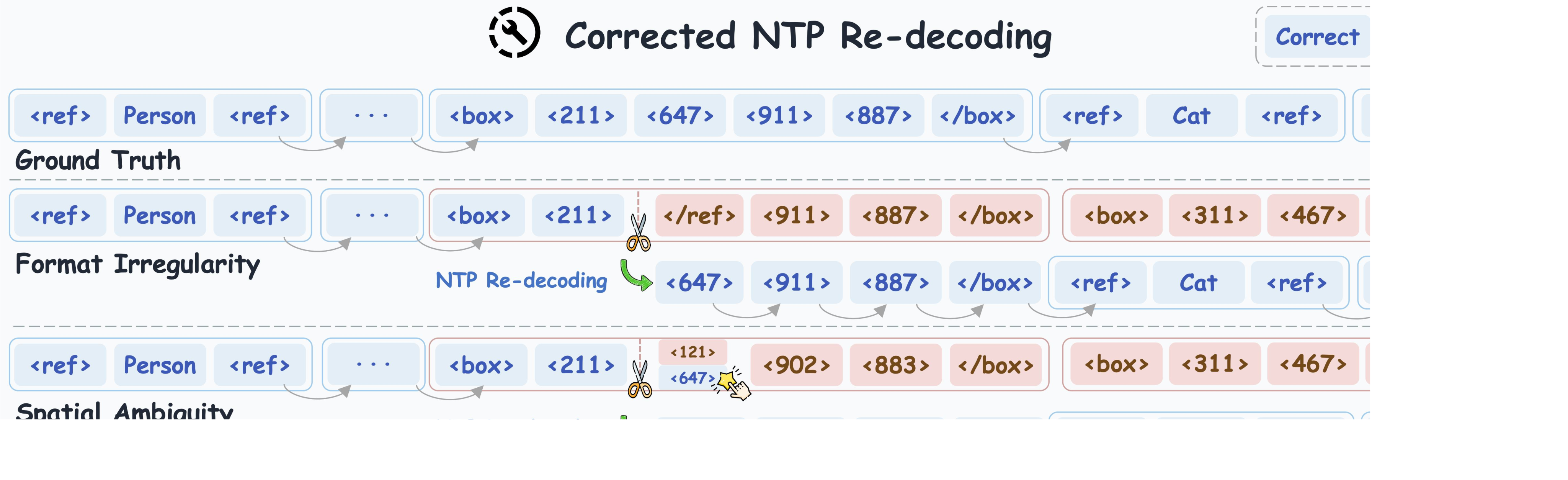
Figure 5 解读:图示的是 Hybrid Mode 的纠错路径。MTP 先预测一个完整 block;若 block syntax 不合法或空间置信度异常,系统不强行提交该 block,而是回退到最近的可靠 prefix,用 NTP 重新解码。这个机制保留了大多数简单目标上的并行速度,同时把错误集中在少数 difficult blocks 上处理。
3.5 LocateAnything-Data:大规模多域 grounding 数据引擎
除了 PBD,论文的第二个重要贡献是 LocateAnything-Data。HF model card 总结为 12M unique images、138M+ queries、785M bounding boxes;paper source 的统计表按六个 domain 给出超过 139M queries 和超过 22M negative samples。数据覆盖 detection、GUI、referring、OCR、layout、pointing 等场景。
数据构造有两条路径:
- 已有 detection datasets 有 gt boxes:以 box category 为 prompt,调用 Qwen3-VL 合成更丰富的 object-centric queries,包括属性、空间关系、reasoning cues;再用 Molmo 预测 candidate points,只保留落在 gt boxes 内的 points,作为可靠监督。
- 无标注高质量图像:Qwen3-VL 直接根据图像生成 diverse queries;这些 query 可以交给 Molmo 预测 point,再用 SAM 3 生成 boxes,也可以直接交给 Rex-Omni 生成 boxes;最后所有生成 boxes 再由 Qwen3-VL post-verify。
作者还显式构造 negative samples,因为传统 detection / grounding 数据几乎全是 positive samples,会让模型在 query 与图像无关时仍输出 box。负样本的加入对应 Negative Block,目的是让模型学会“没有目标”也是合法输出。
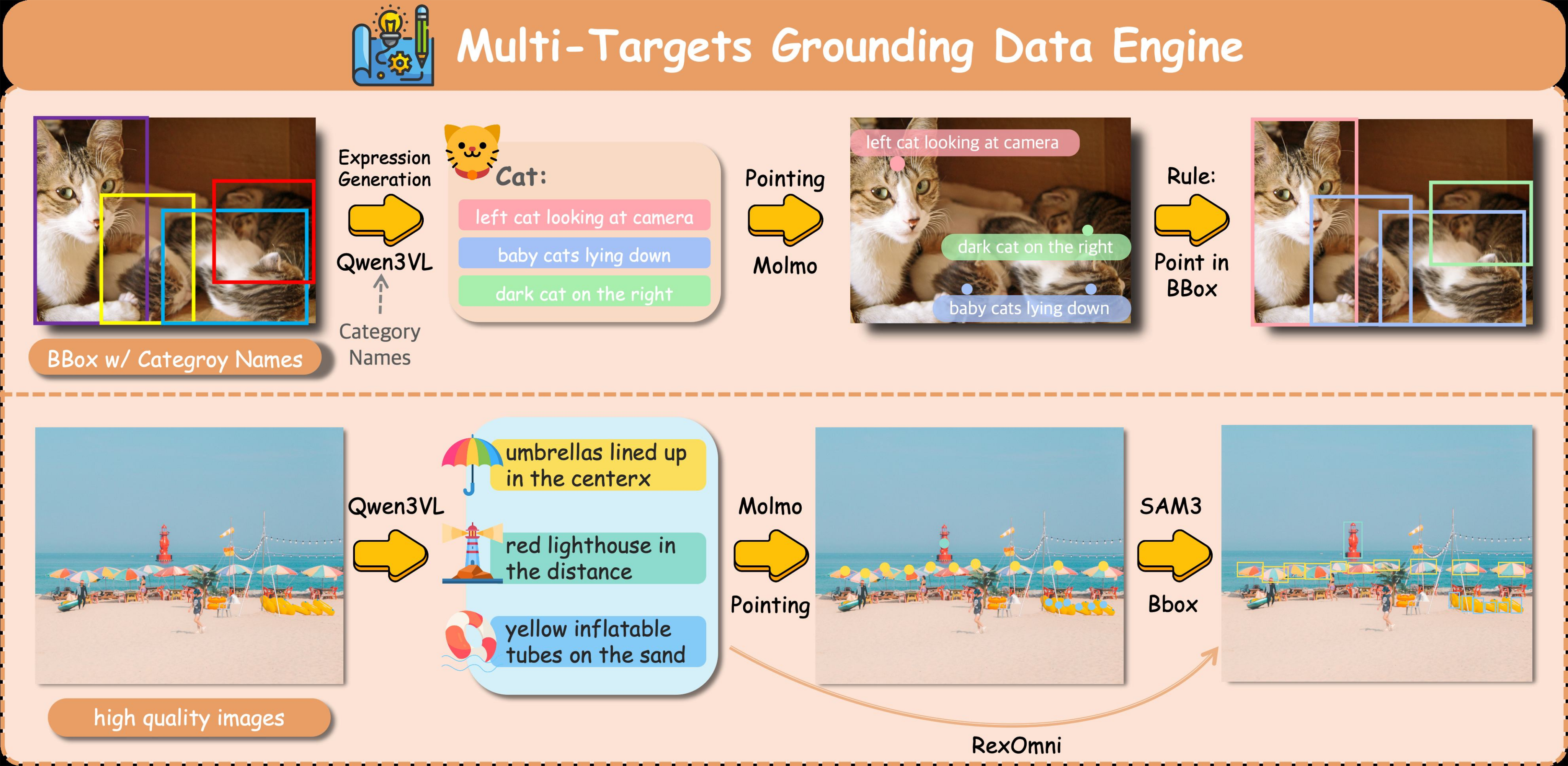
Figure 6 解读:上半部分展示从已有 gt boxes 出发的数据扩展:类别 prompt 经过 Qwen3-VL 变成自然语言 query,再由 Molmo 产生 points 并用 gt boxes 过滤。下半部分展示无标注图像路径:query、point、mask/box、verification 由多个强模型协作产生。这是一个 model-assisted data engine,不只是简单合并公开数据集。
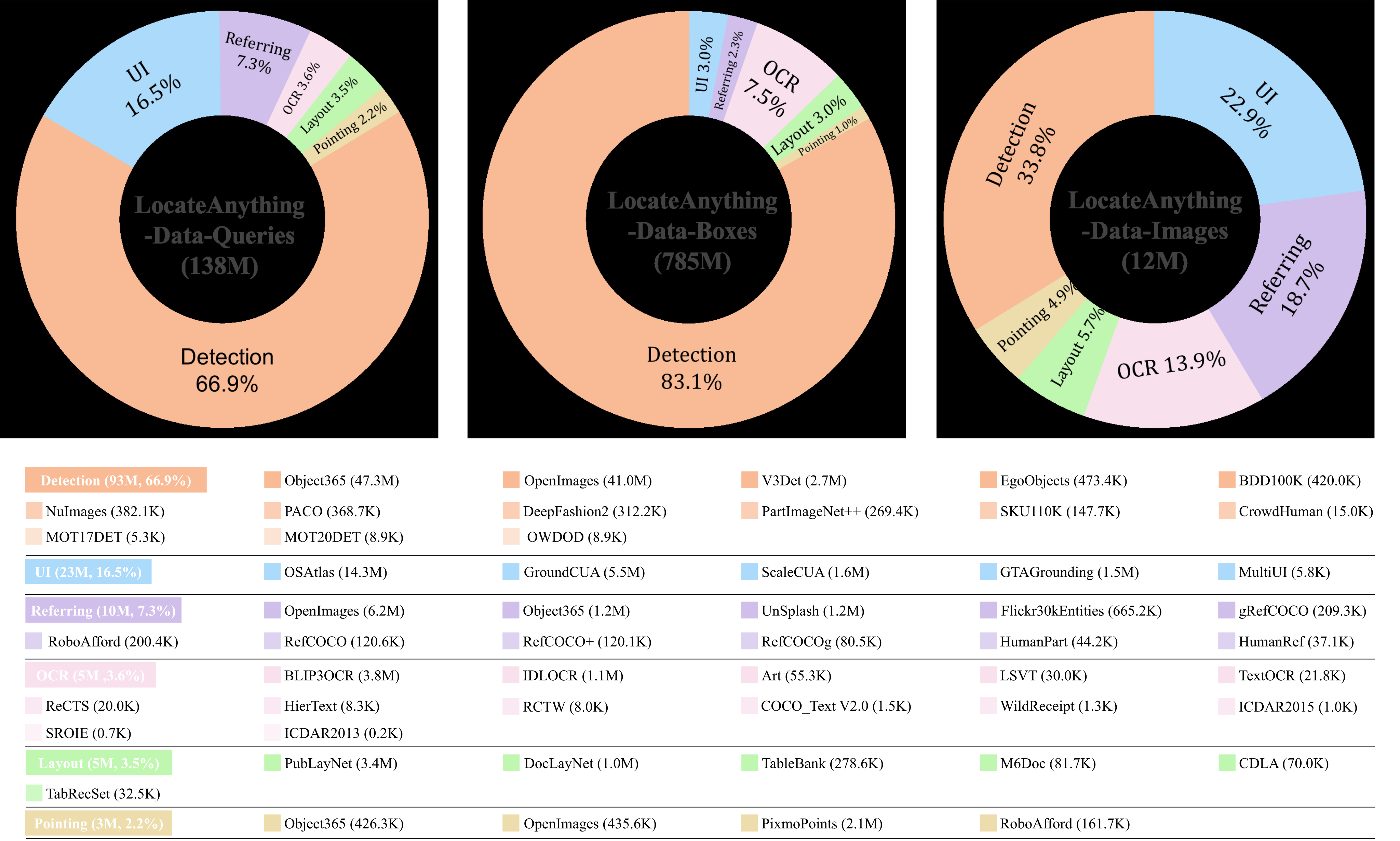
Figure 7 解读:该图给出 LocateAnything-Data 的任务分布。query 维度中 detection 占最大比例,其次是 GUI、referring、OCR、layout 和 pointing;这解释了为什么模型既能做通用 object detection,也能覆盖 GUI / OCR / document layout 等 VLM agent 更常用的 grounding 场景。
数据规模与分布
| Domain | Queries | Negative | Mean targets/query | Mean categories/query | Mean query length | Max targets/image |
|---|---|---|---|---|---|---|
| Detection | 93,351,373 | 21,021,509 | 6.29 | 2.47 | 24.19 | 3,725 |
| GUI | 23,009,535 | 0 | 1.03 | 1.03 | 4.07 | 8,690 |
| Referring | 10,141,597 | 93,396 | 2.12 | 0.89 | 5.48 | 6,938 |
| OCR | 5,052,040 | 0 | 11.89 | 10.40 | 1.17 | 2,337 |
| Layout | 4,859,914 | 1,384,804 | 4.92 | 1.31 | 2.20 | 880 |
| Pointing | 3,148,098 | 353,366 | 3.25 | 0.89 | 2.63 | 1,575 |
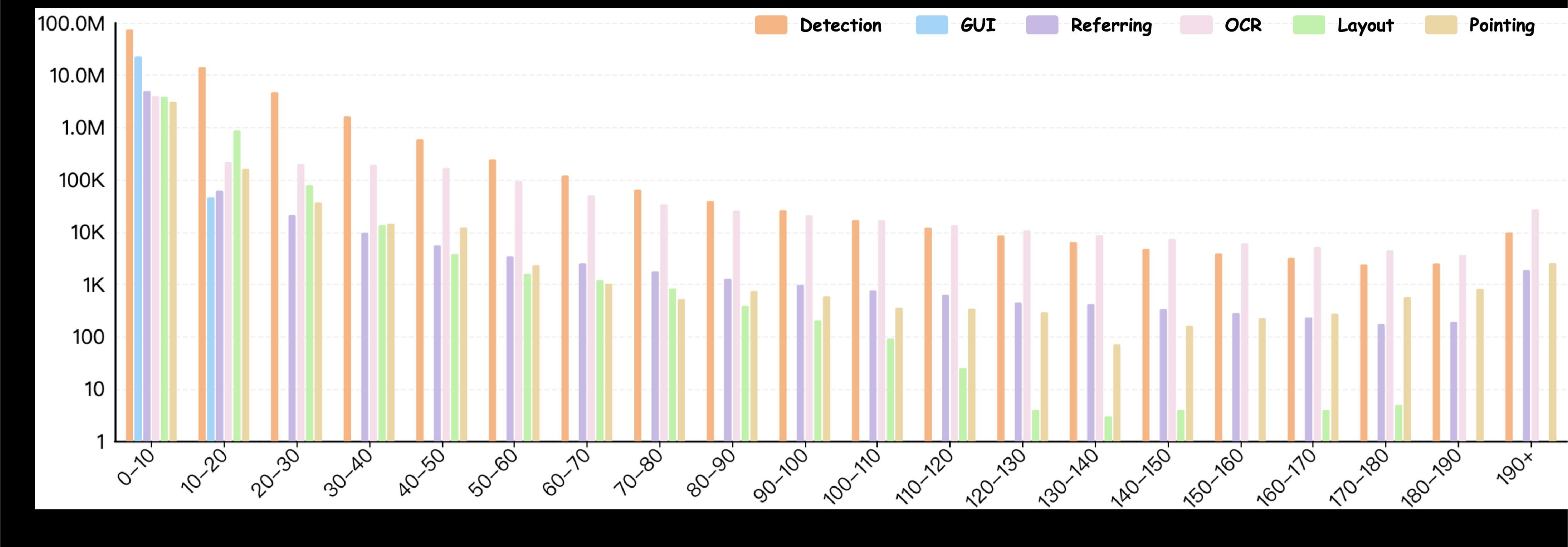
Figure 8 解读:targets per query 是长尾分布。多数 query 对应少量目标,但仍有不可忽略的 query 关联大量实例,这正是 dense detection / multi-target grounding 的难点。PBD 的收益会随目标数增多而变明显,因为逐 token decoding 的时间基本随 box 数线性增长。
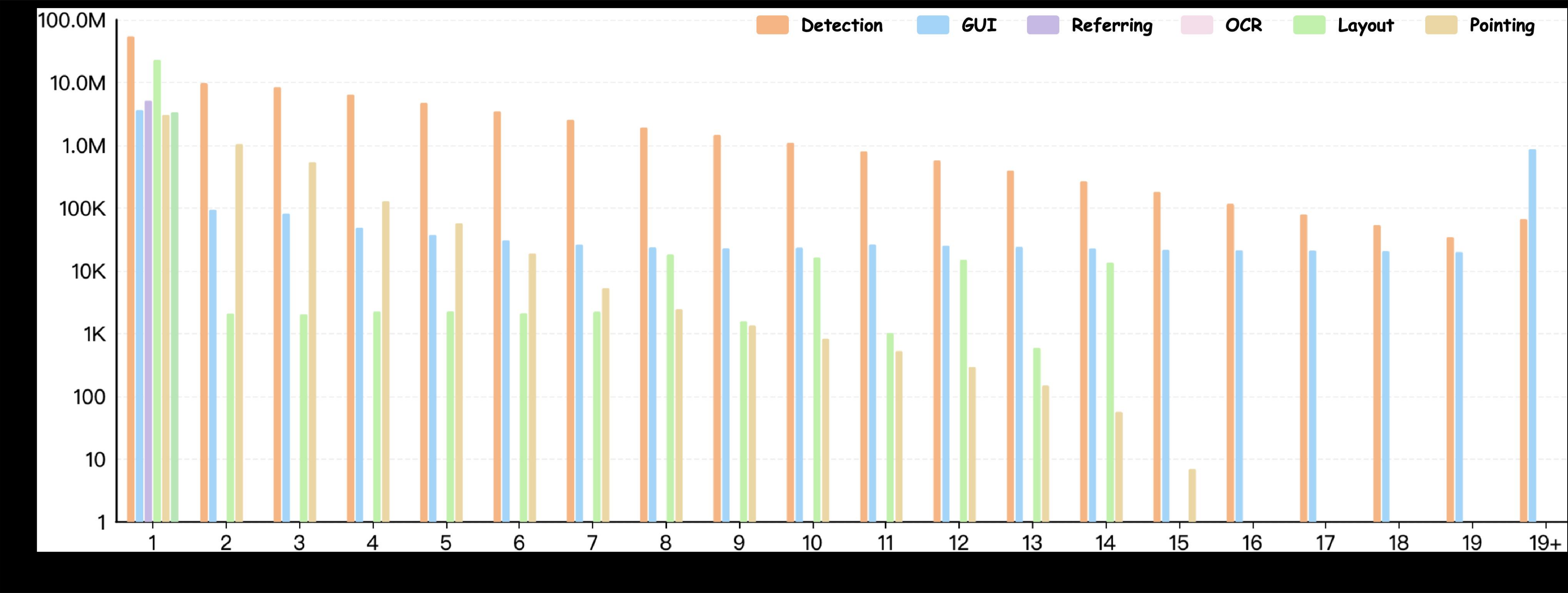
Figure 9 解读:query length / category distribution 反映不同 domain 的语言复杂度差异。Detection query 往往包含属性和关系,OCR / layout 更接近短标签,GUI query 则常是 task-oriented instruction。这说明 LocateAnything 不是只学习固定类别检测,而是在多种文本粒度上学习空间对齐。
3.6 伪代码:基于 released HF code 的实现逻辑
下面的伪代码锚定 HF nvidia/LocateAnything-3B snapshot 7a81d810,并结合 paper source 中未公开为代码的数据构造 / 训练描述。released GitHub NVlabs/Eagle/Embodied 当前只含 LocateAnything.pdf,不含 PBD training launch scripts;因此训练超参数只能引用 paper source supp/training_details.tex,不能从 GitHub launch config 反推。
3.6.1 Block-wise generation loop (modeling_locateanything.py::generate)
@torch.no_grad()
def locateanything_generate(model, tokenizer, pixel_values, input_ids,
                            generation_mode="hybrid", n_future_tokens=6,
                            max_new_tokens=2048, use_cache=True):
    assert input_ids.shape[0] == 1
    assert generation_mode in {"fast", "slow", "hybrid"}
    assert use_cache

    visual_features = model.extract_feature(pixel_values)
    generated = input_ids.clone()
    use_mtp = generation_mode in {"fast", "hybrid"}
    kv_cache = None

    while generated.size(1) < input_ids.size(1) + max_new_tokens:
        if use_mtp:
            # append duplicated anchor + future mask slots; all future slots share a block window
            mtp_inputs = prepare_inputs_in_mtp(
                generated,
                n_future_tokens=n_future_tokens,
                visual_features=visual_features,
                past_key_values=kv_cache,
            )
            outputs = model.language_model(**mtp_inputs, use_cache=True)
            kv_cache = truncate_cache_to_committed_prefix(outputs.past_key_values, generated)

            probs, confidence, sampled, _ = sample_tokens(
                outputs.logits[:, -n_future_tokens:, :],
                generated,
                model.token_ids,
                generation_mode=generation_mode,
            )
            pattern = handle_pattern(sampled[0].tolist(), model.token_ids, generation_mode)
            out_type = pattern["type"]
            out_tokens = torch.tensor(pattern["tokens"], device=generated.device)
        else:
            ar_inputs = prepare_inputs_in_ar(generated, visual_features, kv_cache)
            outputs = model.language_model(**ar_inputs, use_cache=True)
            kv_cache = outputs.past_key_values
            out_type, out_tokens = sample_one_ar_token(outputs.logits[:, -1:, :], generated)

        generated = torch.cat([generated, out_tokens.unsqueeze(0)], dim=1)

        if out_type == "im_end":
            break
        if generation_mode == "hybrid":
            if out_type == "error_box":
                use_mtp = False      # re-decode current block using AR/NTP
            elif out_type == "box_end_ar":
                use_mtp = True       # switch back to MTP after a valid AR box

    return tokenizer.batch_decode(generated[:, input_ids.size(1):], skip_special_tokens=False)
3.6.2 Box pattern validation and fallback (generate_utils.py::handle_pattern)
def handle_pattern(tokens, ids, generation_mode="hybrid"):
    if tokens[0] in {ids["null_token_id"], ids["im_end_token_id"]}:
        return {"type": "im_end", "tokens": [ids["im_end_token_id"]]}

    if tokens[:2] == [ids["box_start_token_id"], ids["none_token_id"]]:
        return {
            "type": "empty_box",
            "tokens": [ids["box_start_token_id"], ids["none_token_id"], ids["box_end_token_id"]],
        }

    if tokens[0] == ids["box_start_token_id"]:
        coord_ix = 1
        for tok in tokens[1:5]:
            if ids["coord_start_token_id"] <= tok <= ids["coord_end_token_id"]:
                coord_ix += 1
            else:
                break

        if coord_ix == 5 and tokens[5] == ids["box_end_token_id"]:
            return {"type": "coord_box", "tokens": tokens}
        if coord_ix == 3 and tokens[3] == ids["box_end_token_id"]:
            return {"type": "point_box", "tokens": tokens[:4]}

        if generation_mode == "fast":
            return {"type": "coord_box", "tokens": tokens}
        return {"type": "error_box", "tokens": tokens[:coord_ix], "need_switch_to_ar": True}

    return {"type": "ref_object", "tokens": trim_after_ref_end(tokens, ids)}
3.6.3 Hybrid spatial ambiguity check (generate_utils.py::decode_bbox_avg)
def decode_bbox_avg(probs, ids, keep_k=5, generation_mode="hybrid"):
    pos_probs, pos_ids = torch.topk(probs[1:5], k=keep_k, dim=-1)
    coord_mask = (pos_ids >= ids["coord_start_token_id"]) & (pos_ids <= ids["coord_end_token_id"])
    if not coord_mask.any(dim=-1).all():
        return None

    first_idx = coord_mask.long().argmax(dim=-1, keepdim=True)
    first_valid_probs = pos_probs.gather(-1, first_idx).squeeze(-1)
    first_valid_ids = pos_ids.gather(-1, first_idx).squeeze(-1)

    if generation_mode == "hybrid":
        valid_counts = coord_mask.sum(dim=-1)
        valid_max = torch.where(coord_mask, pos_ids, -999999).max(dim=-1).values
        valid_min = torch.where(coord_mask, pos_ids, 999999).min(dim=-1).values
        # released code threshold, not the paper-text 0.7 / 80 threshold
        is_abnormal = (first_valid_probs < 0.9) & (valid_counts > 1) & ((valid_max - valid_min) > 60)
        final_coords = torch.where(is_abnormal, torch.zeros_like(first_valid_ids), first_valid_ids)
    else:
        final_coords = first_valid_ids

    return torch.cat([ids.box_start, final_coords, ids.box_end])
3.6.4 Data engine(paper source,未在 released code 中公开)
def build_locateanything_data(images, detection_datasets, unlabeled_images):
    records = []

    for image, gt_boxes in detection_datasets:
        for category, boxes in group_by_category(gt_boxes):
            queries = qwen3_vl_generate_object_queries(image, category, boxes)
            for query in queries:
                points = molmo_predict_points(image, query)
                kept = [p for p in points if inside_any_gt_box(p, boxes)]
                if kept:
                    records.append(make_positive_query(image, query, boxes, kept))
                records.extend(make_domain_specific_negative_queries(image, query, boxes))

    for image in unlabeled_images:
        queries = qwen3_vl_generate_queries_from_image(image)
        for query in queries:
            points = molmo_predict_points(image, query)
            boxes_from_points = sam3_segment_to_boxes(image, points)
            boxes_from_vlm = rex_omni_predict_boxes(image, query)
            boxes = qwen3_vl_verify_boxes(image, query, boxes_from_points + boxes_from_vlm)
            if boxes:
                records.append(make_positive_query(image, query, boxes))

    return deduplicate_and_balance(records)
3.7 Code-to-paper mapping
Code reference: HF
main@7a81d810(2026-05-27) — pseudocode and mapping based on this snapshot. GitHub projectNVlabs/Eagle@c3c08afe(2026-05-27) currently links the paper underEmbodied/LocateAnything.pdf; the PBD implementation files are in the Hugging Face model repo.
| Paper Concept | Source File | Key Class/Function |
|---|---|---|
| LocateAnything VLM wrapper | modeling_locateanything.py | LocateAnythingModel, generate() |
| Fast / Slow / Hybrid generation modes | modeling_locateanything.py | generate(), _prepare_inputs_in_mtp(), _sample_token_in_mtp(), _sample_token_in_ar() |
| PBD token sampling and box decoding | generate_utils.py | sample_tokens(), decode_bbox_avg(), handle_pattern() |
| Box / coordinate / special token IDs | configuration_locateanything.py, tokenizer JSON files | LocateAnythingConfig, get_token_ids_from_config() |
| Block / causal / bidirectional attention masks | mask_sdpa_utils.py, mask_magi_utils.py, modeling_qwen2.py | create_block_diff_mask_by_pe_4d(), build_magi_ranges() |
| Processor and inference worker interface | processing_locateanything.py, README.md | LocateAnythingProcessor, model-card LocateAnythingWorker.predict() |
| Training data engine | paper source sec/X_0_suppl.tex, supp/data.tex | released HF/GitHub code does not include data-engine implementation |
| Training hyperparameters | paper source supp/training_details.tex | released HF/GitHub code does not include LocateAnything training launch config |
4. Experimental Setup (实验设置)
训练流程与模型配置
模型配置来自 paper source 和 HF model card:LocateAnything-3B 是 native-resolution VLM,vision encoder 为 MoonViT,language decoder 为 Qwen2.5-3B-Instruct,projector 为 MLP。训练分四个 progressive stages;其中前两阶段做 world-knowledge injection,后两阶段做 detection & grounding enhancement。
训练超参数来自 supp/training_details.tex,不是 released code launch script;released HF/GitHub snapshot 未公开 LocateAnything training launch config(released HF/GitHub code does not include LocateAnything training launch config)。
| Stage | Objective | Dataset | LR | Max seq len | Trainable | GPUs | Steps |
|---|---|---|---|---|---|---|---|
| Stage 1 | World Knowledge Injection | Caption | $2\times10^{-4}$ | 32768 | MLP | 64 | 2,000 |
| Stage 2 | World Knowledge Injection | General VQA | $4\times10^{-5}$ | 32768 | All | 256 | 20,000 |
| Stage 3 | Detection & Grounding Enhancement | Detection & Grounding | $4\times10^{-5}$ | 25600 | All | 256 | 25,000 |
| Stage 4 | Detection & Grounding Enhancement | 20% previous + dense | $1\times10^{-5}$ | 25600 | All | 256 | 5,000 |
四个阶段均使用 AdamW,weight decay 为 0.01,LR schedule 为 Cosine。正文还说明:Stage-1 将 138M queries 混入总体训练数据,Stage-2 降低 general data 比例到 20%,并增加 MOT20Det、SKU110K 等 many-objects-per-image 数据,以增强 dense detection。
数据集与任务
训练数据覆盖六个 domain:Detection、GUI、Referring、OCR、Layout、Pointing。HF model card 汇总为 12M unique images、138M+ natural-language queries、785M bounding boxes;paper source 的 query statistics 表给出总计约 139.56M queries 和 22.85M negative samples。
评测集覆盖:
- Common object detection:LVIS、COCO;
- Dense object detection:Dense200、VisDrone;
- GUI grounding:ScreenSpot-Pro 的 Dev / Creative / CAD / Sci. / Office / OS split;
- OCR / document layout:DocLayNet、M6Doc、TotalText 等;
- Referring expression comprehension:HumanRef、RefCOCOg val / test;
- Pointing:COCO、LVIS、Dense200、VisDrone、HumanRef、RefCOCOg。
Baselines
论文比较三类方法:
- Specialized detectors:DETR、Deformable-DETR、Faster R-CNN、Grounding DINO 等;
- General / grounding VLMs:Qwen3-VL、SEED1.5-VL、DeepSeek-VL2、Mimo-VL、OVIS2.5、Cosmos-Reason2 等;
- Coordinate / grounding specialists:Rex-Omni-3B、GUI-Owl、UI-Venus、InfiGUI-R1、GTA1 等。
Metrics 与吞吐设置
Box-based outputs 使用 F1@IoU:分别报告 IoU=0.5、IoU=0.95 以及 thresholds mean (mIoU);point-based outputs 以 predicted point 是否落入 ground-truth segmentation mask 或 box 计算 F1@Point。吞吐以 Boxes Per Second (BPS) 报告,在单张 NVIDIA H100、batch size 1 上测量。正文默认报告 Hybrid Mode;Fast / Slow 的完整对比在 supplement 中给出。
5. Experimental Results (实验结果)
5.1 Common object detection:高 IoU 更强,吞吐更高
| Method | BPS | LVIS F1@0.5 | LVIS F1@0.95 | LVIS Mean | COCO F1@0.5 | COCO F1@0.95 | COCO Mean |
|---|---|---|---|---|---|---|---|
| Grounding DINO-Swin-T | - | 47.7 | 22.7 | 38.8 | 69.8 | 23.0 | 56.6 |
| SEED1.5-VL | - | 65.6 | 19.5 | 46.7 | 71.3 | 14.3 | 51.4 |
| Rex-Omni-3B | 5.0 | 64.3 | 20.7 | 46.9 | 72.0 | 15.9 | 52.9 |
| LocateAnything-3B | 12.7 | 62.3 | 31.1 | 50.7 | 70.1 | 19.3 | 54.7 |
LocateAnything 的 LVIS mean F1 比 Rex-Omni-3B 高 +3.8,COCO mean F1 高 +1.8,并且 BPS 从 5.0 提升到 12.7。最有信息量的是高 IoU:LVIS F1@0.95 从 Rex-Omni 的 20.7 到 31.1,说明 PBD 对 box boundary precision 有明显帮助。
5.2 Dense object detection:密集场景中的多目标定位
| Method | Dense200 F1@0.5 | Dense200 F1@0.95 | Dense200 Mean | VisDrone F1@0.5 | VisDrone F1@0.95 | VisDrone Mean |
|---|---|---|---|---|---|---|
| Grounding DINO-Swin-T | 36.9 | 19.7 | 33.1 | 55.2 | 3.9 | 38.5 |
| Rex-Omni-3B | 78.4 | 10.3 | 58.3 | 61.6 | 1.5 | 35.8 |
| LocateAnything-3B | 74.0 | 18.5 | 58.7 | 63.0 | 3.2 | 39.9 |
在 Dense200 上 LocateAnything mean F1 为 58.7,略高于 Rex-Omni-3B 的 58.3;在 VisDrone 上 mean F1 为 39.9,高于 Rex-Omni-3B 的 35.8。Dense detection 的关键不是 F1@0.5,而是高 IoU 和 crowded instances;LocateAnything 在 Dense200 F1@0.95 上接近 Grounding DINO,并显著高于 Rex-Omni。
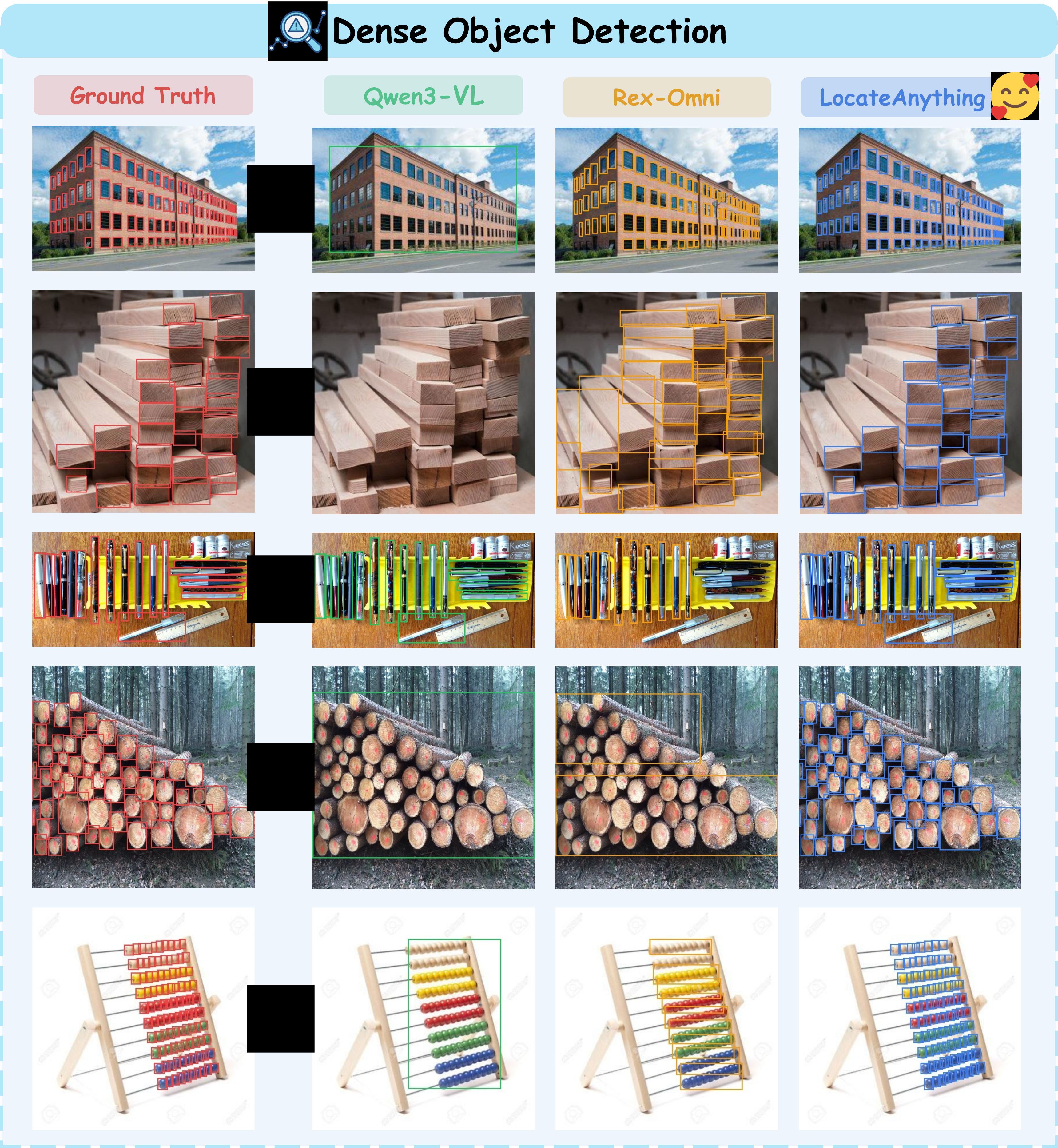
Figure 10 解读:Dense Object Detection 例子展示 stacked logs、abacus beads 等密集重复结构。Qwen3-VL 容易漏检,Rex-Omni 的点式 / token-by-token 输出容易边界模糊;LocateAnything 产生的 boxes 更紧凑且分离,说明 block-aligned geometry 对相邻实例有帮助。
5.3 GUI、OCR 与 referring grounding
| Task | Main benchmark | Strong baseline | LocateAnything-3B |
|---|---|---|---|
| GUI grounding | ScreenSpot-Pro Avg | GUI-Owl-32B 58.0 / UI-Venus 57.7 | 60.3 |
| Document layout | DocLayNet Mean | Rex-Omni 70.7 | 76.8 |
| OCR / document | M6Doc Mean | Rex-Omni 55.6 | 70.1 |
| Scene text | TotalText Mean | Rex-Omni 40.6 | 43.3 |
| REC | RefCOCOg val Mean | Rex-Omni 73.6 | 76.7 |
| REC | RefCOCOg test Mean | Rex-Omni 74.3 | 77.6 |
GUI grounding 上,LocateAnything 在 ScreenSpot-Pro 平均分 60.3,超过 GUI-Owl-32B 的 58.0。OCR / document tasks 上提升更大:DocLayNet mean 76.8,M6Doc mean 70.1,说明大规模 OCR/layout 数据与 block output 对 tight text boxes 有帮助。Referring expression comprehension 中,LocateAnything 在 RefCOCOg val/test mean 分别为 76.7 / 77.6,主要收益来自高 IoU:RefCOCOg test F1@0.95 为 43.4,高于 Rex-Omni 的 36.6。
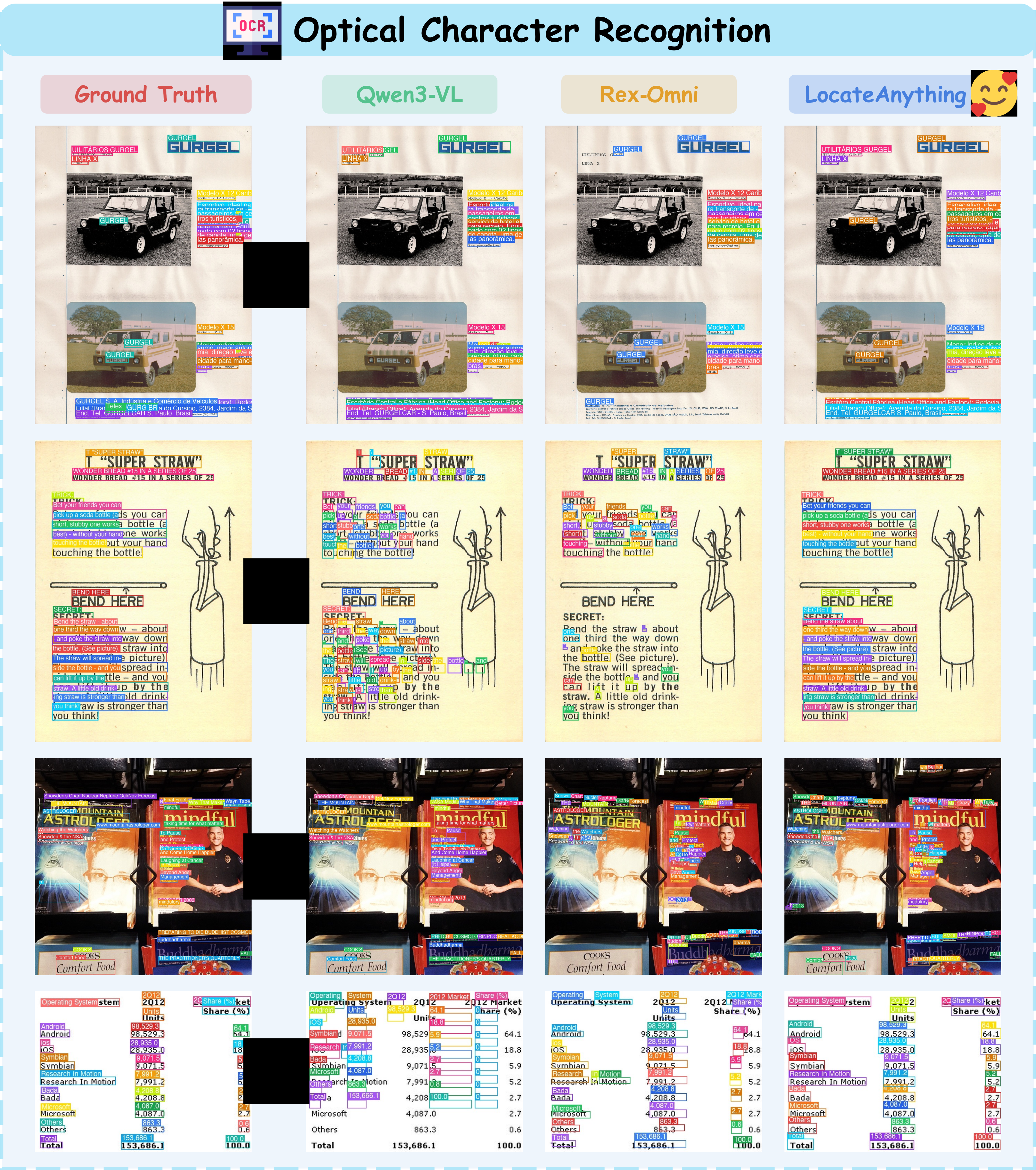
Figure 11 解读:OCR qualitative comparison 中,LocateAnything 的文字框更贴近文本块边界;baseline 容易把相邻文字合并,或者出现格式不规则。这里 Hybrid Mode 的价值很明显:简单 text boxes 可并行输出,复杂 layout 出错时可回退到 NTP。
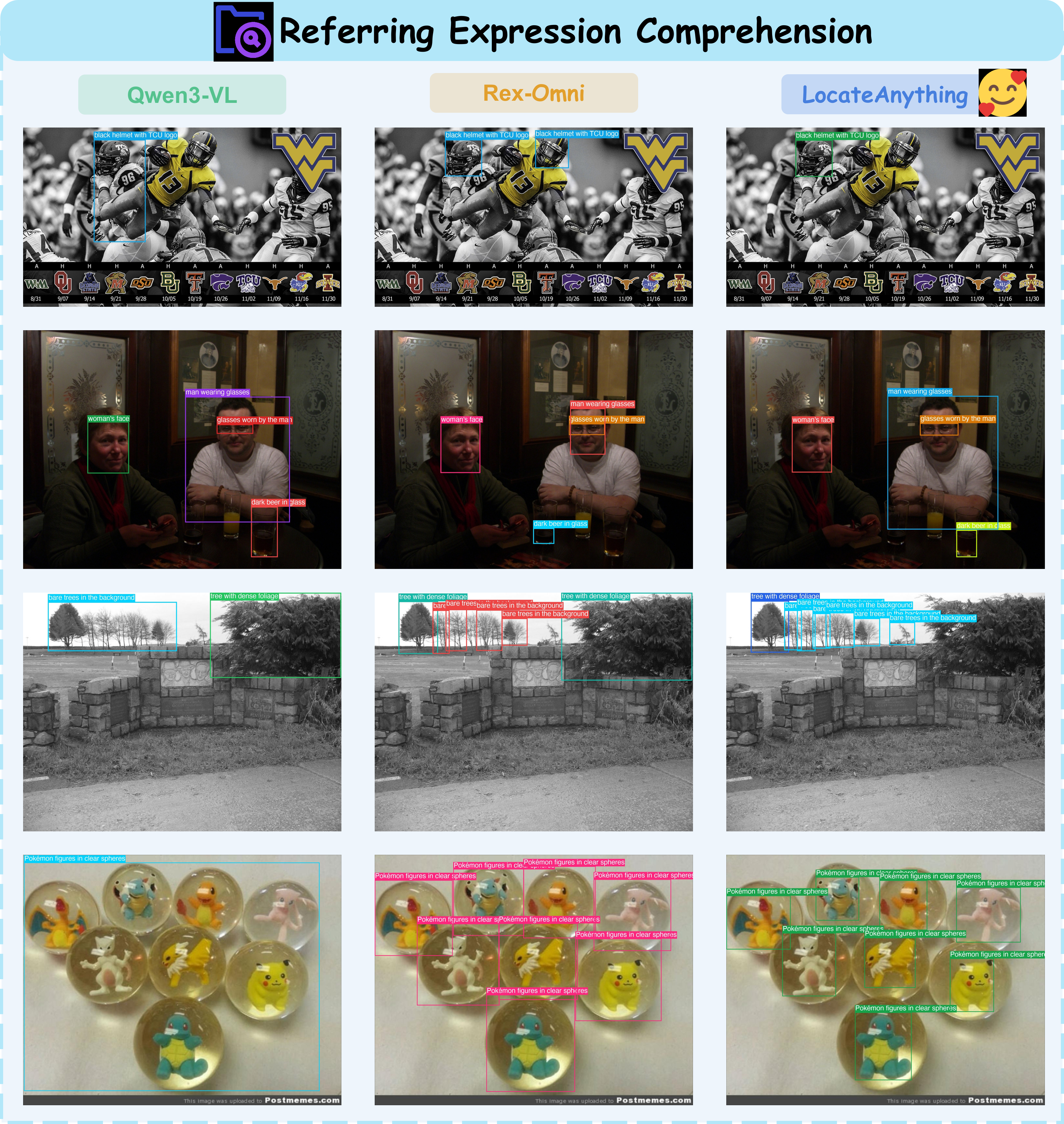
Figure 12 解读:REC 例子强调 compositional human intent,例如属性、空间关系和自由表达。LocateAnything 能把细粒度 query 对齐到正确区域,说明它并非只记住类别,而是能把 language grounding 与 box geometry 联动。
5.4 Pointing results:box-aligned training 迁移到 point 输出
| Dataset | Rex-Omni-3B | LocateAnything-3B |
|---|---|---|
| COCO | 80.5 | 83.9 |
| LVIS | 70.8 | 76.6 |
| Dense200 | 82.5 | 87.6 |
| VisDrone | 58.9 | 60.4 |
| HumanRef | 83.8 | 84.7 |
| RefCOCOg val | 84.7 | 91.3 |
| RefCOCOg test | 85.1 | 91.0 |
Pointing task 不输出四坐标 box,而是输出点坐标;但它仍受益于 PBD 的几何单元建模。RefCOCOg val/test 上 91.3 / 91.0 的 F1@Point 显示,LocateAnything 的空间对齐能力可从 box 迁移到 point。
5.5 Ablation:PBD 的速度-精度折中
| Variant | Throughput | Recall | Precision | F1 |
|---|---|---|---|---|
| Textual | 1.3 | 45.7 | 52.3 | 49.1 |
| Quantized | 3.9 | 48.2 | 52.2 | 50.1 |
| PBD (Slow) | 3.9 | 49.4 | 55.2 | 52.1 |
| PBD (Fast) | 16.9 | 45.6 | 54.6 | 49.6 |
| PBD (Hybrid) | 13.2 | 48.7 | 54.8 | 51.6 |
对 COCO 的 controlled ablation 显示:PBD Slow 在精度上最好,F1=52.1;PBD Fast 吞吐最高,16.9 BPS,但 F1 降到 49.6;PBD Hybrid 达到 13.2 BPS 和 51.6 F1,是速度与鲁棒性的折中。相比 Quantized,Hybrid 提供约 3.4x throughput,同时 F1 提升 +1.5。
| Block / MTP baseline | Throughput | Recall | Precision | F1 |
|---|---|---|---|---|
| SDLM-B4 | 5.2 | 45.4 | 48.1 | 46.5 |
| SDLM-B6 | 5.5 | 45.1 | 47.5 | 46.1 |
| SDLM-B8 | 6.7 | 44.7 | 47.2 | 45.8 |
| Block Diff-B6 | 4.7 | 45.1 | 44.3 | 44.8 |
| PBD (Fast) | 16.9 | 45.2 | 54.6 | 49.6 |
这个对比说明“并行 token prediction”本身不够;关键是 block 与 box 语义对齐。普通 SDLM / Block Diff 的 F1 在 44.8–46.5,而 PBD Fast 为 49.6,吞吐也更高。
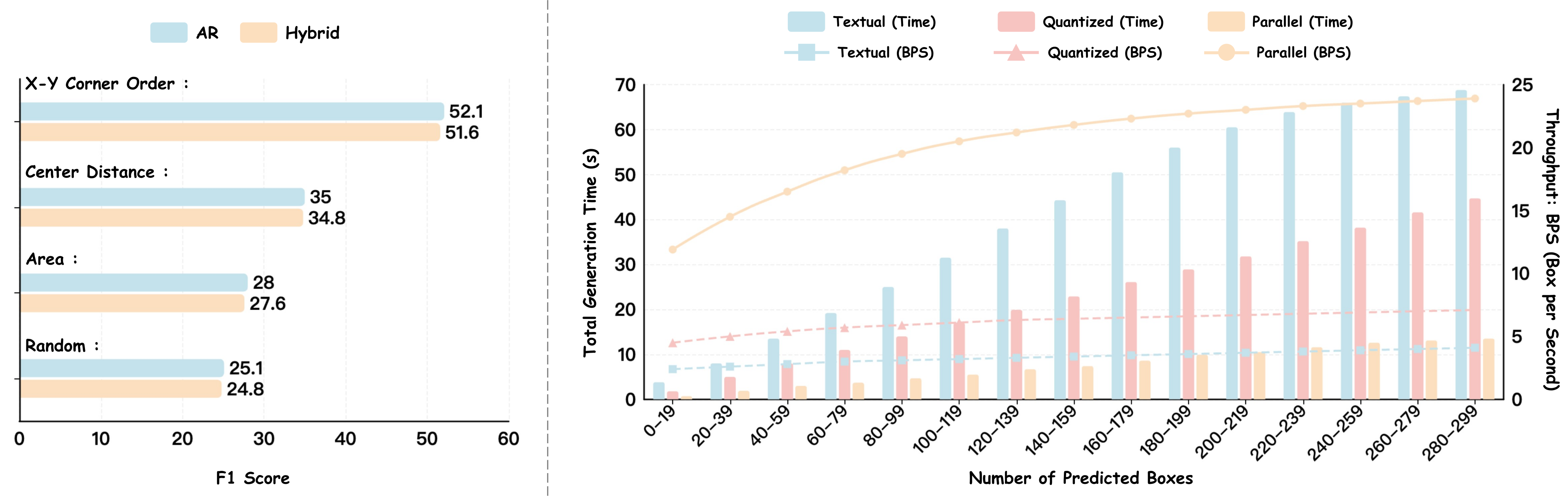
Figure 13 解读:左侧比较 box ordering 策略对 F1 的影响,右侧展示目标数增长时不同 decoding 表示的 generation time / throughput。PBD 的优势在多目标输出时更明显,因为它减少了每个 box 的 sequential coordinate steps。
5.6 Fast / Hybrid / Slow 模式的补充结果
Supplement 的综合表显示三种 mode 的吞吐为:Fast 15.3 BPS,Hybrid 12.7 BPS,Slow 4.3 BPS。部分关键结果如下:
| Dataset / Metric | Fast | Hybrid | Slow |
|---|---|---|---|
| COCO F1@mIoU | 52.2 | 54.7 | 55.1 |
| LVIS F1@mIoU | 47.0 | 50.7 | 52.6 |
| Dense200 F1@mIoU | 46.8 | 61.3 | 61.5 |
| VisDrone F1@mIoU | 34.4 | 39.8 | 40.2 |
| ScreenSpot-Pro Acc | 59.7 | 60.3 | 60.5 |
| RefCOCOg test F1@mIoU | 72.5 | 74.8 | 73.8 |
| COCO F1@Point | 83.1 | 83.9 | 84.8 |
Slow 通常是精度上界,但 Hybrid 已经接近 Slow,同时吞吐接近 Fast。这支持作者的 production recommendation:默认使用 Hybrid,在 latency 和 robustness 之间取得更好的 Pareto point。
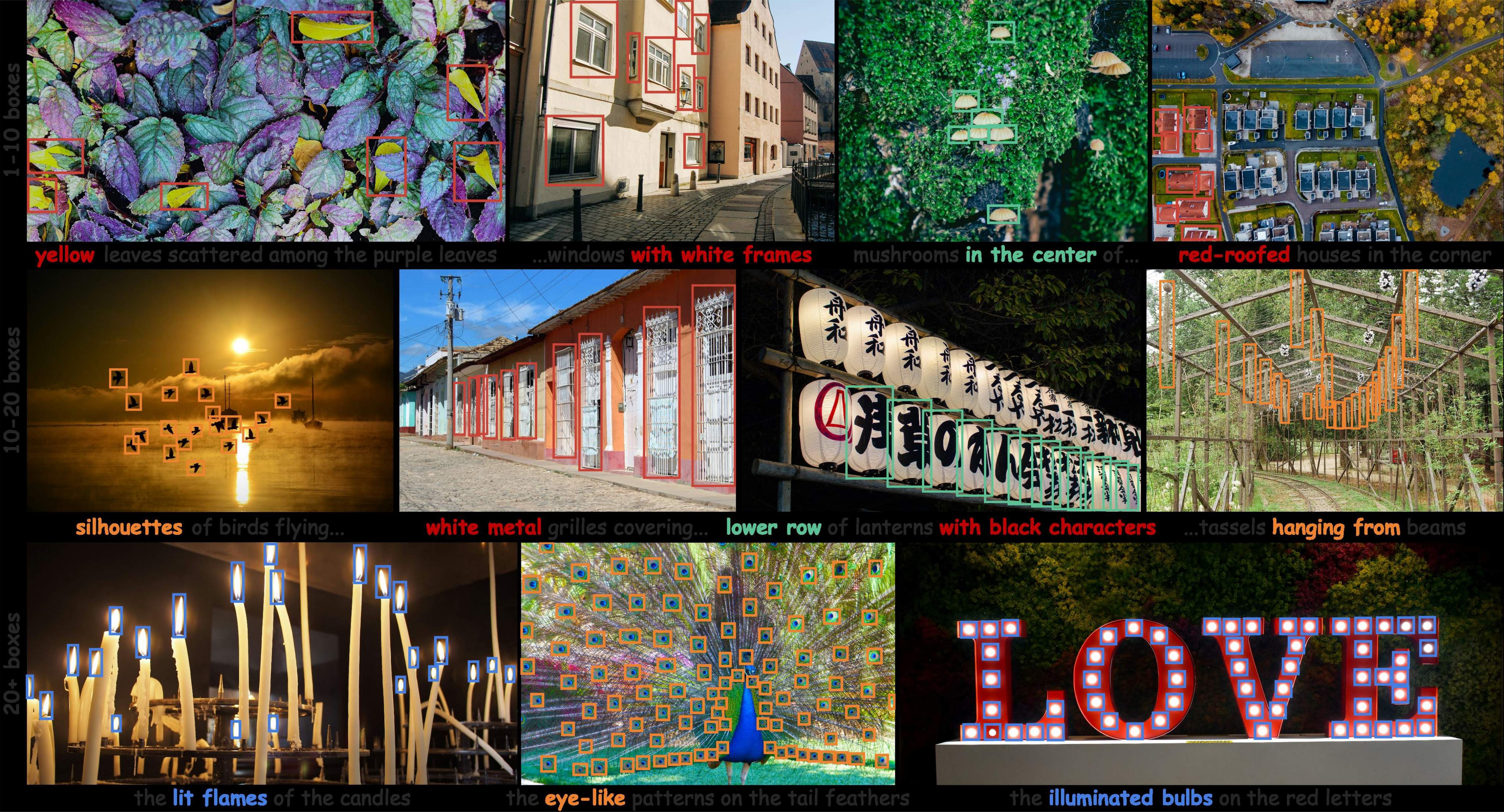
Figure 14 解读:qualitative cases 覆盖多目标数量、不同 box scale、属性 query、part query、reasoning query 和 spatial query。图中颜色代表不同 query category;LocateAnything 在任意分辨率和自由文本 query 下仍能输出多实例 boxes,体现数据规模与 block decoding 的互补效果。
5.7 局限与注意点
作者没有在正文中单列 limitations,但从方法和 released code 可以看到几个实际限制:
- Hybrid 仍依赖 heuristic trigger:format irregularity 和 spatial ambiguity 的检测阈值在论文与 HF code 中不完全一致,说明 fallback policy 仍是工程 heuristic,而非端到端学习出的 uncertainty model。
- Fast Mode 在复杂密集场景会掉精度:Fast 的 COCO / Dense200 / VisDrone F1@mIoU 均低于 Hybrid 和 Slow,适合低延迟简单场景,不适合作为默认高精度模式。
- 训练复现信息不完整:paper source 给了四阶段超参数表,但 released GitHub/HF snapshot 未公开 LocateAnything 的训练 launch config、data-engine implementation 和 138M query 数据构造代码。
- 当前 HF inference code 有 batch-size 限制:
modeling_locateanything.py::generate()断言batch_size == 1,并要求use_cache=True;这符合论文 BPS 测试设置,但部署时需要额外 batch/serving 工程。
总体结论:LocateAnything 的贡献不是单纯扩大 grounding 数据,也不是单纯改 decoding speed;它把输出表示、训练目标、attention mask、fallback inference 和大规模数据引擎组合到一起,使 VLM grounding 在 high-IoU precision 与 BPS 上同时前移。