LiteFrame: Efficient Vision Encoders Unlock Frame Scaling in Video LLMs
Paper: arXiv:2605.17260 Code: jjihwan/LiteFrame Code reference:
main@84fce3f(2026-05-18) Authors: Jihwan Kim, Nikhil Parthasarathy, Danfeng Qin, Junhwa Hur, Deqing Sun, Bohyung Han, Ming-Hsuan Yang, Boqing Gong Affiliations: Google DeepMind; Seoul National University Code status: 官方仓库已公开,但当前只包含 README 与 logo assets;README 明确写明 code and model weights will be released soon,因此本笔记的算法伪代码只能锚定论文公式与官方 README,而不能锚定实现文件。
1. Motivation (研究动机)
1.1 论文要解决的不是“LLM token 太多”这一单点问题
LiteFrame 的核心动机是:长视频 Video LLM 的计算瓶颈并不会在视觉 token 被 post-hoc 压缩后消失,而是会转移。典型 Video LLM 管线包含三段:逐帧 image encoder / ViT 先把每一帧编码成视觉 patch tokens,alignment projector 把视觉特征接到语言空间,LLM 再对视觉 token 与文本 token 做推理。过去的高效化方法大多把主要矛盾放在 LLM 的自注意力复杂度上,因为视觉 token 数随帧数增长会让 LLM prefilling 近似呈二次增长;于是它们保留原始 frozen image encoder,在特征抽取之后再做 token pruning、token merging、pooling 或 query-guided reduction。
这类“extract-and-reduce”范式在短期内有效:它确实能减少进入 LLM 的 token 数,让同一个上下文窗口容纳更多帧。但论文指出,post-hoc reduction 只能减少 LLM 端负担,不能减少每一帧都要跑一次大 ViT 的基础成本。当压缩比例很高时,LLM prefilling 被压下去了,原先看似不是主瓶颈的视觉编码器延迟就会成为新的 floor。换言之,系统延迟的下界由“先对所有帧做昂贵 dense feature extraction”决定,而这个下界不会因为之后把 token 丢掉而下降。
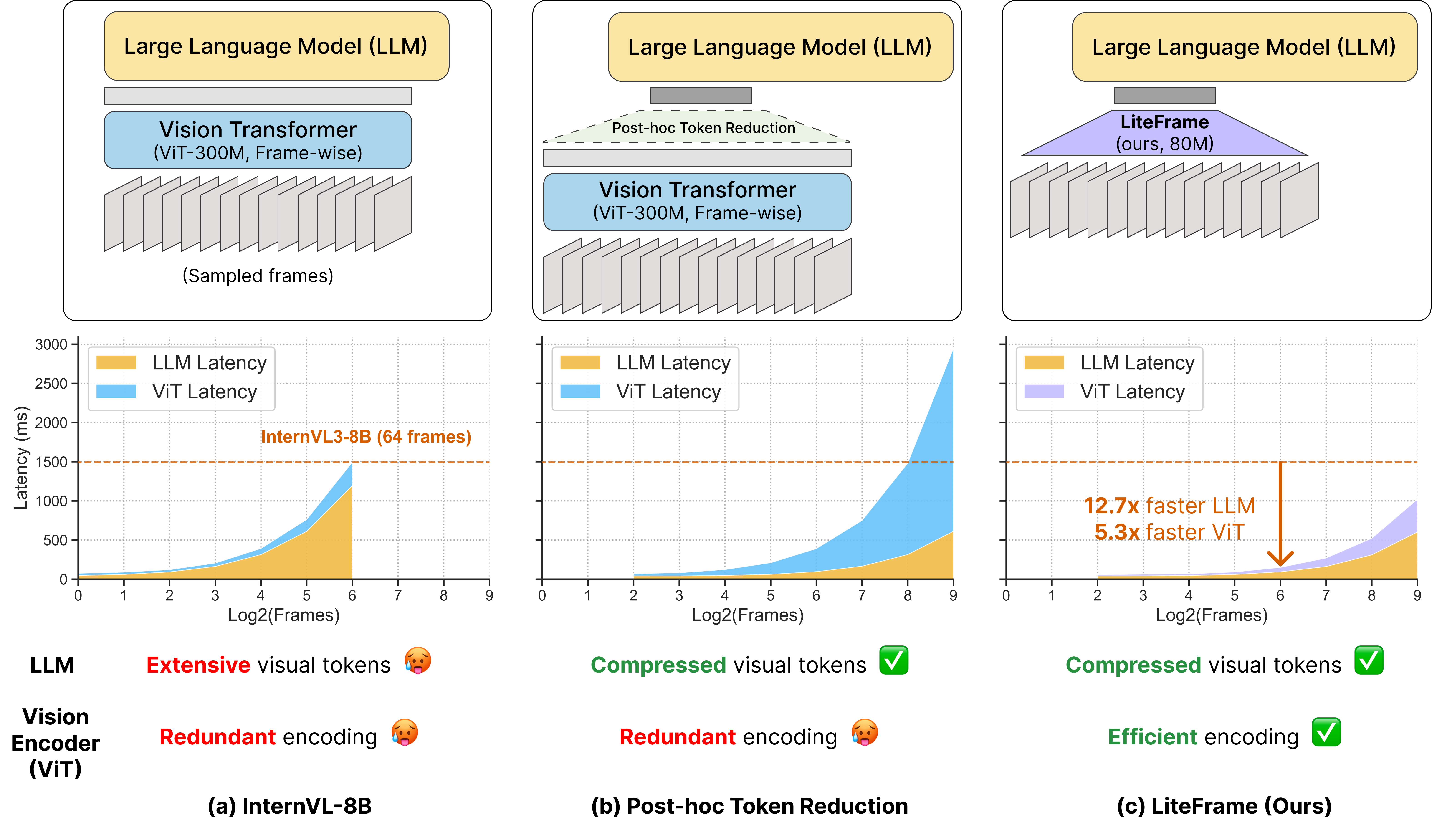
Figure 1 解读:这张 teaser 把三种范式的瓶颈位置放在一起。(a) 标准 Video LLM 被 LLM prefilling 的 token 数限制,通常只能处理较少帧;(b) post-hoc reduction 让 LLM 变轻,但由于仍需对所有帧运行原始 ViT,帧数一多 ViT 延迟爆炸;(c) LiteFrame 同时降低 ViT 编码成本和 LLM prefilling 成本,在 64 帧条件下相对 InternVL3-8B 基线获得 12.7x 更快的 LLM prefilling 和 5.3x 更快的 ViT encoding。这里的关键不是又提出一个 token reduction trick,而是把压缩的位置前移到视觉编码器内部。
1.2 Frame-count bottleneck:性能需要更多帧,但传统 encoder 让更多帧不可承受
论文的第二个动机是长视频理解对帧数高度敏感。Video-MME、MLVU、LongVideoBench 这类长视频 benchmark 的性能会随输入帧数增长而提升,虽然增长近似 logarithmic,但 8 帧、16 帧、32 帧与更高帧数之间仍有明显差距。问题在于 InternVL3 这类模型每帧可以产生 256 个视觉 token,LLM context 与 prefilling 成本限制它们实际只能在大约 64 帧附近工作。若想在固定 visual token budget 下增加时间覆盖,就必须用更高比例的时空压缩把冗余 patch 换成更多帧。
论文先验证了一个重要前提:激进压缩是值得做的。它提出 Weighted Average Pooling (WAP),在固定 压缩、64 帧条件下,WAP 的平均准确率 62.0,高于 average pooling 60.2、max pooling 60.0、subsampling 61.2、ToMe 60.0、PruMerge 59.7 和 FastVID 60.6。这个结果说明,简单保留时空块结构、再用 attention-like 权重选择高激活区域,比纯内容驱动的 pruning/merging 更适合视频连续结构。
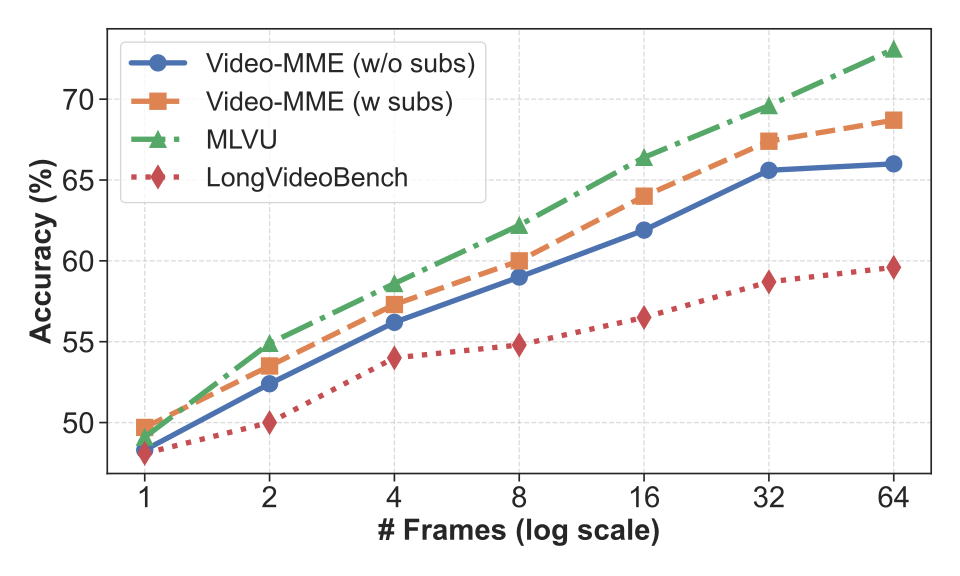
Figure 2 解读:左侧说明长视频理解准确率随帧数提升;右侧说明在固定 token budget 下,WAP 的 、、 压缩都能超过 no-compression baseline,其中 让模型看到最多帧,因此总体最好。这为 LiteFrame 的目标设定提供了依据:如果 token compression 是有用的,就不应只把它作为 post-hoc 操作,而应把这种压缩能力蒸馏进一个轻量视频 encoder。
1.3 论文的根本问题定义
因此 LiteFrame 不是在问“怎样从 LLM 输入里删掉更多 token”,而是在问“怎样让视觉 encoder 直接输出少量、信息密度高、结构连续的时空 token”。这个问题有三个约束:第一,压缩后的 token 必须足够少,论文主设置为每帧 16 tokens,相对 InternVL3 的 256 tokens/frame 是 减少;第二,encoder 本身必须比 teacher image encoder 更便宜,否则只是把 token 压缩换成 encoder 延迟;第三,压缩特征必须能被现有 LLM 消化,因此不能只追求 feature-level MSE,还需要下游 video-text adaptation。LiteFrame 的 CTD 与 LMA 正是围绕这三个约束设计的。
2. Idea (核心思想)
2.1 一句话概括
LiteFrame 的主意是:先用强 teacher 的 dense features 经过 WAP 生成一个信息密集的时空压缩 latent,再训练一个 87M 参数的轻量 student video encoder 直接预测这个 latent;推理时不再运行昂贵 teacher,也不再在 teacher 输出后做 post-hoc reduction,而是让 student 原生输出压缩 token,最后通过轻量 LMA 让 LLM 适应这种新的 latent space 与更长 temporal context。
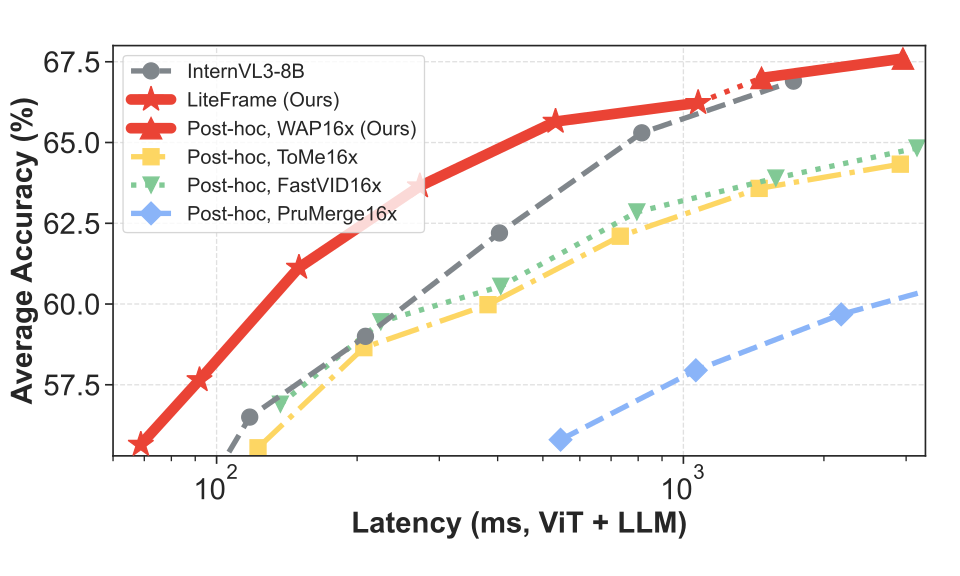
Figure 3 解读:图中黑色虚线是 InternVL3 teacher,彩色虚线是 post-hoc compression 方法,红色三角是 WAP,红色星号是 LiteFrame。WAP 已经能改善部分准确率/延迟权衡,但仍受原始 encoder latency floor 限制;LiteFrame 把 WAP 的压缩效果内化到 student 权重中后,才真正把 Pareto frontier 往左上推。注意横轴是 log-scale latency,这说明 LiteFrame 的收益不是微小常数优化,而是系统瓶颈位置变化带来的结构性收益。
2.2 为什么 WAP 既是 baseline 又是 teacher target generator
WAP 在论文中扮演双重角色。作为 post-hoc baseline,它证明了保留时空块结构的加权 pooling 比复杂 pruning/merging 更稳;作为 CTD 的 target generator,它把 teacher 的 dense feature 投影成压缩目标 ,让 student 不必模仿所有冗余 spatial details,而是模仿经过 teacher class-token attention 加权后的高 saliency feature。这个设计比普通 feature distillation 更适合压缩任务,因为普通蒸馏要求 student 还原 teacher 的 dense output,本质上仍把大量冗余局部细节当作监督;CTD 则把 teacher 的“哪些 patch/时间块更重要”提前融入目标。
2.3 为什么需要 LMA
即使 CTD 能让 student 输出语义显著、时空压缩的视觉 latent,这个 latent 也未必天然适配下游 LLM。InternVL3-8B 的 LLM 习惯接收 teacher image encoder + projector 产生的视觉 token 分布,而 LiteFrame 输出的 token 数更少、时间跨度更长、统计分布也不同。Language Model Adaptation (LMA) 用 video-text pairs 做轻量 fine-tuning,并用 LoRA 保留 LLM 原本推理能力。它的作用不是重新训练一个 Video LLM,而是把 LLM 对视觉 token 的接口从“密集短上下文”迁移到“压缩长上下文”。论文报告 LMA 还帮助模型处理 up to 512 frames 的 extended temporal context。
2.4 与 post-hoc token compression 的边界
LiteFrame 并不否定 token compression;它否定的是把 compression 放在 expensive encoder 之后。post-hoc 方法的隐含假设是:只要 LLM token 少,系统就快。但长视频 scaling 下,encoder 要处理的帧数与像素 patch 数仍线性增加,最后 ViT latency 成为新的主项。LiteFrame 的边界在于它需要额外训练 student encoder,并且目前官方实现尚未发布;但从系统角度,它把 compression 从 runtime 操作转化为 model architecture + distillation objective,减少了推理时的动态 attention/pooling/merging 开销。
3. Method (方法)
3.1 Weighted Average Pooling (WAP)
WAP 的输入是 teacher 或中间特征张量 。论文把 划分成非重叠时空块 ,目标压缩分辨率是 。每个 compressed token 不是简单平均,而是在块内根据当前帧 class token 与 patch token 的相似度做 softmax 加权: 其中 softmax 只在当前 block 内计算, 是第 帧位置 的 patch token, 是该帧的 class token。压缩率为 。直观上,WAP 保留 pooling 的规则网格结构,因此不会像 token merging/pruning 那样破坏时间与空间邻接关系;同时它用 class-token similarity 做权重,因此又不会像 average pooling 一样把显著 object/action 与背景平均掉。
3.2 Student encoder architecture:把时空压缩放进 backbone
LiteFrame 的 student 是 12-layer、768D 的 ViT-Base,约 87M 参数;teacher 是 24-layer、1024D 的 ViT-Large / InternViT-300M,约 304M 参数。student 不再逐帧独立跑 image encoder,而是在空间 attention 层之间插入轻量 depth-wise 1D temporal convolution,用低成本跨帧建模捕捉 motion / temporal redundancy。为了让深层计算更便宜,网络还在第 4 与第 8 个 block 后加入 depth-wise strided convolution,stride 分别是 与 ,逐步在时空维度下采样 feature map。
论文比较了几种 temporal modeling 结构,输入 256 frames 时:teacher ViT-Large-24L 延迟 1043.33 ms、158.80 TFLOPs、304.01M 参数;ViT-Base-12L no compression 延迟 338.01 ms、44.81 TFLOPs、86.31M 参数;TempAttn 延迟 348.29 ms、32.77 TFLOPs、143.83M 参数;SpatioTempAttn 延迟 204.35 ms、17.92 TFLOPs、87.15M 参数;TempConv 延迟 202.08 ms、22.44 TFLOPs、109.54M 参数;DWTempConv 是最低延迟 174.84 ms、17.92 TFLOPs、87.15M 参数。这个 ablation 支撑了论文选择 depth-wise temporal convolution 的原因:它接近 full spatio-temporal attention 的 FLOPs,但参数开销和 latency 更低。
3.3 Compressed Token Distillation (CTD)
CTD 的目标不是让 student 模仿 teacher 的 dense feature map,而是让 student 直接预测 teacher 经过 WAP 压缩后的信息密集表示。形式化地,teacher 输出 ,student 输出 , 是目标压缩率,例如 。用基于 WAP 的 projection 把 teacher dense tokens 聚合为压缩表示,然后最小化: 这等价于把 WAP 的 attention-based weighting 机制蒸馏进 student 的静态参数。推理时 student 不需要先生成 dense teacher tokens,也不需要再做 runtime WAP;它直接输出少量 salient spatio-temporal tokens。训练稳定性上,论文使用 MSE outlier clipping:当 target-prediction difference 超过 标准差时裁剪,同时做 max norm 1.0 的 gradient clipping。
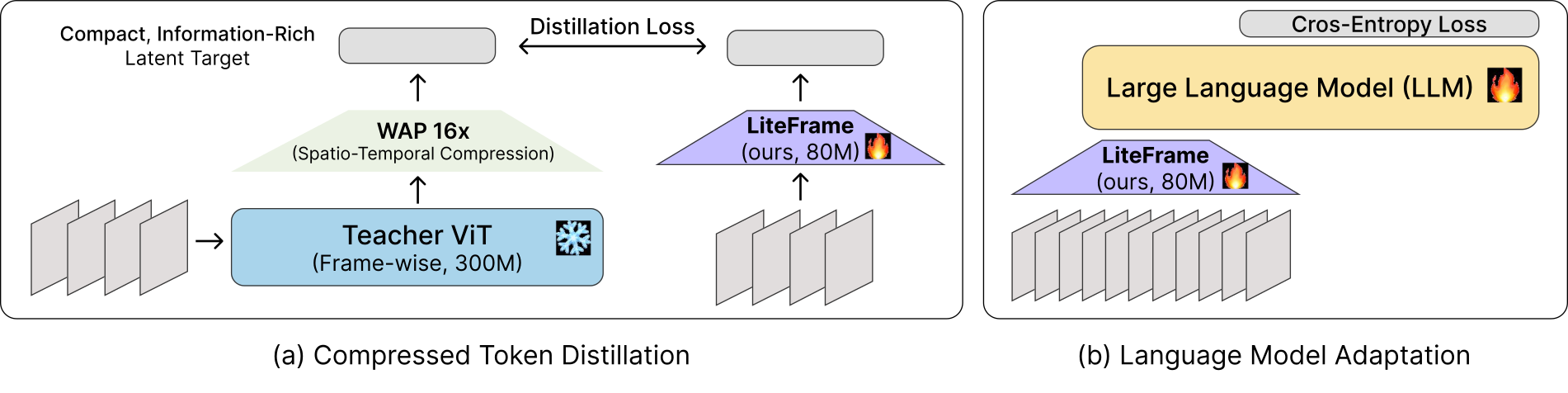
Figure 4 解读:左侧 CTD 先运行 teacher dense encoder,再用 WAP 产生 compact supervision;student 被训练成直接输出这种 compact latent。右侧 LMA 在 video-text pairs 上联合适配 encoder 与 LLM,使压缩 latent 对语言生成与问答任务可用。这个流程把“先高成本编码再压缩”的 runtime 工作,迁移成“离线蒸馏 + 轻量适配”的训练工作。
3.4 Paper-level pseudocode(官方实现未发布,基于论文公式重建)
# CTD stage: distill WAP-compressed teacher features into LiteFrame student
for video in ctd_video_data:
    clip = sample_4_frame_clip(video, fps_uniform=(1, 4))
    teacher_dense = InternViT_300M(clip)              # shape: N x D, no gradient
    target = WAP(teacher_dense, ratio=16)             # shape: (N / 16) x D
    pred = LiteFrame_student(clip)                    # token-compressive encoder output
    diff = clip_outliers(pred - target, threshold=3 * std(diff))
    loss = mse(diff)
    update_student_encoder(loss, optimizer="AdamW", lr="4e-5 cosine")

# LMA stage: adapt LLM interface to compressed long-context visual tokens
for video, text in lma_video_text_pairs:
    frames = dense_clip_sample(video, frame_count=random_choice([128, 256, 512]), fps=(1, 4))
    visual_tokens = LiteFrame_student(frames)
    logits = LLM_with_LoRA(visual_tokens, text_prefix)
    loss = cross_entropy(logits, text_target)
    update_encoder_and_lora(loss, lora_rank=4, alpha=8, dropout=0.05)
这段伪代码反映的是论文流程,而不是仓库实现。当前 jjihwan/LiteFrame 的 main@84fce3f 只包含 README.md、.gitignore 与两个 logo SVG,README 第 22 行说明 code and model weights will be released soon;因此还无法给出具体类名、配置文件路径或训练脚本参数。待官方 release 后,最需要核对的实现锚点包括:WAP block partition 与 class-token weighting、DW temporal convolution 插入位置、strided convolution stride、CTD loss clipping、LMA LoRA 配置、dense clip sampling 与 latency measurement。
3.5 Code mapping / source anchor status
| Paper Concept | Source File | Key Class/Function | Status |
|---|---|---|---|
| Official repo / metadata | README.md | N/A | 已公开;说明 paper、project page、release pending |
| LiteFrame encoder | N/A | N/A | 实现代码未发布,无法定位 class/function |
| WAP / CTD / LMA | N/A | N/A | 只能由论文公式与实验设置重建 |
| Assets | assets/deepmind.svg, assets/snu.svg | N/A | 仓库仅含展示 assets,不含训练或推理代码 |
4. Experimental Setup (实验设置)
4.1 Base model, teacher, student
主 baseline 是 InternVL3-8B。论文使用它的 image encoder InternViT-300M 作为 teacher,参数 304M,hidden dim 1024。student 则采用更小的 ViT-Base backbone,参数 87M,hidden dim 768。student 每帧输出 16 tokens,而 teacher / InternVL3 baseline 是 256 tokens/frame,因此 token 数在每帧层面减少 。注意这里的“更高帧数”不是把原始模型 context 硬拉长,而是利用 token compression 后的 budget 处理更多 frames:例如主结果中 InternVL3-8B 8/16/32 frames 分别对比 LiteFrame 64/128/256 frames,也就是 frame scaling。
4.2 CTD training details
CTD 使用 AdamW、cosine learning rate schedule 与 linear warmup。student 权重初始化来自 teacher,但会裁剪到 student dimensions。全局 batch size 是 512,分布在 NVIDIA H100;maximum learning rate 是 ,warmup 100 epochs;总训练 1800 epochs,约 21 天。ablation studies 为节省成本只蒸馏 800 epochs。CTD 阶段采样 4-frame clips,FPS 从 均匀采样。训练稳定性包括两点:MSE outlier clipping 对超过 standard deviation 的 target-prediction difference 做 clipping,gradient clipping 的 maximum norm 为 1.0。
4.3 LMA training details
LMA 使用 LoRA 适配 LLM,rank 、、lora_dropout=0.05。论文特别提到低 rank(例如 4)比更高 rank(8、16)表现更好。LMA effective batch size 为 128,通过 gradient accumulation 实现;learning rate 同样是 ,cosine schedule。该阶段从 均匀采样 frame counts,FPS 在 1 到 4 之间,使总 visual token volume 接近 teacher 典型输入(未压缩 teacher 的 8–32 frames)。LMA 在 H100 上训练 25K steps,几小时完成。
4.4 Datasets and benchmarks
训练数据来自 InternVL2.5 论文描述的视频数据子集。CTD 使用 ShareGPT4Video、LLaVA-Video-178K、FineVideo、CLEVRER、NTURGB+D。LMA 使用 LLaVA-Video-178K 与 FineVideo 的高质量 video-question answering pairs,并结合 ShareGPT4Video 与 OpenVid-1M 的 captioning data 来增强 visual-text alignment。论文也列出许可证限制:ShareGPT4Video 为 CC-BY-NC-4.0,FineVideo 为 CC-BY,OpenVid-1M 为 CC-BY 4.0,LLaVA-Video-178K 为 Apache 2.0,CLEVRER 与 NTURGB+D 限非商业学术研究。
主评测使用 Video-MME(with / without subtitles)、MLVU 与 LongVideoBench,并取平均性能。额外 benchmark 包括 HLVid(高保真空间理解与 zero-shot resolution scaling)、短视频 MVBench 与 TVBench、长视频 LVBench 与 MMBench-Video。评测设置上,InternVL3-8B 与 post-hoc methods 对整段视频 uniform sampling 并 resize 到 448px;LiteFrame 使用 dense clip sampling,多 clip 覆盖整个视频,每个 clip 固定 4 frames,minimum 1 FPS,输入帧同样 resize 到 448px,空间分辨率 scaling 实验除外。
4.5 Latency protocol
Latency 统计的是 end-to-end visual token encoding + LLM prefilling,不含回答 decoding,因为论文关注的瓶颈是视觉 token 编码和 prefilling。延迟是在单张 NVIDIA A100-80GB 上测量,先 warmup 40 iterations,再取 100 iterations 的 median latency,共 140 iterations。这个 protocol 对 LiteFrame 的解释很重要:它不是只报告 encoder FLOPs,而是把 ViT processing 与 LLM prefilling 合在一起;因此结果能体现“减少 encoder cost + 减少 LLM token”的联合收益。
5. Experimental Results (实验结果)
5.1 Main result:更低延迟、更高平均准确率、8x 更多帧
主表把 InternVL3-8B、FastVID post-hoc baseline 与 LiteFrame 放在相近 latency budget 下比较。第一组中,InternVL3-8B 用 8 frames、256 tokens/frame、304M vision params,总延迟 208.4 ms,平均准确率 59.0;FastVID 用 32 frames、16 tokens/frame,但仍需 304M vision encoder,总延迟反而 224.8 ms,平均 59.5;
LiteFrame 用 64 frames、16 tokens/frame、87M vision params,总延迟 150.1 ms,平均 61.1,相对 teacher latency 降 28.0%,平均准确率高 2.1 points。第二组中,InternVL3-8B 16 frames 总延迟 403.6 ms、平均 62.2;FastVID 64 frames 总延迟 406.2 ms、平均 59.5;LiteFrame 128 frames 总延迟 272.6 ms、平均 63.7,相对 teacher latency 降 32.5%,准确率高 1.5 points。
第三组中,InternVL3-8B 32 frames 总延迟 814.5 ms、平均 65.3;FastVID 128 frames 总延迟 794.9 ms、平均 62.9;LiteFrame 256 frames 总延迟 532.3 ms、平均 65.7,相对 teacher latency 降 34.6%,准确率高 0.4 points。这个结果支持论文摘要中的主张:LiteFrame 通过 internalized compression 让模型处理 更多帧,同时最高降低约 35% end-to-end latency。
更关键的是,FastVID 虽然把 tokens/frame 降到 16,但 vision latency 仍随 frame count 激增,例如 128 frames 时 vision latency 625.8 ms;LiteFrame 同样 256 frames 时 vision latency 204.0 ms,说明主要收益来自 encoder 内部轻量化,而不是 LLM 端压缩本身。
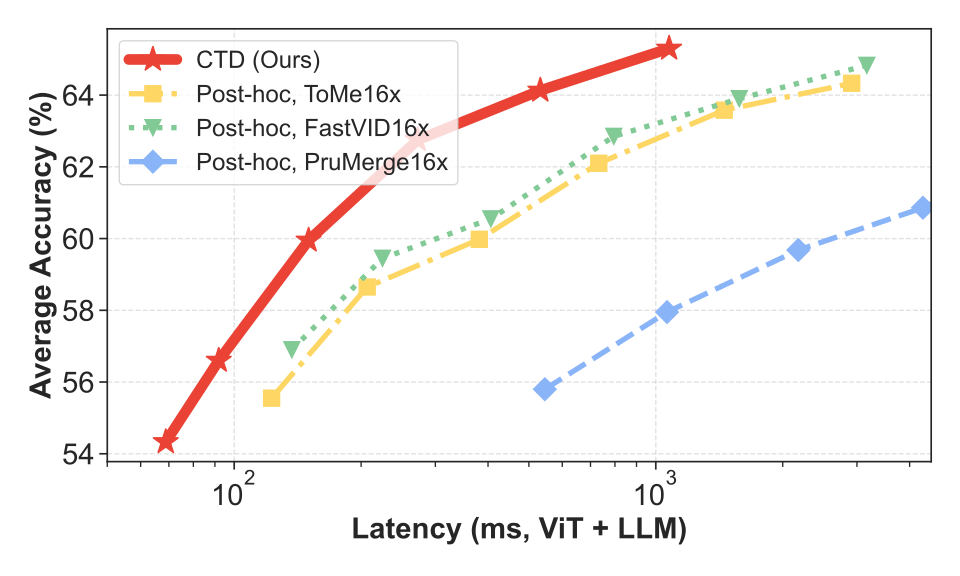
Figure 5 解读:post-hoc 方法在低帧数时能降低 LLM 成本,但当帧数扩大,原始 ViT 处理所有帧的成本成为硬下界。LiteFrame 的曲线更靠左上,说明它不是牺牲 accuracy 换 latency,而是通过更长 temporal coverage 弥补甚至超过了 teacher 的压缩损失。
5.2 WAP baseline:作为 compression primitive 的有效性
在 fixed compression ratio、64 frames 条件下,WAP 的平均准确率是 62.0,是所有 post-hoc token reduction 方法中最高。逐项看,WAP 在 Video-MME without subtitles 上 61.0,with subtitles 上 65.7,MLVU 上 67.4,LongVideoBench 上 54.0。相比之下,subsampling 平均 61.2,FastVID 平均 60.6,average pooling 60.2,ToMe 60.0,PruMerge 59.7。LongVideoBench 上 average pooling 的 54.7 单项更高,但 WAP 在前三项显著更强,平均最好。
这个实验的意义不只是证明 WAP 可以当 post-hoc baseline。更重要的是,它证明 WAP 生成的 compressed representation 足够强,可以作为 CTD 的 teacher target。如果 target primitive 本身质量不高,student 只会学习一个弱压缩空间;WAP 的平均优势让 CTD 的设计更合理。
5.3 Zero-shot spatial resolution scaling 与额外 benchmark
论文报告 LiteFrame 在 HLVid 上做 zero-shot spatial resolution scaling:不经过高分辨率训练,仅利用 token efficiency 在高分辨率视频中扩展空间输入,达到 54.1 的 state-of-the-art score。这个结果说明 LiteFrame 的 token 预算收益不仅能换更多时间帧,也能换更高空间分辨率;这对长视频中的细粒度空间问题尤其重要,因为过强的空间 pooling 可能破坏物体细节。
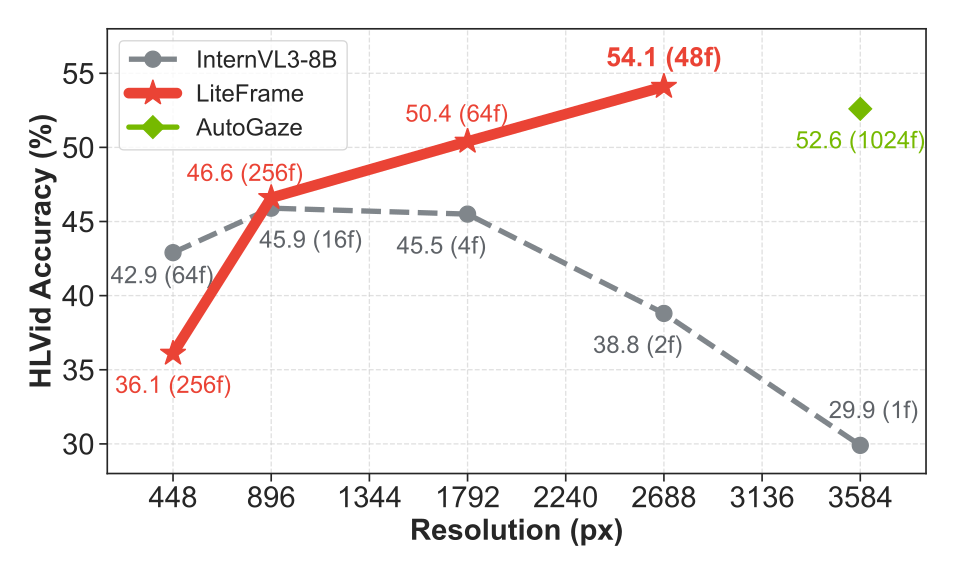
Figure 6 解读:HLVid 结果强调 LiteFrame 的另一个使用方式:当 LLM context 预算因每帧 token 下降而变宽时,可以选择增加帧数,也可以选择提升空间分辨率。LiteFrame 在无高分辨率训练时仍能取得 54.1,说明其 compressed latent 不只是粗糙 temporal summary,而保留了可用于 high-fidelity spatial understanding 的信息。
额外短视频 benchmark 上,LiteFrame 在 MVBench 降低 28% 端到端延迟,在 TVBench 降低 63% 端到端延迟,同时保持 baseline accuracy。长视频额外 benchmark 上,LVBench 中 512-frame LiteFrame 得分 43.9,高于 64-frame baseline 的 43.5,同时快 38%;MMBench-Video 中 LiteFrame 在 16–128 input frames 的 low-latency 区间效率更好。论文用 Gemini 3 Flash Preview API 评估 MMBench-Video 的 free-form QA response quality。
5.4 AutoGaze comparison:避免 pre-reduction module 成为新瓶颈
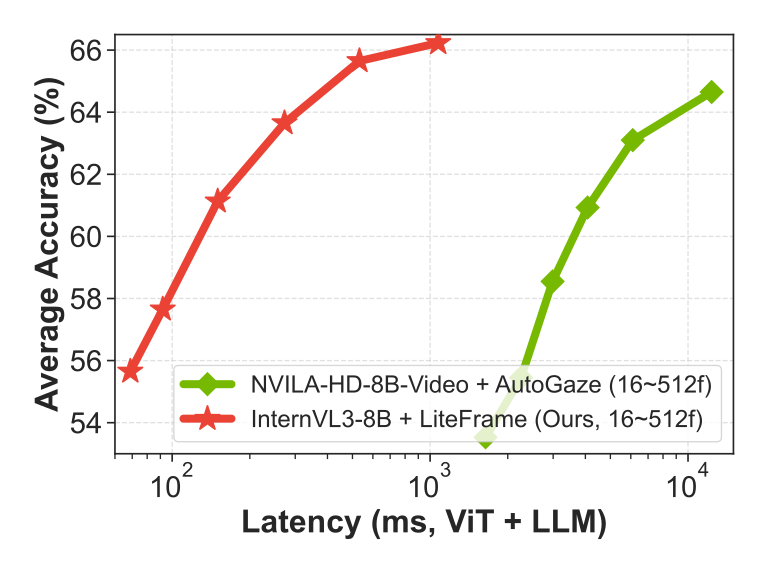
Figure 7 解读:AutoGaze 类方法试图在输入或 pre-reduction 端选择更重要的视觉区域,但论文指出,当从 32 frames 扩展到 256 frames 时,AutoGaze 的 pre-reduction module 本身会成为新瓶颈。LiteFrame 的优势是把 token-compressive behavior 融进 backbone,随着帧数增长能更平衡地分配 ViT 与 LLM 成本。因此它在图中表现为更低 latency 与更高 accuracy 的 frontier。
5.5 Ablation:CTD、DWConv、LMA 都必要
主 ablation 隔离四个因素:token-compressive student architecture、depth-wise temporal convolution、WAP teacher objective、LMA。InternVL3-8B teacher 在 16 frames 下 403.6 ms、62.2%。简单把 teacher 蒸馏到 ViT-Base-12L、不做 token compression,16 frames 下 362.9 ms、60.3%,说明只缩小 encoder 参数并不能解决 LLM token bottleneck。CTD + SpatioTempAttn 在 128 frames 下 102.2 ms、61.9;CTD + DWTempConv 在同样 128 frames 下 87.4 ms、62.8,证明 DW temporal conv 比 full spatio-temporal attention 更高效且更准。RTD(reconstructive token distillation)只有 43.8,RTD + LMA 回到 61.5,但仍低于 CTD without LMA 的 62.8;最终 CTD + LMA 是 87.4 ms、63.4。
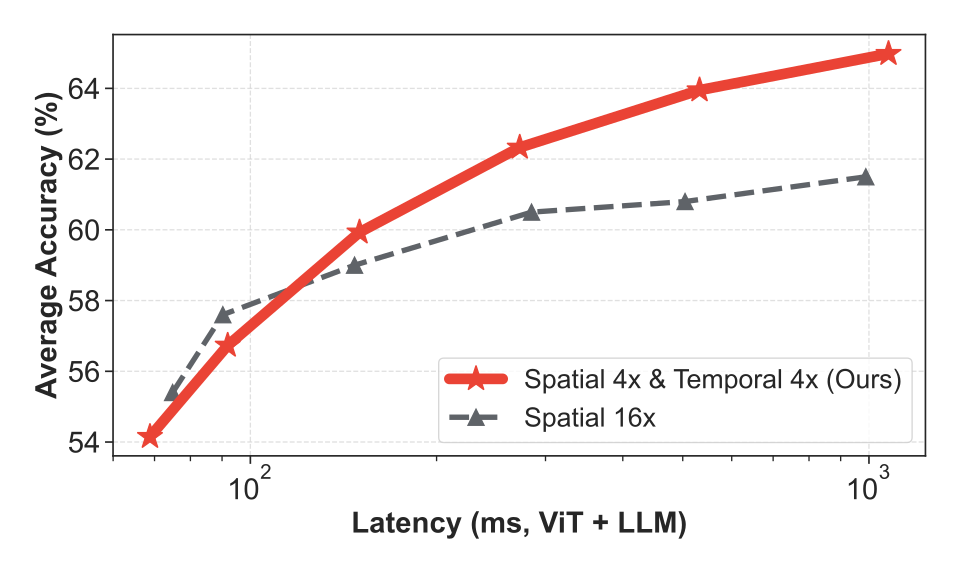
Figure 8 解读:spatio-temporal compression 与 spatial-only compression 的比较说明,不能只在空间维度做 压缩。128-frame budget 下,spatial-only 平均准确率 60.5,而 LiteFrame / CTD 是 62.8;Video-MME without subtitles 上是 57.0 vs 61.9。论文解释为:纯空间 会把一帧压到过粗的 grid,损害细粒度 spatial fidelity;把压缩负担分配到 spatial + temporal ,能同时保留空间细节并合并相邻帧冗余。
5.6 限制与我的阅读判断
论文自己列出三点限制。第一,LMA 只使用现有视频数据子集;如果有更高质量、极长视频数据,extended temporal context 的收益可能更大。第二,评测集中在 video-centric benchmarks,虽然 HLVid 显示了 zero-shot spatial scaling 潜力,但静态图像 benchmark 尚未系统评估。第三,进一步压缩到更小 student 时遇到 loss explosion 等训练不稳定问题,说明 CTD 对 ultra-lightweight student 还需要稳定化改进。
我的判断是,LiteFrame 的贡献更接近“系统瓶颈重定位后的 encoder 设计”,而不是一个 isolated token compression trick。它把一条常见经验明确化:当 LLM 端 token 已经被大幅压缩,继续优化 LLM prefilling 的边际收益下降,真正需要优化的是视觉特征抽取本身。CTD 的优点是 target 很明确:不是任意 autoencoder reconstruction,而是 WAP 压缩后的 teacher saliency space;LMA 的优点是承认压缩 latent 与 LLM 接口存在 distribution gap。当前最大未解点是 code 未发布,因此训练 recipe 的很多实现细节(例如 WAP block indexing、LoRA module selection、clip sampler 边界、latency profiling 脚本)还不能代码级复现。等官方代码 release 后,最值得优先验证的是主表中的 latency 是否包含完全相同的 preprocessing / batching 条件,以及 CTD + LMA 在不同 LLM backbone 上是否仍能维持同样的 Pareto 改善。