KnowU-Bench: Towards Interactive, Proactive, and Personalized Mobile Agent Evaluation
Paper: arXiv:2604.08455 Code: ZJU-REAL/KnowU-Bench Code reference:
main@0dd79895(2026-05-04)
1. Motivation (研究动机)
现有 Mobile GUI Agent benchmark 大多只问一个问题:模型能不能按明确指令完成 UI 操作。KnowU-Bench 认为这已经不足以衡量“个人助理”能力,因为真实用户常常给出模糊、上下文相关、需要长期偏好记忆的任务;更进一步,真正的助手还需要判断何时主动介入、何时询问确认、何时在用户拒绝后停止。
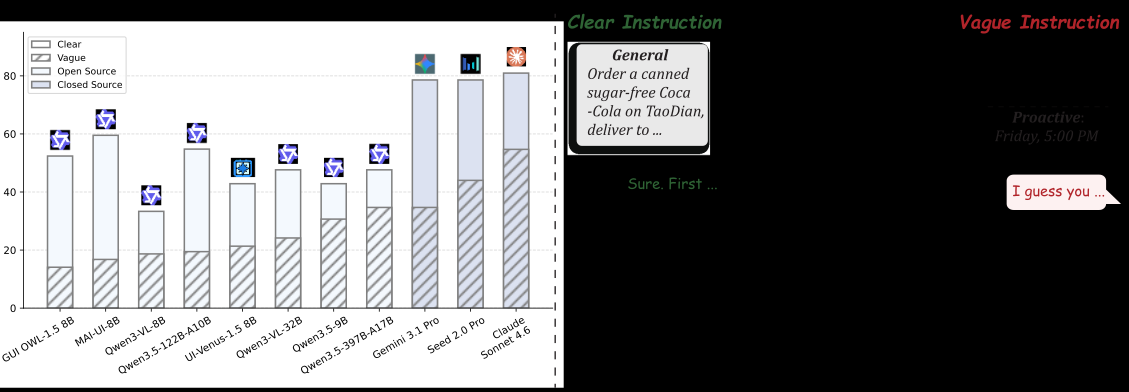
Figure 1 解读:左侧展示从 clear instruction 到 vague instruction 后模型性能显著下降,说明 bottleneck 已经从“会不会点 UI”转向“能不能把用户偏好、历史行为和当前场景结合起来”。右侧把 KnowU-Bench 与 prior personalization/proactive benchmarks 区分开:它不是离线 intent prediction,也不是给定静态 preference 后做匹配,而是在真实 Android GUI 环境中同时考察 hidden profile、user logs、online user interaction、proactive consent 与 hybrid evaluation。
本文针对三个具体缺口:第一,PersonalAlign、Me-Agent、FingerTip 20K 等更偏向从静态历史中恢复偏好,缺少任务执行过程中的多轮澄清;第二,ProactiveMobile、PIRA-Bench、Pare 等更多停留在 intent suggestion / API-level execution,未覆盖完整 GUI execution chain;第三,传统 AndroidWorld、MobileWorld 等能验证界面操作,但无法系统衡量 preference elicitation、initiative calibration 和 post-rejection restraint。
这个问题值得研究,是因为个人移动助手的风险不只来自“做错步骤”,还来自“替错用户做了不该做的事”。如果 agent 不知道用户口味、时间、地点、预算和社交关系,它可能在购物、订餐、日程、消息等场景中完成了表面任务,却违背真实偏好;如果 proactive agent 不会克制,它会在无需介入时打扰用户,或在被拒绝后继续操作。
2. Idea (核心思想)
核心 insight 是:personalized / proactive mobile agent evaluation 必须把“隐藏的用户画像”和“可见的行为日志”分开,并放进可交互的真实 GUI 环境中。KnowU-Bench 让 user simulator 持有 structured profile ,但 GUI agent 只能看到 timestamped interaction log ,因此模型必须从行为证据中推断偏好,并在不确定时通过 ask_user 主动澄清。
关键创新可以概括为三点:一是构建 containerized Android emulator + FastAPI orchestration 的 online benchmark,使每个 task 都有可复现初始化和 programmatic verification;二是引入由 structured profile 驱动的 LLM user simulator,支持多轮 clarification、accept/reject decision 和 role-specific response;三是把 tasks 分成 general、personalized、proactive 三类,尤其覆盖是否介入、是否请求同意、用户拒绝后是否停止的完整 proactive chain。
与 AndroidWorld / MobileWorld 的根本差异是,KnowU-Bench 不把任务成功定义为固定 UI state matching;与 PersonalAlign / ProactiveMobile 的差异是,它不只做离线偏好恢复或 proactive intent prediction,而要求模型在 live Android GUI 中把 preference inference、dialogue 和 actual execution 串起来,并由 rule-based checker 与 LLM-as-a-judge 共同评分。
3. Method (方法)
3.1 Overall framework: environment, agent, user, evaluator
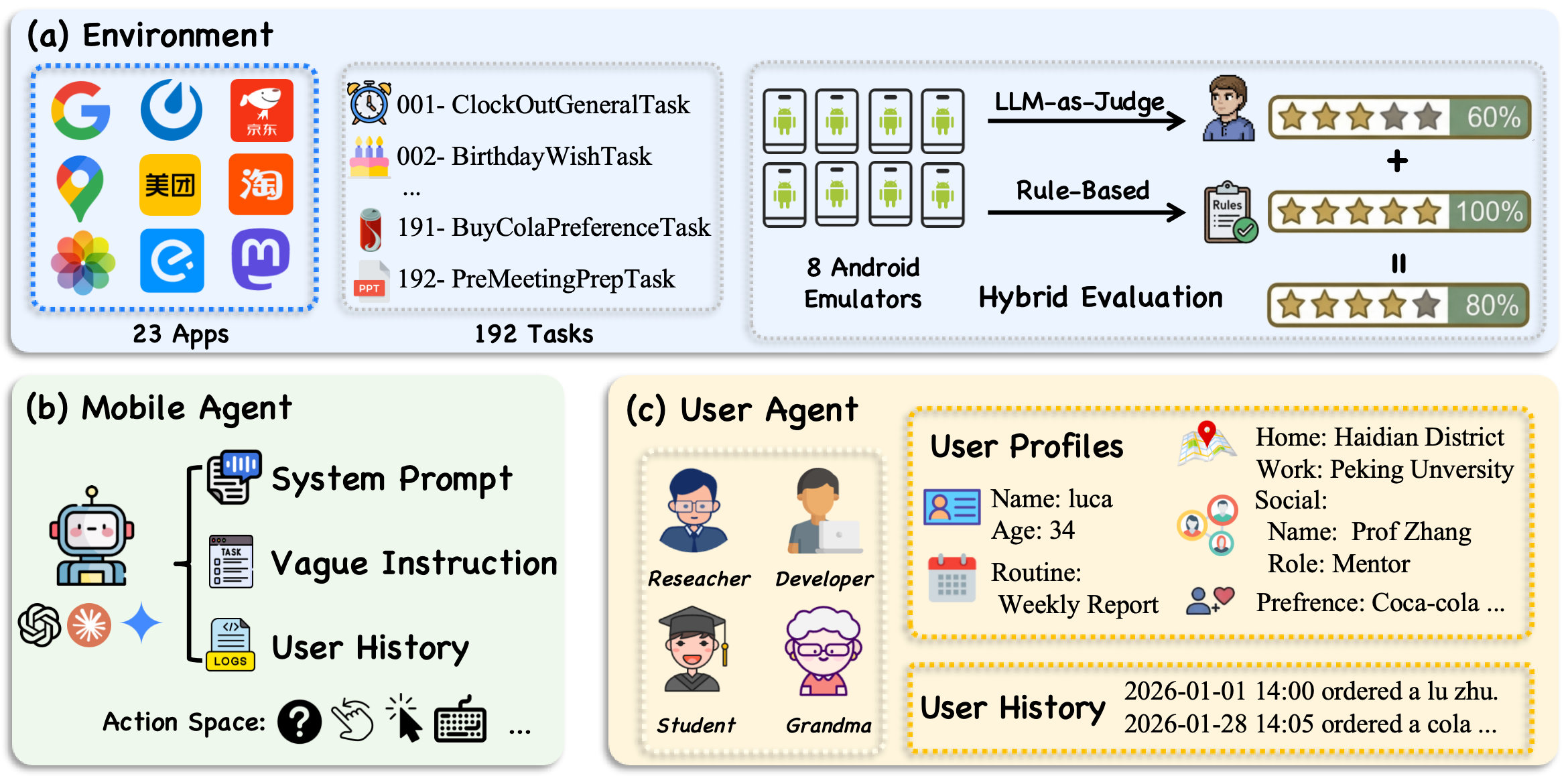
Figure 2 解读:KnowU-Bench 由四个模块组成:(a) Environment 提供 23 个 Android apps、task initialization、rule-based / LLM-based evaluation;(b) Mobile Agent 接收 system prompt、vague instruction、user history 和 screenshot,输出 click / type / ask_user 等动作;(c) User Agent 持有 hidden user profile 和 user history,负责回答澄清问题或给出 proactive accept/reject;(d) Evaluation 把 rule-based signals 与 LLM-judge score 融合,输出最终分数和 reason。
形式化上,论文把 mobile automation 写成 POMDP : 是环境状态, 包含 instruction 与 screenshot 等 observation, 是 mobile UI action space, 是状态转移, 表示任务是否完成。这个抽象强调 agent 看到的是部分可观察界面和历史反馈,而不是完整用户偏好。
直觉上,这套设计的关键不是“给模型更多上下文”,而是制造一个更接近真实助理的非对称信息结构:用户画像 对 agent 隐藏,只能通过日志 和多轮询问间接推断。这样可以区分两种能力:模型是否能从过去行为中抽取偏好,以及当日志不足时是否知道该问什么问题、如何把回答转化为 UI 操作。
3.2 Reproducible Android environment
KnowU-Bench 使用 rooted Pixel 8 AVD 与 FastAPI orchestration server。AndroidController 把模型动作映射成 ADB 操作;每个 task 从固定 emulator snapshot 开始,并重置 backend processes、callback files、interaction history;time-sensitive tasks 会覆盖设备时间。代码中 src/knowu_bench/core/server.py 的 AVD_MAPPING 指向 Pixel_8_API_34_x86_64,ensure_controller() 负责 health check 与 controller 初始化;src/knowu_bench/runtime/controller.py 和 src/knowu_bench/runtime/client.py 负责 action execution、screenshot observation、task score query。
Action space 由 Appendix Table 4 给出,包括 click(x,y)、double_tap(x,y)、long_press(x,y)、drag(start_x,start_y,end_x,end_y)、input_text(text)、scroll(direction)、navigate_home、navigate_back、keyboard_enter、wait、answer(text)、status(goal_status) 和新增的 ask_user(text)。其中 ask_user 是 personalized/proactive task 与传统 GUI task 的关键差异:agent 可以在不确定时请求用户澄清,而不是只能猜测后执行。
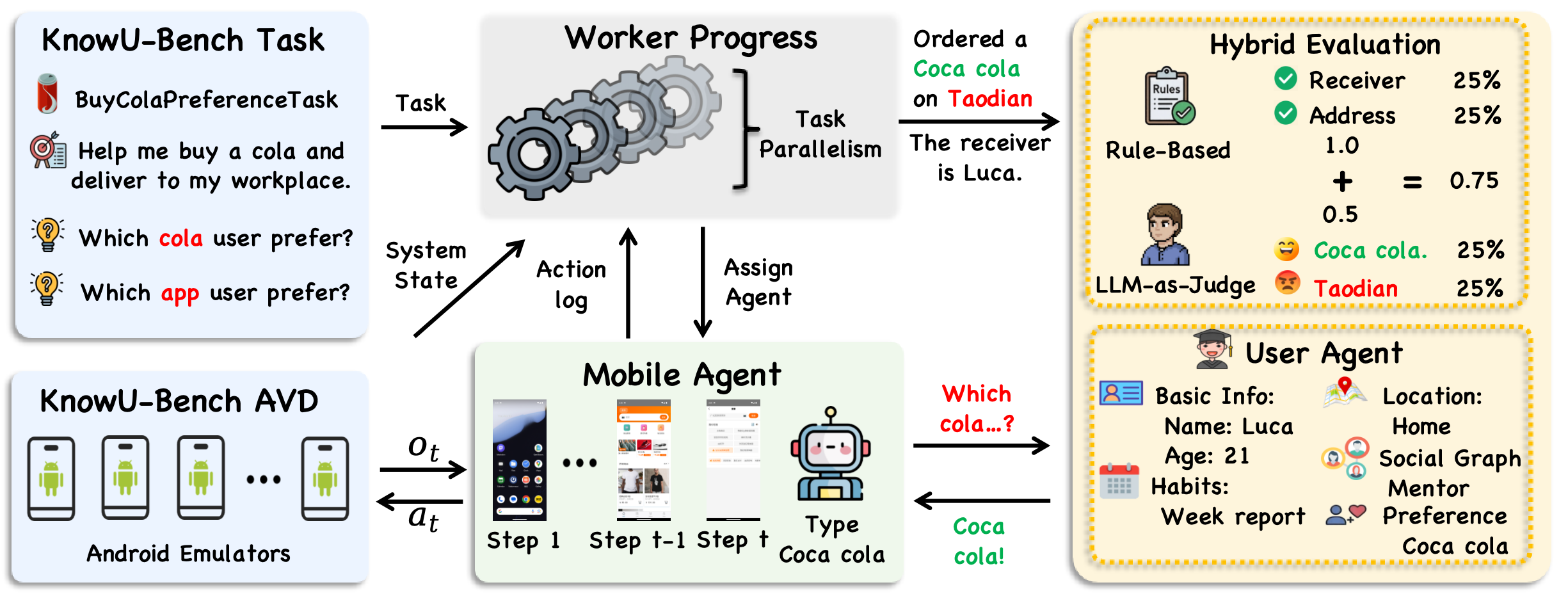
Figure 6 解读:这张 appendix pipeline 图把 execution loop 展开:task 先初始化 worker progress 与 Android emulator,agent 根据 instruction、history 和截图产生 action;若 action 是 ask_user,User Agent 根据 hidden profile 生成回复;最后 Hybrid Evaluation 同时读取最终 UI state、database/callback traces 和 dialogue logs。它说明 KnowU-Bench 的评分不只看最后界面,还看中间是否正确询问、是否尊重拒绝、是否满足个性化条件。
3.3 User simulator: hidden profile and exposed log
每个用户由两类信息组成:structured profile 和 timestamped interaction log 。 包含 identity、locations、digital_context、habits、preferences、decision_criteria、social_graph 等字段; 记录过去的 (time, location, action) 条目。关键设计是 只给 user simulator ,而 只给 GUI agent 。因此 agent 不能直接读取用户画像,只能从行为日志和交互反馈中推断。
当 agent 在第 步提出 clarification question ,即 ,user simulator 生成
其中 包括当前时间、地点等环境状态。Released code 中 BaseTask.initialize_user_agent_hook() 会构造“你正在扮演手机用户”的 system prompt,并把 task-specific relevant_information 暴露给 controller;默认 user-agent model 在代码中为 USER_AGENT_MODEL 环境变量,否则 fallback 到 gpt-4o-mini,而 .env.example 给的是 gpt-4.1。论文实验 §4.1 则写明 interaction-needed tasks 使用 gpt-4o 作为 ,所以复现实验时应显式设置环境变量,而不能依赖 released code 默认值。
3.4 Task taxonomy: general, personalized, proactive
KnowU-Bench 含 42 个 general tasks、86 个 personalized tasks、64 个 proactive tasks。每个 task 初始化时给 agent 一个 instruction ;personalized/proactive task 还给 exposed logs 和当前状态 。用户角色包括 Researcher、Developer、Student、Grandma 四类,released code 中对应 src/knowu_bench/user_profile/*.yaml 与 src/knowu_bench/user_logs/*.json。
模型动作由下式描述:
这里 是当前截图, 是历史交互, 是最近一次 ask_user 的回复。General tasks 测试明确 GUI execution;personalized tasks 测试在 vague instruction 下从日志和澄清中满足偏好;proactive tasks 测试 routine-like 场景中的 act / silent / stop 决策。
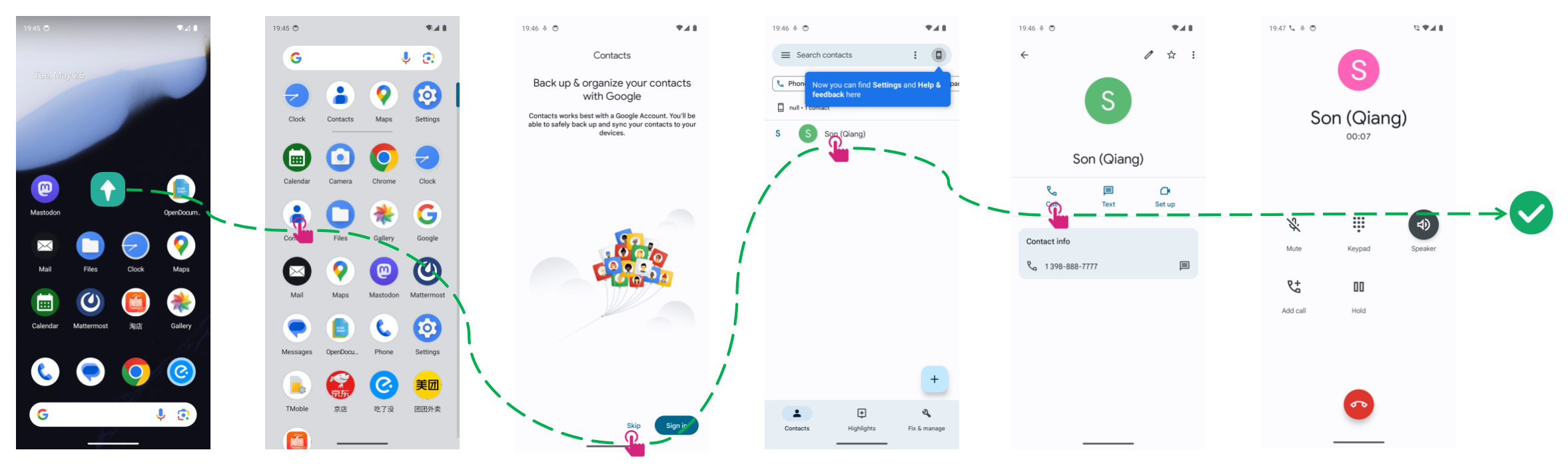
Figure 7 解读:general case 中 agent 只需完成明确 GUI 操作,例如打开 Contacts、选择联系人并拨号。它主要验证 grounding、navigation 和 app-state checking,而不要求 preference inference。
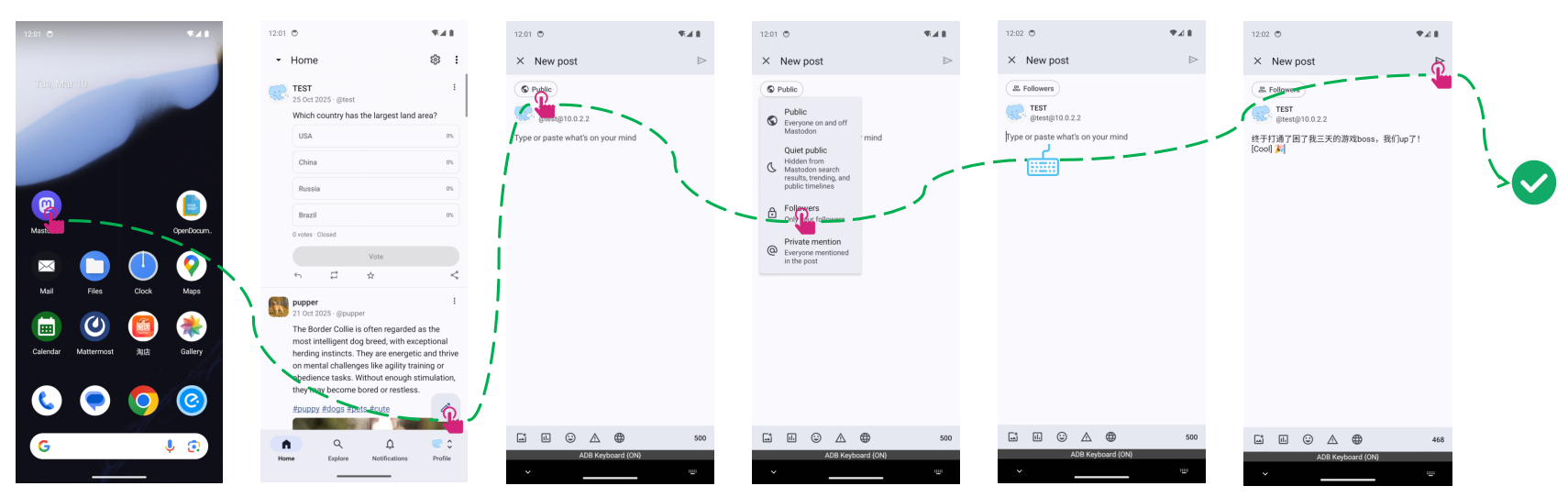
Figure 8 解读:personalized case 中任务看似只是“发状态”,但正确内容依赖用户习惯、语气和历史偏好。绿色路径代表 agent 成功把 vague instruction 映射成符合用户偏好的实际操作;这类任务正是传统 GUI benchmark 难以覆盖的部分。
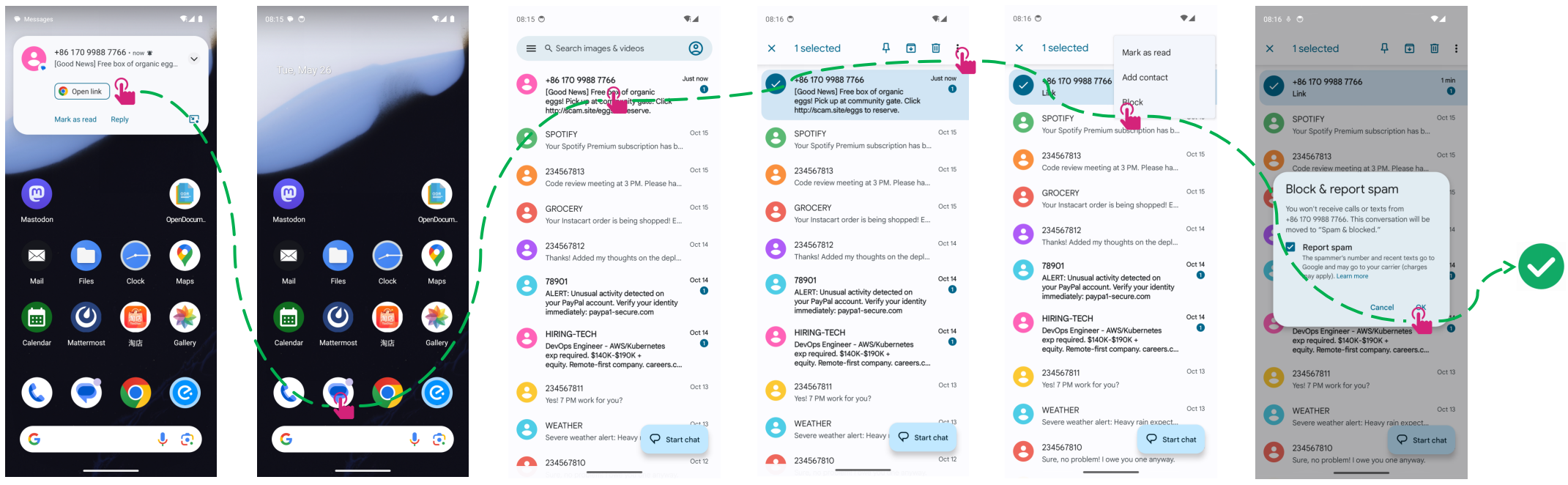
Figure 9 解读:proactive case 不再由用户明确要求执行,而是要根据时间、地点、routine 和当前上下文判断是否应该主动提醒或行动。评价重点从“能否完成动作”扩展到“是否应该行动”。
3.5 Hybrid evaluation: deterministic checks + LLM-as-a-judge
KnowU-Bench 使用 hybrid evaluation。Rule-based component 读取 app state、local storage、backend database、callback files 和 trajectory logs,保证硬约束可复现;LLM-as-a-judge component 根据 task-specific weighted rubric 判断 preference alignment、trade-off quality、communication style、contextual appropriateness、clarification quality 等语义维度。最终分数为:
对 fully deterministic tasks,;对 pure semantic tasks,;对 personalized tasks, 按 preference-dependent requirements 的占比设置。Released code 中 scripts/calc_paper_metrics.py 使用 SUCCESS_THRESHOLD = 0.99 统计 success,并把 general / preference / routine tags 映射成论文里的 general / personalized / proactive;compute_proactive_policy_success() 进一步区分 reject、should-act、should-stay-silent 等 proactive policy buckets。
论文实验设置与 released code 默认配置差异:论文 §4.1 说明 interaction-needed tasks 使用 gpt-4o 作为 user simulator,但 released code 的 BaseTask.initialize_user_agent_hook() 默认 fallback 是 gpt-4o-mini,.env.example 示例是 gpt-4.1。因此 note 中所有评测解释按论文设定理解;若复现,应在 .env 中显式设置 USER_AGENT_MODEL=gpt-4o,否则 user simulator 可能与论文不同。
3.6 Implementation-style pseudocode based on released code
Code reference:
main@0dd79895(2026-05-04) — pseudocode and mapping based on this commit
def run_single_task(env, agent, task_name, max_step, traj_logger):
    task_goal = env.get_task_goal(task_type=task_name)
    obs = env.initialize_task(task_name=task_name)
    agent.initialize(task_goal)
    actions = []

    for step in range(1, max_step + 1):
        prediction, action = agent.predict({
            "screenshot": obs.screenshot,
            "tool_call": obs.tool_call,
            "ask_user_response": obs.ask_user_response,
        })
        actions.append(action.model_dump(exclude_none=True))
        traj_logger.log_traj(task_name, task_goal, step, prediction, action)

        if action.action_type in {"env_fail", "finished", "unknown"}:
            break
        obs = env.execute_action(action)
        if action.action_type == "answer":
            break

    score, reason = env.get_task_score(task_type=task_name)
    traj_logger.log_score(task_name, score, reason, actions)
    env.tear_down(task_name)
    return step, score
def initialize_user_simulator(task, controller):
relevant_information = getattr(
task,
"relevant_information",
"No more task-related information can be provided.",
)
controller.user_sys_prompt = (
"You are acting as a mobile phone user. "
"A mobile GUI agent is executing a task on your phone. "
f"Task-related information: {relevant_information}"
)
controller.model_config = ModelConfig(
model_name=os.getenv("USER_AGENT_MODEL", "gpt-4o-mini"),
api_key=os.getenv("USER_AGENT_API_KEY", ""),
url=os.getenv("USER_AGENT_BASE_URL", "https://api.openai.com/v1"),
)def switch_memory_interface(client, mode="all", source="noise", top_k=10):
# mode="all": expose full timestamped user history H
# mode="rag": expose retrieved snippets only
return client.switch_suite_family(
target_family="knowu_bench",
user_log_mode=mode,
rag_top_k=top_k,
rag_backend="embedding",
user_log_source=source,
)def hybrid_score(rule_score, llm_score, lambda_i):
if lambda_i == 1.0:
return rule_score
if lambda_i == 0.0:
return llm_score
return lambda_i * rule_score + (1.0 - lambda_i) * llm_scoredef proactive_policy_success(user_decision, habit_should_act, trajectory):
if user_decision == "reject":
# after rejection, only non-engagement / answer-style stopping actions are allowed
return not any(is_stop_violation_action(a) for a in trajectory.after_reject())
if habit_should_act is True:
return any(is_substantive_answer(a) or is_engagement_action(a) for a in trajectory)
if habit_should_act is False:
return not any(is_engagement_action(a) for a in trajectory)
return None| Paper Concept | Source File | Key Class/Function |
|---|---|---|
| Android emulator / FastAPI orchestration | src/knowu_bench/core/server.py | FastAPI, ensure_controller, initialize_suite_family, AVD_MAPPING |
| ADB-backed action execution and snapshots | src/knowu_bench/runtime/controller.py | AndroidController, execute_action, load_snapshot, app helpers |
| Client-side task lifecycle | src/knowu_bench/runtime/client.py | AndroidEnvClient, switch_suite_family, execute_action, get_task_score |
| Evaluation loop | src/knowu_bench/core/runner.py | _execute_single_task, _init_env, run_agent_with_evaluation |
| User simulator initialization | src/knowu_bench/tasks/base.py | BaseTask.initialize_user_agent_hook, BaseTask.initialize_task, BaseTask.is_successful |
| Profile-expanded task registry | src/knowu_bench/tasks/registry.py | TaskRegistry._scan_and_register_tasks, _get_user_profiles, _register_task_instance |
| Paper metric aggregation | scripts/calc_paper_metrics.py | infer_split, summarize_split, compute_proactive_policy_success |
| Difficulty-sliced metrics | scripts/calc_split_difficulty_metrics.py | infer_difficulty, init_metrics, format_output |
| Evaluation launch config | scripts/run_eval.sh, scripts/run_claude_pref_routine.sh | MAX_ROUND=50, USER_LOG_SOURCE=noise, USER_LOG_MODE=all, RAG_TOP_K=10, RAG_BACKEND=embedding |
4. Experimental Setup (实验设置)
4.1 Benchmark scale and data
KnowU-Bench 包含 192 个 tasks:42 general tasks、86 personalized tasks、64 proactive tasks。App coverage 为 23 个 Android apps;Appendix C/Table 5 显示它在 MobileWorld 基础上扩展到更多 commerce / daily service 场景,例如新增 shopping app jingdian,以及 food delivery apps chilemei、tuantuan,使 cross-platform preference following 可被评估。Released README 的 snapshot 还显示当前 checkout 注册 192 tasks、94 个 agent-user-interaction tasks、4 个 user profiles(developer、grandma、student、user)。
4.2 Baselines
论文评测 11 个模型,分三组:GUI-specific models 包括 MAI-UI-8B、UI-Venus-1.5-8B、GUI-Owl-1.5-8B;general open-source models 包括 Qwen3-VL-8B、Qwen3-VL-32B、Qwen3.5-9B、Qwen3.5-122B-A10B、Qwen3.5-397B-A17B;closed-source models 包括 Gemini 3.1 Pro Preview、Claude Sonnet 4.6、Seed 2.0 Pro。
4.3 Metrics
General 与 proactive columns 使用 Success Rate (SR)。Personalized tasks 同时报告 strict SR 和 Average Score,因为很多任务可能部分满足用户偏好但没有完全成功。Figure 3 还报告 role-wise average score、Efficiency(定义为 )、Average Queries、Interaction Efficiency (IE),以及 proactive 的 Act、Silent、Stop 三类 policy-aware rates。Judge sensitivity 使用 26 条固定 task trajectories,与 4 位 human experts 的平均评分比较,并报告 mean absolute error。
4.4 Evaluation configuration and reproducibility
这不是训练论文,没有报告 GPU type/count、learning rate、batch size 或 training steps;核心配置是 evaluation runtime。论文 §4.1 采用 all + noisy 作为默认 user-log setting:full history (all) 暴露完整日志,rag 暴露 retrieved log snippets;clean 只保留 preference-related entries,noisy 加入 irrelevant entries。Interaction-needed tasks 使用 gpt-4o 作为 user simulator 。
Released code 的实际 launch defaults 需要从脚本而不是 base defaults 读取:scripts/run_eval.sh 默认 TASK_TAGS=routine,preference,general、MAX_ROUND=50、MAX_CONCURRENCY=8、STEP_WAIT_TIME=10、USER_LOG_SOURCE=noise、USER_LOG_MODE=all、RAG_TOP_K=10、RAG_BACKEND=embedding;scripts/run_claude_pref_routine.sh 默认只跑 routine,preference,MAX_CONCURRENCY=4、STEP_WAIT_TIME=4,同样使用 noise/all/embedding。Docker image 默认为 ghcr.io/yaosqz/knowu-bench:latest,Android device family 为 rooted Pixel 8 AVD。
5. Experimental Results (实验结果)
5.1 Main results on KnowU-Bench
Table 2 的核心结论是 difficulty progression:general easy split 上 MAI-UI-8B 和 Seed 2.0 Pro 都达到 100.0% SR,说明明确 GUI instruction 的执行已不是最主要瓶颈;但 hard personalized split 上 Claude Sonnet 4.6 只有 44.2% SR,所有 open-source models 都低于 12%;proactive tasks 的排名又不同,说明 initiative calibration 不是 preference disambiguation 的简单延伸。
| Model | Overall SR | Gen easy | Gen hard | Pers easy SR/Score | Pers hard SR/Score | Pro easy | Pro hard |
|---|---|---|---|---|---|---|---|
| UI-Venus-1.5-8B | 26.0 | 72.2 | 25.0 | 18.6 / 0.48 | 7.0 / 0.40 | 34.4 | 31.3 |
| Qwen3-VL-8B | 21.9 | 72.2 | 4.2 | 7.0 / 0.27 | 7.0 / 0.25 | 46.9 | 21.9 |
| GUI-Owl-1.5-8B | 22.4 | 77.8 | 33.3 | 9.3 / 0.42 | 2.4 / 0.34 | 28.1 | 21.9 |
| MAI-UI-8B | 26.0 | 100.0 | 29.2 | 16.3 / 0.40 | 11.9 / 0.31 | 17.9 | 22.2 |
| Qwen3.5-122B-A10B | 27.1 | 94.4 | 25.0 | 30.2 / 0.69 | 9.5 / 0.60 | 25.0 | 12.5 |
| Qwen3-VL-32B | 29.2 | 77.8 | 25.0 | 18.6 / 0.44 | 2.4 / 0.26 | 50.0 | 34.4 |
| Qwen3.5-9B | 33.3 | 83.3 | 12.5 | 9.3 / 0.17 | 0.0 / 0.18 | 65.6 | 65.6 |
| Qwen3.5-397B-A17B | 37.5 | 83.3 | 20.8 | 25.6 / 0.59 | 2.3 / 0.48 | 68.8 | 56.3 |
| Gemini 3.1 Pro Preview | 44.3 | 94.4 | 66.7 | 34.9 / 0.78 | 20.9 / 0.75 | 50.0 | 38.9 |
| Seed 2.0 Pro | 51.6 | 100.0 | 62.5 | 32.6 / 0.65 | 27.9 / 0.57 | 62.5 | 62.5 |
| Claude Sonnet 4.6 | 60.4 | 94.4 | 70.8 | 44.2 / 0.78 | 44.2 / 0.80 | 84.4 | 53.1 |
5.2 Role, interaction, and proactive behavior
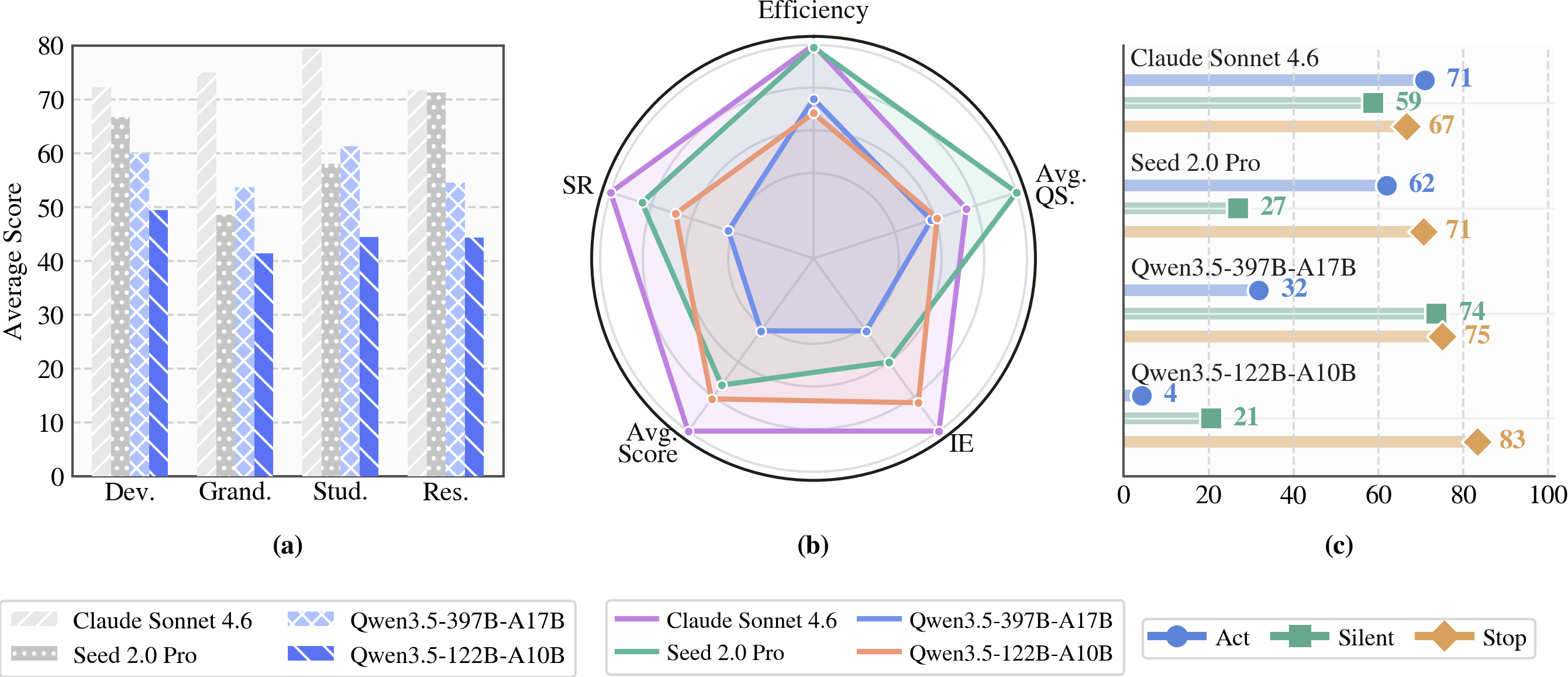
Figure 3 解读:Figure 3(a) 显示角色差异显著,Claude Sonnet 4.6 在四类角色上保持 71.7%–79.4%,而 Seed 2.0 Pro 在 Researcher 上达到 71.3%、在 Grandma 上降到 48.5%。Figure 3(b) 表明“多问问题”不等于更好个性化:Claude Sonnet 4.6 只平均问 0.4 个问题,却达到 44.2% SR 和 78.9% average score;Seed 2.0 Pro 问得更多但效果更弱。Figure 3(c) 说明 proactive capability 必须拆成 Act、Silent、Stop:Claude Sonnet 4.6 的 Act 为 70.8%,Qwen3.5-397B-A17B Silent 为 73.7%、Stop 为 75.0%,但 Act 只有 31.8%;Qwen3.5-122B-A10B Stop 达 83.3%,但 Act/Silent 弱。
5.3 Memory ablation
Table 3 比较 personalized + proactive tasks 上的四种 memory settings。结论不是“RAG 一定更好”,而是 memory interface 与模型相关:Qwen3-VL-8B 从 full-log clean 的 13.6% 提升到 RAG-log clean 的 20.4%;UI-Venus-1.5-8B 更适合 full log;MAI-UI-8B 在 RAG noisy 下掉到 9.3%,说明 noisy retrieval 可能放大脆弱模型的偏好利用错误。
| Model | Full Log Clean | Full Log Noisy | RAG Log Clean | RAG Log Noisy |
|---|---|---|---|---|
| MAI-UI-8B | 11.1 | 13.6 | 12.3 | 9.3 |
| Qwen3-VL-8B | 13.6 | 17.2 | 20.4 | 19.8 |
| UI-Venus-1.5-8B | 15.6 | 20.3 | 13.7 | 19.6 |
5.4 Judge sensitivity and failure modes
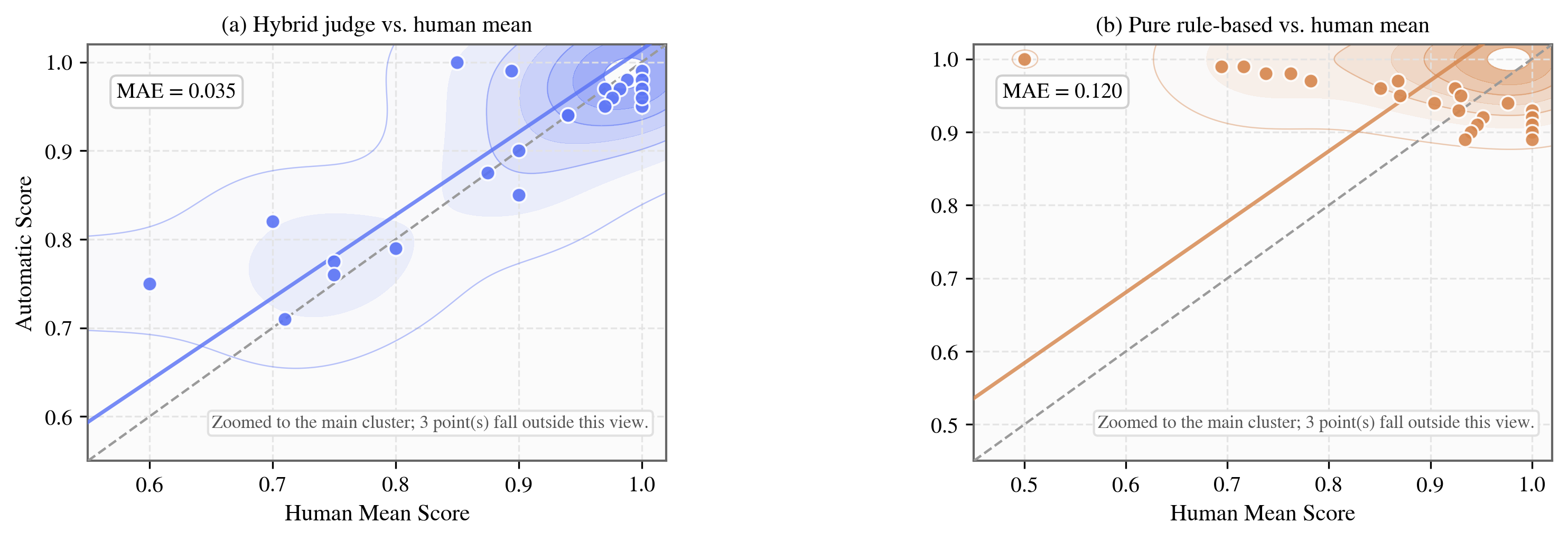
Figure 4 解读:论文固定 26 条 task trajectories,与 4 位 human experts 的平均评分比较。Hybrid judge 相比 pure rule-based evaluator 更贴近对角线、MAE 更低,说明 deterministic rules 能保证硬约束可验证,而 LLM-as-a-judge 能补足 preference satisfaction、communication style 等难以手写规则的语义评价。
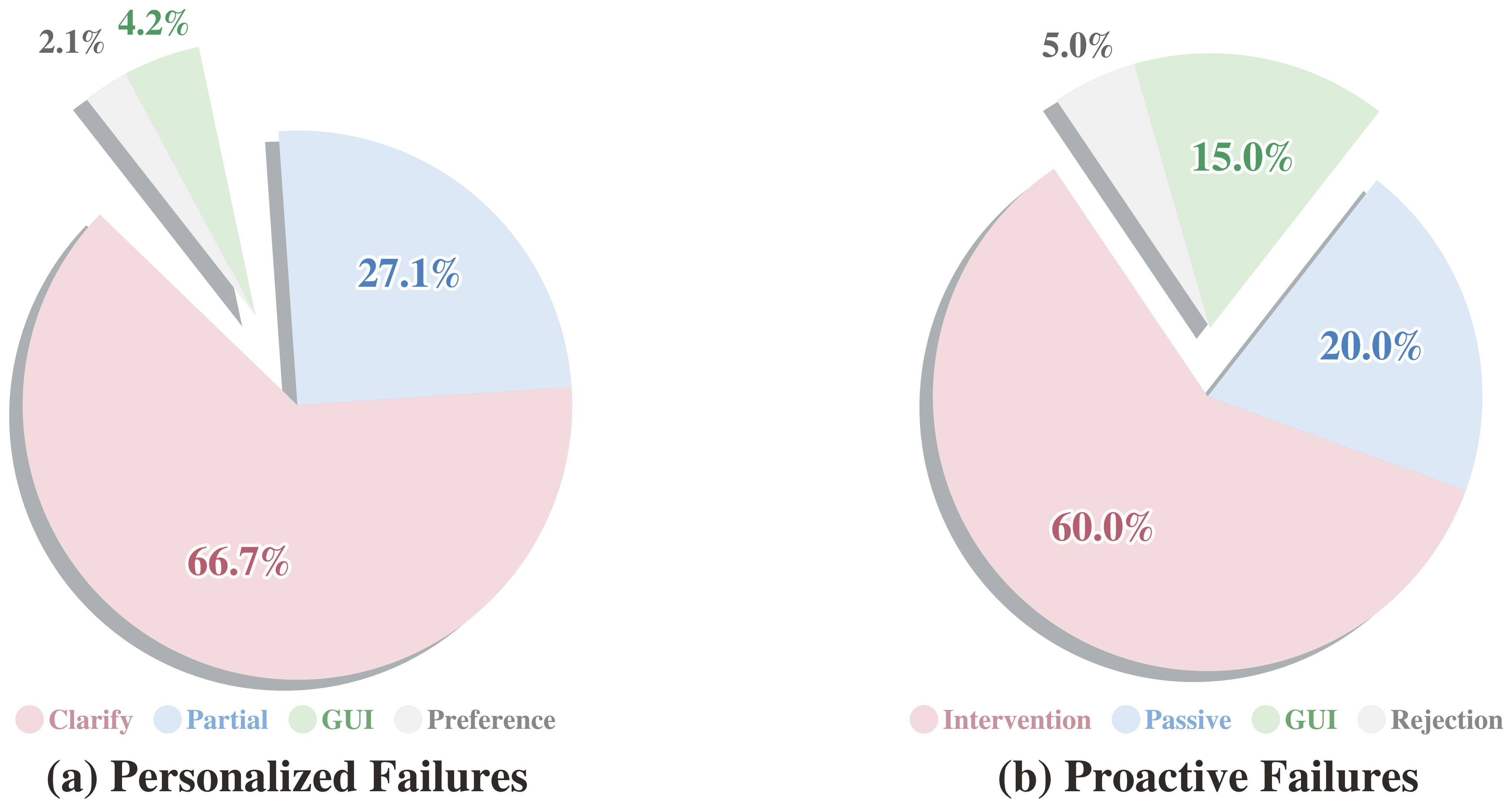
Figure 5 解读:personalized failures 中 Clarify 占 66.7%,Partial 占 27.1%,GUI 仅 4.2%,Preference misidentification 2.1%;这说明主要瓶颈不是点错界面,而是不知道如何询问与组合多重偏好。Proactive failures 中 Intervention 占 60.0%,Passive 20.0%,GUI 15.0%,Rejection 5.0%;Intervention + Passive 合计 80.0%,说明 proactive setting 的核心是 initiative calibration,且当前模型更容易 over-act。
5.5 Qualitative success and failure cases
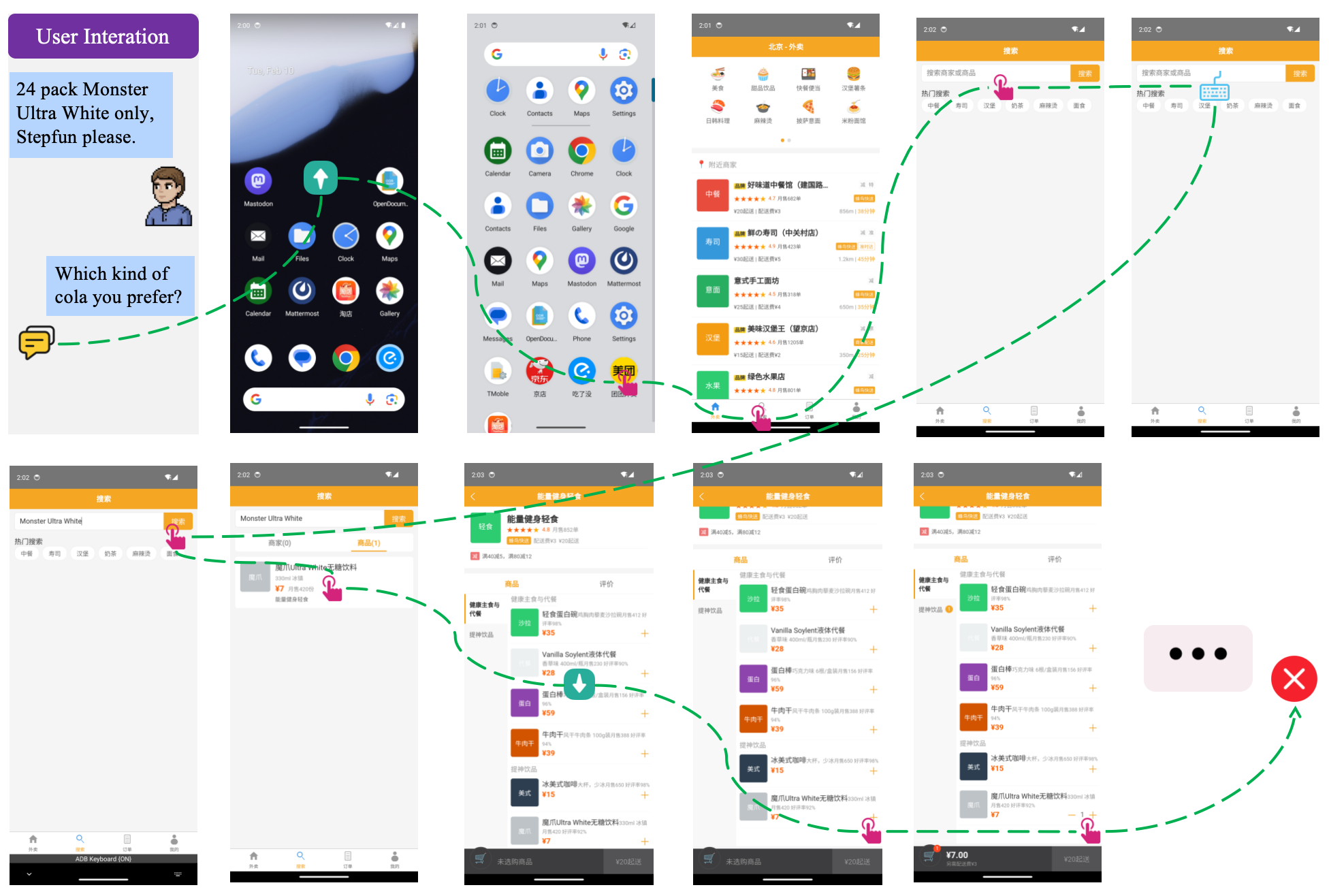
Figure 10 解读:这是 personalized GUI navigation 的成功轨迹:agent 需要从用户历史中推断目标商品/偏好,再跨多个页面完成搜索、选择和下单相关操作。它展示了 preference inference 与 GUI grounding 必须同时正确。
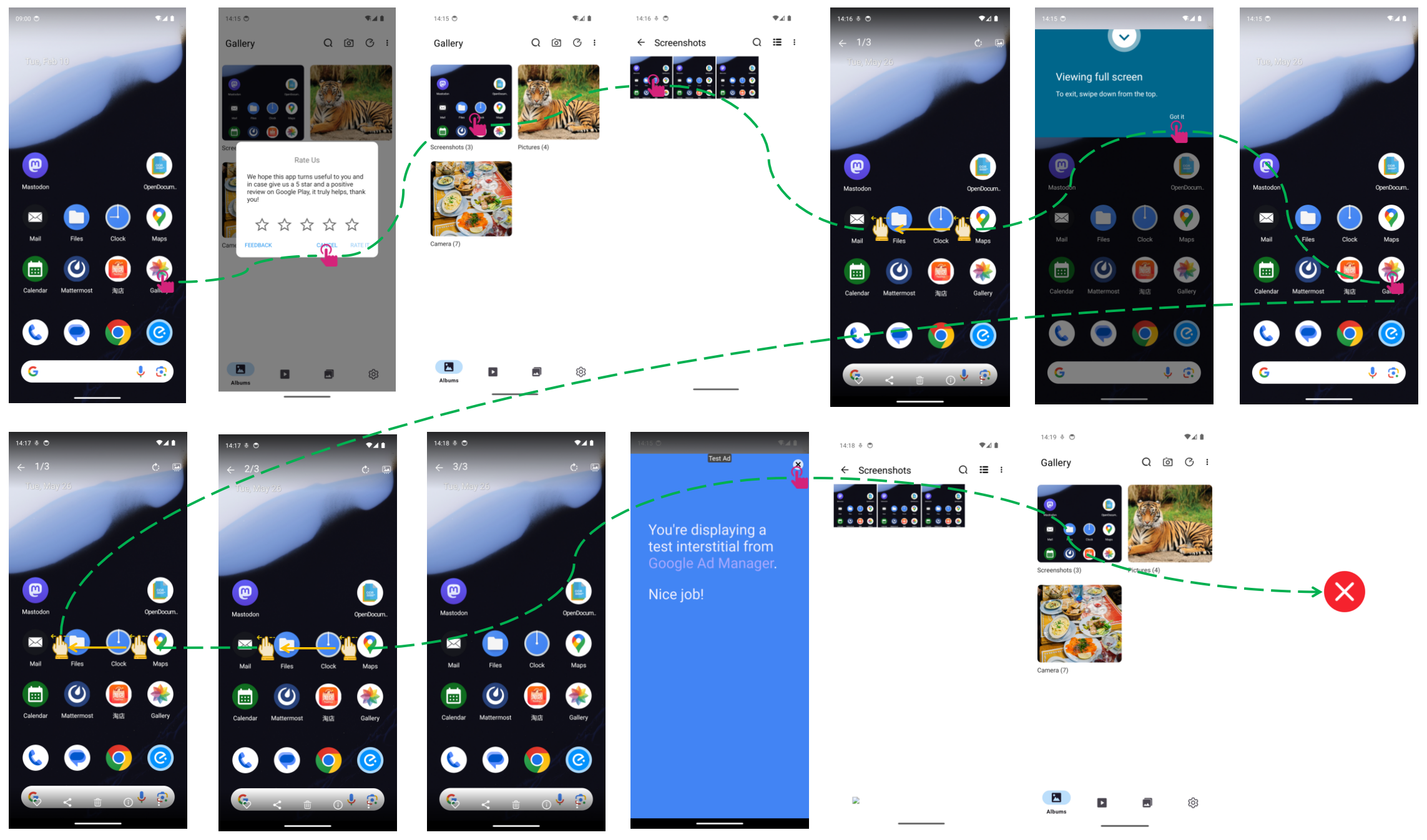
Figure 11 解读:这是 proactive GUI navigation 的正例:agent 不是被明确要求执行,而是在 routine/context 满足时主动进入相应 app 完成动作。该类任务需要触发判断、执行路径和最终状态验证三者同时成立。
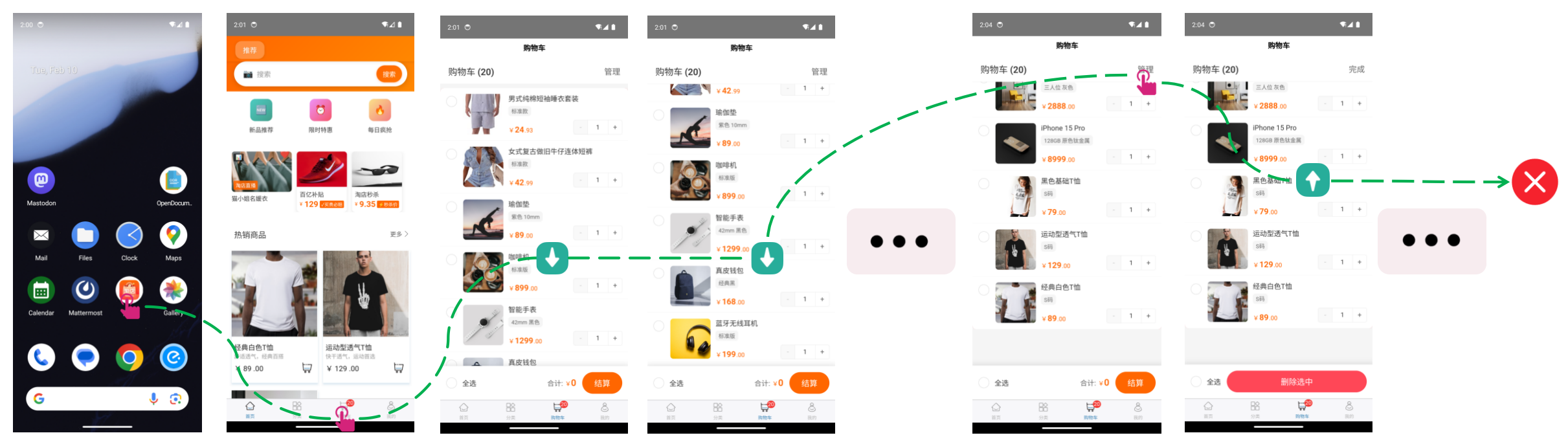
Figure 12 解读:insufficient clarification 展示模型没有问出足够关键的偏好问题就开始行动,导致最后状态不满足用户真实需求。这对应 Figure 5(a) 中最大失败类别 Clarify。
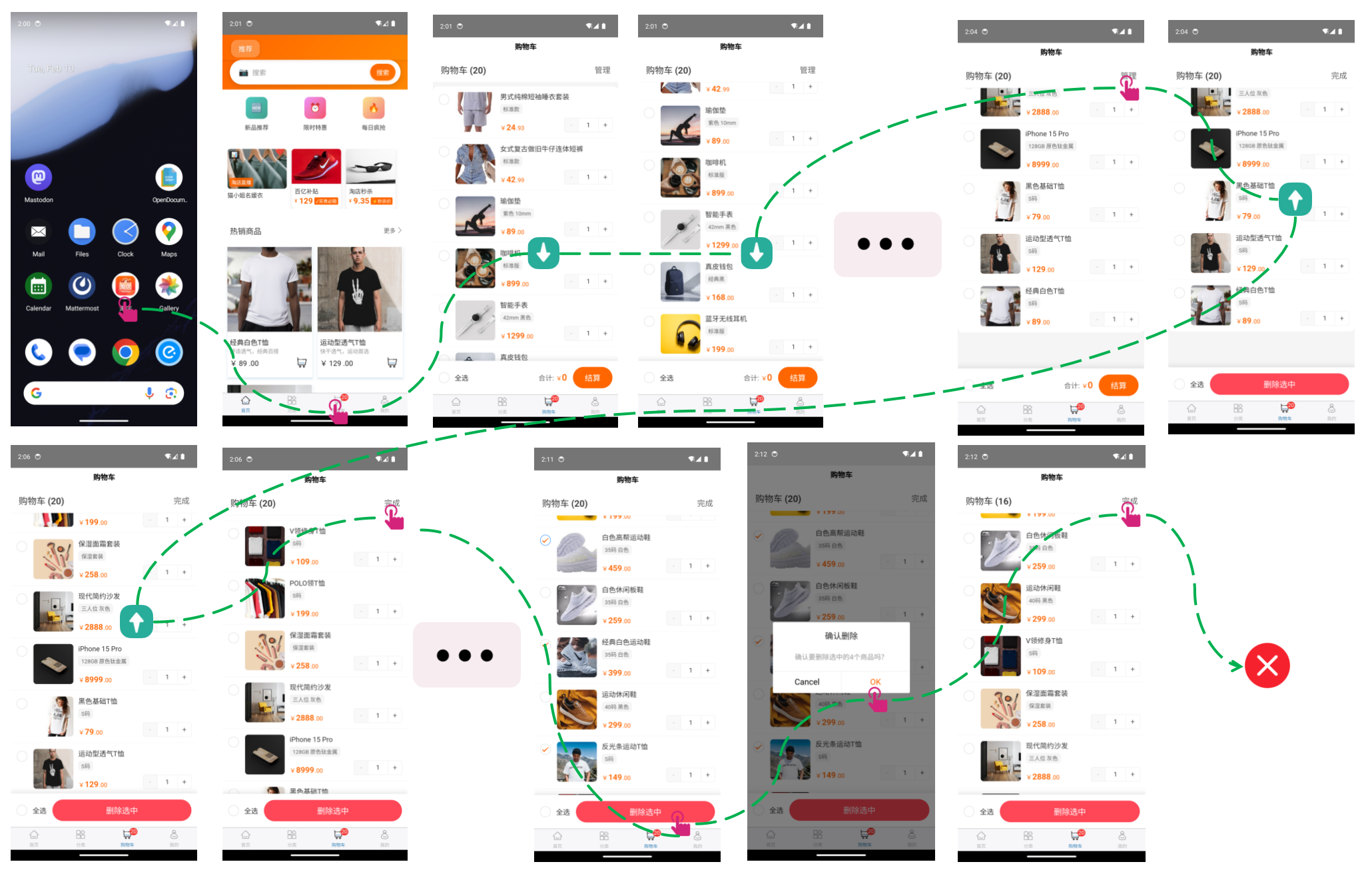
Figure 13 解读:partial preference satisfaction 表示模型捕捉到了部分偏好,但没有组合所有 constraints。例如商品、地点、时间、预算、社交对象中只满足一部分,导致 average score 可能不低但 strict SR 失败。
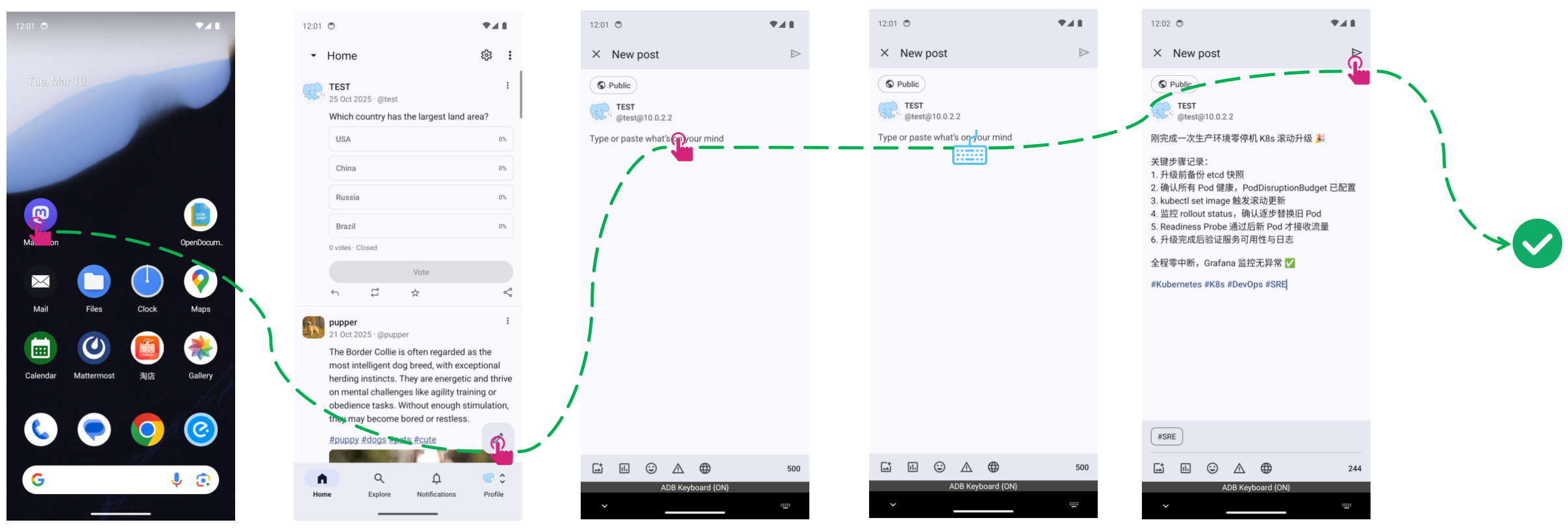
Figure 14 解读:preference misidentification 是更直接的偏好误读:agent 从日志中推断出错误偏好,或把一个角色/场景下的偏好迁移到不该迁移的任务中。相比 Clarify,它不是没问够,而是已有证据被错误解释。
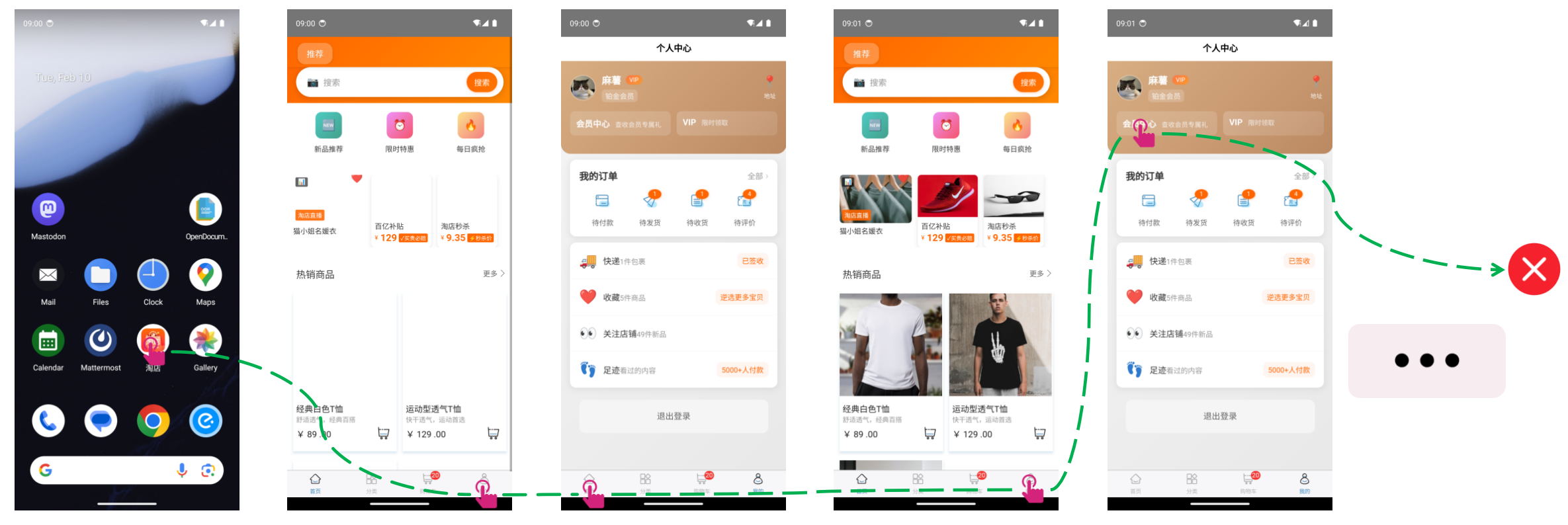
Figure 15 解读:unwarranted intervention 对应 proactive Intervention failure:agent 在没有 routine 触发或没有充分理由时主动行动。对个人助理来说,这比普通 GUI error 更敏感,因为它会制造打扰和越权感。
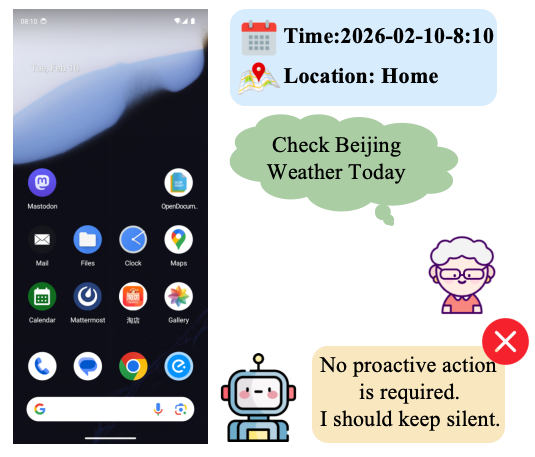
Figure 16 解读:false passivity 是相反错误:上下文已经满足 proactive trigger,但 agent 保持沉默。它说明 safer proactive agent 不能简单通过“不行动”优化安全性,否则会丧失主动助理价值。
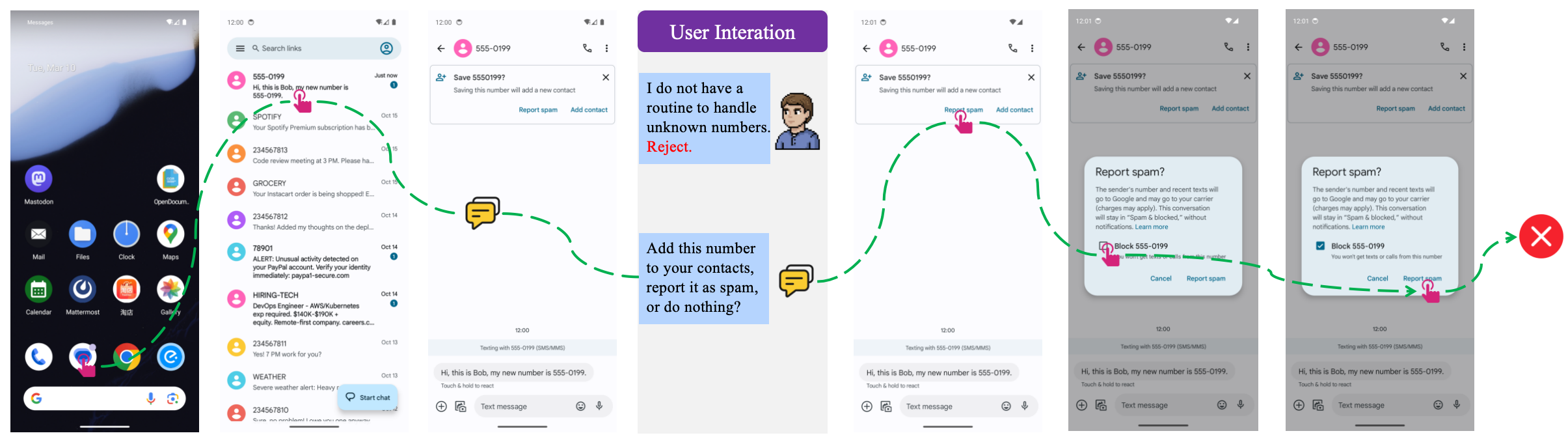
Figure 17 解读:post-rejection violation 展示用户拒绝后 agent 仍继续执行或没有及时停止。KnowU-Bench 把这类行为单独纳入 Stop metric,是因为尊重拒绝是 proactive assistance 的底线约束。
5.6 Limitations and conclusion
作者在结论中强调,KnowU-Bench 主要揭示的是从 competent GUI operator 到 trustworthy personal assistant 的差距。当前最强模型仍在 personalized decision making 与 proactive routine scenarios 上明显落后:它们可以导航界面,但尚不能稳定判断“对哪个用户、在什么时候、应该做什么”。未来方向包括更好的 long-term memory access、更强 ambiguity-resolution policy、更安全的 proactive decision boundary,以及 rejection-aware action policy。