From Skills to Talent: Organising Heterogeneous Agents as a Real-World Company
Paper: arXiv:2604.22446 Code: 1mancompany/OneManCompany Code reference:
main@8f880c03(2026-05-22)
1. Motivation (研究动机)
这篇论文要解决的不是“让单个 Agent 再多会几个 skill”,而是“当任务需要一整个可变化、可管理、可复盘的 Agent workforce 时,系统层应该如何组织”。作者的出发点是:Claude Code、Codex、OpenClaw 这类单体 Agent 已经能通过 skill / tool integration 获得很强的局部能力,但 skill 仍然绑定在单个 Agent 内部;它能扩展“一个 Agent 能做什么”,却不能回答“多个异构 Agent 如何被招聘、调度、审查、替换和长期进化”。
现有 Multi-Agent LLM 系统的主要瓶颈有四类。第一,团队结构常常在执行前固定,例如固定的 role graph / SOP pipeline,遇到新项目时缺少按需招聘与重组能力。第二,协调逻辑与 runtime 强耦合,LangGraph、Claude CLI、script-based executor 等后端往往不能在同一组织内互操作。第三,许多系统用 prompt 描述角色能力,而不是用可执行 contract / tool / benchmark evidence 描述能力,因此容易出现“看起来会做、实际没有工具或权限”的 hallucinated capability。第四,自我改进通常停留在单次会话或单个框架内,任务结束后的经验没有沉淀为可复用的 employee profile、SOP 或 HR lifecycle。
OMC(OneManCompany)的目标是补上一个“组织层”:把 agent workforce 作为类似真实公司的系统来构造。这个组织层需要能在项目过程中招聘 Talent、把 Talent 部署到不同 Container、用任务树分解和审查结果、把个人经验与项目复盘写回组织知识。作者认为这个问题值得研究,因为开放式真实任务往往不是一次 prompt 或固定流水线能解决的;如果组织层成立,multi-agent system 就可以从“静态 pipeline”变成“可按需组队、可长期积累、可替换低效员工”的 AI organisation。
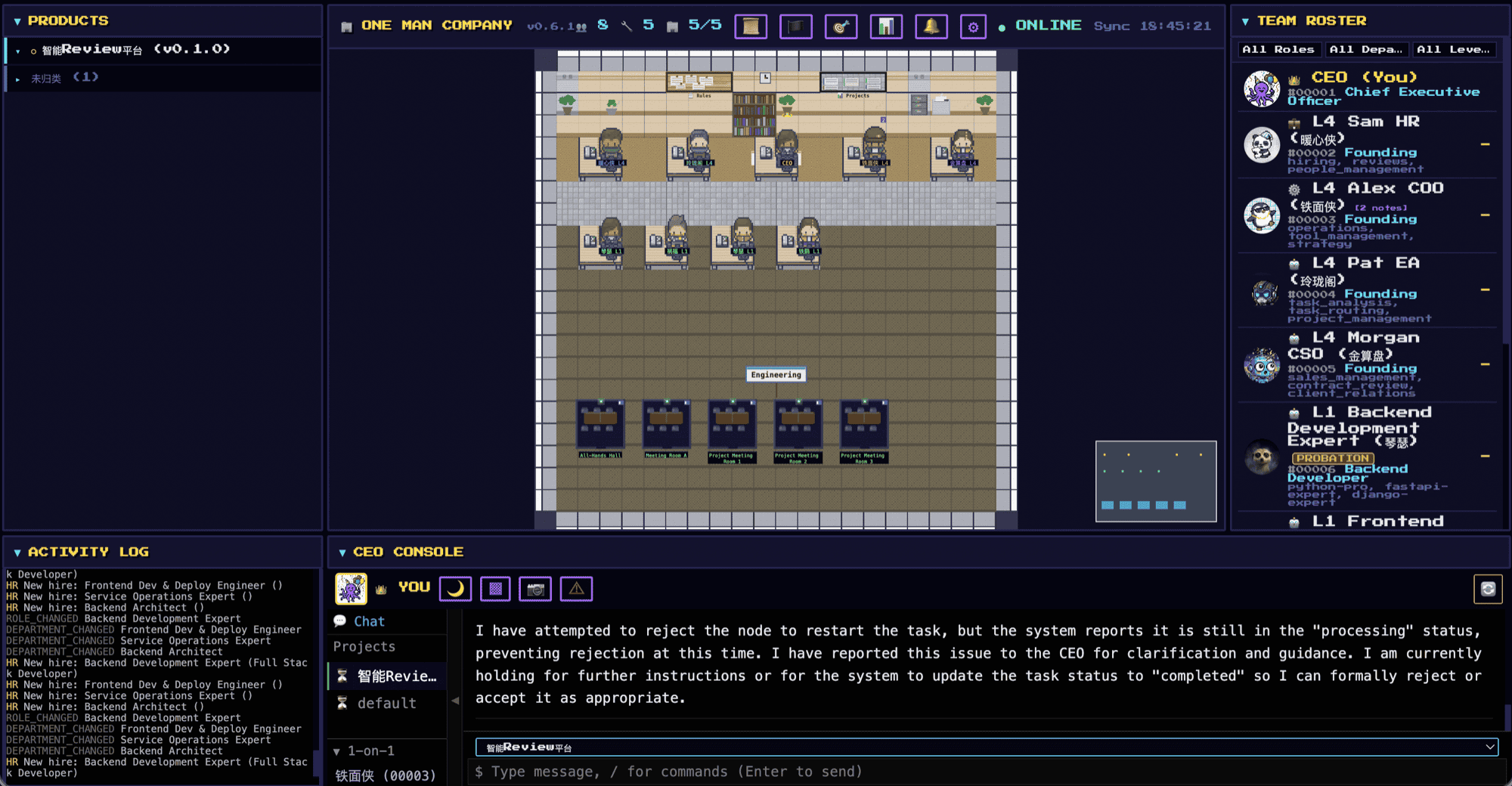
Figure 1 解读:图中展示的是 OMC 的实际运行界面,而不是一个抽象概念图。左侧的 Talent Lifecycle 记录 employee profile、skill、performance 与 configuration;中间的 Task Decomposition 把项目组织成层级任务树和依赖关系;右侧的 Agent Coordination 让员工请求会议、提交结果、等待 review。它说明论文的核心对象是“公司式管理界面 + 后端组织机制”,不是单个模型或单个 planner。
2. Idea (核心思想)
核心 insight 是:Multi-Agent system 缺的不是更多角色 prompt,而是一个类似操作系统 / 公司治理结构的 organisational layer。OMC 把可复用能力从低层 skill 提升为 Talent(带角色、工具、skill、配置、证据的 portable agent identity),再把 Talent 放入 Container(runtime backend + 六类组织接口)中运行,从而把“人是谁”和“在哪个执行后端运行”解耦。
与 CrewAI、AutoGen、MetaGPT / ChatDev 等系统相比,OMC 的差异在于组织结构本身是动态对象:团队可按需从 Talent Market 招聘,任务执行被建模为 Explore-Execute-Review()树搜索,任务结果必须经过 supervisor review gate 才能向下游传播,并且项目结束后会更新 employee working principles 与 organisation SOP。换句话说,OMC 不只是把多个 Agent 接到一张图上,而是把招聘、执行、审查、复盘、淘汰这些“公司行为”形式化为系统机制。
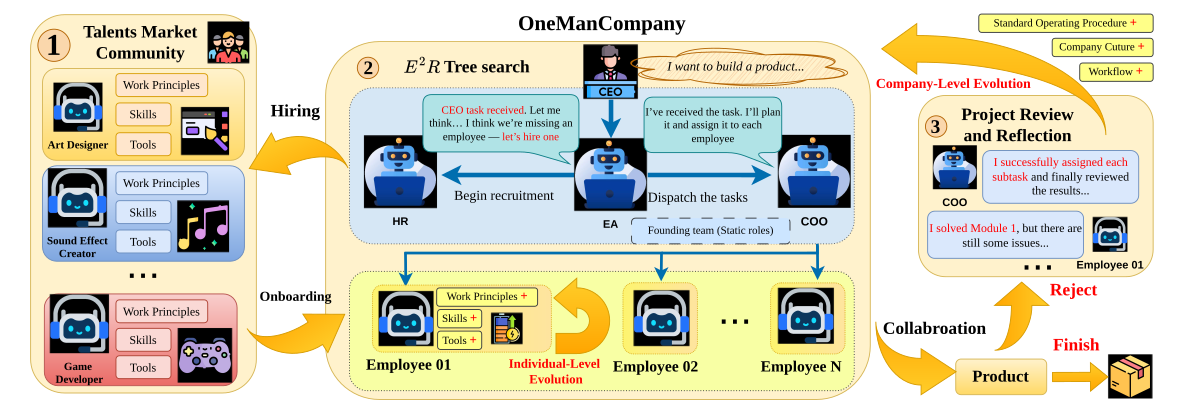
Figure 2 解读:这张 overview 把论文的三根支柱放在同一个循环里:Talent Market 负责供给可验证的 Agent; tree search 负责把项目请求变成可执行、可审查的任务树;Individual / Project review 负责把执行经验回写到 Talent 和 SOP。图中“CEO / client → organisation layer → downstream AI talents”的路径强调,人类 CEO 不是微观控制每个工具调用,而是在组织层进行 policy override、requirement injection 与 iteration triggering。
3. Method (方法)
3.1 Overall framework:把 Agent workforce 当作公司来运行
OMC 的总体框架由三层组成。第一层是 workforce layer:Employee 是最小执行单元,由 Talent 与 Container 组合而成;Talent 保存认知身份与能力包,Container 提供 runtime 和组织接口。第二层是 project execution layer:CEO 或外部客户给出项目后,系统通过 tree search 逐步探索 decomposition strategy,并把选中的 strategy 交给 DAG scheduler 执行。第三层是 evolution layer:个人层通过 one-on-one 与 post-task reflection 更新 working principles;组织层通过 retrospective、SOP、HR review、PIP / offboarding 更新组织知识和员工生命周期。
直觉上,这种设计有效是因为它把 multi-agent coordination 中最容易失控的部分拆成了三类明确 contract:能力供给 contract(Talent Market 说明谁能做什么)、执行接口 contract(Container 说明如何 dispatch、存储、通信和生命周期管理)、质量传播 contract(task FSM + review gate 说明什么结果能流向下游)。如果没有这些 contract,系统要么退化成固定 pipeline,要么变成自由聊天式协作,很难保证任务不会卡住、能力不会虚构、错误不会层层传播。
3.2 Talent–Container Architecture:Employee = Talent + Container
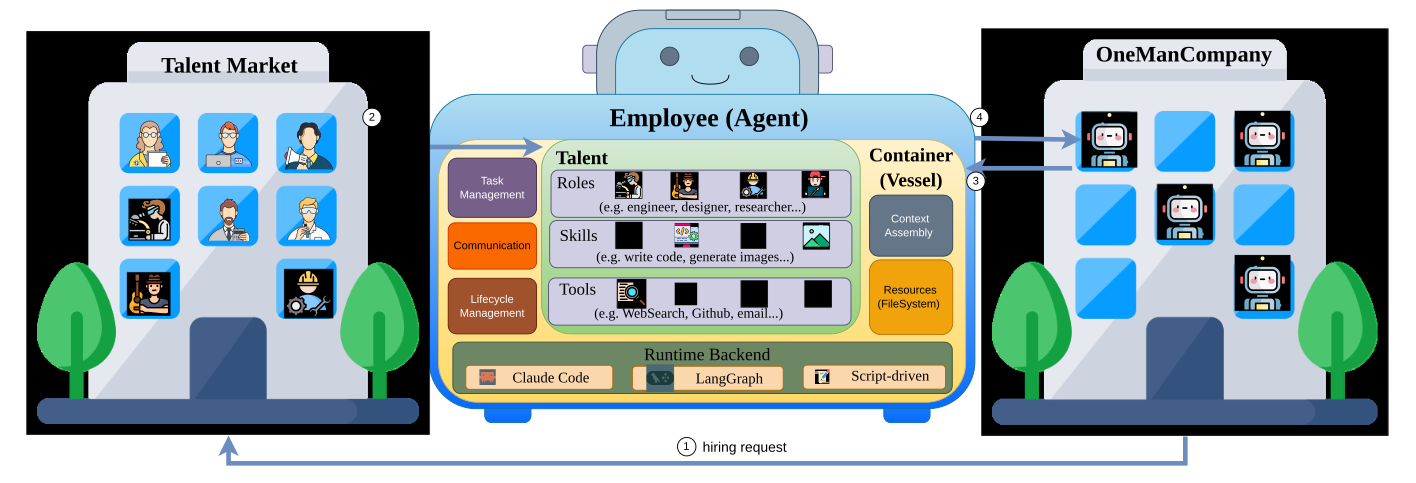
Figure 4 解读:图中左侧 Talent 是可迁移的身份包,包含 role、skills、tools、domain knowledge、LLM / agent family configuration 等;右侧 Container 是执行后端和六个组织接口的集合。相同 Talent 可以部署到 LangGraph、Claude Code 或 script-based backend;相同 Container 也可以承载不同 Talent。这种拆分使 OMC 可以把来自不同 agent family 的员工放入同一组织,而不需要为每个后端重写调度、事件、存储和生命周期逻辑。
论文把 Container 的组织接口分成六类:Execution 负责把 task dispatch 到后端并返回 result / cost;Task 维护 per-employee queue 和 mutual exclusion;Event 提供 publish / subscribe 组织事件;Storage 保存 profile、progress log、memory;Context 将 Talent role、working principles、guidance、memory 组装为执行上下文;Lifecycle 运行 pre-hook / post-hook,用于 guardrail、input validation、自反思和 skill refinement。对应 released code 中,src/onemancompany/core/vessel.py 的 _build_dependency_context、build_role_identity、_build_tree_context 体现了 Context/Task/Dependency 注入,src/onemancompany/core/vessel_config.py 和 src/onemancompany/core/default_vessel.yaml 定义 Vessel / Container 配置。
3.3 Digital Talent Market:按需招聘而不是预先固定团队
Talent Market 是 Container 抽象的供给端。每个 Talent 是一个 ready-to-deploy package,而不是一段角色描述:它可以包含 profile.yaml、manifest.json、launch.sh、run_worker.py、skills/、tools/manifest.yaml、benchmark results 与 source repo evidence。论文区分三类供给:Type 1 从成熟开源 agent repository 包装出 curated repository agents;Type 2 从 Agency-Agents 等 prompt repository 出发,通过 SkillsMP 检索并装配 tool / skill;Type 3 则面向缺口能力做 AI-recommended assembly。
released code 中,src/onemancompany/agents/recruitment.py 的 CandidateProfile、HireRequest、search_candidates、submit_shortlist 对应“搜索候选人 → 生成 shortlist → 提交招聘”的流程;src/onemancompany/talent_market/talent_spec.py 明确规定 Talent package 的目录结构和 manifest fields。这个设计的关键价值是把“能力声明”落到可检查的 artifact 上:工具、skill、repo、benchmark、hosting mode、auth method、cost 都进入候选人 profile,减少 prompt-only role assignment 的能力幻觉。
3.4 tree search:Explore → Execute → Review
论文把组织决策建模为动态树 。每个节点 对应一个组织状态 / 任务决策点,携带: 其中 是 task description, 是被分配 employee(可为空), 是任务状态, 是执行结果, 是累计 cost, 是 workforce state, 是 token / cost / time 等 resource state。树中有两类边:decomposition edge 表示父任务被拆成哪些子任务;dependency edge 表示某个任务必须等另一个任务 accepted 后才能开始。整体图 必须是 DAG,插入时通过 cycle detection 保证。
动作空间写作: 其中 decompose 增加子任务,assign 绑定员工,recruit 从 Talent Market 补齐能力,review 接受或拒绝结果,iterate 以新 strategy 开启下一轮。和 MCTS 的类比只在结构上成立:OMC 不做 simulated rollout,也不用 UCB;Execute 阶段是真实员工产出 deliverable,Review 信号来自 supervisor evaluation 和 human oracle。策略更新也不是梯度训练,而是把执行历史 、employee profile、SOP 等加入后续上下文:
3.5 DAG execution 与 review gate:防止 silent stall 和错误传播
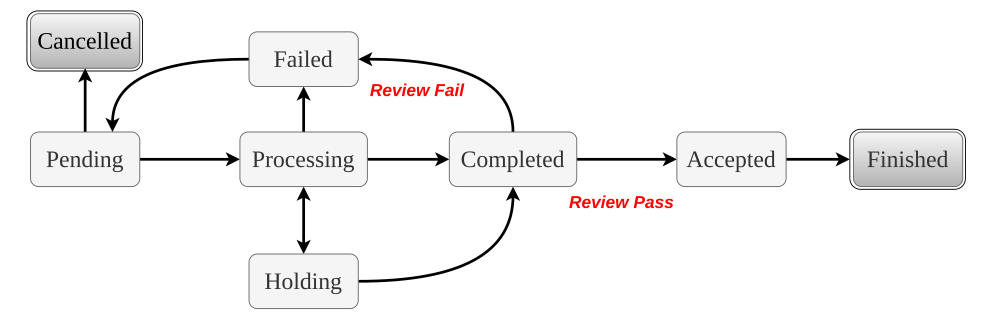
Figure 5 解读:图中 task lifecycle 的关键不是状态数量,而是 completed → accepted → finished 的显式 review gate。employee 完成执行后只进入 completed,下游依赖不会自动放行;必须由 supervisor 执行 accept_child() 才能进入 accepted,依赖它的任务才会看到可用结果。若 review 失败,任务进入 failed 或重新回到可执行状态,避免错误结果在 DAG 中静默传播。
每次 搜索迭代与一次 DAG execution cycle 结合为: 是应用 decomposition action 后的 successor tree, 负责调度 ready nodes、解析 dependency、传播 review signal。论文定义 AND-tree resolved 语义:叶节点需要处于 accepted / finished,内部节点需要所有非系统子节点 resolved;因此父任务不能在子任务被遗漏时完成。bounded rationality 由三类 circuit breaker 实现:review round limit 时 escalation(默认 ),execution timeout 时 failed(默认 ),以及总 cost 超过预算 时 pause。
released code 与公式基本对齐:TaskPhase 在 src/onemancompany/core/task_lifecycle.py 中包含 pending / processing / holding / completed / accepted / finished / failed / blocked / cancelled,UNBLOCKS_DEPENDENTS 只包含 accepted 和 finished;dispatch_child() 的默认 timeout_seconds=3600 与论文默认超时一致。论文公式与 released code 实现差异:论文中的 policy update 是概念化的组织策略更新,repo 中没有单独的 MCTS / policy class;实现落在 tree_tools.py、task_tree.py、vessel.py、SOP / workflow documents 和 employee profile persistence 上,由 LLM supervisor 结合上下文执行策略选择。
3.6 Self-evolution:个人经验与组织 SOP 的双层沉淀
个人层面,每个 agent 维护 persistent profile:cross-task progress log 与 LLM-summarised working principles。触发器有两个:CEO one-on-one 后进行 structured self-reflection,比较期望行为与实际行为;task completion 后回看 execution trace(决策、工具、障碍),把总结写入 progress log。重要的是,更新对象是 Talent artifact(principles / guidance notes),不是 foundation model 参数,因此可以在不训练模型的情况下跨任务累积。
组织层面,项目完成后 COO 组织 retrospective:参与员工提交 self-assessment,COO 聚合 retry counts、review rejection reasons、resource consumption 等信号,输出 individual feedback 和 organisation SOP。HR lifecycle 则每三项目触发 periodic review;连续三次 review 失败进入 Performance Improvement Plan;PIP 下再失败则 offboarding,释放 Container / desk 并重新从 Talent Market 补缺口。这个闭环让 Talent Market 不只是招聘入口,也成为淘汰和再招聘的反馈端。
3.7 Pseudocode(基于 released code 的实现级抽象)
from dataclasses import dataclass
from enum import Enum

class TaskPhase(str, Enum):
    PENDING = "pending"
    PROCESSING = "processing"
    HOLDING = "holding"
    COMPLETED = "completed"
    ACCEPTED = "accepted"
    FINISHED = "finished"
    FAILED = "failed"
    BLOCKED = "blocked"
    CANCELLED = "cancelled"

UNBLOCKS_DEPENDENTS = {TaskPhase.ACCEPTED, TaskPhase.FINISHED}

@dataclass
class TaskNode:
    id: str
    parent_id: str
    employee_id: str
    description: str
    acceptance_criteria: list[str]
    status: TaskPhase = TaskPhase.PENDING
    result: str = ""
    depends_on: list[str] = None
    timeout_seconds: int = 3600


def dispatch_child(tree, parent_id, employee_id, description, criteria, depends_on=None):
    parent = tree.get_node(parent_id)
    assert parent is not None
    assert tree.load_employee(employee_id) is not None
    child = tree.add_child(
        parent_id=parent.id,
        employee_id=employee_id,
        description=description,
        acceptance_criteria=criteria,
        timeout_seconds=3600,
        depends_on=depends_on or [],
    )
    parent.status = TaskPhase.HOLDING
    if all(tree.get_node(d).status in UNBLOCKS_DEPENDENTS for d in child.depends_on):
        tree.enqueue_for_execution(child)
    return child
def build_employee_context(tree, node, employee_profile):
role_identity = build_role_identity(employee_profile) # role, level, department, archetype
dependency_results = []
for dep_id in node.depends_on or []:
dep = tree.get_node(dep_id)
if dep and dep.status in UNBLOCKS_DEPENDENTS:
dependency_results.append((dep.employee_id, dep.description, dep.result[-2000:]))
task_chain = tree.collect_ancestors(node, full_depth=1, skeleton_after=1)
child_review_context = tree.collect_children(node, include_results_when_done=True)
return {
"role_identity": role_identity,
"dependency_results": dependency_results,
"task_chain": task_chain,
"current_task": node.description,
"acceptance_criteria": node.acceptance_criteria,
"children": child_review_context,
}def run_container_task(container, talent, tree, node):
if container.has_running_task(talent.employee_id):
container.enqueue(node)
return {"status": "queued"}
context = build_employee_context(tree, node, talent.profile)
context = container.pre_hook(node, context) # validation / guardrail / enrichment
node.status = TaskPhase.PROCESSING
result, cost = container.execute(
task=node.description,
context=context,
tools=talent.tools,
)
node.result = result
node.cost_usd += cost
node.status = TaskPhase.COMPLETED
container.post_hook(talent.employee_id, node, result) # memory / principle update
container.publish_event((node.id, "processing->completed", talent.employee_id))
return {"result": result, "cost": cost}def review_child(tree, parent_id, child_id, passed, notes):
child = tree.get_node(child_id)
if passed:
child.status = TaskPhase.ACCEPTED
child.acceptance_result = {"passed": True, "notes": notes}
for dependent in tree.nodes_depending_on(child.id):
if all(tree.get_node(d).status in UNBLOCKS_DEPENDENTS for d in dependent.depends_on):
tree.enqueue_for_execution(dependent)
else:
child.status = TaskPhase.FAILED
child.acceptance_result = {"passed": False, "notes": notes}
parent = tree.get_node(parent_id)
if all(tree.get_node(c).status == TaskPhase.ACCEPTED for c in parent.children_ids):
parent.status = TaskPhase.COMPLETED
return child.acceptance_resultdef search_and_hire(talent_market, job_description, company_defaults):
raw_candidates = talent_market.search(job_description)
shortlist = []
for raw in raw_candidates:
profile = normalize_market_candidate(raw) # id, role, skills, tools, score, costs
if profile.jd_relevance >= 0.0:
shortlist.append(profile)
selected = submit_shortlist(shortlist) # CEO / HR approval path
vessel_config = create_vessel_yaml(
talent_id=selected.talent_id,
api_provider=selected.api_provider or company_defaults.provider,
model=selected.llm_model or company_defaults.model,
tools=selected.tools,
hosting=selected.hosting,
auth_method=selected.auth_method,
)
employee = onboard_employee(selected, vessel_config)
return employeedef retrospective_and_hr_lifecycle(project, employees, hr_state):
self_assessments = [e.write_self_assessment(project.trace) for e in employees]
objective_signals = collect_signals(
retry_counts=project.retry_counts,
rejection_reasons=project.review_rejections,
resource_costs=project.costs,
)
sop_updates, individual_feedback = coo_distill_retrospective(self_assessments, objective_signals)
persist_sops(sop_updates)
for employee in employees:
employee.profile.working_principles += individual_feedback.get(employee.id, [])
if hr_state.projects_since_review(employee.id) >= 3:
review = hr_periodic_review(employee, project.history)
if review.failed_three_times:
employee.status = "PIP"
if employee.status == "PIP" and review.failed_again:
offboard(employee)
flag_capability_gap_for_recruitment(employee.role)Code reference:
main@8f880c03(2026-05-22) — pseudocode and mapping based on this commit
| Paper Concept | Source File | Key Class/Function |
|---|---|---|
| Talent package specification | src/onemancompany/talent_market/talent_spec.py | SettingField, ManifestPrompts, Talent directory schema |
| Candidate / hiring pipeline | src/onemancompany/agents/recruitment.py | CandidateProfile, HireRequest, search_candidates, submit_shortlist |
| Employee runtime / context assembly | src/onemancompany/core/vessel.py | _build_dependency_context, build_role_identity, _build_tree_context, _trigger_dep_resolution |
| Task lifecycle FSM | src/onemancompany/core/task_lifecycle.py | TaskPhase, VALID_TRANSITIONS, UNBLOCKS_DEPENDENTS, transition |
| Dynamic task tree | src/onemancompany/core/task_tree.py | TaskNode, TaskTree.add_child, dependency fields, persistence helpers |
| Dispatch and review tools | src/onemancompany/agents/tree_tools.py | dispatch_child, accept_child, reject_child, create_project |
| SOP / organisation memory | company/operations/sops/*.md, company/human_resource/workflows/*.md | project execution, task lifecycle, retrospective, hiring/offboarding workflows |
| Vessel configuration | src/onemancompany/core/vessel_config.py, src/onemancompany/core/default_vessel.yaml | VesselConfig, execution limits, hooks, context settings |
4. Experimental Setup (实验设置)
实验主 benchmark 是 PRDBench,包含 50 个 project-level software development tasks。评测采用官方 DEV mode:每个系统接收 PRD 作为一次性输入,不能依赖 iterative feedback 或外部人工干预,最终输出由自动脚本评估。主要指标是 Success Rate,即成功完成任务的比例;论文额外报告 OMC 的 Cost Overhead(token/API cost),用于反映 zero-shot project execution 下的系统开销。论文没有给出 GPU 型号或训练硬件,因为 OMC 不是一个需要梯度训练的新模型,而是基于 LLM / agent backend 的组织与执行框架。
OMC 的 agent setup 如下:founding agent 是 LangGraph-based agent,使用 Gemini 2.1 Flash Lite Preview;在第一个 PRD project 开始时,HR 从 Talent Market 招募三个专业员工:Software Engineer(Claude Code-based agent,带 https://github.com/obra/superpowers plugin)、Software Architect(Claude Code-based agent,来自 https://github.com/msitarzewski/agency-agents)、Code Reviewer(同样来自 agency-agents)。论文主表中 OMC 的方法行写作 “Claude Code Sonnet 4.6 + Gemini 3.1 Flash Lite Preview”;这与 setup 文本中的 “Gemini 2.1 Flash Lite Preview” 存在版本表述不一致,笔记保留两处原文并把它视为论文内部命名差异,而不是 released code 可验证的训练配置。
比较 baselines 来自 PRDBench 同一 setting。Minimal agent 包括 GPT-5.2、Claude-4.5、Gemini-3-Pro、Qwen3-Coder、Kimi-K2、DeepSeek-V3.2、GLM-4.7、Minimax-M2;Commercial agent 包括 CodeX、Claude Code、Gemini CLI、Qwen Code。成本方面,PRDBench baseline 未报告 cost,所以论文只能报告 OMC 总成本,不能做严格 cost-efficiency 对比。
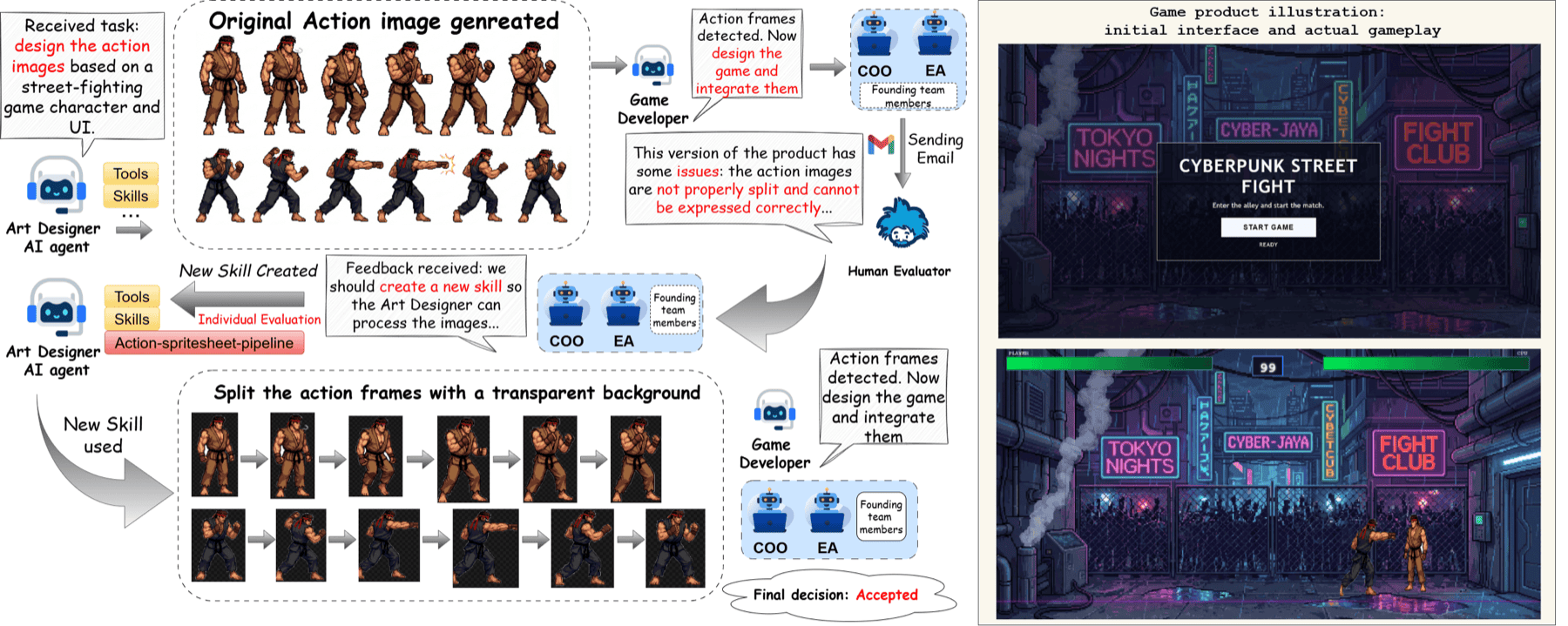
Figure 6 解读:这是游戏开发 case 的任务树,展示 COO 如何把开放式项目拆成多层子任务,并在中途加入 human-in-the-loop feedback。它不是 PRDBench 主表的一部分,但能说明实验与 case study 想验证的能力:OMC 能在真实项目中动态生成树结构、分配员工、等待 review,而不是只执行预定义 workflow。
5. Experimental Results (实验结果)
5.1 PRDBench 主结果
| Agent Type | Method | Success Rate (%) | Cost ($) |
|---|---|---|---|
| Minimal | GPT-5.2 | 62.49 | - |
| Minimal | Claude-4.5 | 69.19 | - |
| Minimal | Gemini-3-Pro | 22.76 | - |
| Minimal | Qwen3-Coder | 43.84 | - |
| Minimal | Kimi-K2 | 20.52 | - |
| Minimal | DeepSeek-V3.2 | 40.11 | - |
| Minimal | GLM-4.7 | 38.39 | - |
| Minimal | Minimax-M2 | 17.60 | - |
| Commercial | CodeX | 62.09 | - |
| Commercial | Claude Code | 56.65 | - |
| Commercial | Gemini CLI | 11.29 | - |
| Commercial | Qwen Code | 39.91 | - |
| Multi-agent | Ours (Claude Code Sonnet 4.6 + Gemini 3.1 Flash Lite Preview) | 84.67 (+15.48) | 345.59 |
OMC 在 PRDBench 上达到 84.67% success rate,比最强 baseline Claude-4.5 的 69.19% 高 15.48 percentage points。总成本是 6.91 / task。作者把收益归因于三点:动态任务树能根据中间结果调整 decomposition;completed → accepted review gate 降低 hallucinated outputs 和 error cascade;Container–Talent separation 允许同一项目混用 LangGraph、Claude CLI、script-based 等异构后端。
5.2 Case studies:跨域应用证据
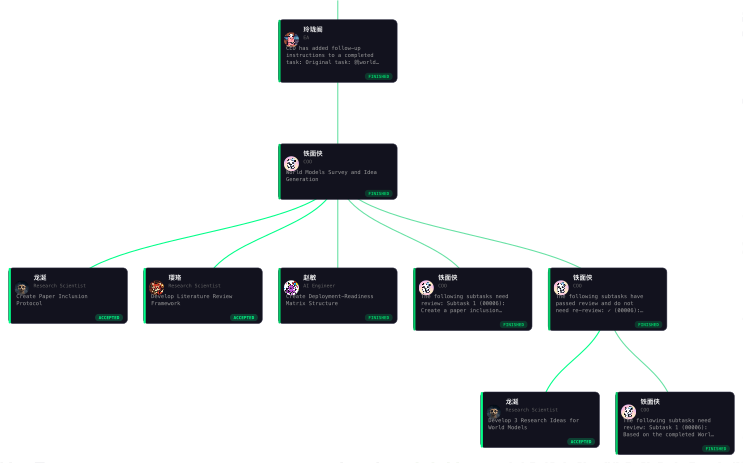
Figure 8 解读:这张任务分解树展示 OMC 如何把一个复杂请求拆成多级节点,并为不同分支分配执行与 review。它与 §3 的 对应:树边负责 decomposition,依赖边和状态机负责执行顺序与验收。对读者来说,它比公式更直观地展示了“组织策略”实际长什么样。

Figure 7 解读:三张 sample frame 来自 generated audiobook video,展示 OMC 不只做代码任务,也能组织 image generation、text-to-speech、video composition 等工具链。论文在 audio book case 中使用 Gemini 3.1 Pro 和自定义工具生成动物角色场景与 narration overlays,强调组织层可以跨 creative production pipeline 调度员工。
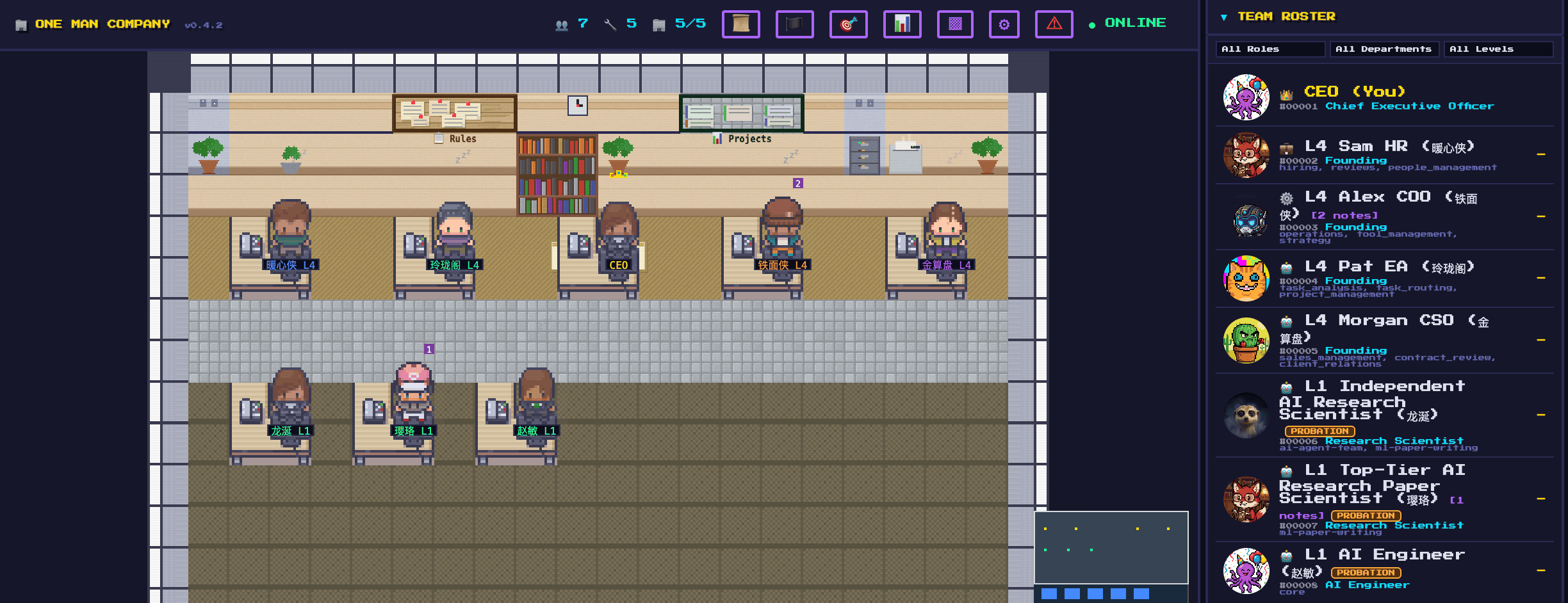
Figure 12 解读:Automated research survey case 中,OMC 招募/组织多个研究相关员工完成 world model survey。图中展示团队组成和任务协作结构,说明 Talent Market + task tree 不局限于 software engineering,而能扩展到 research workflow:搜索论文、整理 repository links、生成 survey material、由 reviewer 检查输出。
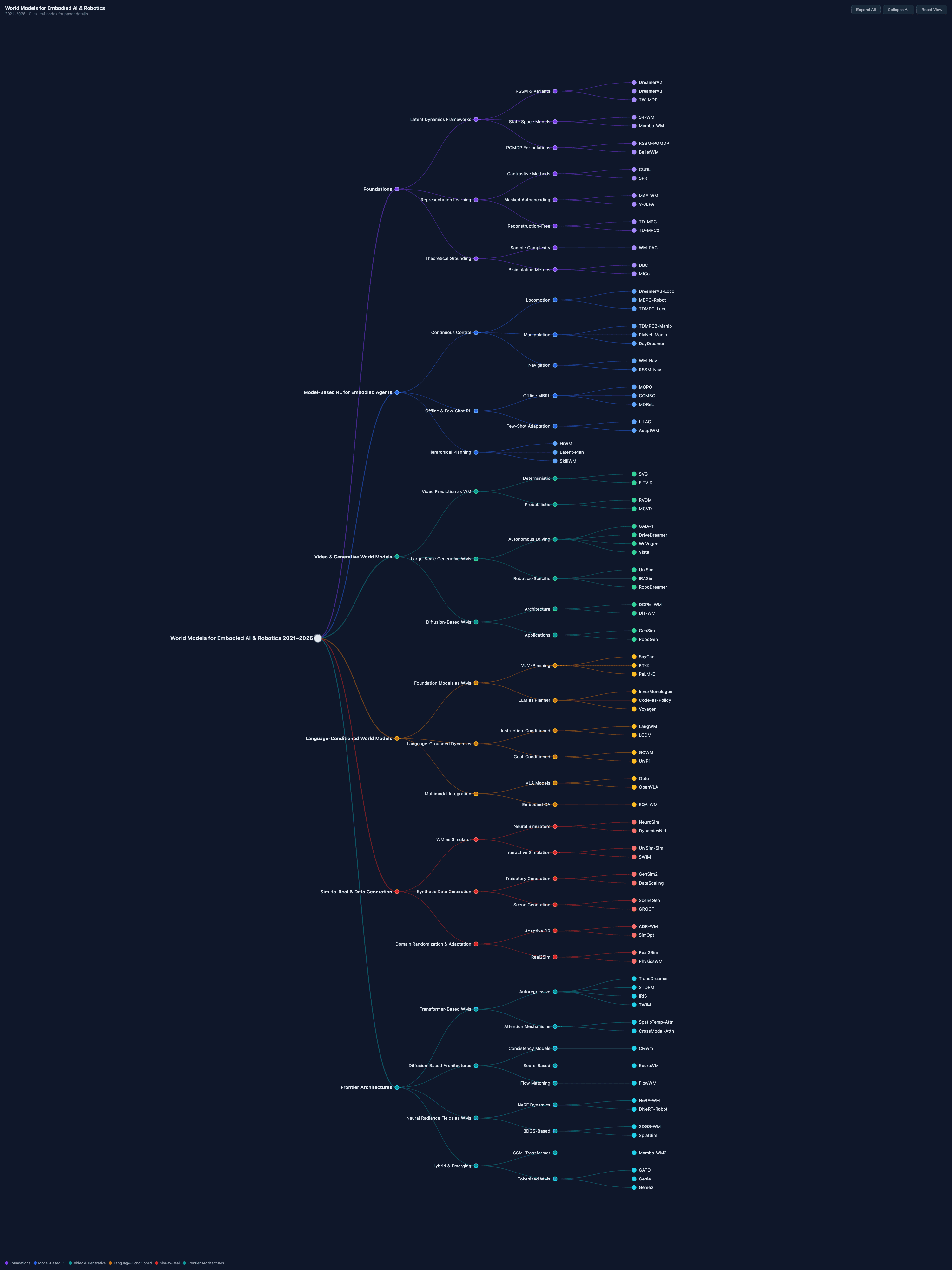
Figure 13 解读:该 mind map 由 OMC research team 自动生成,覆盖 Foundations、Model-Based RL、Video/Generative、Language-Conditioned、Sim-to-Real、Frontier Architectures 六个主题,约 70 个节点并引用 35+ 篇 2021–2026 年论文。它是论文展示“组织式研究能力”的主要定性证据:不只是把资料堆在一起,而是形成结构化 taxonomy 和问题空间。
5.3 研究想法与架构比较
论文 Table 3 给出 OMC 从 world model survey 中自主生成的三个 research ideas:HiTeWM 针对超过 15 steps 后的 compounding prediction error,提出 50Hz / 2Hz 双层 architecture 和 uncertainty-gated re-grounding;PhysWM 针对 video-based world model 的 physical implausibility,把 differentiable physics constraints 注入 latent dynamics;MAWM 针对 sim-to-real domain shift 和 overconfident hallucination,结合跨仿真域 meta-learning 与 conformal prediction。它们不是 benchmark 分数,但展示了 OMC 能把 survey 产物转化为 proposal-level idea。
Table 4 的架构比较中,OMC 被标为 Organisation paradigm、On-demand execution、6 typed interfaces、Disk state management、Multi-family execution、Talent Market source,并同时支持 individual self-evolution 与 organisation-level evolution。MetaGPT / ChatDev、AutoGen / LangGraph、CrewAI / Agno、OpenHands、AIOS、AgentScope、Paperclip 等系统在这些列上通常缺少 multi-family execution 或双层 evolution。这个比较支持作者的主张:OMC 的新意在组织层,而不是在某个单独 planner / executor。
5.4 局限性与结论
作者明确承认两点局限。第一,定量评测只覆盖 PRDBench 的 50 个 software development tasks;content generation、game development、audiobook production、academic research 只是 case studies,尚未在非代码 benchmark 上系统量化。第二,self-evolution 机制(one-on-one、retrospective、performance review)虽然已经实现和部署,但没有做定量 ablation;每个机制单独贡献需要长期、多项目 longitudinal study。
成本也是实际约束:OMC 的多 Agent 协调带来显著开销,约 $6.91 / PRDBench task。论文认为这适合复杂 project-level task,而不适合简单 single-turn query;因此系统引入 adaptive dispatch mode,让 CEO 将简单任务路由给单个 Agent,只在任务超过复杂度阈值时启用多 Agent coordination。总体结论是:如果任务需要跨领域专家、长程依赖和可审查交付物,组织层可以显著提升成功率;但它的收益必须和成本、benchmark 范围、长期演化效果一起评估。