CORAL: Towards Autonomous Multi-Agent Evolution for Open-Ended Discovery
Paper: arXiv:2604.01658 Code: Human-Agent-Society/CORAL Code reference:
main@3d002bfd(2026-05-22)
1. Motivation (研究动机)
现有 LLM-based evolution 的瓶颈:外层搜索仍然是固定算法
这篇论文关注的不是“让 LLM 一次性写出答案”,而是更接近 FunSearch / AlphaEvolve / OpenEvolve / ShinkaEvolve 这类 evaluator-guided evolutionary search:LLM 反复提出 candidate program,外部 evaluator 给分,系统再根据历史高分解继续搜索。问题在于,已有方法虽然把 LLM 放进了演化循环,但很多真正决定搜索质量的动作仍由硬编码规则控制:检索哪些父解、怎样构造 prompt、什么时候评估、怎样更新 population / memory、失败后何时换方向。
论文把这类固定流程拆成四步:给定任务描述 和 evaluator ,候选解 的评估为 其中 是 numeric score, 是辅助反馈。第 步共享记忆为 ,系统先从中构造工作上下文 ,再执行 Retrieve Propose Evaluate Update。传统固定演化搜索的问题是: 的选择、评估触发、失败处理、知识外化等关键控制权在外层算法,而不是在 agent 自己手里。
多智能体系统的另一类刚性:角色与通信结构预设
很多 multi-agent LLM 系统采用“vertical scaling”:人先拆任务、分配角色、定义通信拓扑,再让 agents 按剧本协作。论文认为这对 open-ended discovery 也有限制,因为开放问题的有效分解方式、哪些中间发现值得保存、哪些 agent 应该借鉴谁的路线,往往也是搜索过程的一部分,而不是一开始就能知道的固定结构。
CORAL 要解决的具体问题
CORAL 试图回答两个问题:第一,若把 Retrieve / Propose / Evaluate / Update 中更大部分的控制权交给长期运行的 autonomous agent,是否能比固定演化搜索更有效?第二,若多个长期运行 agent 不通过预设对话协议,而是通过共享持久记忆异步协作,是否能比单 agent 或“best-of-4 独立运行”扩展更好?这个问题值得研究,因为很多科学、系统和算法优化任务只有 evaluator,没有 ground-truth answer;系统必须长期积累经验、复用失败教训和局部技巧,才能持续推进 frontier。
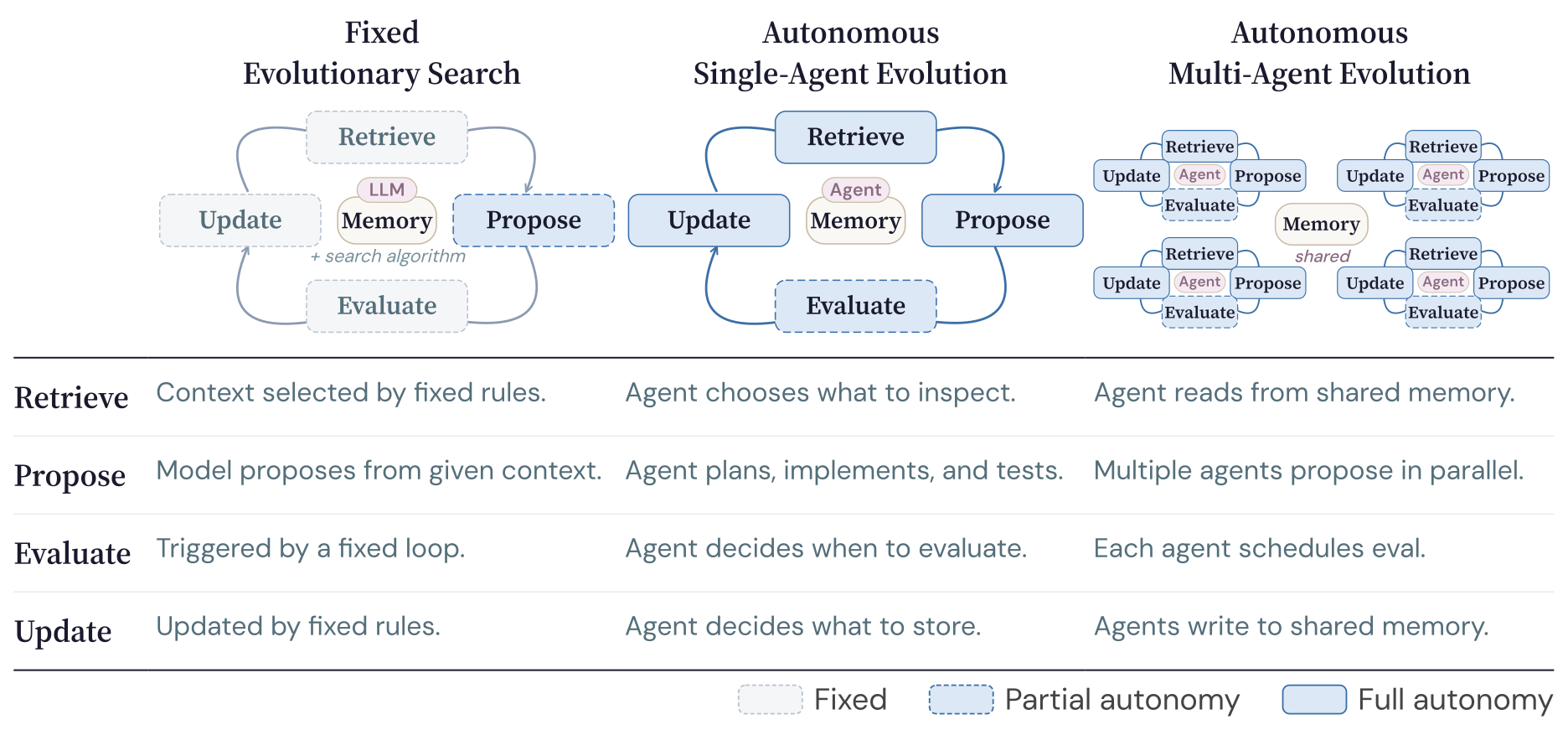
Figure 1 解读:图中把三种范式并排比较。Fixed evolutionary search 中,LLM 基本只负责 Propose,Retrieve / Evaluate / Update 由固定 search algorithm 控制;autonomous single-agent evolution 把“看什么、何时测试、写回什么”交给单个 agent;autonomous multi-agent evolution 则让多个 agent 各自执行完整循环,并通过 shared memory 读写彼此成果。CORAL 的核心定位就是从中间范式进一步走到右侧范式。
2. Idea (核心思想)
CORAL 的核心 insight 是:open-ended discovery 中,搜索策略本身应当成为 agent 的可自主决策对象,而不是固定外层算法的一组超参数。如果 agent 能像工程师一样浏览历史尝试、局部测试、保存笔记、提炼 skills,并且多个 agent 能通过共享记忆异步“相互感染”有效技巧,那么系统可以在长时间搜索中自然形成知识积累与探索分工。
关键创新可以概括为三点:CORAL 用 file-system-based shared persistent memory 替代固定 population 数据结构;用 asynchronous multi-agent organization 替代预设角色/对话拓扑;用 heartbeat-based interventions 在不接管 agent 全部决策的前提下,周期性推动 reflection、consolidation 和 pivot,防止长期运行 agent 只做局部微调或忘记写入共享知识。
与 AlphaEvolve / OpenEvolve / ShinkaEvolve 相比,CORAL 的根本差异不是“也用了 LLM 生成候选”,而是把很多外层演化控制权从 algorithm 转移给 agent:agent 自己决定检索哪些 attempts / notes / skills,何时执行 local test,何时调用 evaluator,以及哪些发现值得写回共享库。与常见 multi-agent collaboration 相比,CORAL 不要求人类预设通信结构;agents 主要通过 attempts、notes、skills 等持久 artifact 间接协调。
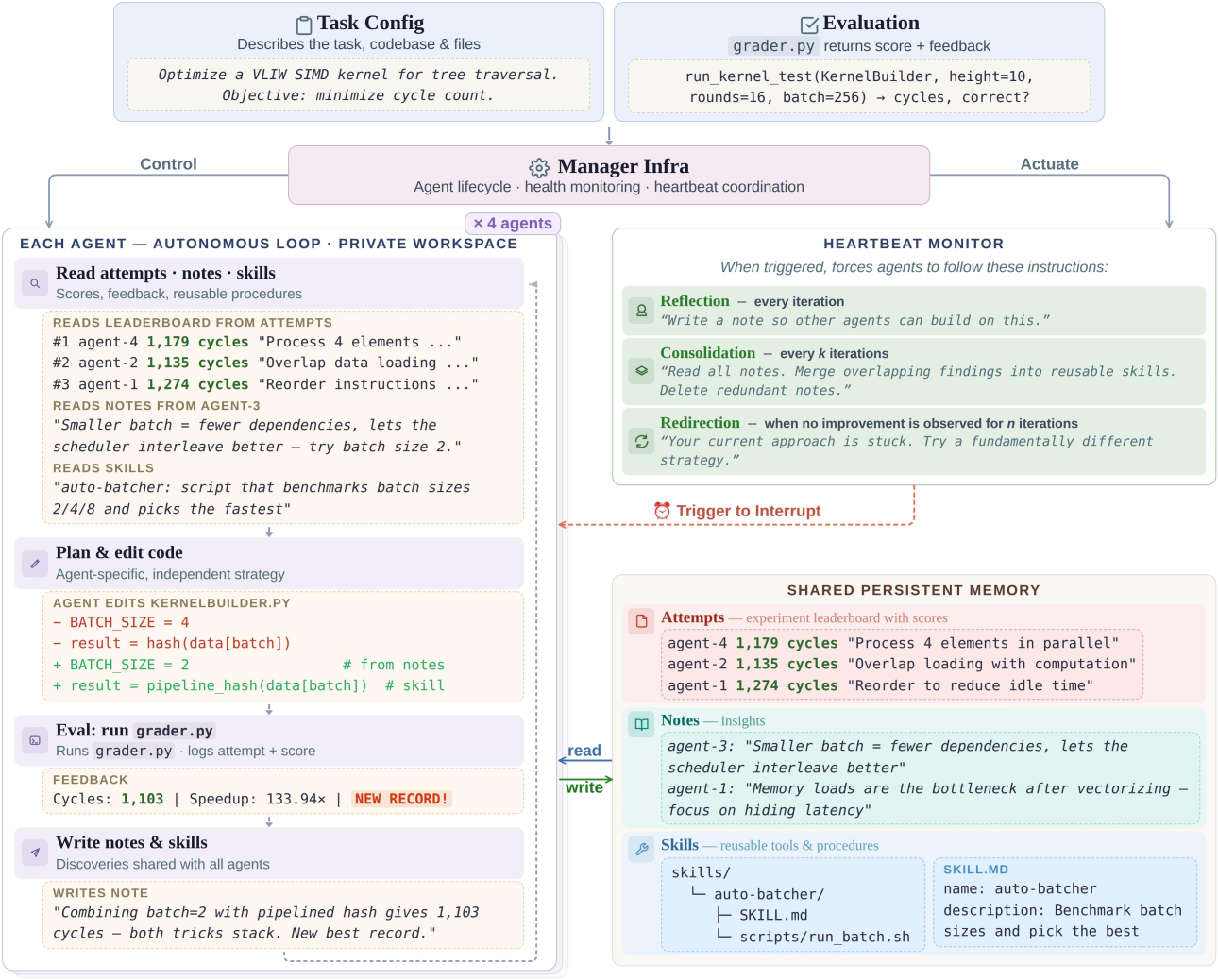
Figure 2 解读:这是 CORAL 的整体框架图。左侧每个 agent 在私有 worktree 中独立循环:读取 leaderboard / notes / skills,计划并修改代码,运行 grader.py 评估,最后把 notes 与 skills 写回。右侧 heartbeat monitor 不直接给出新算法,而是在反思、整理和停滞时重定向三个节点插入 prompt。底部 shared persistent memory 是 agents 之间真正的通信介质:attempts 记录得分轨迹,notes 记录分析,skills 存可复用程序和流程。
3. Method (方法)
3.1 问题形式化:从候选解评估到四阶段循环
论文把 open-ended discovery 表述为:任务由描述 和 evaluator 指定,candidate solution 经 evaluator 返回 。共享持久记忆 包含已有候选解、评估结果、文字反馈、笔记和可复用技能;一次改进步骤可抽象为: 在 fixed evolutionary search 中,这四个算子大多是外部固定规则;CORAL 的目标是让 agent 自己执行这些动作,并允许动作的时机、粒度和内容随任务进展改变。直觉上,这更接近人类研究者做长期优化:不是每次都按同一模板 mutate,而是先看失败样例、局部复现实验、记录假设,再决定下一步是否值得提交 evaluator。
3.2 Shared Persistent Memory:把演化 population 扩展成可读写知识库
CORAL 的共享记忆 是 .coral/public/ 下的文件系统,并通过 symlink 暴露到每个 agent 的 runtime 目录。论文给出三类 root folder:
attempts/:保存历史评估、candidate solution、score、status、feedback 和 commit hash;agent 可以看 leaderboard、比较高分解、checkout 父解。notes/:保存 agents 写下的观察、失败原因、局部规律、开放问题和 synthesis;agent 可按主题组织子目录。skills/:保存可复用过程、脚本、工具和 implementation pattern,例如一个自动 benchmark batch size 的 skill。
这个设计的重点不是“把所有上下文塞进 prompt”,而是让 agent 以 progressive disclosure 方式主动读取需要的 artifact。对长程任务而言,notes / skills 提供了比 prompt history 更稳定的跨回合记忆;对 multi-agent 而言,它又是一个弱耦合的通信总线。
3.3 Asynchronous Multi-Agent Organization:水平扩展探索,而不是硬编码角色
在 multi-agent 版本中,第 个 agent 有自己的局部上下文 和独立 worktree,同时通过 symlink 共享同一个 。当 agent 写入 artifact 后,agent 之后可以把它作为 的一部分检索: 因此,信息转移不是通过固定消息协议发生,而是通过“可被后续 agent 检索的持久证据”发生。这使得不同 agent 可以并行探索不同方向,同时仍能通过 code parent、notes、skills、leaderboard 等方式共享突破。
3.4 Heartbeat:轻量干预长期 agent 的反思、整理与换方向
因为 CORAL 不再强制固定搜索循环,agent 可能陷入局部最优、过度微调、忘记查共享记忆、或忘记把新知识写回。heartbeat 的作用是提供最低限度的行为约束,而不是替代 agent 搜索。论文定义 heartbeat 触发后会把 agent 的本地上下文从 修改为 ,从而影响后续行为:
当前 CORAL 实现包含三类默认 heartbeat:reflect 每次 eval 后要求基于近期结果写 note;consolidate 每 10 次全局 eval 后要求整理 shared notes、建立 connections / open questions、抽取 skills;pivot 在连续 5 次无提升后触发,要求 agent 诊断停滞、查看 top attempts、换一个“different mountain to climb”。released code 中 coral/config.py 的默认 AgentConfig.heartbeat 对应 reflect every=1、consolidate every=10 is_global=True、pivot every=5 trigger="plateau";coral/agent/heartbeat.py 中 HeartbeatRunner.check() 根据 local/global eval count 与 plateau streak 返回触发 actions。
3.5 Grader isolation 与 execution safeguards:让 agent 能优化但不能偷看 evaluator
CORAL 保留 evaluator 作为 API,而不是把 grader 细节暴露给 agent。coral eval -m "..." 的流程是:在 agent worktree 中 stage / commit,动态加载 .coral/private/eval/grader.py,在 child process 中带 timeout 运行 grader,生成 ScoreBundle,将结果写回 attempts,并把反馈递送回 agent。Appendix C.7 还列出若干 safeguards:grader 被复制到 .coral/private/eval/ 并对 agent 隐藏;.gitignore 防止 .coral/ 被提交;manager 记录 PID 并按 SIGINT SIGTERM SIGKILL 优雅停止;grader timeout 默认在任务配置中设定,超时记为 timeout 且 score 为 null。
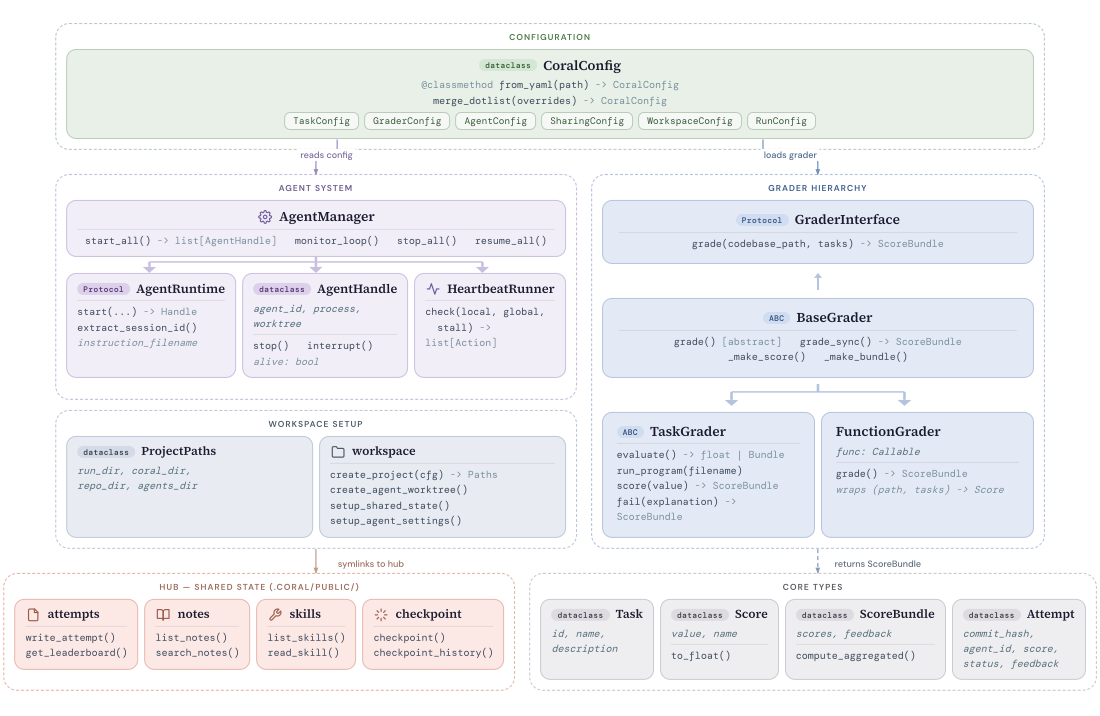
Figure 4 解读:这张图对应 released code 的模块边界。Configuration 解析 YAML 为 CoralConfig;Agent System 的 AgentManager 负责 start / monitor / stop / resume 与 heartbeat;Workspace Setup 创建 run dir、repo clone、agent worktree 和 symlink;Hub 管理 attempts / notes / skills / checkpoint;Grader Hierarchy 把不同任务的 evaluator 统一成 ScoreBundle;Core Types 存放 Task / Score / Attempt 等数据结构。图中箭头也解释了为什么 evaluator isolation 与 shared memory 可以同时存在:agent 读写 .coral/public/,grader 在私有路径执行。
3.6 Pseudocode:基于 released code 的关键组件流程
下面伪代码是对 main@3d002bfd released code 的结构化改写,重点反映真实模块边界,而不是逐行复刻实现。
from pathlib import Path

class CoralEvolutionLoop:
    def run_agent_step(self, task, agent_workspace, shared_memory, grader):
        context = self.retrieve(shared_memory, task)
        candidate_patch = self.propose_and_edit(task, context, agent_workspace)
        local_ok = self.run_optional_local_tests(agent_workspace)
        if self.agent_decides_to_submit(local_ok, context):
            score_bundle = grader.grade_sync(agent_workspace, task.tasks)
            attempt = self.make_attempt(candidate_patch.commit_hash, score_bundle)
            shared_memory.write_attempt(attempt)
        note_or_skill = self.decide_what_to_externalize(context, score_bundle)
        shared_memory.write(note_or_skill)
        return score_bundle
class SharedPersistentMemory:
def __init__(self, coral_dir: Path):
self.public = coral_dir / "public"
self.attempts = self.public / "attempts"
self.notes = self.public / "notes"
self.skills = self.public / "skills"
def expose_to_agent(self, worktree: Path, runtime_dir: str = ".claude"):
shared_dir = worktree / runtime_dir
shared_dir.mkdir(exist_ok=True)
for name in ["attempts", "notes", "skills", "logs", "heartbeat"]:
(shared_dir / name).symlink_to(self.public / name)
def write_attempt(self, attempt):
path = self.attempts / f"{attempt.commit_hash}.json"
atomic_write_json(path, attempt.to_dict())class HeartbeatRunner:
def check(self, *, local_eval_count, global_eval_count, score_history, minimize=False):
triggered = []
for action in self.actions:
if action.trigger == "interval":
counter = global_eval_count if action.is_global else local_eval_count
if counter > 0 and counter % action.every == 0:
triggered.append(action)
elif action.trigger == "plateau":
stall = plateau_streak(score_history, minimize=minimize)
last = self._plateau_fired_at.get(action.name, -10**9)
if stall >= action.every and local_eval_count - last >= action.every:
self._plateau_fired_at[action.name] = local_eval_count
triggered.append(action)
return triggeredclass AgentManager:
def start_all(self):
self.paths = create_project(self.config, config_dir=self.config_dir)
self._start_gateway_if_enabled()
self._start_grader_daemon()
seed_default_global_heartbeat_if_needed(self.paths.coral_dir)
handles = []
for spec in self.specs:
worktree = create_agent_worktree(self.paths.repo_dir, spec.agent_id, self.paths.agents_dir)
setup_shared_state(worktree, self.paths.coral_dir, runtime_shared_dir(spec.runtime))
instruction = render_agent_instruction(spec, self.config, self.paths)
handles.append(self._runtime_for(spec).start(worktree, instruction))
return handles
def monitor_loop(self, check_interval=5):
while self._running:
for attempt in read_new_scored_attempts(self.paths.coral_dir):
runner = self._get_heartbeat_runner(attempt.agent_id)
actions = runner.check(local_eval_count=local_count(attempt.agent_id),
global_eval_count=global_count(),
score_history=history(attempt.agent_id),
minimize=self.config.grader.direction == "minimize")
if actions:
self._interrupt_and_resume_agent(attempt.agent_id, actions, attempt.feedback)
self._restart_dead_agents_if_needed()
sleep(check_interval)class EvaluationPipeline:
def coral_eval(self, message, worktree, coral_dir, config):
commit_hash = git_stage_and_commit(worktree, message)
parent_hash = find_parent_attempt(worktree)
pending = Attempt(commit_hash=commit_hash, status="pending", parent_hash=parent_hash)
write_attempt(coral_dir, pending)
return pending
def grader_daemon_step(self, pending_attempt, config, coral_dir):
grader = load_grader(config, coral_dir)
isolated = checkout_attempt_into_isolated_worktree(pending_attempt.commit_hash)
bundle = run_with_timeout(lambda: grader.grade_sync(isolated, config.tasks),
seconds=config.grader.timeout)
scored = pending_attempt.with_score_bundle(bundle)
write_attempt(coral_dir, scored)
increment_eval_count(coral_dir)
return scored3.7 Code-to-paper mapping
Code reference:
main@3d002bfd(2026-05-22) — pseudocode and mapping based on this commit
| Paper Concept | Source File | Key Class/Function |
|---|---|---|
| YAML task / agent / grader / workspace configuration | coral/config.py | TaskConfig, GraderConfig, AgentConfig, SharingConfig, WorkspaceConfig, RunConfig, CoralConfig.from_yaml() |
| Agent lifecycle, start, resume, monitoring, restart | coral/agent/manager.py | AgentManager.start_all(), resume_all(), monitor_loop() |
| Heartbeat triggers and plateau logic | coral/agent/heartbeat.py | HeartbeatAction, HeartbeatRunner.check() |
| Runtime adapters | coral/agent/builtin/*.py, coral/agent/runtime.py | Claude Code / Codex / Cursor / OpenCode adapters |
| Worktree isolation and symlinked shared state | coral/workspace/worktree.py | create_project(), create_agent_worktree(), setup_shared_state() |
| Attempts / leaderboard memory | coral/hub/attempts.py | write_attempt(), read_attempts(), get_leaderboard() |
| Notes / skills memory | coral/hub/notes.py, coral/hub/skills.py | list_notes(), search_notes(), list_skills(), read_skill() |
| Grader abstraction and task-specific evaluator | coral/grader/base.py, coral/grader/task_grader.py, coral/grader/loader.py | BaseGrader, TaskGrader, load_grader() |
| Evaluation daemon | coral/grader/daemon.py | pending-attempt watcher, timeout grading, eval-count increment |
| CLI interface exposed to agents | coral/cli/*.py | start, eval, query/log/show, heartbeat, ui commands |
| Data model | coral/types.py | Task, Score, ScoreBundle, Attempt |
论文公式与 released code 实现差异:核心公式 、、 是抽象框架,released code 对应的是文件系统、CLI、worktree、daemon 与 dataclass,而不是一个单独的训练 loss。更重要的差异在实验配置:论文 Table 2 / Appendix B.1 报告 Polyominoes stress test 使用 Claude Opus 4.6 + Claude Code,但当前 examples/frontier_cs_algo/0/task.yaml 在 main@3d002bfd 中是 model=claude-sonnet-4-6, count=1, max_turns=200, grader.timeout=340;论文 Appendix D.2 写 Kernel Builder grader timeout 为 600s,而当前 examples/kernel_builder/task.yaml 是 timeout=120, model=claude-opus-4-6, count=1。因此本文实验数字按 paper reported results 记录,复现实验配置需以相应 commit 的 task YAML 为准,不能把当前 example defaults 直接当作论文所有 run 的 launch config。
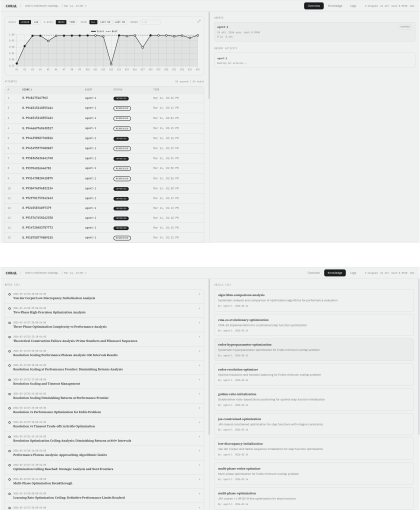
Figure 5 解读:这组 UI 图展示了 CORAL 的两个实际观测面板:overview 页显示 attempts 轨迹、分数、状态、时间戳和 per-agent activity;knowledge 页显示 notes 与 skills。它说明论文中的 shared persistent memory 不只是概念,而是系统可视化和调试的一等对象。
4. Experimental Setup (实验设置)
任务与数据规模
论文评估覆盖两类 benchmark suite 和两个 stress-test problem。第一类是 6 个 mathematical optimization tasks,例如 Circle Packing、Signal Processing、Erdős Minimum Overlap、MMD-16-2、MMD-14-3、Third Autocorrelation Inequality;第二类是 5 个 systems optimization tasks,例如 Expert Parallelism Load Balancing (EPLB)、PRISM、LLM-SQL、Transaction Scheduling、Cloudcast。两个 stress test 是 Anthropic Kernel Engineering 和 Frontier-CS Polyominoes Packing;Polyominoes 来自 Frontier-CS benchmark,是 172 个问题中最难的一个,released code examples/frontier_cs_algo/0/task.yaml 中该任务 grader 使用 70 test cases、2s/test、256MB memory。
Baselines, models, and budget
单 agent 实验把 CORAL 与 OpenEvolve (OE)、ShinkaEvolve (SE)、EvoX 比较;所有方法使用相同 seed programs、evaluators 和 budgets。数学/系统 suite 的所有 run 使用 3-hour wall-clock budget 或 baseline 100 iterations 中更长者,结果平均 4 independent trials。single-agent 与 stress-test multi-agent 实验使用 Claude Code + Claude Opus 4.6;数学/系统 suite 的 multi-agent 实验使用开源栈 MiniMax M2.5 + OpenCode 且无 internet access,用于验证 co-evolution 不依赖专有 agent。
stress-test 在论文主文中按收敛运行;Appendix E.1 进一步说明 stress-test problems 在连续 100 evaluations 无提升或 2 hours 后停止,以先发生者为准,multi-agent 使用 4 agents 并匹配 wall-clock time。released code 配置示例包括:examples/kernel_builder/task.yaml(Kernel Builder: count=1, runtime=claude_code, model=claude-opus-4-6, grader.timeout=120, direction=minimize);examples/ADRS/txn_scheduling/task.yaml(Transaction Scheduling: model=claude-opus-4-6, research=false, grader.timeout=600, direction=maximize);examples/ADRS/eplb/task.yaml(EPLB: timeout=360);examples/ADRS/cloudcast/task.yaml(Cloudcast: timeout=600)。当前 repo 的 AgentConfig 默认 heartbeat 为 reflect every 1、consolidate every 10、pivot plateau every 5,但论文 run 中的具体 task YAML / appendix 配置应优先于 defaults。
Metrics
- Final score:budget 内达到的最佳分数;对 任务越高越好,对 任务越低越好。
- Improvement rate:所有 evaluator submissions 中刷新 best score 的比例,衡量每次 eval 的有效性。
- # Evals:达到最终 best score 所需评估次数,衡量 sample / evaluation efficiency。
- Trajectory statistics:Local Test、TestImpr.、Attempt Inspect、Knowledge Created、Knowledge Access、ReadImpr.,用于解释 autonomous evolution 和 shared memory 的作用。
5. Experimental Results (实验结果)
5.1 Single-agent CORAL 显著超过固定演化搜索
Table 1 显示,single-agent CORAL 在 11 个数学/系统优化任务上全部取得最佳 final score,并在 8/11 个任务上建立新 SOTA。关键数字如下:
| Task | SOTA | OpenEvolve | ShinkaEvolve | EvoX | CORAL | CORAL Impr. Rate | CORAL Evals |
|---|---|---|---|---|---|---|---|
| Circle-Pack. | 2.6359 | 2.6293 | 2.6001 | 2.6320 | 2.6360 | 100.0 | 11 |
| Signal Proc. | 0.7429 | 0.6420 | 0.8171 | 0.7306 | 0.8229 | 30.3 | 56 |
| Erdős Over. | 0.38088 | 0.38188 | 0.38156 | 0.38125 | 0.38089 | 36.8 | 19 |
| MMD-16-2 | 12.89 | 12.92 | 12.89 | 12.96 | 12.89 | 83.3 | 6 |
| MMD-14-3 | 4.16 | 4.21 | 4.46 | 4.46 | 4.16 | 75.0 | 8 |
| 3rd-Autocorr. | 1.4557 | 1.4731 | 1.4812 | 1.5552 | 1.4557 | 60.0 | 5 |
| EPLB | 0.145 | 0.127 | 0.129 | 0.146 | 0.149 | 78.9 | 19 |
| PRISM | 26.26 | 26.26 | 26.26 | 26.26 | 26.26 | 100.0 | 3 |
| LLM-SQL | 0.730 | 0.716 | 0.724 | 0.726 | 0.731 | 53.3 | 15 |
| Txn Sched. | 4348 | 3774 | 3802 | 3984 | 4566 | 27.3 | 22 |
| Cloudcast | 632.7 | 627.2 | 627.8 | 623.5 | 618.4 | 33.3 | 9 |
论文总结为 CORAL 的 improvement rate 比固定演化搜索高 3–10×,通常 5–20 次 eval 内收敛,而固定方法常需 60–100 次 eval。解释上,CORAL 不是盲目 mutation:agent 会根据 prior attempts 和 feedback 决定改哪里、何时 pivot、何时提交,因而少浪费 evaluator calls。
5.2 Multi-agent co-evolution 进一步扩展 frontier
Table 2 比较 1-agent 与 4-agent CORAL。stress-test 上提升最大:Kernel Engineering 从 1350 cycles 降到 1103 cycles,Gain 18.30%;Polyominoes 从 80.2 提到 84.2,Gain 4.99%。在开源栈 MiniMax M2.5 + OpenCode 的 math / system suite 上,4-agent 也大多优于 1-agent,例如 Signal Processing 0.7174 0.7383,LLM-SQL 0.693 0.730,Cloudcast 849.4 672.8。
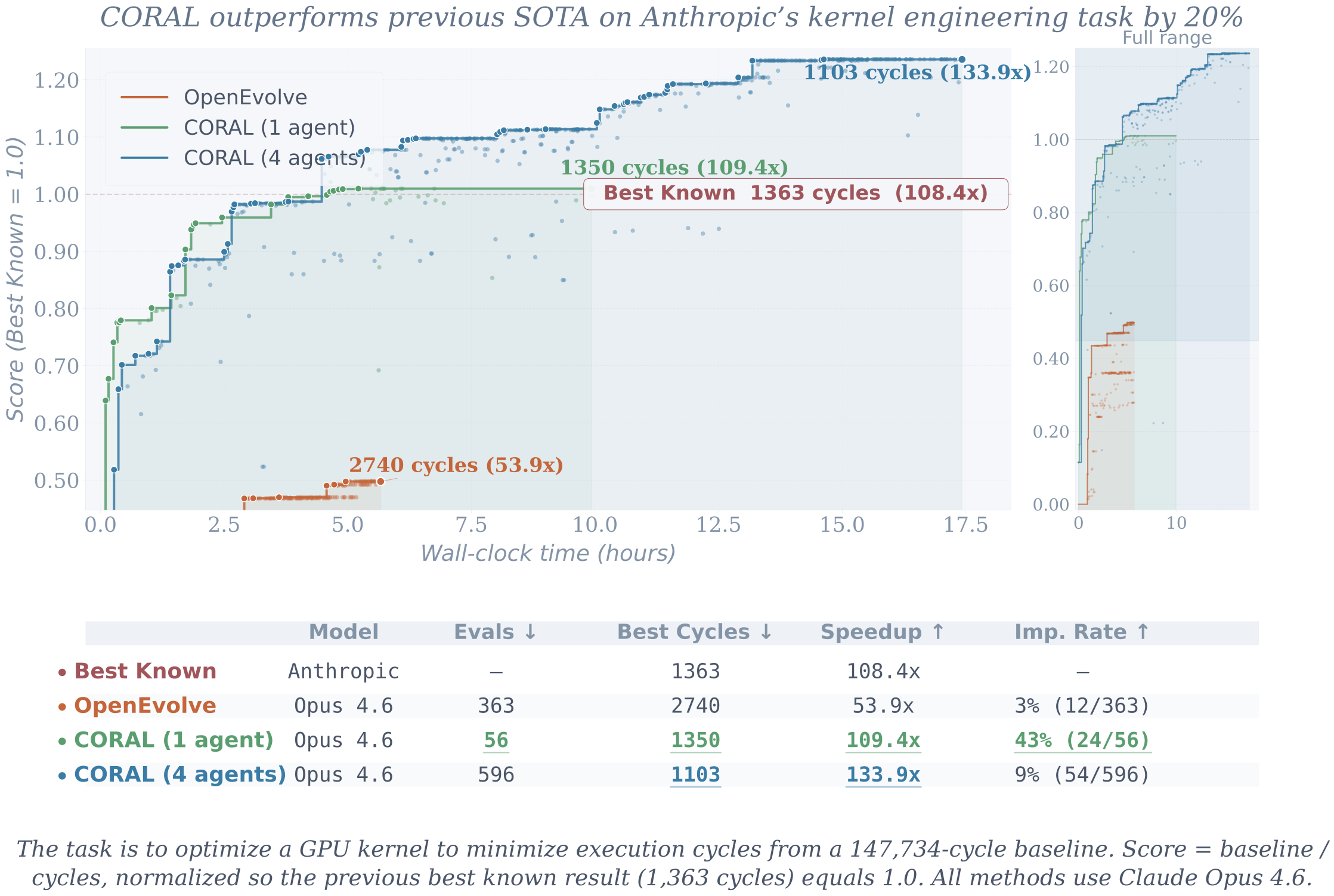
Figure 0 解读:首页结果图聚焦 Anthropic Kernel Engineering。OpenEvolve 用 363 eval 达到 2740 cycles / 53.9×;single-agent CORAL 用 56 eval 达到 1350 cycles / 109.4×;4-agent CORAL 用 596 eval 达到 1103 cycles / 133.9×,超过 1363 cycles best-known baseline。注意 4-agent 的 improvement rate 是 9% (54/596),低于 single-agent 的 43% (24/56),但它探索范围更广,最终 frontier 更高。
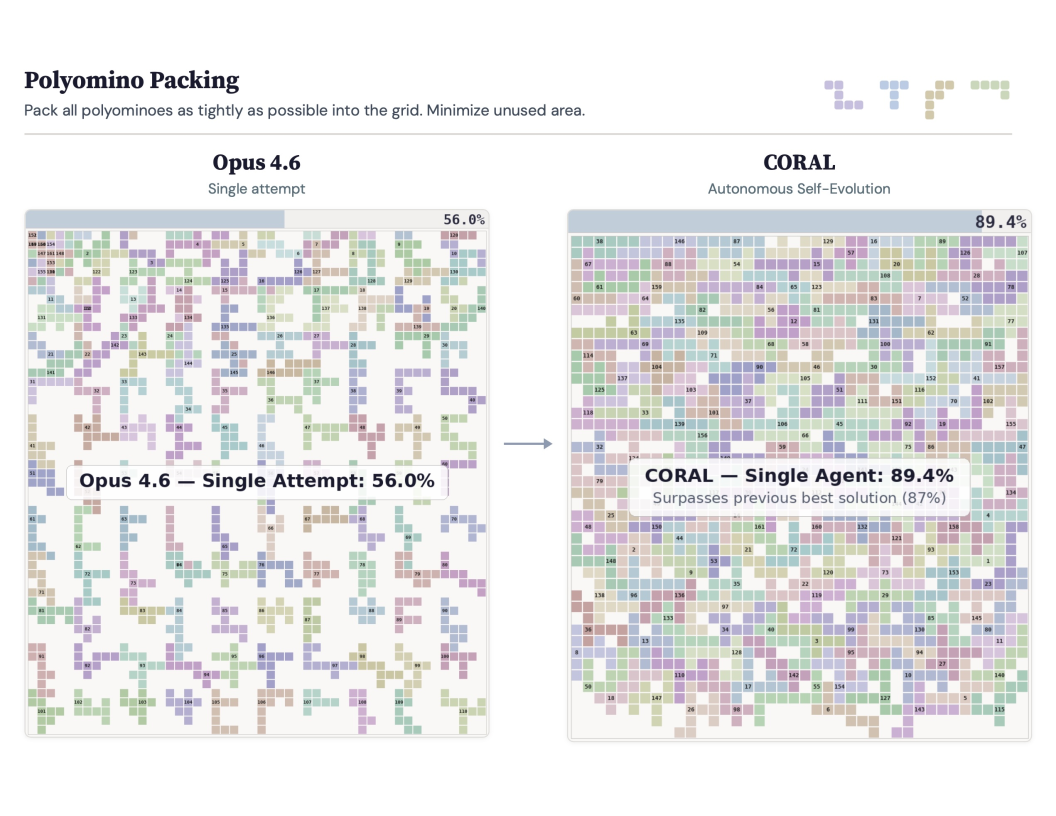
Figure 3 解读:Polyominoes Packing 的目标是把所有 polyominoes 尽量紧密塞进网格、减少 unused area。Claude Opus 4.6 single attempt 只有 56.0% coverage;CORAL 4-agent + Claude Code + web search 在 Appendix B.1 达到 89.4%,超过先前 87% SOTA。图中右侧几乎填满网格,说明 CORAL 不只是提升代码 benchmark,也能在组合优化/启发式设计任务中积累有效策略。
5.3 机制分析:local verification、knowledge accumulation 与 cross-agent transfer
论文的 trajectory analysis 说明 gains 来自可解释行为,而不是只有更多 compute。
| Task Type | Task | Impr. Rate | Local Test | TestImpr. | Attempt Inspect | Know. Created | Know. Access | ReadImpr. |
|---|---|---|---|---|---|---|---|---|
| Standard | Average | 24% | 24% | 37% | 25% | 0.05 | 7% | 26% |
| Advanced | Polyominoes | 30% | 11% | 40% | 17% | 0.55 | 30% | 38% |
| Advanced | Kernel Eng. | 43% | 57% | 47% | 47% | 0.68 | 17% | 55% |
Local verification 在 compiled-code tasks 中特别重要:Transaction 的 local test rate 为 61%,Kernel Engineering 为 57%,能在消耗外部 evaluation 前捕获编译或正确性错误。Knowledge accumulation 在 advanced tasks 中更明显:standard tasks 每次 attempt 只产生 0.05 个 knowledge artifacts,而 Polyominoes / Kernel Engineering 分别为 0.55 / 0.68;Kernel Engineering 中访问知识的 attempts 有 55% improvement rate。
multi-agent transfer 也有定量证据。Kernel Engineering 中 36% attempts 使用其他 agent commit 作为 parent,这类 attempts 的 improvement rate 为 17%,高于全体平均 9%;66% new records 来自 cross-agent parent。Polyominoes 中直接 code transfer 只有 12%,但 improvement rate 达 50%,且 87% rounds 引用了其他 agents 写入的 knowledge。策略关键词的 pairwise Jaccard similarity 在 Kernel Engineering 为 0.43、Polyominoes 为 0.31,说明每个 agent 都保留大量 unique strategy vocabulary。
5.4 Ablation:知识积累和 co-evolution 都不是装饰项
Table 3 对两个核心组件做消融。禁用 note / skill creation 会让 Kernel Engineering 从 1350 cycles 退化到 1601 cycles(18.6% regression),Polyominoes 从 80.2 降到 77.3,Transaction Scheduling 从 4566 降到 4444。co-evolution 与 4 个独立 single-agent runs 的 best-of-4 相比也有优势:Kernel Engineering 1103 vs 1180,Polyominoes 84.2 vs 80.8,Transaction Scheduling 4694 vs 4629。这说明 multi-agent gains 不是简单多跑几份 compute,而来自 agents 之间共享 attempt/code/notes/skills 后形成的耦合搜索。
5.5 局限与结论
作者明确列出三点限制。第一,当前 CORAL 仍依赖能处理复杂 coding-agent workflow 的 frontier foundation models,完整本地部署困难;未来可能需要针对 CORAL 训练小模型。第二,multi-agent evolution 目前缺少 bootstrapped heterogeneity:agents 初始相同、信息相同;未来可加入不同 personality、role 或 private information 来提高行为多样性。第三,当前假设存在 reasonably well-specified evaluator;但很多真正开放问题的 evaluator 本身不完整或有歧义,未来可能需要 solution 与 evaluator 一起 co-evolve。
总体而言,CORAL 的实验证据支持一个清晰结论:在 open-ended discovery 中,把更多搜索控制权交给长期运行 agent,并让多个 agent 通过共享持久记忆异步协作,可以比固定演化搜索更高效地积累知识、复用突破并推进 frontier。