GLM-5V-Turbo: Toward a Native Foundation Model for Multimodal Agents
Paper: arXiv:2604.26752v3 Code: zai-org/GLM-V; related public skills/data: GLM-skills, ImageMining Code reference:
main@b0467612(2026-05-16); GLM-skillsmain@2ecd31c3(2026-04-15); ImageMiningmain@39cab09c(2026-05-16)
1. Motivation (研究动机)
1.1 现有 multimodal agent 的瓶颈
论文把问题定义在“原生多模态 agent foundation model”上,而不是单纯的 VLM benchmark 提升。 真实 agent 需要处理图片、视频、网页、文档、GUI、终端输出和本地文件系统等异质上下文。 如果视觉能力只是语言模型外部的辅助接口,模型在规划、工具调用、执行和自我校验时会持续丢失视觉细节。 典型失败不是只发生在高层 reasoning:很多高层错误首先来自“没有看清楚”。 GUI agent 中,一个按钮位置、表格区域、截图裁剪、页面层级或视频中的时间变化都可能决定后续动作是否可执行。 论文因此强调 perception 不是可以早期解决后就冻结的低层模块,而是持续决定 agent 能力上限的基础。
1.2 本文要解决的具体问题
目标是让多模态感知直接参与 reasoning、planning、tool use 和 execution。 模型需要在 text-first coding workflow 中保持代码与推理能力,同时获得视觉环境中的行动能力。 训练不能只优化单一任务族;论文希望 perception、reasoning、planning、execution 在预训练、SFT 和 RL 中一起发展。 工程系统也必须适配大规模多任务 VLM RL:prompt/response 长度不同,图像/视频 token 数不同,verifier 可能是规则或模型。 因此本文同时讨论模型结构、训练数据、RL 基础设施、外部 agent 框架和官方 skill 生态。
1.3 为什么这个问题值得做
对软件工程,模型不只是写函数,还要看截图、理解 UI、复刻网页、调试交互状态。 对深度搜索,模型要从图像和网页视觉结构里发现线索,而不是只读文本搜索结果。 对文档生产,模型要保留视觉证据与文字结论的对应关系,例如图表、页面布局和多页材料。 对长程 GUI agent,模型要跨多步维持屏幕状态、动作后果和验证信号。 这些任务都要求“看见—推理—行动—验证”是同一个闭环,而不是外接 OCR/图像描述后的文本推理。
1.4 论文的定位
GLM-5V-Turbo 是一篇 technical report,主线是“toward native foundation models for multimodal agents”。 它不是只提出一个单点算法,而是把 CogViT、MMTP、多模态预训练、30+ 类任务 RL、agent toolchain、skills 和评测放在同一系统里。 论文贡献更接近系统性配方:哪些视觉/语言结构要改,哪些训练阶段要覆盖,哪些基础设施瓶颈会出现,哪些评测能体现 agent 能力。
2. Idea (核心思想)
2.1 核心 insight
GLM-5V-Turbo 的核心思想是:多模态感知必须成为 agent 推理与执行链路的原生组成部分,而不是语言模型旁边的附属输入通道。为此,模型端用 CogViT 强化细粒度视觉表示,用 Multimodal Multi-Token Prediction 让多模态输入兼容高效 MTP 训练;训练端从预训练到 RL 覆盖 perception、coding、GUI、tool-use 与 reasoning;系统端通过 VLM RL Gym、异步 reward、官方 skills 和外部 agent 框架把能力落到可执行任务。
2.2 与常见路线的差异
与“先 OCR/Caption,再把文本喂给 LLM”的 pipeline 不同,本文强调视觉 token 与文本 token 在模型和训练目标中共同参与。 与只做 benchmark VLM 的路线不同,本文把 Claude Code、AutoClaw、OpenClaw、GUI exploration、web replication、ImageMining 都作为 agentic deployment 的一部分。 与单任务 RL 不同,本文采用 30+ task categories 的 joint RL optimization,理由是 agent 能力需要跨任务的策略共享。 与只追求长程任务不同,本文提出 hierarchical optimization:元素感知、GUI grounding、单步动作预测、trajectory-level 动作预测都要参与优化。
2.3 关键创新拆解
CogViT:403M 参数视觉编码器,面向 general recognition、fine-grained understanding、geometry/spatial perception。Two-stage vision pretraining:第一阶段蒸馏式 masked image modeling;第二阶段 contrastive image-text pretraining。MMTP:把 text-only MTP 扩展到 multimodal 输入,并采用 <|image|> placeholder 方案减少 pipeline-parallel 通信复杂度。
Broad multimodal training:预训练数据覆盖 world knowledge、interleaved image-text、OCR、coding、GUI、video、tool-use、spatial perception、grounding、academic problem-solving。Multimodal RL at scale:统一任务/奖励抽象,rollout、reward、batch construction、weight transfer 解耦,单独处理 ViT/projector 内存。
Agent ecosystem:扩展 proprietary multimodal tools,兼容自定义 tools,并公开 GLM-skills 与 ImageMining。
2.4 对“native”的理解
Native 不是指模型永远不调用工具,而是指视觉上下文不会在进入 agent 循环前被降维成一次性的文字摘要。 Native 也不是单纯增加图像输入长度,而是让视觉表示、推理 token、工具状态和验证信号能在训练和执行中相互约束。 论文把 native multimodal agent 视为 model + harness 的共同体:模型能力和外部工具/框架会一起决定系统边界。
2.5 读者应抓住的主线
第一条线是视觉表示:CogViT 让模型更可靠地看见细节、空间和局部结构。 第二条线是训练效率:MMTP 的 <|image|> placeholder 让 multimodal MTP 兼容大规模基础设施。 第三条线是行为能力:多任务 RL 和 agent toolchain 把 perception 转化为行动与验证。 第四条线是工程边界:长程多模态上下文、verifier、harness 和 memory 都会成为能力瓶颈。
3. Method (方法)
3.1 Overall framework
GLM-5V-Turbo 的方法不是单模块 pipeline,而是四层协同。 Model layer:CogViT vision encoder、MLP adapter、LLM backbone、MMTP heads。 Training layer:视觉预训练、多模态预训练、SFT、30+ 类任务 joint RL。 Infrastructure layer:VLM RL Gym、统一 reward system、异步 rollout/reward、old-policy/reference 权重搬运、ViT/projector memory management。 Agent layer:multimodal tools、Claude Code/AutoClaw/OpenClaw integration、official skills、ImageMining benchmark。
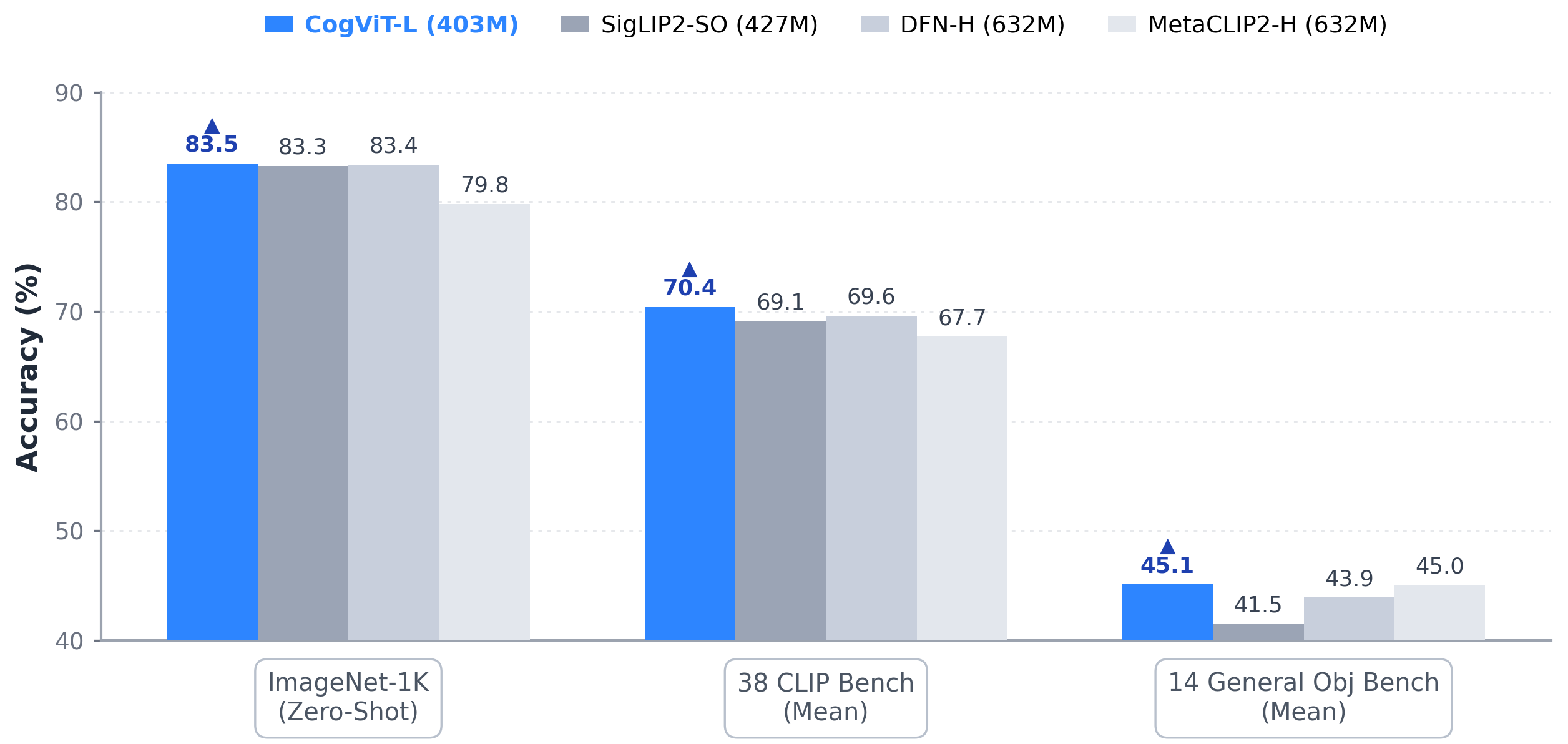
Figure 1 解读:这张图展示 CogViT-L (403M) 与 SigLIP2-SO、DFN-H、MetaCLIP2-H 在三类视觉编码器评测上的比较。CogViT 在 ImageNet-1K zero-shot 为 83.5,在 38 CLIP Bench mean 为 70.4,在 14 General Obj Bench mean 为 45.1。前两项略高于或接近同级 SOTA,第三项低于 MetaCLIP2-H 的 45.0 仅 0.1 个点并高于 SigLIP2-SO/DFN-H。论文用该图支撑一个方法判断:agentic VLM 不能只依赖语言推理,视觉 encoder 的细粒度物体、空间和几何能力仍然是上层 agent 的基础。
3.2 CogViT vision encoder
CogViT 被描述为 parameter-efficient vision encoder,核心目标是 general object recognition、fine-grained understanding、geometric/spatial perception。第一阶段使用 distillation-based masked image modeling。Masking ratio 是 35%。分辨率是 。Student ViT 重建 masked regions 在两个 teacher feature space 中的表示。SigLIP2 作为 semantic representation teacher。
DINOv3 作为 texture feature teacher。第一阶段训练数据采用 quality-aware mixture。数据配比是 80% high-quality natural images、10% instruction-following data、10% scientific imagery。优化器是 Muon,schedule 是 cosine decay。作者加入 QK-Norm,对 attention 前的 query/key vector 归一化。QK-Norm 的作用是缓解 logit explosion,保证 scale-up 时的稳定性。第二阶段转向 contrastive image-text pretraining。
它的目标是把视觉和文本特征对齐到 shared embedding space。与第一阶段相比,第二阶段有三个升级。升级 1:用 NaFlex 替代固定 ,处理 variable-size inputs 并保留原始 aspect ratio。升级 2:使用 sigmoid-based SigLIP loss,把 global batch size 扩到 64K。升级 3:使用 8-billion bilingual Chinese-English image-text corpus,加强跨语言理解。
第二阶段仍使用 Muon,但对 vision、text、projection components 采用 module-specific learning rates 和 decay schedules。直觉上,CogViT 的两阶段设计先让视觉编码器学到稳定的视觉局部/语义表示,再用大规模双语图文对齐把这些视觉表示接到语言空间。这样做比直接把现成视觉 encoder 插入 VLM 更贴近 agent 需求:GUI、网页复刻、图表搜索、grounding 和 UI-to-code 都需要局部结构、坐标关系、跨语言文本和视觉证据同时可靠。
3.3 Multimodal Multi-Token Prediction (MMTP)
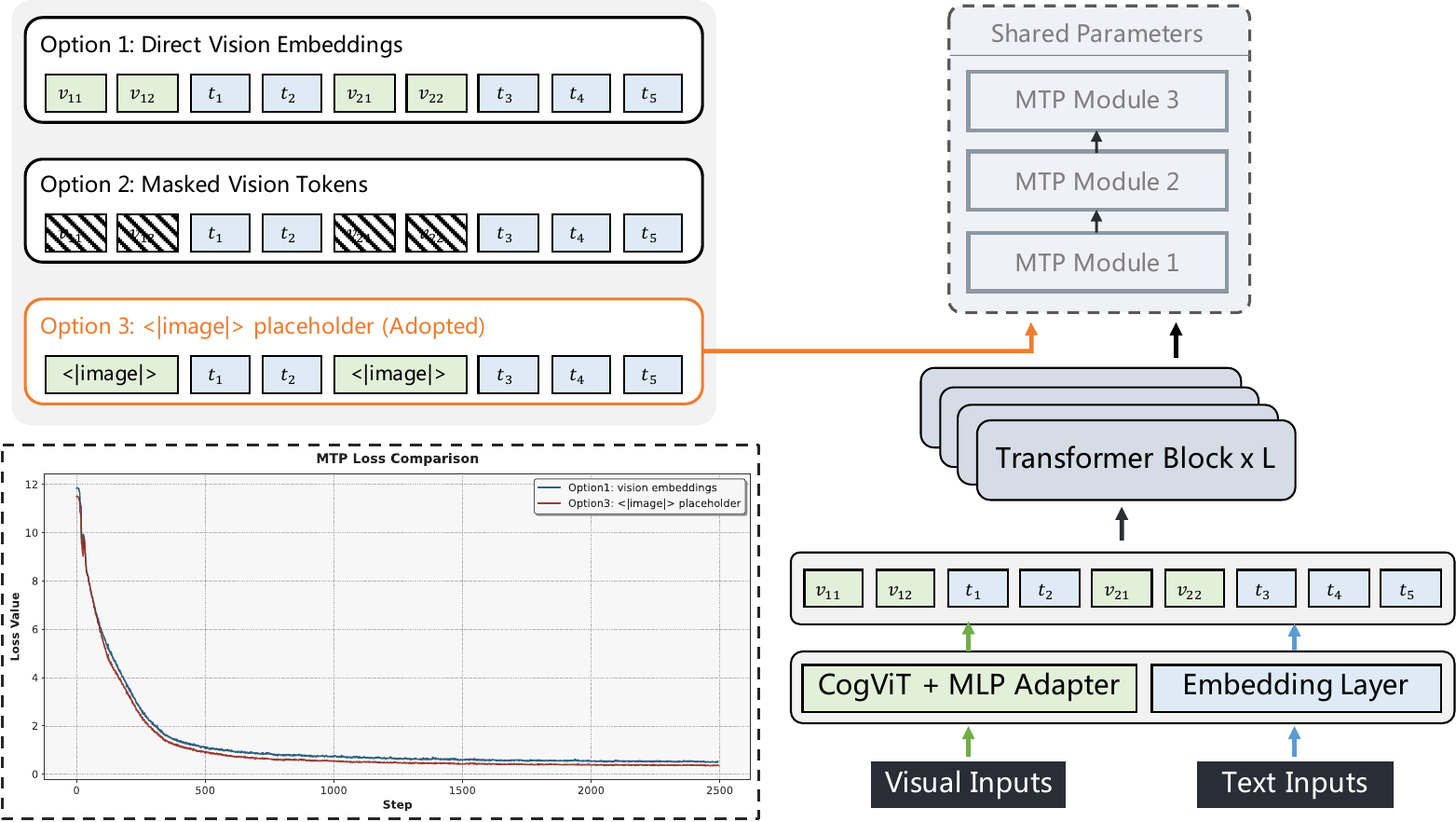
Figure 2 解读:图右侧是 GLM-5V-Turbo 的 multimodal backbone:Visual Inputs 经过 CogViT + MLP Adapter,Text Inputs 经过 Embedding Layer,两者组成混合序列进入 Transformer Block。上方 MTP Module 1/2/3 共享参数,用于多 token 预测。左侧比较三种把 image tokens 传给 MTP head 的方式:直接传 visual embeddings、mask visual tokens、以及 adopted 的 <|image|> placeholder。底部 loss 曲线显示 Option 3 在 0.5B ablation 中比 Option 1 更低且更稳定。
MMTP 是 text-only MTP 的多模态扩展。 标准 text-only MTP 中,prefix tokens 可以通过 token IDs 进入 MTP head,再由 word embedding layer 嵌入。 多模态场景的关键问题是:image tokens 应该如何传给 MTP head。 论文系统比较了三种方案。 Option 1:直接把 LLM backbone input 中的 visual embeddings 传给 MTP head。 Option 2:在 MTP head input 处 mask 掉所有 visual tokens,相当于退化为 text-only MTP。 Option 3:保留 visual positional information,但把所有 visual tokens 替换成共享可学习的 <|image|> special token。 GLM-5V-Turbo 最终采用 Option 3。 选择 Option 3 的核心理由有两个。第一,直接传 visual embeddings 会要求在 pipeline-parallel stages 之间传播视觉嵌入,增加通信复杂度和工程维护成本;<|image|> token 避免了这点。第二,0.5B 模型 ablation 显示 <|image|> 方案训练 loss 更低、收敛更稳定。作者推测原因是 MTP head 通常较轻,无法充分吸收与文本 embedding 分布差异很大的 visual representations;placeholder 让输入形式更统一,从而降低优化难度。 与 fully masking visual tokens 相比,Option 3 仍然自然兼容 sequence parallelism 和 context parallelism。 它不需要额外处理 visual-embedding partitioning、alignment 或 offset mapping。 因此 MMTP 的贡献不是一个新闭式损失,而是多模态 token 表示如何进入 MTP 训练头的基础设施设计。 论文未给出新的数学公式;本笔记不补写作者未报告的损失函数。
3.4 Broad training across perception, reasoning, and agent capability
论文认为 multimodal agent 的实际表现取决于 perception、reasoning、planning、execution 的共同发展。 因此窄域优化不够,预训练阶段就要深度整合 vision and language。 预训练数据包括 plain text 和 multimodal data 的混合。 多模态数据类别覆盖 world knowledge。 多模态数据类别覆盖 interleaved image-text。 多模态数据类别覆盖 OCR。 多模态数据类别覆盖 coding。 多模态数据类别覆盖 GUI。 多模态数据类别覆盖 video。 多模态数据类别覆盖 multimodal tool-use。 多模态数据类别覆盖 spatial perception。 多模态数据类别覆盖 grounding。 多模态数据类别覆盖 academic problem-solving。 作者特别强调 multimodal coding data,因为它同时锻炼 visual understanding 与 code generation。
3.5 Joint RL over 30+ task categories
GLM-5V-Turbo 进一步进行超过 30 个 task categories 的 joint RL optimization。论文提到的技术改进包括 UI-to-code tasks 中的 relative visual policy optimization。相对 SFT,RL 阶段在 RefCOCO-avg 上提升 4.8%。相对 SFT,RL 阶段在 PointBench 上提升 3.2%。相对 SFT,RL 阶段在 MVBench 上提升 5.6%。相对 SFT,RL 阶段在 SUNRGBD 上提升 7.7%。相对 SFT,RL 阶段在 OCRBench 上提升 4.2%。相对 SFT,RL 阶段在 CharXiv 上提升 7.7%。
reasoning-heavy STEM 任务上,MMMU_Val、MMMU_Pro、MathVista、LogicVista 组合提升 1.8%。agentic GUI 任务 OSWorld 提升 4.9%。coding agent 的 CC-Backend 提升 0.2%。general tool use 的 MMSearch 提升 3.5%。论文对 multi-task RL 的解释不是简单的“任务更多所以分数更高”。作者观察到,RL 相比 SFT 更少出现跨域 trade-off,多领域可以一起稳定提升;在分布较窄、single-task RL 容易 oscillation 的域里,collaborative training 可以暴露更多策略分布,让优化更稳。
更重要的是,不同任务之间可能发生 thinking pattern transfer:一个域中学到的推理行为可能迁移到另一个域,带来可测收益。但论文也指出 broad coverage 不等于完全解决。RL 未覆盖的能力在 post-training 后有时会下降。一个解释是模型容量和 learned thinking patterns 会越来越集中到 sampled task distribution。因此 RL task coverage 本身会塑造最终 generalization boundary。即便某个目标能力不能直接写成 RL task,语义或结构相关的 proxy tasks 也可能提供优化信号。
例子:single-turn UI-to-code generation 的 RL 可以支持更复杂的 multi-turn coding ability。
3.6 Multimodal RL infrastructure
RL infrastructure 的系统压力
大规模多任务 multimodal RL 比常规训练更复杂。它要处理 prompt length、response length、image/video token count 的巨大差异。它要支持 single-step 与 multi-step tasks。每个 task 可能需要 rule-based verifier,也可能需要 model-based judge。论文把训练栈重构为四个维度。维度 1:unified task and reward abstraction。维度 2:end-to-end asynchrony and stage overlap。
VLM RL Gym:任务与 verifier 抽象
维度 3:fine-grained memory management for multimodal workloads。维度 4:topology-aware partitioning and load balancing for visual inputs。VLM RL Gym 为 single-step 和 multi-step tasks 提供统一环境接口。独立 reward system 集中编排多个 verifier。Rule-based verifiers 本地同步执行。Model-based judges 通过 API 异步调用。
Reward aggregation 与 pipeline decoupling
多个 verifier 输出再通过 configurable aggregation strategies 组合成 rewards。Full-pipeline decoupling 把 rollout inference、reward evaluation、batch construction、weight transfer 解耦。每个 inference request 注册 completion callback。单个 request 完成后即可触发 reward computation,不必等完整 rollout batch。Batch construction 与 old-policy weights 的 CPU–GPU transfer 并行。
Reference model:CPU offload 与异步 prefetch
Reference model 参数常驻 CPU memory。Reference forward 前异步 prefetch 到 GPU。Reference forward 后立即释放,从而和主训练 step 更好 overlap。系统支持基于 completion count 或 time threshold 的 two early-abort modes。被 abort 的 prompts 可缓存复用,降低 long-tail latency,同时尽量不损失数据利用率。标准 recomputation 主要面向 text-only training,不适合多图像/视频带来的 activation memory bottleneck。
ViT/projector activation memory
因此论文为 ViT 和 projector 设计单独 memory-management strategies。它组合 targeted recomputation 与 CPU offloading。目标是避免 activation memory 按图像数量线性增长。对 long videos 等变长视觉输入,论文引入 topology-aware partitioning 与 dynamic load balancing。传统实现中 partitioning 在 forward pass 中进行,每个 rank 先持有完整 patch tensor 后再重分发。本文把 CP/TP partitioning 前移到 data-loading stage。
Topology-aware partition 与 dispatch
Partition boundaries 与 downsample groups 对齐。经过 DP groups 的 load balancing 后,再通过 asynchronous all-to-all 精确 dispatch。每个 rank 只接收自己实际需要的 partition。大型 Python objects 从 GPU communication path 移到 CPU path。实践中 GPU communication buffer overhead 减少约 7 GB。
Joint bin-packing:长度与视觉 token 双约束
对 rollout 产生的 variable-length sequences,系统同时按 sequence length 和 ViT token count 做 joint bin-packing。
3.7 Multimodal toolchain and external agent frameworks
GLM-5V-Turbo 扩展了 multimodal toolchain,使模型支持更完整的 perception–planning–execution loop。General recognition tools 包括 zai_recognize_plant、zai_recognize_location、zai_recognize_person。Multimodal search tools 包括 zai_search_web_text、zai_search_web_by_image、zai_search_similar_images、zai_search_web_images、zai_search_scholar。
Browser tools 包括 zai_load_image_from_url、zai_read_webpage。Image processing tools 包括 zai_crop_image、zai_draw_image_bounding_boxes、zai_draw_image_point_markers、zai_draw_image_geometry、zai_draw_image_3d_bounding_boxes、zai_draw_video_objects_tracking。
Creation tools 包括 submit_plan、apply_edits、zai_generate_web_html、zai_generate_web_outline、zai_generate_slide_html、zai_generate_outline_ppt。Deep research tools 包括 zai_dr_python、zai_dr_open_url_mm、zai_dr_visit_img、zai_dr_search、zai_dr_images_search、zai_dr_images_lens。
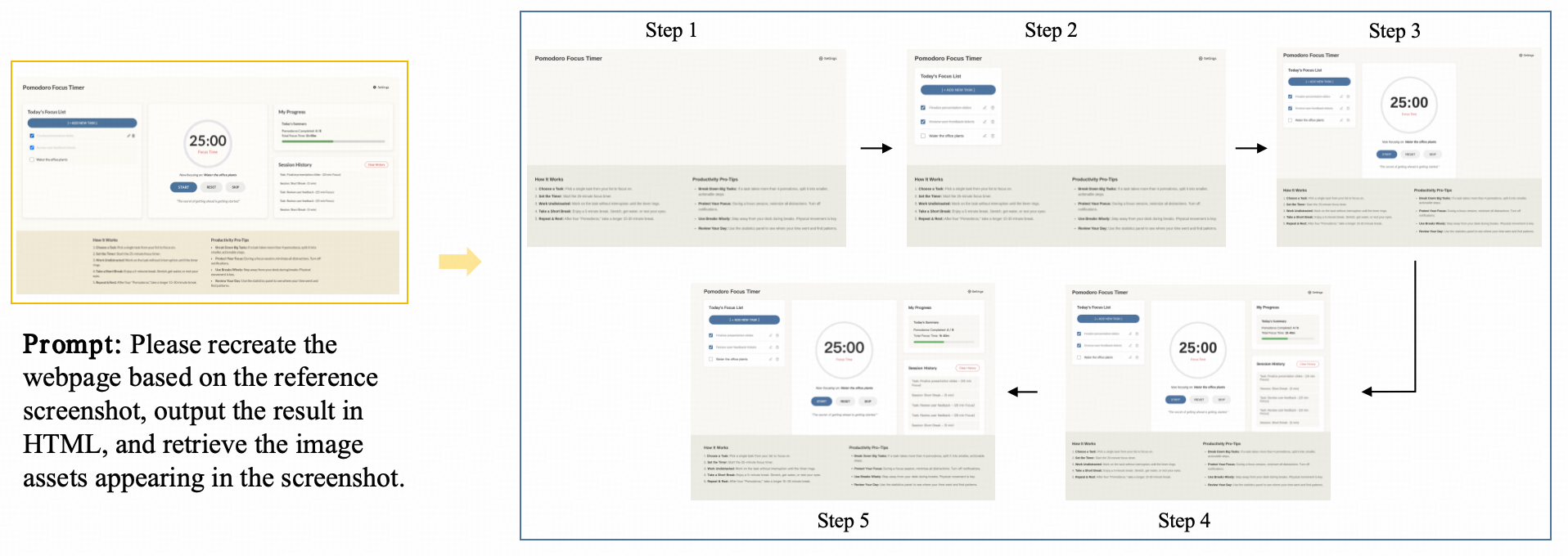
Figure 3 解读:这张图展示 UI-to-code / webpage recreation 的 agentic 工作流。左侧是 reference screenshot 与 prompt,右侧是多步探索/生成过程:模型不是一次性输出 HTML,而是围绕截图和页面资产逐步理解布局、补全交互状态、检索和复用图像资产,最终生成更完整的网页。这正好体现论文的主张:visual environment 不只是输入描述,而是 agent 执行过程中的持续 grounding signal。
与 Claude Code 集成后,GLM-5V-Turbo 从被动代码生成器变为系统级 collaborator。 Claude Code 处理逻辑、终端和本地文件环境。 AutoClaw 提供 browser-based / GUI-centric automation 的“hands”。 GLM-5V-Turbo 作为 AutoClaw 的 vision-language controller。 OpenClaw、AutoClaw、Claude Code 都被论文列为可集成框架。
3.8 ImageMining benchmark and visual deep search
论文提出 “think with image, deep search with image” 的评测范式。 ImageMining 是自收集的 vision-centric deep search benchmark。 它测试 high-density visual understanding 与 autonomous multimodal search 的整合。 任务类型包括 universal recognition,例如 flora、fauna、artifacts 的细粒度识别。 数据构造 pipeline 覆盖 knowledge discovery、QA reconstruction、quality filtering。 关键约束是 Visual Jump (WEB_VISUAL)。 Visual Jump 要求 discovery 中的中间 reasoning hops 必须涉及视觉跳转。 这会迫使模型解析图像,而不是只依赖文本捷径或参数知识。 作者还构造 OCR Search data,面向 charts、maps、posters。 OCR Search 要求模型先做 entity isolation 和 localized cropping,再发起 search chains。 因而图像从静态输入变成深度探索中的交互式环境。
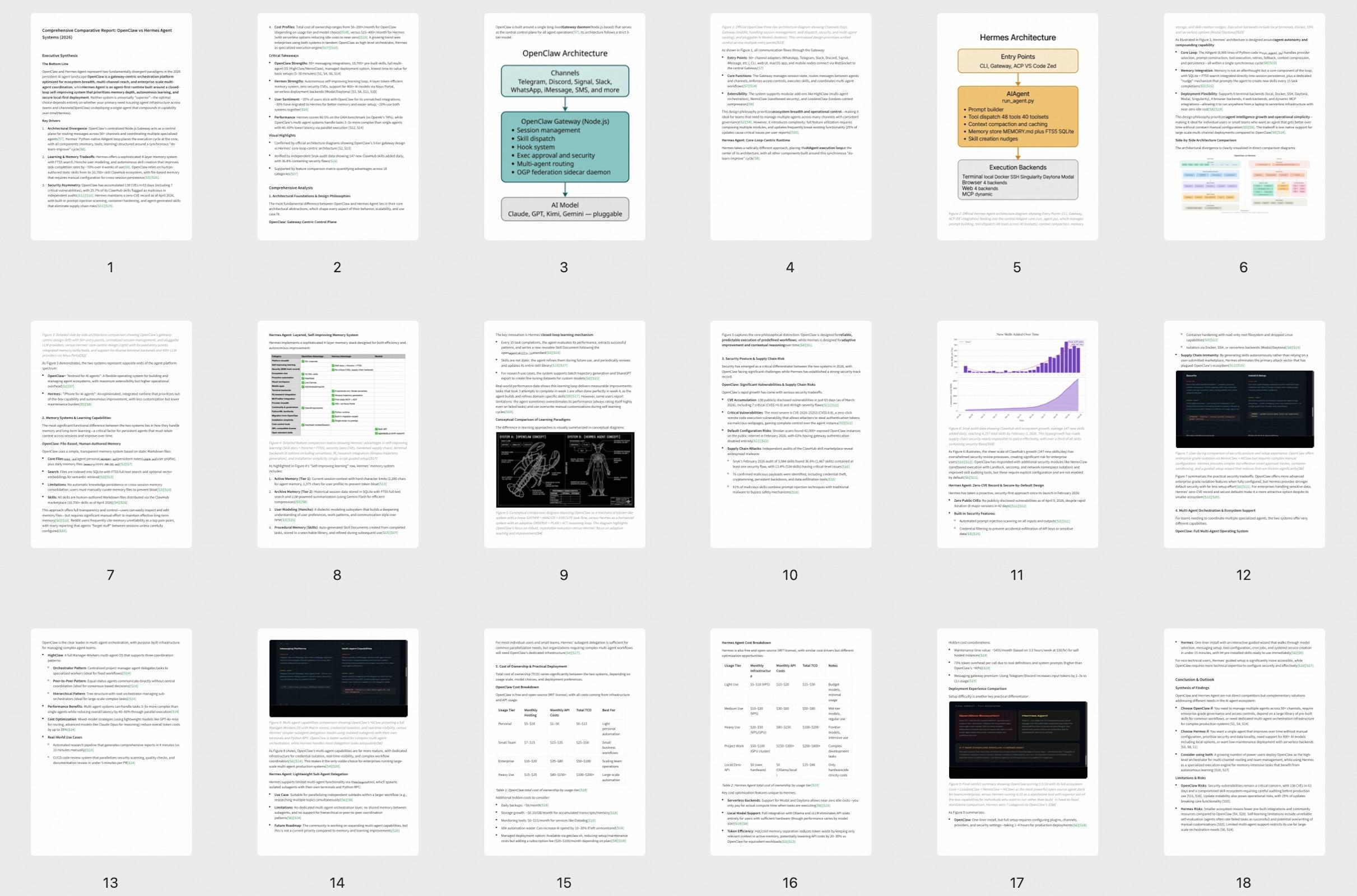
Figure 6 解读:该图展示 multimodal deep research 与内容创作场景:模型把网络检索得到的视觉材料、页面证据和文本结论组织成图文交织报告。它不是单纯回答问题,而是完成证据收集、材料筛选、结构化排版和视觉-文本一致性保持。这说明论文把 agent capability 视为端到端工作流,而不是孤立 VQA。
3.9 Official GLM-V code boundary and public implementation evidence
官方 ranking pass 给出的代码仓库是 https://github.com/zai-org/GLM-V。本次检查该仓库的默认分支为 main,ref 为 main@b0467612,提交日期 2026-05-16。仓库 README 已把 GLM-5V-Turbo 作为 2026-04-02 release/news 入口列出,并链接到 GLM-skills;同一仓库还公开了 inference/、examples/gui-agent/、skills/ 与 glmv_reward/。需要明确边界:当前 public repo 不是 GLM-5V-Turbo 的完整训练代码发布;没有公开 CogViT 训练脚本、MMTP training head、30+ task joint RL launcher 或论文中的完整 VLM RL Gym 训练配置。因此下方 pseudocode 与映射表只锚定 released GLM-V inference / GUI-agent / skill / reward-system layer,模型结构和训练细节仍以论文 PDF/source 为准。
论文公式与 released code 实现差异:论文报告的是 GLM-5V-Turbo 的 CogViT、MMTP 与 multimodal RL 训练系统;released GLM-V repo 主要公开 GLM-V 系列 inference、GUI-agent demos、skills 与 VLM reward verifier system,并未给出 GLM-5V-Turbo 训练公式对应的可运行实现。因此这里不是某个公式参数写错,而是 paper-described training stack 与 public-code coverage 的范围差异。
Code reference:
main@b0467612(2026-05-16) — pseudocode and mapping based on this GLM-V commit; related GLM-skillsmain@2ecd31c3, ImageMiningmain@39cab09cused only as public skill/data references.
代码映射表
| Paper Concept | Source File | Key Class/Function |
|---|---|---|
| Official GLM-V release / GLM-5V-Turbo link | README.md, README_zh.md | project updates, GLM-5V-Turbo release link, model implementation pointers |
| Transformers multimodal inference | inference/trans_infer_cli.py | build_content, main, AutoProcessor, Glm4vForConditionalGeneration, Glm4vMoeForConditionalGeneration, model.generate |
| Gradio multimodal chat demo | inference/trans_infer_gradio.py | load_model, GLM4VModel, file handling for image/video/PDF/PPT, threaded model.generate |
| Robust video / reasoning benchmark inference | inference/trans_infer_bench.py | RobustInference, two-stage generation when </think> / <answer> is incomplete |
| VLM reward system abstraction | glmv_reward/src/glmv_reward/reward_system.py | RewardSystem, config loading, datasource-to-verifier mapping, get_reward path |
| Verifier registry for multimodal RL rewards | glmv_reward/src/glmv_reward/verifiers/__init__.py | _VERIFIER_REGISTRY, get_verifier_from_config; includes math, OCR, VQA, multi-image, AndroidWorld/OSWorld/WebVoyager file-based verifiers |
| GUI agent prompt/action demo | examples/gui-agent/glm-45v/gui_agent_45v.py | history image compression, GUI prompt construction, OpenAI-compatible GLM API calls, action parsing |
| Grounding skill / API layer | skills/glmv-grounding/scripts/glm_grounding_cli.py | DEFAULT_MODEL="glm-5v-turbo", DEFAULT_API_URL, media URL checks, coordinate parsing and visualization |
| ImageMining benchmark data | zai-org/ImageMining/data.jsonl | public benchmark/data subset checked at main@39cab09c |
Source-anchored pseudocode: released inference path
def glmv_transformers_chat(model_path, turns, image_paths=None, video_path=None, max_new_tokens=2048):
    processor = AutoProcessor.from_pretrained(model_path)
    if "GLM-4.5V" in model_path or "GLM-4.6V" in model_path:
        model = Glm4vMoeForConditionalGeneration.from_pretrained(
            model_path, torch_dtype="auto", device_map="auto"
        )
    else:
        model = Glm4vForConditionalGeneration.from_pretrained(
            model_path, torch_dtype="auto", device_map="auto"
        )

    content = []
    for path in image_paths or []:
        content.append({"type": "image", "url": path})
    if video_path is not None:
        content.append({"type": "video", "url": video_path})
    content.append({"type": "text", "text": turns[-1]})

    messages = [{"role": "user", "content": content}]
    inputs = processor.apply_chat_template(
        messages, tokenize=True, add_generation_prompt=True, return_tensors="pt", return_dict=True
    ).to(model.device)
    output_ids = model.generate(**inputs, max_new_tokens=max_new_tokens)
    return processor.decode(output_ids[0][inputs["input_ids"].shape[-1]:], skip_special_tokens=False)
Source-anchored pseudocode: reward verifier path
def score_vlm_rollout(config_file, datasource, prompt, model_answer, ground_truth, image_file=None):
    reward_system = RewardSystem(config_file)
    verifier_config = reward_system.datasource_reward_configs[datasource]
    verifier = get_verifier_from_config(verifier_config, datasource=datasource)

    if isinstance(model_answer, str) and not reward_system.check_answer_format(model_answer):
        return verifier.min_reward
    extracted_gt = verifier.extract_answer(ground_truth, question=prompt)
    extracted_answer = verifier.extract_answer(model_answer, question=prompt)
    reward = verifier.judge(
        extracted_answer, extracted_gt, question=prompt, image_file=image_file
    )
    return float(reward)
Source-anchored pseudocode: GUI / grounding skill path
def run_glmv_grounding_skill(file_url, prompt, visualize=False, out_dir=None):
    api_url, api_key = get_config()  # defaults to BigModel chat-completions endpoint
    assert is_public_url_or_local_media(file_url)
    messages = build_multimodal_messages(file_url=file_url, prompt=prompt)
    raw = call_chat_completions(
        api_url=api_url, api_key=api_key, model="glm-5v-turbo", messages=messages
    )
    coords = parse_coordinates_from_response(raw)
    detections = parse_detection_from_response(raw)
    tracks = parse_mot_from_response(raw)
    if visualize:
        visualize_boxes_or_tracks(file_url, coords, detections, tracks, out_dir)
    return {"coords": coords, "detections": detections, "tracks": tracks}
3.10 Design lenses from development
Lens 1: Perception remains foundational. 高层 planning/reasoning/reflection 仍然依赖细粒度视觉和空间理解。论文指出 multimodal coding 与 grounding 是有效的 perceptual learning proxy tasks。Frontend 或 SVG coding 要求模型捕捉 layout、structure、relative position、local detail,而不是只识别粗粒度语义。
加入 subject-specific images 与 SVG representations 的 paired data 有助于 STEM problem solving。RL 中加强 grounding-related training 也能改善 GUI-agent performance。GUI-agent instruction tuning 中加入 critic data,让模型批判自己的 perception error,例如误读元素或误判位置。
Lens 2: Agent capability benefits from hierarchical optimization. Agent training 资源昂贵:环境构建、任务构建、优质数据、可靠验证都很难。长程 agent task 具有 non-unique solution paths 和强 environment-state dependence。因此作者把优化分布到能力层级上,而不是只优化 high-level long-horizon tasks。
GUI agent 中的层级包括 element perception、GUI grounding、single-step action prediction、trajectory-level action prediction。低层任务更容易构造、标注和验证;在低层能力不稳时直接推高层任务往往效率低且训练不稳定。Lens 3: Long-horizon tasks need specification, verification, and procedural control. 真实 agent 设置常常开放、非唯一、难复现。End-to-end task 的价值不只取决于真实程度,也取决于能否清晰指定、可靠验证、受控评估。
Vision2Web 是这一观点的例子:任务不只由文本 instruction 定义,还可包含 PRD、mockup、reference screenshots、target interaction outcomes。Workflow-based verification 通过一系列 dependent steps 评估执行,而不是只看最终状态。这更容易比较系统、归因失败,并区分 functional correctness 与 visual consistency。
4. Experimental Setup (实验设置)
4.1 训练数据与规模
论文没有公开完整训练语料的总 token 数、图像数、视频数或采样权重。 已公开的视觉预训练第一阶段配置包括:35% masking ratio、 resolution。 第一阶段数据 mixture 是 80% high-quality natural images、10% instruction-following data、10% scientific imagery。 第一阶段使用 SigLIP2 与 DINOv3 作为 dual teachers。 第二阶段使用 8-billion bilingual Chinese-English image-text corpus。 第二阶段 global batch size 是 64K。 多模态预训练数据类别包括 world knowledge、interleaved image-text、OCR、coding、GUI、video、tool-use、spatial perception、grounding、academic problem-solving。 RL 阶段覆盖超过 30 个 task categories。 ImageMining 公开仓库本次检查到 data.jsonl 为 217 行,可视为公开 benchmark/data 子集。
4.2 Baselines
多模态 coding / tool-use / GUI agent 图中主要对比 Kimi K2.5 与 Claude Opus 4.6。 Text coding / Claw 图中对比 GLM-5-Turbo、Kimi K2.5 与 Claude Opus 4.6。 CogViT 图中对比 SigLIP2-SO (427M)、DFN-H (632M)、MetaCLIP2-H (632M)。 论文在文字中也与 GLM-4.6V 做代际比较,指出 GLM-5V-Turbo 在 MMSearch-Plus 上达到 30.0,接近前代约八倍。
4.3 Evaluation categories
Multimodal Coding:Design2Code、Flame-VLM-Code、Vision2Web。 Multimodal ToolUse:ImageMining、BrowseComp-VL、MMSearch、MMSearch-Plus、SimpleVQA、Facts、V*。 GUI Agent:OSWorld、AndroidWorld、WebVoyager。 Text-only Coding and Claw:CC-Bench-V2、PinchBench、ClawEval、ZClawBench。 Vision encoder evaluation:ImageNet-1K zero-shot、38 CLIP Bench mean、14 General Obj Bench mean。
4.4 Metrics
图中大多数 benchmark 报告 score 或 accuracy;具体指标定义以各 benchmark 原论文为准。 CogViT 图明确纵轴为 Accuracy (%)。 PinchBench 报告 Best / Avg。 ClawEval 报告 Pass^3 / Pass@3。 其他如 Design2Code、MMSearch、OSWorld、AndroidWorld、WebVoyager 均按 benchmark score 展示。 RL gain 段落报告的是相对 SFT 的 percentage-point improvements。
4.5 Training config 已知与未知
已知:CogViT 第一阶段 mask ratio 为 35%。已知:第一阶段分辨率为 。已知:第一阶段数据比例为 80/10/10。已知:第二阶段 NaFlex 处理 variable-size inputs。已知:第二阶段 global batch size 为 64K。已知:第二阶段使用 SigLIP loss 与 bidirectional distributed implementation。已知:第二阶段使用 8B 中英双语图文语料。已知:优化器为 Muon,并对 vision/text/projection components 使用 module-specific LR 与 decay。
已知:RL 使用 30+ task categories,并采用 relative visual policy optimization 等技术。已知:多模态 RL infra 通过 CPU offloading、upstream CP/TP partitioning 和 all-to-all dispatch 减少内存/通信压力。未公开:GLM-5V-Turbo 主模型参数量、完整训练 steps、GPU type/count、学习率具体数值、batch composition、完整 SFT/RL 数据清单。未公开:CogViT/MMTP/RL stack 的源码实现和完整可复现配置。
5. Experimental Results (实验结果)
5.1 CogViT vision encoder results
ImageNet-1K zero-shot:CogViT-L 83.5,SigLIP2-SO 83.3,DFN-H 83.4,MetaCLIP2-H 79.8。 38 CLIP Bench mean:CogViT-L 70.4,SigLIP2-SO 69.1,DFN-H 69.6,MetaCLIP2-H 67.7。 14 General Obj Bench mean:CogViT-L 45.1,SigLIP2-SO 41.5,DFN-H 43.9,MetaCLIP2-H 45.0。 解释:CogViT 在 general recognition 和 CLIP-style average 上领先,在 general object benchmark 上与 MetaCLIP2-H 基本持平。 这支持作者关于“perception remains foundational”的判断,但图中只覆盖 vision encoder 层面,不等同于完整 agent benchmark。
5.2 MMTP ablation result
论文在 0.5B model 上比较 Option 1 direct visual embeddings 与 Option 3 <|image|> placeholder。 Figure 2 底部 loss 曲线显示 Option 3 训练 loss 更低。 Option 3 也被描述为收敛更稳定。 论文没有给出表格化的 exact loss 数值;结论来自曲线和文字说明。 该 ablation 主要证明 placeholder 方案兼顾 optimization behavior 与 system efficiency。
5.3 RL over 30+ categories: 相对 SFT 的增益
RefCOCO-avg:+4.8%。 PointBench:+3.2%。 MVBench:+5.6%。 SUNRGBD:+7.7%。 OCRBench:+4.2%。 CharXiv:+7.7%。 MMMU_Val / MMMU_Pro / MathVista / LogicVista 这组 STEM reasoning-heavy tasks:+1.8%。 OSWorld:+4.9%。 CC-Backend:+0.2%。 MMSearch:+3.5%。 解释:perception、reasoning、agentic、tool-use 都有提升,说明 joint RL 不只是过拟合一个任务族。 但 CC-Backend +0.2% 很小,说明并非所有域都获得大幅改进。 论文也承认未覆盖能力可能在 post-training 后下降,因此 task coverage 是泛化边界的重要因素。
5.4 Multimodal coding / tool-use / GUI agent benchmarks
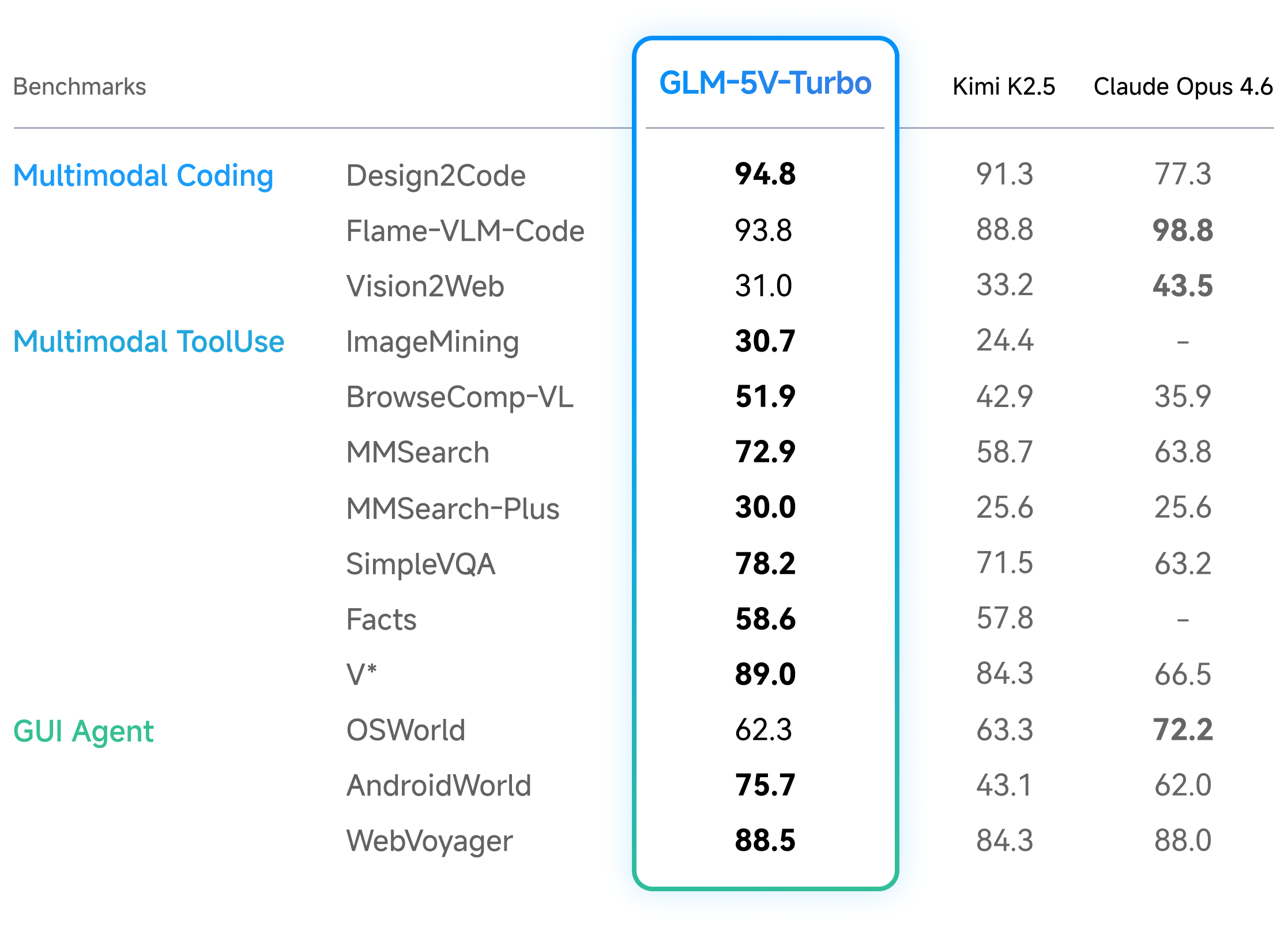
Figure 4 解读:这张图把 GLM-5V-Turbo 与 Kimi K2.5、Claude Opus 4.6 放在 multimodal coding、multimodal tool-use、GUI agent 三类 benchmark 上比较。GLM-5V-Turbo 在 Design2Code、ImageMining、BrowseComp-VL、MMSearch、MMSearch-Plus、SimpleVQA、Facts、V*、AndroidWorld、WebVoyager 等多项上领先或接近领先;在 Vision2Web、OSWorld 上弱于 Claude Opus 4.6。这说明它的强项集中在视觉搜索、视觉 grounding QA、UI-to-code 与部分 GUI 执行,但不是所有长程 GUI benchmark 都全面领先。
| Category | Benchmark | GLM-5V-Turbo | Kimi K2.5 | Claude Opus 4.6 |
|---|---|---|---|---|
| Multimodal Coding | Design2Code | 94.8 | 91.3 | 77.3 |
| Multimodal Coding | Flame-VLM-Code | 93.8 | 88.8 | 98.8 |
| Multimodal Coding | Vision2Web | 31.0 | 33.2 | 43.5 |
| Multimodal ToolUse | ImageMining | 30.7 | 24.4 | - |
| Multimodal ToolUse | BrowseComp-VL | 51.9 | 42.9 | 35.9 |
| Multimodal ToolUse | MMSearch | 72.9 | 58.7 | 63.8 |
| Multimodal ToolUse | MMSearch-Plus | 30.0 | 25.6 | 25.6 |
| Multimodal ToolUse | SimpleVQA | 78.2 | 71.5 | 63.2 |
| Multimodal ToolUse | Facts | 58.6 | 57.8 | - |
| Multimodal ToolUse | V* | 89.0 | 84.3 | 66.5 |
| GUI Agent | OSWorld | 62.3 | 63.3 | 72.2 |
| GUI Agent | AndroidWorld | 75.7 | 43.1 | 62.0 |
| GUI Agent | WebVoyager | 88.5 | 84.3 | 88.0 |
Design2Code:GLM-5V-Turbo 94.8,高于 Kimi K2.5 91.3 和 Claude Opus 4.6 77.3。Flame-VLM-Code:Claude Opus 4.6 最高 98.8,GLM-5V-Turbo 为 93.8。Vision2Web:Claude Opus 4.6 最高 43.5,GLM-5V-Turbo 为 31.0。ImageMining:GLM-5V-Turbo 30.7,高于 Kimi K2.5 24.4;Claude 未报告。BrowseComp-VL:GLM-5V-Turbo 51.9,高于 Kimi 42.9 和 Claude 35.9。
MMSearch:GLM-5V-Turbo 72.9,高于 Kimi 58.7 和 Claude 63.8。MMSearch-Plus:GLM-5V-Turbo 30.0,高于 Kimi/Claude 的 25.6。SimpleVQA:GLM-5V-Turbo 78.2,高于 Kimi 71.5 和 Claude 63.2。Facts:GLM-5V-Turbo 58.6,略高于 Kimi 57.8;Claude 未报告。V*:GLM-5V-Turbo 89.0,高于 Kimi 84.3 和 Claude 66.5。OSWorld:GLM-5V-Turbo 62.3,略低于 Kimi 63.3,明显低于 Claude 72.2。
AndroidWorld:GLM-5V-Turbo 75.7,高于 Kimi 43.1 和 Claude 62.0。WebVoyager:GLM-5V-Turbo 88.5,略高于 Claude 88.0,高于 Kimi 84.3。
5.5 Text coding and Claw agent benchmarks
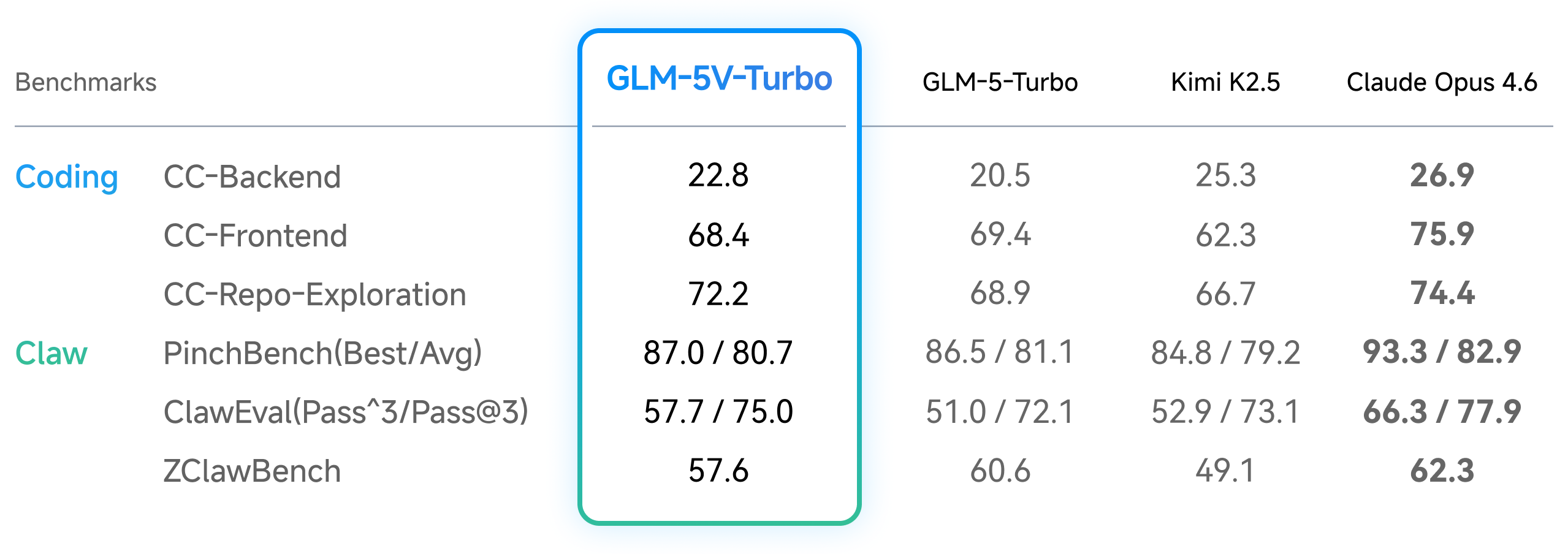
Figure 5 解读:这张图检验加入视觉能力后是否牺牲 text-first coding 与 Claw agent 能力。GLM-5V-Turbo 在 CC-Backend、CC-Frontend、ZClawBench 上不是最高,但在 CC-Repo-Exploration、PinchBench、ClawEval 上有竞争力。论文把这解释为:多模态能力没有明显破坏底层 coding/reasoning,模型仍能作为 multimodal agentic foundation。
| Category | Benchmark | GLM-5V-Turbo | GLM-5-Turbo | Kimi K2.5 | Claude Opus 4.6 |
|---|---|---|---|---|---|
| Coding | CC-Backend | 22.8 | 20.5 | 25.3 | 26.9 |
| Coding | CC-Frontend | 68.4 | 69.4 | 62.3 | 75.9 |
| Coding | CC-Repo-Exploration | 72.2 | 68.9 | 66.7 | 74.4 |
| Claw | PinchBench Best/Avg | 87.0 / 80.7 | 86.5 / 81.1 | 84.8 / 79.2 | 93.3 / 82.9 |
| Claw | ClawEval Pass^3/Pass@3 | 57.7 / 75.0 | 51.0 / 72.1 | 52.9 / 73.1 | 66.3 / 77.9 |
| Claw | ZClawBench | 57.6 | 60.6 | 49.1 | 62.3 |
CC-Backend:GLM-5V-Turbo 22.8,高于 GLM-5-Turbo 20.5,但低于 Kimi 25.3 和 Claude 26.9。 CC-Frontend:GLM-5V-Turbo 68.4,接近 GLM-5-Turbo 69.4,高于 Kimi 62.3,低于 Claude 75.9。 CC-Repo-Exploration:GLM-5V-Turbo 72.2,高于 GLM-5-Turbo 68.9 和 Kimi 66.7,低于 Claude 74.4。 PinchBench Best/Avg:GLM-5V-Turbo 87.0 / 80.7,Best 高于 GLM-5-Turbo 和 Kimi,但低于 Claude;Avg 略低于 GLM-5-Turbo 与 Claude。 ClawEval Pass^3/Pass@3:GLM-5V-Turbo 57.7 / 75.0,高于 GLM-5-Turbo 与 Kimi,低于 Claude。 ZClawBench:GLM-5V-Turbo 57.6,高于 Kimi 49.1,低于 GLM-5-Turbo 60.6 与 Claude 62.3。
5.6 主要结论
GLM-5V-Turbo 的最强证据来自 tool-use、multimodal search、AndroidWorld、WebVoyager 和 UI/coding 相关 benchmark。 CogViT 结果说明视觉 encoder 层面已经具备强 general/fine-grained 能力。 MMTP ablation 说明 <|image|> placeholder 是合理的工程折中:更低 loss、更稳定、更容易扩展到 pipeline/context/sequence parallel。 Joint RL 的增益覆盖 perception、reasoning、agentic 和 tool-use,支持“多任务策略共享”的叙事。 但 Vision2Web、OSWorld、CC-Backend、CC-Frontend、ZClawBench 等结果提醒:GLM-5V-Turbo 并非所有 agent/coding benchmark 都领先。 因此更准确的结论是:它展示了原生多模态 agent foundation model 的系统性可行路径,而不是单模型在全部 agent benchmarks 上全面胜出。
5.7 局限与开放问题
未公开完整训练代码:没有找到 CogViT、MMTP、VLM RL Gym、RL stack 的公开源码,复现只能依赖论文描述和官方 skills/benchmark。训练细节不完整:GPU type/count、完整学习率、完整数据配比、SFT/RL prompt 和 verifier 配置未详细说明。未覆盖能力可能下降:论文明确说 RL 未覆盖的能力在 post-training 后可能下降。Agent strategy emergence 仍未解决:当前 agent training 仍依赖手工或强过滤 cold-start trajectories,容易限制策略探索空间。
Trajectory diversity 只是第一步:增加 cold-start trajectory diversity 可以放松约束,但更根本目标是模型自主发现更好的推理和行动策略。多模态长上下文仍是瓶颈:图片和视频比文本更快消耗 context budget,丢弃早期视觉观察会损失布局、空间关系、视频时间变化等后续可能需要的信息。Text-centric memory 不够:现有 memory 机制更擅长压缩“说过什么”,不擅长压缩“看到了什么”和视觉状态如何演化。
Model 与 harness 共同决定能力边界:task decomposition、tool policy、memory、verification loop 都会改变同一模型的实际表现。Harness 不是固定外层:当模型跨过推理、规划、反馈利用能力阈值后,某些以前无效的 harness 设计可能变得关键。评估仍受 procedural control 影响:长程任务必须有清晰 specification、可靠 outcome verification 和 controlled evaluation,否则结果难以归因。
5.8 实践启发
如果把 GLM-5V-Turbo 作为 agent 模型使用,优先设计视觉观察的保留、压缩和再检索机制。 对 GUI/web/code agent,不要只评估最终答案;应记录 screenshot、动作、工具调用、verifier 输出和失败阶段。 对 RL 数据构造,不应只追求长程任务数量;低层 perception/grounding/action-prediction proxy tasks 可能更高效。 对工具生态,官方 skills 说明“模型能力”需要配套工具、API key、渲染、可视化和安全边界才能形成可用 agent workflow。 对复现者,当前能复现的是 skills/benchmark 层,不是 GLM-5V-Turbo 的完整训练。 对研究者,最值得继续追的问题是多模态 memory、strategy emergence、harness-model co-optimization,而不只是扩 benchmark 分数。