EnterpriseOps-Gym: Environments and Evaluations for Stateful Agentic Planning and Tool Use in Enterprise Settings
Paper: arXiv:2603.13594 Code: ServiceNow/EnterpriseOps-Gym Code reference:
main@09593147(2026-04-30)
1. Motivation (研究动机)
现有 Agent benchmark 很难回答一个企业部署中最关键的问题:LLM Agent 能否在有持久状态、权限规则、跨系统依赖和真实副作用的环境里稳定完成工作。许多 tool-use benchmark 把工具调用视为短序列 API matching,重点考察“会不会选对工具”或“能不能按格式调用 API”;但企业工作流更像数据库事务和业务流程编排:Agent 的一个错误写入会改变后续状态,错误 ID 会产生悬空记录,越权操作会违反组织政策,跨 Email、Calendar、Drive、ITSM、HR 等系统的依赖会让局部正确的动作组合成全局错误。
EnterpriseOps-Gym 要解决的具体问题是:构造一个可复现的企业 sandbox,让模型在真实风格的多步任务中操作工具、修改数据库,并用最终状态 verifier 判断是否真正完成目标、保持状态完整、遵守权限/流程政策、避免不良副作用。论文强调的不是一个新 Agent 算法,而是一个更接近企业真实风险的 evaluation environment:1,150 个专家构造任务、8 个企业域、512 个工具、164 张数据库表,并包含 30 个故意不可完成的任务来测试模型是否知道拒绝。
这个问题值得研究,是因为企业 Agent 的失败成本比普通问答高得多。Agent 一旦被部署为“AI worker”,它不只是生成建议,而是会创建 ticket、关闭 HR case、发邮件、更新知识库、安排会议或修改访问权限。若 benchmark 只奖励短程 tool-call accuracy,就会高估模型能力;EnterpriseOps-Gym 的价值在于把瓶颈从“能否调用工具”推向“能否在状态、政策、计划和副作用约束下可靠行动”。
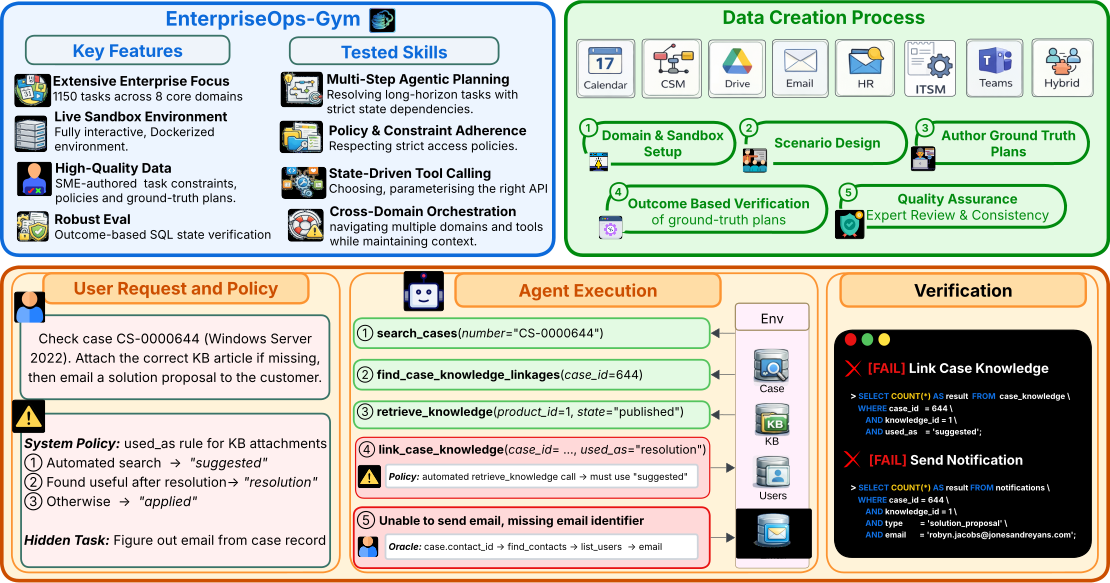
Figure 1 解读:上半部分说明 benchmark 覆盖 8 个企业域,并由 domain experts 构造 sandbox、任务、ground-truth trajectory、human plan 与 SQL verifier;下半部分展示 Agent 接收系统政策和用户任务后,通过工具改变环境状态,最后由 final-state verifier 检查 goal completion、policy compliance 与 side effects。图中案例的关键失败不是“没有调用工具”,而是自动发现 KB article 后没有按政策设置正确参数,并且由于未解析 case 相关 email identifier 而无法正确通知客户。
2. Idea (核心思想)
核心洞见是:企业级 Agent 评测必须把“工具调用”提升为“状态化、政策约束的业务执行”。EnterpriseOps-Gym 不用单一平台的 UI 或静态 API question 来评估模型,而是在 Docker/MCP sandbox 中给 Agent 真实风格的数据表、工具和任务,让它产生会改变数据库状态的行动,再用 outcome-based SQL verifier 判断最终状态是否满足业务目标。
关键创新有三点。第一,任务不是模板化 API 练习,而是由 SME 和 annotator 经过 scenario design、ground-truth execution、human plan authoring、SQL verification、multi-stage QA 生成;第二,评估不是 action-sequence matching,而是允许多条有效路径,只要求最终状态、权限约束和副作用检查通过;第三,论文把 infeasible task、tool distractor、thinking budget、human/LLM plan-conditioned execution 与 multi-agent orchestration 放在同一 benchmark 中分析,从而定位瓶颈到底在 tool discovery、planning、policy compliance 还是 execution。
与 WorkArena / WorkArena++ 这类单平台企业环境相比,EnterpriseOps-Gym 的根本差异是跨域和关系状态密度:它覆盖 8 个域、512 个工具、164 张表,平均每个任务涉及 24.9 张表,Hybrid task 最高涉及 73 张表。与 ToolLLM、API-Bank、ACEBench 等通用 API benchmark 相比,它更强调持久状态、外键完整性、权限/流程政策和不可行任务拒绝,而不是短程 API 链接准确率。
3. Method (方法)
3.1 Overall framework:从任务构造到 final-state verification
EnterpriseOps-Gym 的整体框架可以理解为四层:任务层、环境层、Agent execution 层和验证层。任务层给出 user prompt、system policy、可用工具集合、数据库初始状态、human-authored plan 和 verifier;环境层提供容器化 MCP server、领域数据库和工具执行接口;Agent execution 层使用 ReAct 或 plan-conditioned ReAct 与工具交互;验证层在执行结束后运行 SQL / response / tool-execution verifier,判定最终状态是否满足目标和约束。
直觉上,这个设计把 Agent 放进一个“低风险的企业数据库副本”。模型不能靠输出一句看似合理的答案得分,因为所有重要状态都要落到数据库里;它也不能只完成主目标,因为 verifier 会检查外键、权限、状态转移和副作用。这使 benchmark 对企业场景中最常见的失败更敏感:未查 prerequisites 就创建记录、用未验证 ID 调工具、漏掉政策要求的级联动作、在任务不可行时仍然乱写状态。
3.2 Domain 与 sandbox construction
论文选择域时遵循三个原则:真实企业相关性、政策复杂度/数据敏感度多样性、以及是否能找到 SME 生成和验证真实任务。最终 8 个域分成两组:CSM、HR、ITSM 代表企业运营骨干,政策重、数据敏感、错误有高代价;Email、Calendar、Teams、Drive 代表所有企业都会用到的协作基础设施;Hybrid 则要求跨域编排,在多个系统之间保持上下文和数据完整性。
Sandbox 由专业 annotation vendor 与超过 160 名 contributors 参与构建,每个域平均约 20 名 annotators 和 6 名 reviewers。环境是 fully containerized Docker setup,包含领域数据库、API 和 MCP 工具执行层。SME 参考公开 API 文档、产品数据模型和企业使用方式,建模真实表结构、字段约束与工具行为;annotator 在任务构造过程中会按任务需要扩展表、schema、record 和工具。最终环境包含 164 张 unique tables,平均 foreign key degree 为 1.7,每个任务平均涉及 3,443 行数据库记录,数据重的 CSM 可超过 10,000 行。
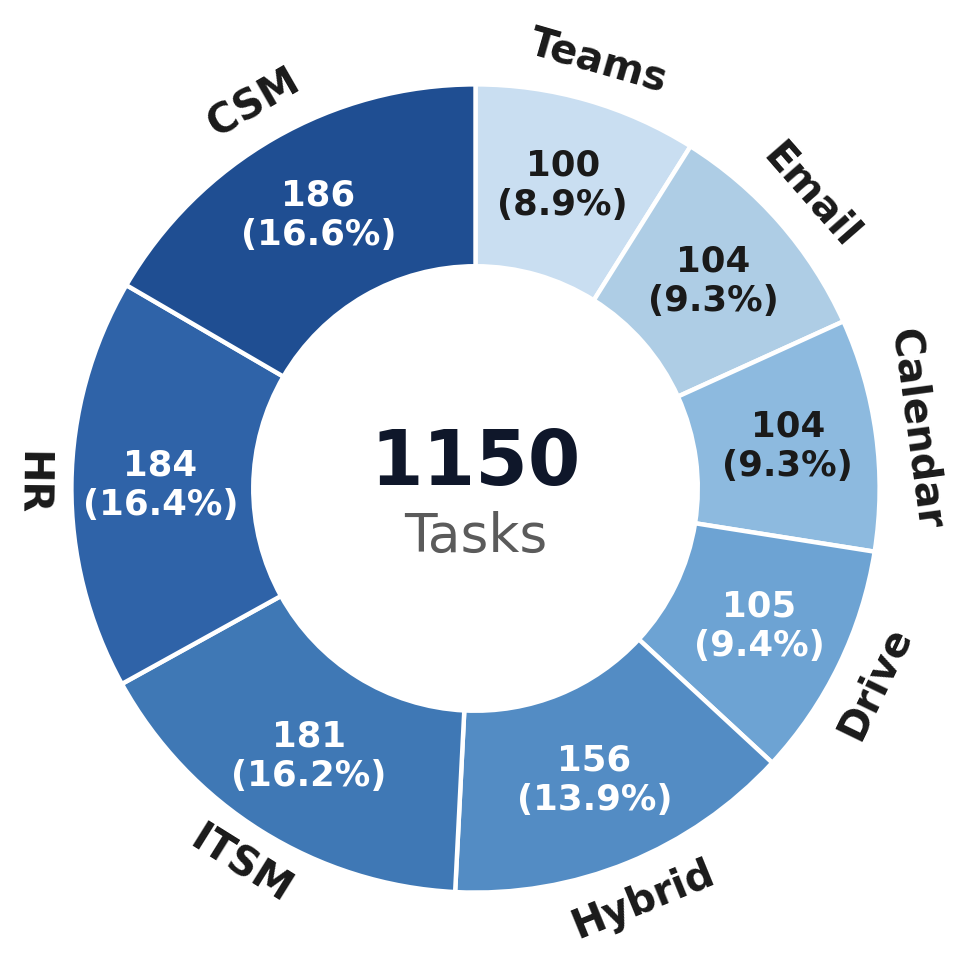
Figure 2 解读:该图展示 1,150 个任务在 8 个企业域中的分布。它的用途不是证明某个域最多,而是说明 benchmark 同时覆盖“平台协作任务”和“高政策约束运营任务”;后者(CSM/HR/ITSM)在结果中也正是模型最容易失败的区域。
3.3 Task construction pipeline:scenario、trajectory、plan、verifier、QA
每个任务由一个严格 pipeline 产生。
- Scenario Design:annotator 设计多步任务,明确工具调用数量、verification condition、状态依赖、访问约束和政策冲突。任务被约束为有唯一最终状态,但允许多条有效执行路径。论文还专门设计 30 个 infeasible tasks,原因包括工具不足、显式政策冲突或资源不可用。
- Ground Truth Execution and Plan Authoring:annotator 在 sandbox 中手动执行任务,记录每次 tool call 的参数、返回值和执行理由,并写出 natural-language reasoning plan。这个 plan 不只是操作清单,还要引用 system prompt 中的政策,解释为什么某些动作必须先做、哪些约束优先级更高。
- Outcome-based Verification:annotator 写 SQL verification scripts 检查最终状态,而不是要求模型复现同一条 trajectory。verifier 覆盖目标完成、foreign-key / state integrity、permission compliance、process compliance 和 side effects。
- Quality Assurance:先用 GPT-5、Gemini、Claude 等模型 stress-test draft tasks,暴露任务定义错误、缺工具、无效数据库、access-control conflict 和过于简单的推理路径;再由 human reviewers 检查语法、工具逻辑、trajectory 正确性、prompt 清晰度与 verifier 覆盖。
3.4 Task / environment statistics
EnterpriseOps-Gym 规模和复杂度如下:
| Item | Value | 含义 |
|---|---|---|
| Tasks | 1,150 | 专家构造企业任务 |
| Infeasible tasks | 30 | 测试模型是否能拒绝不可完成请求并避免副作用 |
| Domains | 8 | Teams, CSM, Email, ITSM, Calendar, HR, Drive, Hybrid |
| Tools | 512 | 各域 toolset 范围从 Calendar 的 37 到 ITSM 的 93 |
| Human trajectory length | 平均 9.15 steps | Email 平均 6.2,CSM 平均 12.1,HR 最长可达 34 |
| Verification conditions | 平均 5.3 / task | 最复杂任务需要满足 44 个条件 |
| Database tables | 164 | 每任务平均涉及 24.9 张表,Hybrid 最高 73 |
| Rows per task | 平均 3,443 | CSM 等数据重领域可超过 10,000 |
| Mean FK degree | 1.7 | Calendar 约 1.1,HR 约 2.4 |
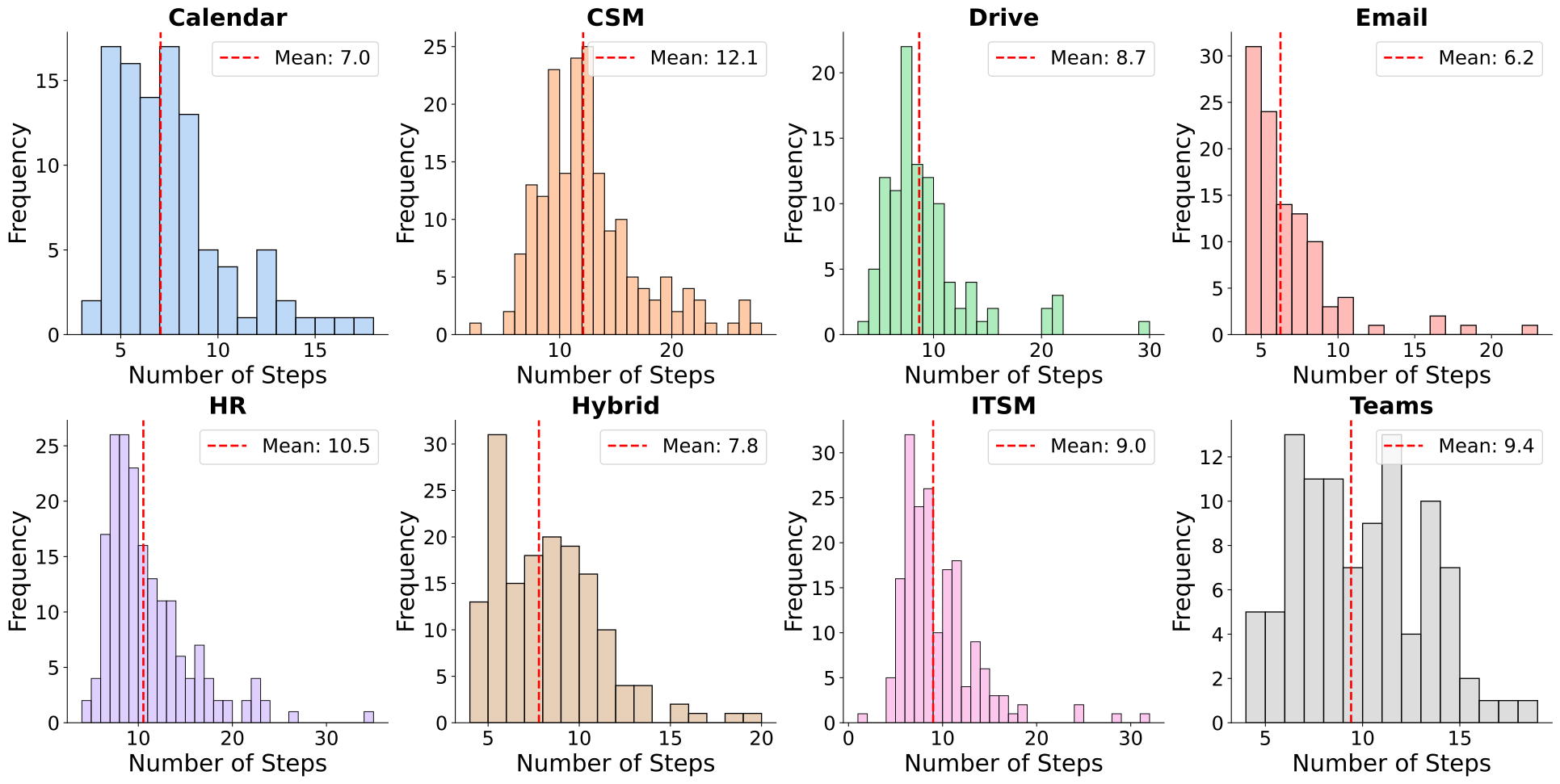
Figure 3 解读:该图按域展示 human trajectory 所需 tool-execution steps 的分布。Email 和 Calendar 的任务长度较短、分布更集中;CSM 和 HR 更长且 heavy-tailed;Hybrid 与 ITSM 方差较大。这解释了为什么同一个模型在 collaboration 域能达到 51–52%,但在 ITSM/Hybrid 这类长程和跨域任务上明显下降。
3.5 Execution model:ReAct、plan-conditioned ReAct 与 decomposition
论文默认使用 oracle-tool setting:假设 perfect retriever 已经把正确工具集给到模型,从而把评估重点放在 planning 与 execution,而不是 tool discovery。released code 中 evaluate.py 将 orchestrator 映射到三类实现:react、planner_react、decomposing。
react是标准 Reason-Act-Observe loop:把 system prompt 和 user prompt 放进消息,模型每轮选择 tool calls,执行结果再作为ToolMessage反馈,直到模型停止调用工具或达到max_iterations。planner_react先让 planner LLM 根据 system policy、user task 和 available tools 生成 plan,再把该 plan 注入 executor 的 user prompt,让 executor 执行 ReAct。decomposing进一步把任务拆成 subtasks,并为每个 subtask 调用 subagent/ReAct loop;论文发现这不一定更好,因为企业任务有强顺序状态依赖,错误 decomposition 会破坏全局 state progression。
Pseudocode: benchmark evaluation flow
def evaluate_domain(dataset, llm_config, domain, mode, orchestrator_cls, output_folder):
    results = []
    for sample in dataset.filter(lambda x: x["domain"] == domain):
        if skip_sample(sample, mode):
            continue

        config = load_config(sample["config_json"])
        executor = BenchmarkExecutor(
            config=config,
            llm_config=llm_config,
            orchestrator_class=orchestrator_cls,
            config_path=sample["config_path"],
        )
        result = await executor.execute_benchmark()
        results.append(result)
        write_json(output_folder, sample["task_id"], result)
    return results
Pseudocode: ReAct execution loop
async def react_execute(config, llm_client, available_tools, execute_tool_call, max_iterations):
    messages = [SystemMessage(config.system_prompt), HumanMessage(config.user_prompt)]
    conversation_flow, tools_used, tool_results = [], [], []

    for _ in range(max_iterations):
        response = await llm_client.invoke_with_tools(messages, available_tools)
        messages.append(response)
        conversation_flow.append({
            "type": "ai_message",
            "content": response.content,
            "tool_calls": response.tool_calls or [],
            "usage_metadata": getattr(response, "usage_metadata", {}),
        })

        if not response.tool_calls:
            break

        for call in response.tool_calls:
            exec_result = await execute_tool_call(call["name"], call["args"])
            tool_message = ToolMessage(
                content=json.dumps(exec_result["result"]),
                tool_call_id=call["id"],
            )
            messages.append(tool_message)
            tools_used.append(call["name"])
            tool_results.append(exec_result)

    return {
        "conversation_flow": conversation_flow,
        "tools_used": tools_used,
        "tool_results": tool_results,
        "final_response": messages[-1].content if messages else "",
    }
Pseudocode: planner-conditioned execution
async def planner_react_execute(system_prompt, user_prompt, tools, planner_llm, executor):
    planning_prompt = render_planner_prompt(
        system_policy=system_prompt,
        user_task=user_prompt,
        tools=tools,
        required_fields=[
            "intent analysis",
            "relevant policies",
            "risk assessment",
            "execution strategy",
        ],
    )
    plan = (await planner_llm.ainvoke([HumanMessage(planning_prompt)])).content

    executor.config.user_prompt = (
        f"{user_prompt}\n\n"
        f"# Strategic execution plan\n{plan}\n\n"
        "Follow this plan, but system policy remains highest priority."
    )
    result = await executor.execute()
    result["metadata"] = {"generated_plan": plan}
    return result
Pseudocode: verifier execution
async def run_verifiers(verifiers, model_response, database_id, mcp_clients, judge_llm):
    engine = VerifierEngine(mcp_clients=mcp_clients, llm_client=judge_llm)
    verifier_results = []

    for verifier in verifiers:
        if verifier.verifier_type == "database_state":
            sql = verifier.validation_config["query"]
            actual = await engine.execute_sql(sql, database_id, verifier.gym_name)
            passed = compare_values(
                actual,
                verifier.validation_config["expected_value"],
                verifier.validation_config.get("comparison_type", "equals"),
            )
        elif verifier.verifier_type == "response_check":
            sql_result = await engine.execute_sql(
                verifier.validation_config["sql_query"], database_id, verifier.gym_name
            )
            score = await judge_llm_compare(
                response=model_response,
                sql_result=sql_result,
                rubric=verifier.validation_config["comparison_prompt"],
            )
            passed = score >= verifier.validation_config.get("minimum_comparison_value", 7)
        else:
            passed = await check_tool_execution(verifier, model_response)

        verifier_results.append({"verifier": verifier.name, "passed": passed})

    return verifier_results
3.6 Outcome-based metrics as formalization
论文没有提出训练 loss;它是 benchmark / evaluation paper。核心评分可写成最终状态 verifier 的逻辑合取: 其中 是任务, 是工具执行后的最终数据库状态, 是最终模型响应, 是 SME 写的 SQL / response / tool-execution verifier。主要指标是三次运行平均的 pass@1: 论文还报告 verifier-level pass rate,但明确指出它可能误导:模型可能通过一些简单 verifier,却在核心业务逻辑、系统政策或副作用检查上失败。因此主要结论都以“所有 verifier 均通过”的 task-level pass@1 为准。
3.7 Released code mapping and implementation notes
Code reference:
main@09593147(2026-04-30) — pseudocode and mapping based on this commit
| Paper Concept | Source File | Key Class/Function |
|---|---|---|
| Benchmark runner / single-domain evaluation | evaluate.py | ORCHESTRATOR_MAP, load_config, execute_sample, CLI args |
| End-to-end executor | benchmark/executor.py | BenchmarkExecutor.initialize, execute_benchmark, MCP client setup, verifier execution |
| ReAct baseline | orchestrators/react.py | ReactOrchestrator.execute |
| Planner + executor baseline | orchestrators/planner_react.py | SimplePlanGenerator, PlannerReactOrchestrator.execute |
| Decomposition orchestration | orchestrators/decomposing_planner.py | subtask decomposition / subtask executor state management |
| SQL / response / tool verifier | benchmark/verifier.py | VerifierEngine.execute_verifier, _execute_database_state_verifier, _execute_response_check_verifier |
| MCP tool/database interface | benchmark/mcp_client.py | MCPClient, create_database_from_file, delete_database |
| Scoring result folders | compute_score.py | get_score, process_mode |
| Ray experiment templates | conf.example/ray/*.json | modes oracle, plus_5_tools, plus_10_tools, plus_15_tools; example num_runs=1 |
论文公式与 released code 实现差异:没有发现数学公式层面的直接冲突;但 released repo 只提供 example config,conf.example/ray/experiment.json 中 num_runs=1,而论文实验指标说明报告的是三次运行平均 pass@1。因此笔记中的实验结果以论文表格为准,不把 example config 当作论文复现实验的精确启动配置。另一个实现口径是 hybrid:README 要求 hybrid 用 direct evaluation,conf.example/ray/domain_conf.json 只列出七个单域 MCP endpoints,说明 cross-domain/hybrid 运行依赖额外组合配置,而不是单一 hybrid endpoint。
4. Experimental Setup (实验设置)
4.1 Dataset and scale
实验数据就是 EnterpriseOps-Gym 本身:1,150 个专家构造任务,覆盖 Teams、CSM、Email、ITSM、Calendar、HR、Drive、Hybrid 八个域;包含 30 个 infeasible tasks;动作空间有 512 个 unique tools;数据库环境包含 164 张 unique tables;human trajectory 平均 9.15 steps,每任务平均 5.3 个 verification conditions。任务由 SME 和 annotator 经过约四个月流程构造,每个任务的 scenario、ground-truth trajectory、human plan 和 SQL verifier 都经过自动 stress-test 与人工 QA。
4.2 Baselines
论文评测 closed-source 与 open-source/open-weight 模型。Closed-source 包括 Claude Opus 4.5、Claude Sonnet 4.5、GPT-5.2 High/Low、GPT-5、GPT-5-Mini、Gemini-3-Pro、Gemini-3-Flash、Gemini-2.5-Pro。Open-source/open-weight 包括 DeepSeek-V3.2 High/Medium、GPT-OSS-120B High、Kimi-K2-Thinking、Qwen3-30B Think、Qwen3-235B Inst.、Qwen3-4B Think。
系统层面的 baseline 包括:standard ReAct;oracle-tool mode;额外加入 +5/+10/+15 distractor tools 的 tool-overload ablation;GPT-OSS-120B 的 low/medium/high thinking-budget ablation;Planner+Executor;Planner+Decompose+Subtask Executor;Oracle Human Plan + Executor;以及针对较弱模型的 Claude Plan / Human Plan conditioned execution。
4.3 Metrics
主指标是 pass@1 task completion rate:只有当任务所有需求和所有约束 verifier 都通过时,得分才是 1。论文报告三次运行平均 pass@1。辅助指标是 verifier-level pass rate,用于分析 verifier 类型或局部条件的通过情况;但作者明确认为它不适合作为主指标,因为模型可能通过 trivial verifier 却没有真正完成业务目标或政策约束。Infeasible task 分数要求模型正确拒绝不可满足请求,并且不留下系统副作用。
4.4 Evaluation config and reproducibility details
Released repo 的可见运行方式是 Docker/MCP + Hugging Face dataset + Python evaluator。README 的 direct 命令使用 python evaluate.py --hf_dataset ServiceNow-AI/EnterpriseOps-Gym --domain <domain> --mode oracle --llm_config conf/llm/<model>.json --output_folder results/... --orchestrator react --concurrency 4 --num_runs 1;hybrid 示例把 concurrency 降为 2。Ray template conf.example/ray/experiment.json 支持 modes oracle, plus_5_tools, plus_10_tools, plus_15_tools,orchestrator 默认为 react,conf.example/ray/llm_concurrency.json 示例给单模型 concurrency 4。
论文未详细说明底层硬件,因为主要评测通过 API / model endpoints 运行;成本分析按每任务 token/API cost 估算。训练配置也不适用:本文不是训练新模型,而是发布 benchmark 和评估框架。可复现依赖包括 Python >=3.11、datasets、ray、langchain、httpx、各模型 provider SDK,以及每个 domain 的 Docker MCP server;README 列出的默认端口包括 CSM 8001、Teams 8002、Calendar 8003、Email 8004、ITSM 8006、HR 8008、Drive 8009。
5. Experimental Results (实验结果)
5.1 Main benchmark results
主表显示所有模型都远未达到可靠企业部署水平:最佳 Claude Opus 4.5 平均只有 37.4%,第二名 Gemini-3-Flash 为 31.9%,最强 open-source/open-weight DeepSeek-V3.2 High 为 24.5%。不同域差异很大:Email、Teams、Drive 的最好结果可达 51–52%,但 ITSM 最好只有 28.5%,Hybrid 最好只有 30.7%,说明政策/流程密集和跨域状态依赖是核心难点。
| Model | Teams | CSM | ITSM | Calendar | HR | Drive | Hybrid | Infeas. | Avg. | |
|---|---|---|---|---|---|---|---|---|---|---|
| Claude Opus 4.5 | 50.0 | 34.2 | 51.9 | 23.8 | 43.2 | 32.1 | 49.5 | 30.7 | 50.0 | 37.4 |
| Gemini-3-Flash | 47.3 | 35.0 | 44.3 | 28.5 | 30.5 | 12.6 | 49.7 | 24.2 | 38.5 | 31.9 |
| GPT-5.2 (High) | 31.0 | 34.8 | 51.0 | 21.7 | 38.5 | 25.0 | 40.0 | 22.2 | 50.0 | 31.8 |
| Claude Sonnet 4.5 | 51.0 | 16.7 | 51.3 | 17.6 | 34.6 | 21.6 | 52.1 | 28.1 | 46.2 | 30.9 |
| GPT-5 | 26.3 | 36.4 | 49.0 | 18.9 | 41.3 | 17.9 | 34.0 | 23.5 | 50.5 | 29.8 |
| Gemini-3-Pro | 43.0 | 27.7 | 33.6 | 22.2 | 28.8 | 12.5 | 46.7 | 22.9 | 50.0 | 28.0 |
| GPT-5.2 (Low) | 25.0 | 21.2 | 43.3 | 6.7 | 28.9 | 13.0 | 26.7 | 20.9 | 53.9 | 21.9 |
| GPT-5-Mini | 25.7 | 15.8 | 47.4 | 8.9 | 28.8 | 10.7 | 23.8 | 22.5 | 47.4 | 21.3 |
| Gemini-2.5-Pro | 39.3 | 11.6 | 31.1 | 13.9 | 12.5 | 4.9 | 27.0 | 19.6 | 34.7 | 18.2 |
| DeepSeek-V3.2 (High) | 37.0 | 14.1 | 47.1 | 16.1 | 21.2 | 16.3 | 35.2 | 22.9 | 53.8 | 24.5 |
| GPT-OSS-120B (High) | 32.0 | 16.3 | 42.3 | 6.1 | 35.6 | 16.3 | 41.0 | 19.6 | 50.0 | 23.7 |
| DeepSeek-V3.2 (Medium) | 35.7 | 15.4 | 45.8 | 9.6 | 21.5 | 15.0 | 27.6 | 22.9 | 40.0 | 22.3 |
| Kimi-K2-Thinking | 30.0 | 7.1 | 51.0 | 12.2 | 15.4 | 8.2 | 39.6 | 15.7 | 30.5 | 19.5 |
| Qwen3-30B (Think) | 22.0 | 5.4 | 51.9 | 6.7 | 18.3 | 7.6 | 25.7 | 15.7 | 36.8 | 16.8 |
| Qwen3-235B (Inst.) | 28.0 | 4.7 | 38.1 | 9.3 | 15.7 | 7.8 | 23.8 | 17.7 | 30.5 | 16.1 |
| Qwen3-4B (Think) | 24.0 | 3.8 | 38.4 | 5.6 | 5.8 | 7.1 | 21.9 | 15.8 | 31.6 | 13.7 |
5.2 Horizon, thinking budget, and tool overload
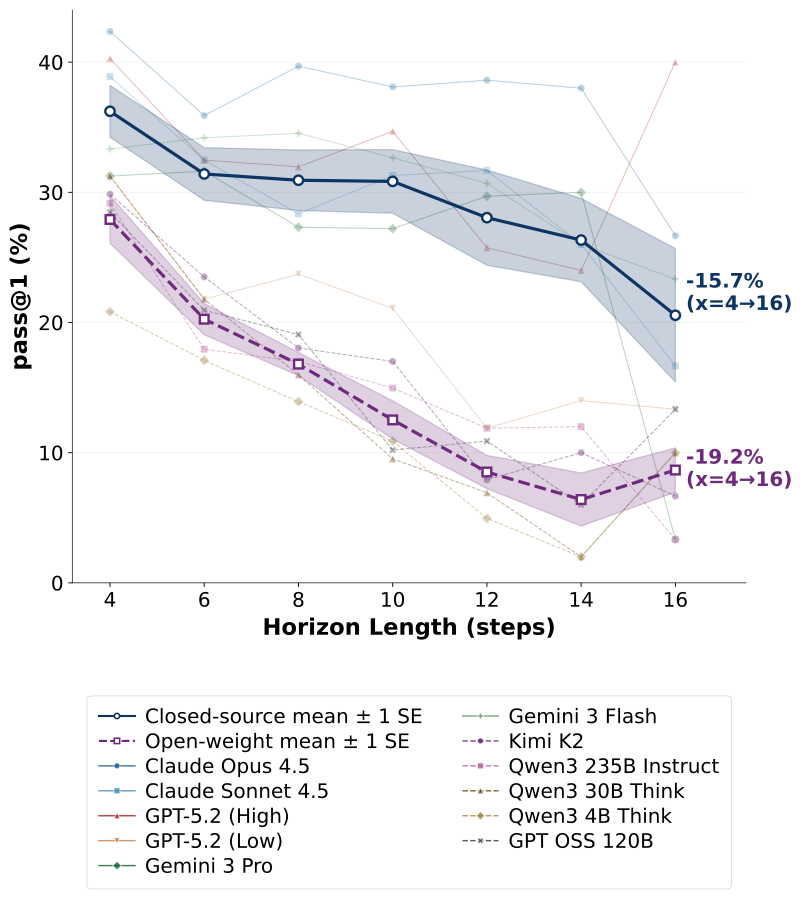
Figure 4 解读:模型成功率随 human trajectory horizon 增长而下降。Closed-source 组均值从约 4 steps 的 35% 附近降到 16 steps 时低于 20%;open-source/open-weight 组下降更陡,Kimi K2 和 GPT-OSS-120B 等在最长 horizon 附近接近 10%。这说明 EnterpriseOps-Gym 的难点不是单步工具格式,而是长程序列中的错误累积和状态保持。
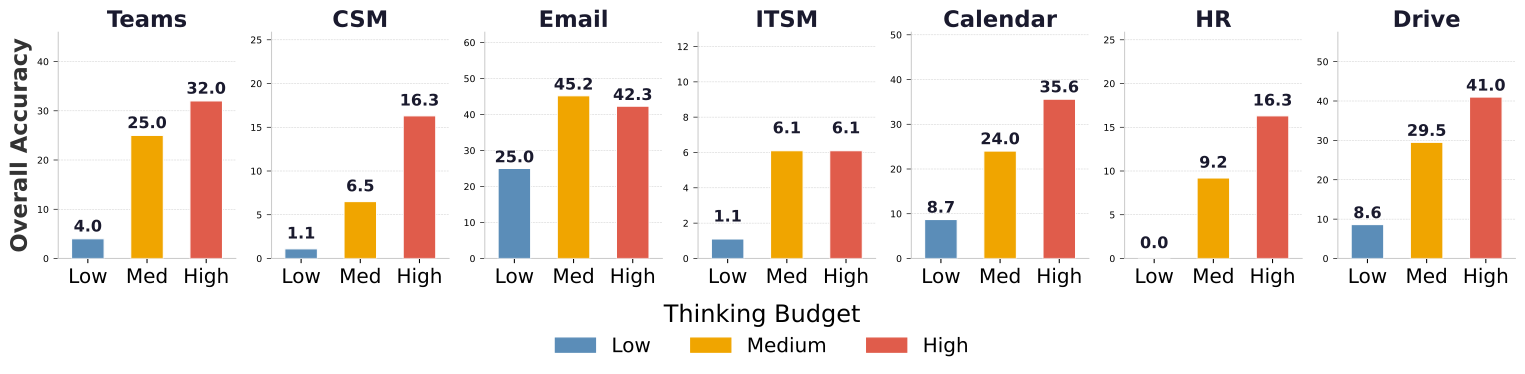
Figure 5 解读:GPT-OSS-120B 的 thinking budget 从 low 到 high 通常能提升任务完成率,复杂域在 low budget 下几乎无法工作,例如 CSM 1.1%、ITSM 1.1%、HR 0.0%。提升到 high budget 后,Drive 从 8.6% 到 41.0%,Calendar 从 8.7% 到 35.6%,Teams 从 4.0% 到 32.0%。但增长并非总是单调:Email 在 medium budget 达到 45.2% 后略降,ITSM 在 6.1% 附近早早 plateau,说明更多 test-time compute 不能替代缺失的约束推理能力。
Tool overload ablation 使用 Claude Sonnet 4.5,在 oracle toolset 上加入 +5/+10/+15 个由 Claude 检索出的相似 distractor tools。结果平均 completion rate 反而轻微增加约 1.0%,分别为 +0.07%、+2.35%、+0.64%,代价主要是输出 token 增加 4–9%。这支持论文的核心结论:当前瓶颈不是工具发现,而是计划、状态和政策约束。
5.3 Planning is the bottleneck
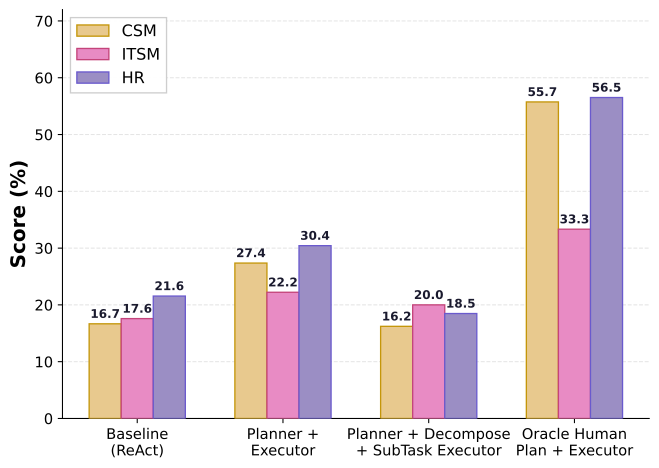
Figure 6 解读:Planner+Executor 通常优于单纯 ReAct;但 Planner+Decompose+Subtask Executor 并没有稳定提升,在 CSM 中甚至低于 base ReAct(16.2% vs. 16.7%)。这说明企业任务的子任务并不独立,许多动作依赖前序数据库状态和政策判断,强行 decomposition 可能打断必要的顺序推理。
计划条件实验进一步证实瓶颈在 planning。Claude-generated plan(CP)能给较弱模型带来 5–13 个百分点提升;human plan(HP)提升更大,达到 14–35 个百分点。
| Model | Plan | CSM | ITSM | HR |
|---|---|---|---|---|
| Kimi-K2 | CP | 19.6 (+12.5) | 18.1 (+5.9) | 17.2 (+9.0) |
| Kimi-K2 | HP | 42.2 (+35.1) | 29.1 (+16.9) | 34.5 (+26.3) |
| Qwen3-30B | CP | 15.2 (+9.8) | 11.7 (+5.0) | 17.9 (+10.3) |
| Qwen3-30B | HP | 33.9 (+28.5) | 20.9 (+14.2) | 33.2 (+25.6) |
| Qwen3-4B | CP | 16.8 (+13.0) | 12.2 (+6.6) | 19.6 (+12.5) |
| Qwen3-4B | HP | 37.16 (+33.4) | 23.3 (+17.7) | 36.4 (+29.3) |
5.4 Cost-performance frontier
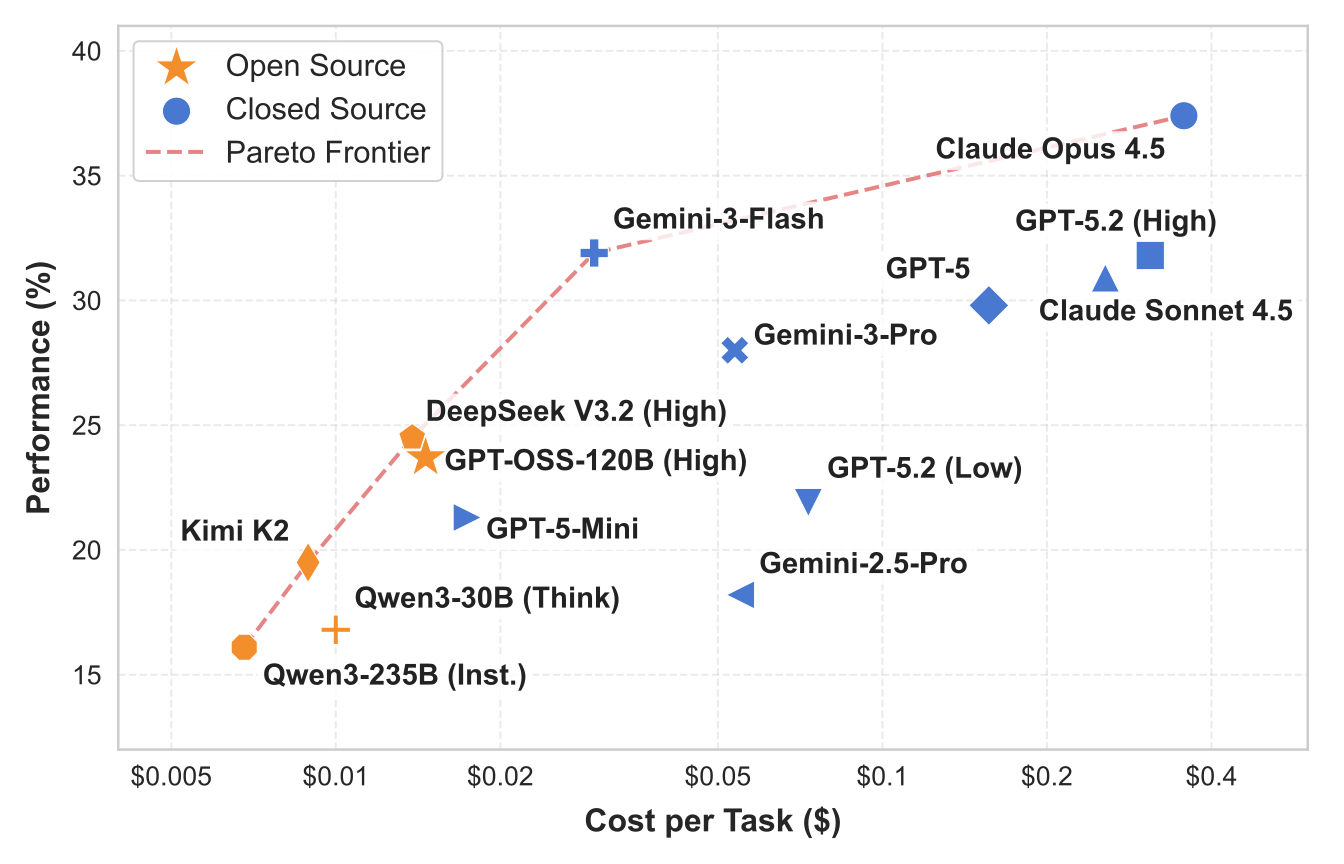
Figure 7 解读:Claude Opus 4.5 是最高绝对性能点,37.4% 成功率但约 0.36 USD/task;Gemini-3-Flash 是 closed-source 中较好的性价比点,31.9% 且约 0.03 USD/task,比 GPT-5(29.8%, 0.16 USD)和 Claude Sonnet 4.5(30.9%, 0.26 USD)便宜 80–90%。Open-source/open-weight 中 DeepSeek-V3.2 High 为 24.5%、0.014 USD/task,GPT-OSS-120B High 为 23.7%、0.015 USD/task;Qwen3-235B Inst. 最便宜,0.007 USD/task,但平均只有 16.1%。
5.5 Failure modes and limitations
论文把失败模式归纳为四类:Missing Prerequisite Lookup(未先查询必要前置对象就创建记录,导致 broken foreign-key links)、Cascading State Propagation(某状态转移后漏掉政策要求的后续动作)、Incorrect ID Resolution(未通过工具解析正确 ID 就传入 tool call)、Premature Completion Hallucination(未执行完所有必要步骤就宣布完成)。这些失败都指向同一个问题:模型通常会“看起来会用工具”,但不能可靠维护业务状态机。
Verifier 类型分析显示,模型在 Permission and Process Compliance 上最弱:ITSM 的 policy compliance 只有 30.0,CSM 为 45.5,HR 为 50.4;相比之下许多域的 task completion 或 integrity score 更高。例如 Teams task completion 82.3、integrity 90.0、policy compliance 81.3;Drive integrity 87.8,但 policy compliance 66.7。最危险的是 infeasible task:最佳模型也只有 53.9% 能正确拒绝并避免副作用,距离无人监督企业部署仍很远。
| Domain | Task Completion samples / score | Integrity samples / score | Policy samples / score |
|---|---|---|---|
| Teams | 100 / 82.3 | 20 / 90.0 | 8 / 81.3 |
| CSM | 183 / 58.3 | 30 / 70.0 | 120 / 45.5 |
| 103 / 70.9 | 17 / 76.5 | 12 / 79.2 | |
| ITSM | 176 / 53.7 | 30 / 50.6 | 70 / 30.0 |
| Calendar | 104 / 71.5 | 8 / 62.5 | 19 / 76.1 |
| HR | 182 / 63.2 | 47 / 56.0 | 94 / 50.4 |
| Drive | 105 / 75.1 | 26 / 87.8 | 6 / 66.7 |
| Hybrid | 152 / 60.0 | 23 / 72.5 | 18 / 61.1 |
作者在 impact statement 中也指出潜在限制:如果系统只针对 benchmark 优化,可能 overfit 特定任务模式或 verifier;更强自动化也会带来对 AI 系统过度依赖的风险;大模型 agentic evaluation 本身有计算成本和环境影响。总体结论是,EnterpriseOps-Gym 证明当前 frontier agents 即使在 oracle tool access 下仍不适合自治企业部署,下一步提升重点应是 constraint-aware planning、policy-grounded execution 和安全拒绝,而不仅是扩大工具检索或增加 orchestration 层数。