EVA-Bench: A New End-to-end Framework for Evaluating Voice Agents
Paper: arXiv:2605.13841 Code: ServiceNow/eva Code reference:
main@66ac2d90(2026-05-19)
1. Motivation (研究动机)
现有 voice agent 评测的核心问题不是“有没有一个分数”,而是两个评测前提同时缺失:第一,评测交互不够像真实电话任务;第二,指标没有覆盖 voice-specific failure modes。许多 benchmark 只评估静态 transcript、单轮问答、或某个组件(STT、LLM、TTS)的局部能力,因此无法回答一个端到端 voice agent 在真实多轮语音任务中是否可靠。
具体瓶颈有三类:
- 仿真层面:真实企业场景里的用户目标、persona、身份认证、工具调用、数据库状态变化、打断/沉默/延迟都影响结果。若只用静态 prompt 或人工录音片段,就无法稳定复现 agent 在 multi-turn task completion 中的行为。
- 测量层面:task completion 只看最终状态,不能发现 agent 在过程中误报政策、误读金额/确认码、过度冗长、抢话、长时间沉默等语音交互错误。论文强调,即使工具调用正确,spoken output 中一个字母/数字错了也可能让用户拿到不可用的 confirmation code。
- 架构比较层面:cascade(STT→LLM→TTS)、hybrid(AudioLLM→TTS)和 S2S(speech-to-speech)暴露的中间信号不同。若指标只依赖 transcript 或某一 pipeline 的内部日志,就会偏向某类架构,不能公平比较 audio-native 与 cascade 系统。
EVA-Bench 的目标是把“仿真”和“评分”连成一个 end-to-end benchmark:用 bot-to-bot audio conversation 自动生成多轮语音任务,再用 validation-gated simulation 排除 user simulator 自身错误,最后用 EVA-A / EVA-X / diagnostic metrics 同时衡量 accuracy、experience 与可诊断失败源。它值得研究,因为 deployment-grade voice agent 需要的不只是偶尔成功,而是在多次真实调用、噪声/口音扰动、不同企业域中稳定完成任务并保持可接受的语音体验。
2. Idea (核心思想)
核心 insight:voice agent benchmark 应该把“用户仿真质量控制”和“跨架构可比的端到端语音指标”合并,而不是只评单个组件或只评 transcript。 EVA-Bench 先让一个带 persona、goal、decision tree 和 TTS voice 的 User Simulator 通过 live audio WebSocket 与待测 agent 对话;对话结束后先过 simulator validation,失败则自动重跑;只有有效 conversation 才进入评分。
关键创新可以压缩成三点:
- Validated bot-to-bot simulation:每个 scenario 不只是 prompt,而包含 user goal、persona、scenario database、ground truth 和 decision tree;Tool Executor 确定性执行 agent tool calls,使最终数据库状态可以精确比较。
- 双主指标:EVA-A 衡量 task completion、faithfulness、speech fidelity;EVA-X 衡量 conversation progression、conciseness、turn-taking。它们不是简单平均,而是先对每个 component 设置 pass threshold,再用 pass@1 / pass@k / pass^k 区分平均、峰值和可靠表现。
- 跨架构和扰动分析:同一套 213 enterprise scenarios 覆盖 Airline CSM、Healthcare HRSD、Enterprise ITSM;再用 French accent、coffee-shop background noise、二者组合等扰动,观察 cascade、hybrid、S2S 的不同失败模式。
与只看工具调用正确率的 TAU-bench-like 评测相比,EVA-Bench 增加了 audio-level speech fidelity、turn timing、spoken conciseness 和 simulator validation;与只测实时语音交互体验的 benchmark 相比,它又把最终 tool/database state 与 policy faithfulness 纳入同一评价框架。因此它更像一个 voice-agent operating envelope test,而不是单点能力测试。
3. Method (方法)
3.1 Overall framework
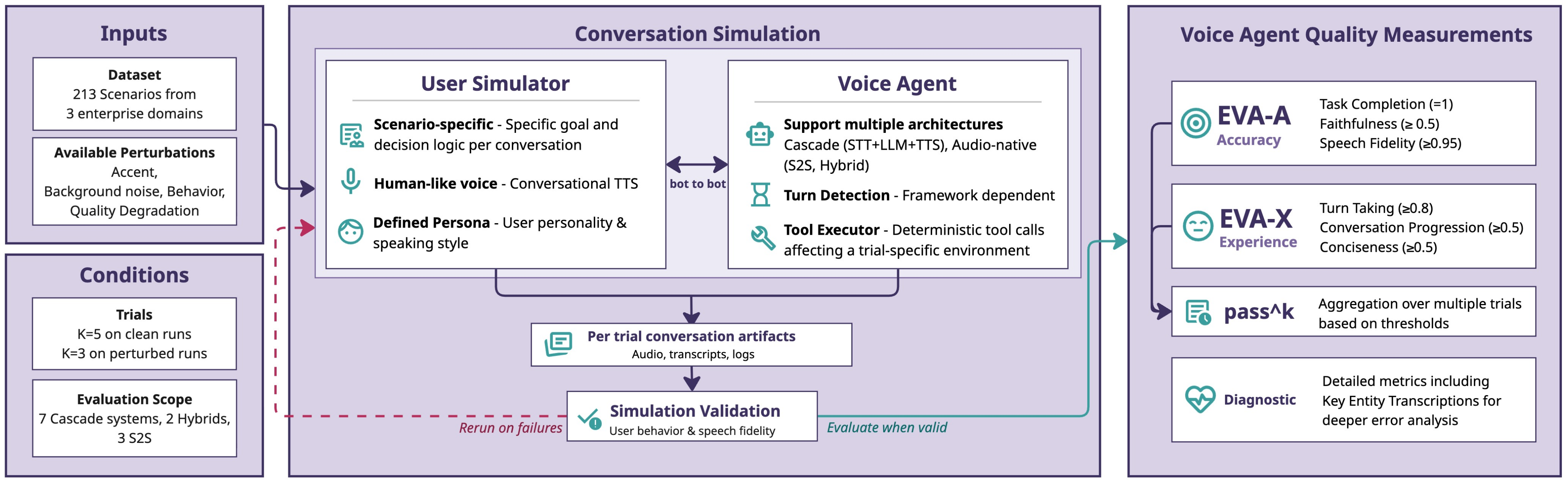
Figure 1 解读:整个 pipeline 分成 simulation、validation 和 quality measurement。左侧 User Simulator 带着 scenario-specific goal、persona、conversational TTS voice,通过 WebSocket 与待测 Voice Agent 进行真实音频多轮对话;Tool Executor 对 agent 的工具调用做确定性执行并更新 scenario database。中间的 Simulator Validation 用 Conversation Finished、User Behavioral Fidelity、User Speech Fidelity 检查该次仿真是否有效;失败会触发 regeneration,而不是把 simulator 错误算到 agent 头上。右侧 Quality Measurements 输出 EVA-A、EVA-X、pass@1、pass@k、pass^k 和 diagnostic metrics。
直觉上,EVA-Bench 的设计把 benchmark 中最容易混淆的两个来源分开:先判断“用户模拟是否合格”,再判断“agent 是否做得好”。 这样可以避免把 user simulator 的 premature ending、decision-tree violation、missing information 误判成 agent failure。同时,每个 scenario 有 ground-truth database state,使 task completion 能用 deterministic hash 比较;每个对话又保留 audio/log/timing,使 speech fidelity 和 turn-taking 可以被端到端评估。
3.2 Scenario 与 data design
EVA-Bench 的数据覆盖三个企业语音客服域:
| Domain | Scenarios | Workflows | Tools | Avg. tool calls | Min / max tool calls | Auth tiers |
|---|---|---|---|---|---|---|
| Airline CSM | 50 | 7 | 15 | 3.14 | 1 / 6 | 1 |
| Healthcare HRSD | 83 | 12 | 47 | 8.7 | 1 / 18 | 2 |
| Enterprise ITSM | 80 | 21 | 59 | 8.3 | 1 / 18 | 3 |
每个 scenario 包含四个核心对象:
- user goal:用户想达成的结果和约束,例如改签必须在 10pm 前、票价低于某金额。
- user persona:说话方式、耐心、个性,用来模拟不同 caller 行为。
- scenario database:agent tools 会读取和修改的数据状态。
- ground truth:任务成功后数据库应处于的状态;这也是 deterministic task completion 的比较目标。
User goal 还配有 decision tree,消除“用户到底应该怎么选”的歧义。论文有意选择高接触、适合电话解决的任务,例如 flight rebooking,而不是初次订票这类不一定需要语音 agent 的场景。许多场景要求处理 confirmation code、employee ID、姓名、日期、金额等 spoken key entities,用来触发 STT/TTS/S2S 最常见的语音错误。
3.3 Bot-to-bot multi-turn simulation
EVA-Bench 通过 fully automated bot-to-bot conversation 评估 agent。User Simulator 基于 ElevenLabs ElevenAgents:TTS model family 为 V3 Conversational,English,默认 personality disabled,first message none,interruptible disabled,输入音频为 -law telephony 8000 Hz,最大 conversation duration 为 600 s。它接收 user goal、decision tree、persona,与 agent 通过 live audio WebSocket 交互。
待测 agent 可以是三类:
- Cascade:STT → LLM → TTS。它有明确 transcript 和 intended assistant text,因此可以区分 STT 错误、LLM policy 错误、TTS spoken-output 错误。
- Hybrid:AudioLLM 直接听 audio,再用 TTS 输出语音。它在输入侧 audio-native,输出侧仍是 text-to-speech。
- S2S:输入和输出都是 raw audio,可能同时生成 text 用于 tool call。它更少跨模态,通常 latency 更低,但一些中间信号不可见。
Controlled perturbations 包括 accent variations、background noises、connection degradation,也可以建模 personality/speaking style。主实验实际使用三种条件:French-accented user speech、coffee shop background noise、二者组合。每个扰动轴可以单独或组合施加,便于把“口音伤害 accuracy”与“噪声伤害 experience”分开分析。
3.4 Simulator validation:先过滤无效用户仿真
在计算 agent metrics 前,每次 simulated conversation 必须经过 validation:
| Validation metric | Type | Scale | Pass threshold | 用途 |
|---|---|---|---|---|
| Conversation Finished | Deterministic | 1.0 | 对话是否正常结束 | |
| User Behavioral Fidelity | LLM-as-Judge | 1.0 | user simulator 是否按 goal / decision tree 行事 | |
| User Speech Fidelity | LALM-as-Judge | – normalized to | 论文表中未设统一 pass threshold | 用户音频是否准确表达 intended content |
论文报告,在四个代表系统、所有 domain 上, 的 trials 因 user simulator error 需要 regeneration,几乎全部来自 behavioral drift;speech fidelity 占 rerun 的比例低于 。在完整 cost analysis 中,四个代表系统平均 trials 需要 regeneration,其中约一半是 simulator error,另一半是 infrastructure failures 或 timeouts。因此 EVA-Bench 不是把每次失败都直接打分,而是把无效 conversation 从评分入口前剔除/重跑。
3.5 EVA-A:Accuracy metrics
EVA-A 衡量“任务是否真的正确完成”。它不是单个分数平均,而是每个 component 都必须过阈值: 三个 component 的含义如下:
- Task Completion:deterministic binary metric。比较 scenario database final state 与 ground truth 的 SHA-256 hash;正确工具调用和参数会得到 1,任何 wrong / missing / extra changes 得到 0。
- Faithfulness:LLM-as-Judge。检查 agent actions 是否 grounded in instructions、policies、tool results、user inputs。它补足 task completion:agent 可能最终数据库正确,但过程中误报费用、违反 policy 或误导用户。注意架构适配不同:cascade 相对于 STT delivered text 评估;audio-native 的 mishearing 属于模型自身责任,因此会被计入 faithfulness。
- Speech Fidelity:LALM-as-Judge。检查 spoken audio 是否准确复现 intended text,特别关注 confirmation codes、dates、dollar amounts 等 high-stakes named entities。对 S2S 系统,由于不存在明确 intended text,指标检查 user turns 和 tool responses 中的 key entities 是否被正确说出。
3.6 EVA-X:Experience metrics
EVA-X 衡量“用户是否能顺畅完成语音交互”。pass 条件为: 三个 component 的角色不同:
- Conversation Progression:LLM-as-Judge,检查 agent 是否避免重复、保留上下文、持续推进任务,而不是 stall 或 backtrack。
- Conciseness:LLM-as-Judge,检查 spoken response 是否足够简洁。电话用户不能像阅读文本一样 skim 或回看,过多选项/细节会造成 working-memory overload。
- Turn-Taking:timestamp-based metric。它不只看平均 latency,而是按 turn type 选择 scoring function:agent-interrupted turns 看 overlap duration、barge-in count、post-interrupt recovery latency;user-interruption turns 看 agent yield latency;uninterrupted turns 用 piecewise-linear latency curve;tool-call turns 有更宽松的 latency threshold。若 agent 对用户 turn 完全不响应,也会通过 Conversation Completion 影响此维度。
3.7 pass@1 / pass@k / pass^k:平均、峰值和可靠性
EVA-Bench 对每个 dimension(EVA-A 或 EVA-X)先得到 binary pass/fail,再报告三种 aggregate statistics: 直觉上,pass@1 是随机一次调用的平均成功概率;pass@k 是“同一个 scenario 试 次至少一次成功”的 ceiling;pass^k 是“同一个 scenario 连续 次都成功”的可靠性。论文的关键发现之一就是 pass@k 与 pass^k 差距很大,所以单次或 best-of-k 结果会显著高估 deployment-grade reliability。
3.8 Released code 对应实现与伪代码
代码搜索找到官方实现 ServiceNow/eva。检索面包括 Hugging Face paper page、title + GitHub、arXiv ID + GitHub、ServiceNow + EVA-Bench、GitHub direct probe;有效 repo 含 README、main.py、src/eva/orchestrator/、src/eva/metrics/、configs/ 等实现证据。
Code reference:
main@66ac2d90(2026-05-19) — pseudocode and mapping based on this commit
| Paper Concept | Source File | Key Class/Function |
|---|---|---|
| End-to-end benchmark runner | src/eva/run_benchmark.py | run_benchmark(config) |
| Conversation orchestration + validation/rerun loop | src/eva/orchestrator/runner.py | BenchmarkRunner.run |
| Per-record validation gate | src/eva/orchestrator/validation_runner.py | ValidationRunner.validate_one, run_validation |
| Multi-trial setting | src/eva/models/config.py | RunConfig.num_trials, max_rerun_attempts, validation_thresholds |
| EVA-A / EVA-X composite thresholds | src/eva/metrics/aggregation.py | EVA_COMPOSITES, compute_record_aggregates |
| pass@k / pass^k implementation | src/eva/utils/pass_at_k.py | compute_pass_at_k, compute_pass_power_k, compute_pass_at_k_for_scores |
| Deterministic task completion | src/eva/metrics/accuracy/task_completion.py | TaskCompletion |
| Faithfulness judge | src/eva/metrics/accuracy/faithfulness.py | FaithfulnessJudgeMetric |
| Audio speech fidelity | src/eva/metrics/accuracy/agent_speech_fidelity.py | AgentSpeechFidelityMetric |
| Experience metrics | src/eva/metrics/experience/*.py | ConversationProgressionJudgeMetric, ConcisenessJudgeMetric, TurnTakingMetric |
| Key-entity transcription diagnostic | src/eva/metrics/diagnostic/transcription_accuracy_key_entities.py | transcription key entity metric |
代码侧的主循环可以概括为:
async def run_eva_benchmark(config, records):
    runner = BenchmarkRunner(config)
    output_ids = expand_trials(records, num_trials=config.num_trials)

    successful_records = []
    for output_id in output_ids:
        for attempt in range(config.max_rerun_attempts):
            result = await ConversationWorker(config).run(output_id)

            if not check_conversation_finished(result):
                continue

            validation = await ValidationRunner(...).validate_one(output_id)
            if validation.passed:
                successful_records.append(output_id)
                break

        # failed attempts are kept for diagnostics but excluded from full metrics

    metrics = await MetricsRunner(...).run(successful_records)
    return compute_run_level_aggregates(metrics, num_draws=config.num_trials)
EVA-A / EVA-X composite 的 released code 单一来源在 src/eva/metrics/aggregation.py:
EVA_A_PASS = all([
    task_completion == 1.0,
    faithfulness >= 0.5,
    agent_speech_fidelity >= 0.95,
])

EVA_X_PASS = all([
    conversation_progression >= 0.5,
    turn_taking >= 0.8,
    conciseness >= 0.5,
])
src/eva/utils/pass_at_k.py 中,compute_pass_at_k(n, c, k) 用 计算至少一次通过的概率;compute_pass_power_k(n,c,k) 用 计算无放回抽取中全通过的概率。src/eva/metrics/aggregation.py 在 run-level 同时输出 pass_power_k_observed 和 pass_power_k_theoretical=(c/n)^k;论文定义的 pass^k 对应 theoretical 解释。论文公式与 released code 实现差异:核心阈值与 component 组合未发现不一致;但 released code 同时保留 observed/theoretical 两个 pass^k 字段,读取 metrics_summary.json 时要确认使用的是与论文定义一致的 theoretical 口径。
4. Experimental Setup (实验设置)
4.1 Datasets and scale
Clean condition 覆盖全部 213 scenarios,每个 scenario trials。Perturbation condition 覆盖 90 scenarios(每个 domain 30 个),每个 perturbation trials,扰动包括 French-accented user speech、coffee shop background noise、accent + background noise。每个模型总评估样本数为: 考虑 validation/rerun,四个代表系统平均 trials 需要 regeneration,因此实际 simulation/judge call 约为: per system。论文还说明平均 conversation 时长约 4–5 分钟,成本来自 user simulator、待测 agent 推理以及 8 个 LLM/LALM-as-Judge metrics。
4.2 Evaluated systems
共评估 12 个系统:7 个 cascade,2 个 hybrid,3 个 S2S。
- Cascade:Cohere-transcribe + Gemma-4-26B + Voxtral-4B-TTS;Scribe-v2.2-Realtime + Gemini-3-Flash + TTS-Conversational-v3-Alpha;Ink-whisper + Haiku-4.5 + Sonic 3;Nova-3 + GPT-5.4 + Sonic 3;Nova-3 + GPT-5.4-mini + Aura-2;Parakeet-1.1 + Gemma-4-31B + Kokoro;Whisper-Large-v3 + Qwen3.5-27B + Voxtral-4B-TTS。
- Hybrid:Gemini-3-Flash + Gemini-3.1-Flash-TTS;Ultravox-Realtime。
- S2S:Gemini-3.1-Flash-Live;GPT-Realtime-1.5;GPT-Realtime-mini。
Self-hosted model configuration 来自 appendix table:Gemma-4-26B / Gemma-4-31B 用 2×H100 BF16 vLLM;Qwen3.5-27B 用 4×H100 + 8×8GB CPU BF16 vLLM;Whisper-Large-v3 用 1×H100 + 4×64GB CPU FP16 vLLM;Cohere-transcribe、Parakeet、Kokoro、Voxtral 分别有 1×H100 配置。API-hosted table 给出 GPT-5.2、GPT-5.4、GPT-5.4-mini、GPT-Realtime-1.5、GPT-Realtime-mini、Gemini-3-Flash、Gemini-3.1-Flash-Live、Gemini-3.1-Flash-TTS、Claude Opus 4.6、Haiku-4.5、Ultravox、Cartesia/Deepgram 等 provider/model IDs。
Released code 的 run config 入口是 RunConfig:domain 取 airline | itsm | medical_hr,num_trials 控制 pass@k 所需重复次数,max_rerun_attempts 默认 3,validation_thresholds 默认 conversation_valid_end=1.0 和 user_behavioral_fidelity=1.0。README 中 required environment variables 包括 OPENAI_API_KEY、EVA_MODEL_LIST、ELEVENLABS_API_KEY、STT/TTS API 参数;全指标运行还需要 Gemini/Vertex audio judge 和 Claude/Bedrock faithfulness judge 相关凭据。
4.3 Metrics and judge validation
主指标与阈值:
| Category | Metric | Type | Scale | Pass threshold |
|---|---|---|---|---|
| EVA-A | Task Completion | Deterministic | 1.0 | |
| EVA-A | Faithfulness | LLM-as-Judge | – normalized to | 0.50 |
| EVA-A | Speech Fidelity | LALM-as-Judge | 0.95 | |
| EVA-X | Conciseness | LLM-as-Judge | – normalized to | 0.50 |
| EVA-X | Conversation Progression | LLM-as-Judge | – normalized to | 0.50 |
| EVA-X | Turn-Taking | Deterministic | 0.80 |
Diagnostic metrics 包括 Authentication Success、Response Latency、Speakability、STT Word Error Rate、Tool Call Validity、Transcription Key Entities 等,不直接进入 EVA-A/EVA-X,但用于定位失败来源。
Judge validation 方面,primary judge 与 human linguist agreement 的 范围为 0.777–0.845:Faithfulness 0.836,Conversation Progression 0.845,Conciseness 0.823,Speech Fidelity 0.777。论文将这作为 judge 至少接近 human annotator consistency 的证据。
5. Experimental Results (实验结果)
5.1 Main accuracy/experience results
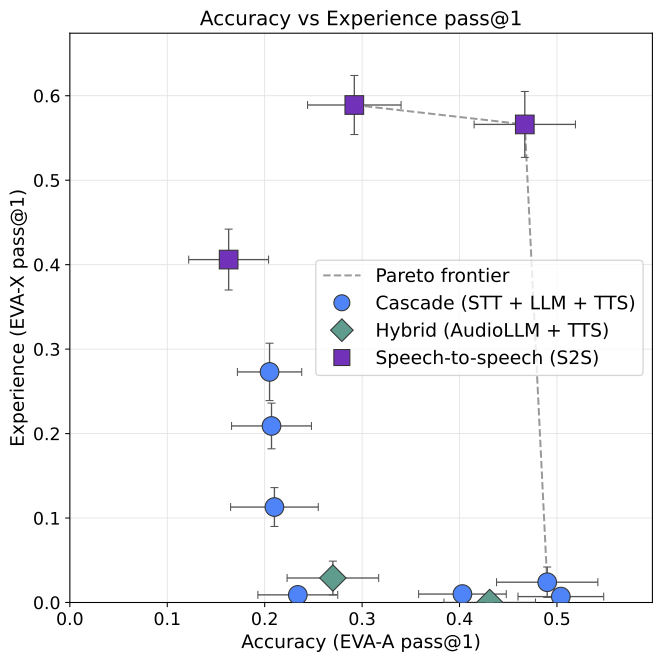
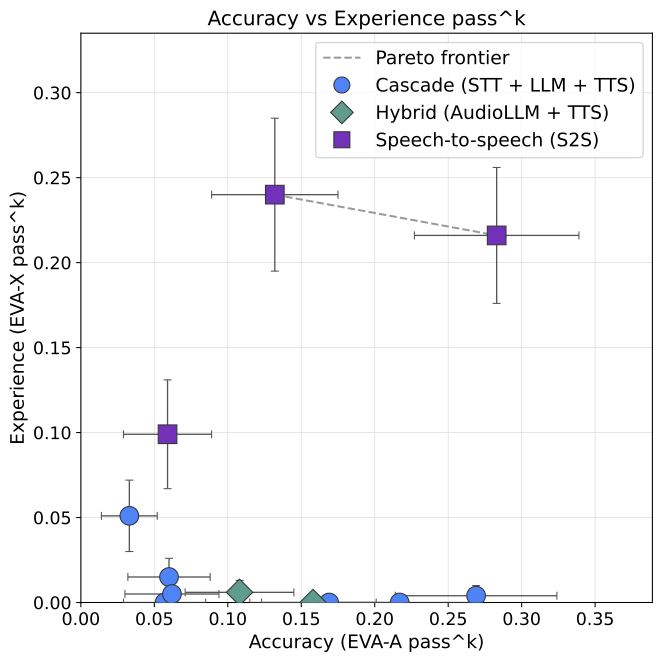
Figure 2 解读:左图是 pass@1,右图是 pass^k。pass@1 上 Pareto frontier 有四个系统,来自两个区域:两个 S2S(Gemini-3.1-Flash-Live、GPT-Realtime-1.5)和两个 cascade(Scribe + Gemini + Conversational、Nova + GPT + Sonic)。但到 pass^k 可靠性视角时,frontier 只剩两个 S2S,说明“某次能成功”与“多次都稳定成功”不是同一件事。
| Architecture | System | EVA-A pass@1 | EVA-A pass^k | EVA-X pass@1 | EVA-X pass^k |
|---|---|---|---|---|---|
| Cascade | Cohere + Gemma-4-26B + Voxtral | 0.207 ±0.041 | 0.060 ±0.028 | 0.209 ±0.027 | 0.015 ±0.011 |
| Cascade | Scribe + Gemini-3-Flash + Conversational v3 | 0.490 ±0.052 | 0.269 ±0.055 | 0.024 ±0.018 | 0.004 ±0.006 |
| Cascade | Ink-whisper + Haiku-4.5 + Sonic 3 | 0.234 ±0.041 | 0.057 ±0.028 | 0.009 ±0.006 | 0.000 ±0.000 |
| Cascade | Nova-3 + GPT-5.4 + Sonic 3 | 0.504 ±0.044 | 0.217 ±0.048 | 0.007 ±0.006 | 0.000 ±0.000 |
| Cascade | Nova-3 + GPT-5.4-mini + Aura-2 | 0.210 ±0.045 | 0.062 ±0.032 | 0.113 ±0.023 | 0.005 ±0.004 |
| Cascade | Parakeet-1.1 + Gemma-4-31B + Kokoro | 0.403 ±0.045 | 0.169 ±0.046 | 0.010 ±0.009 | 0.000 ±0.000 |
| Cascade | Whisper + Qwen3.5-27B + Voxtral | 0.205 ±0.033 | 0.033 ±0.019 | 0.273 ±0.034 | 0.051 ±0.021 |
| Hybrid | Gemini-3-Flash + Gemini-3.1-Flash-TTS | 0.431 ±0.047 | 0.158 ±0.043 | 0.000 ±0.000 | 0.000 ±0.000 |
| Hybrid | Ultravox-Realtime | 0.270 ±0.047 | 0.108 ±0.037 | 0.029 ±0.020 | 0.006 ±0.007 |
| S2S | Gemini-3.1-Flash-Live | 0.292 ±0.048 | 0.132 ±0.043 | 0.589 ±0.035 | 0.240 ±0.045 |
| S2S | GPT-Realtime-1.5 | 0.467 ±0.052 | 0.283 ±0.056 | 0.566 ±0.039 | 0.216 ±0.040 |
| S2S | GPT-Realtime-mini | 0.163 ±0.041 | 0.059 ±0.030 | 0.406 ±0.036 | 0.099 ±0.032 |
最重要的结果是:没有系统在 EVA-A pass@1 和 EVA-X pass@1 上同时超过 0.5;只有 GPT-Realtime-1.5 在两个维度上同时超过 0.4(0.47, 0.57)。EVA-X 的架构差异几乎完全由 Turn-Taking 驱动:cascade mean turn-taking 为 0.28–0.58,S2S 为 0.82–0.83;Conciseness 和 Conversation Progression 没有同样强的架构分层。两个 hybrid 的 EVA-X pass@1(0.000, 0.029)仍落在 cascade 范围内,说明 hybrid 不一定自动继承 fully S2S 的 latency 优势。
5.2 Cascade accuracy–experience trade-off
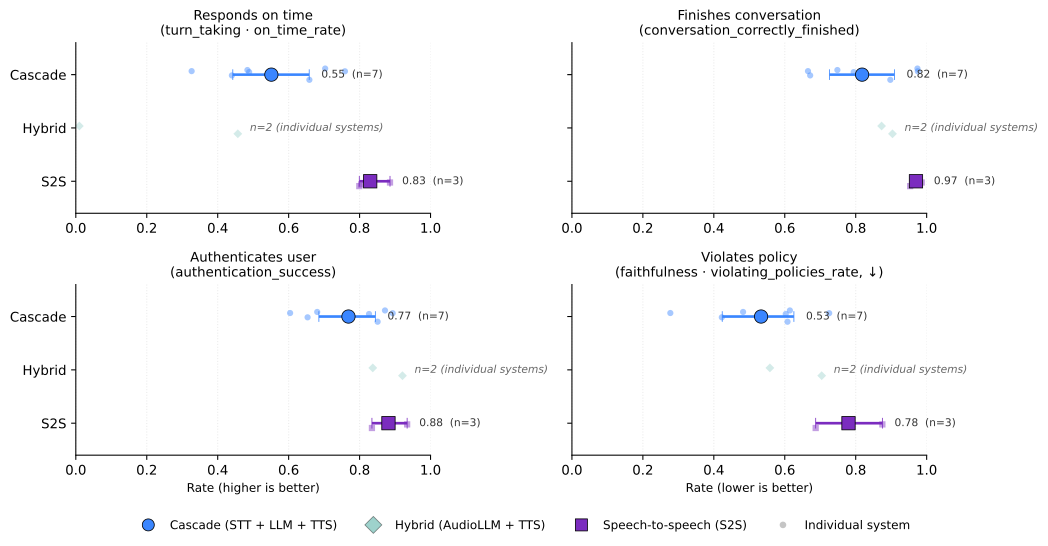
Figure 3 解读:该图按 pipeline type 汇总四类 facets,显示 S2S 在 turn-taking / conversation completion 上有清晰优势,而 cascade 在某些 accuracy-related 维度上仍有强项。论文指出,accuracy 最好的三个 cascade(Nova + GPT + Sonic、Scribe + Gemini + Conversational、Parakeet + Gemma + Kokoro)在 experience 上表现差,tool-call turn latency 均超过 5 s;experience 较好的两个 cascade(Whisper + Qwen + Voxtral、Cohere + Gemma + Voxtral)tool-call latency 低于 2.7 s,但 accuracy 较低。没有 cascade 在两个维度上同时超过 0.25。
5.3 Consistency: pass@k 高估 reliable capability
Across 12 systems,peak performance(pass@k)显著高于 reliable performance(pass^k):median gap 为 EVA-A 0.44、EVA-X 0.24。即便 strongest systems,在“同一 scenario 五次全过”的 pass^k 解释下也远低于 peak。这说明用单次 trial 或 best-of-k 评测会系统性高估 voice agent 的部署可靠性。
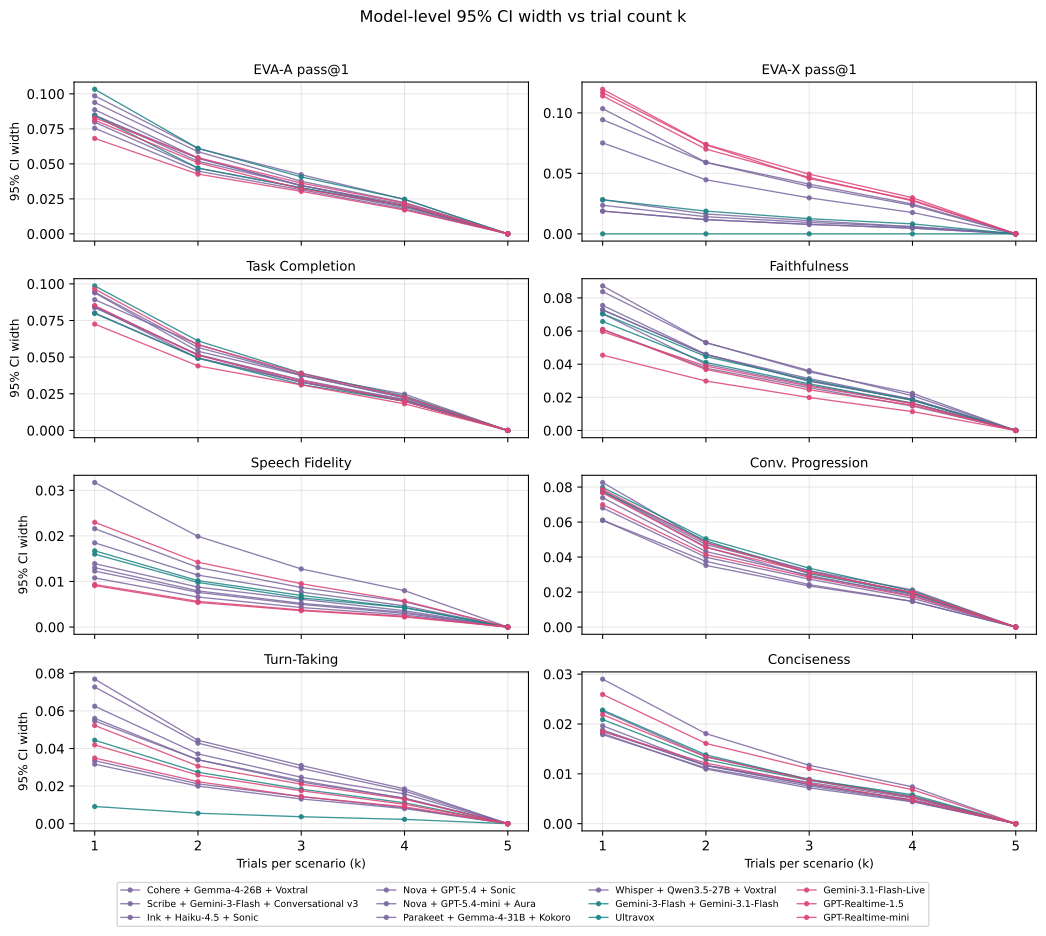
Figure 4 解读:appendix 的 trial-count analysis 显示,模型级估计的 95% CI width 随 约按 下降。subsample stability summary 中,EVA-A pass@1 的 median 95% CI width 从 的 0.085 降到 的 0.020,EVA-X pass@1 从 0.052 降到 0.013; subsamples 落在 anchor ±0.02 内的比例分别为 97.6% 和 99.6%。这支持论文选择 clean condition 的稳定性。
5.4 Robustness under accent and noise
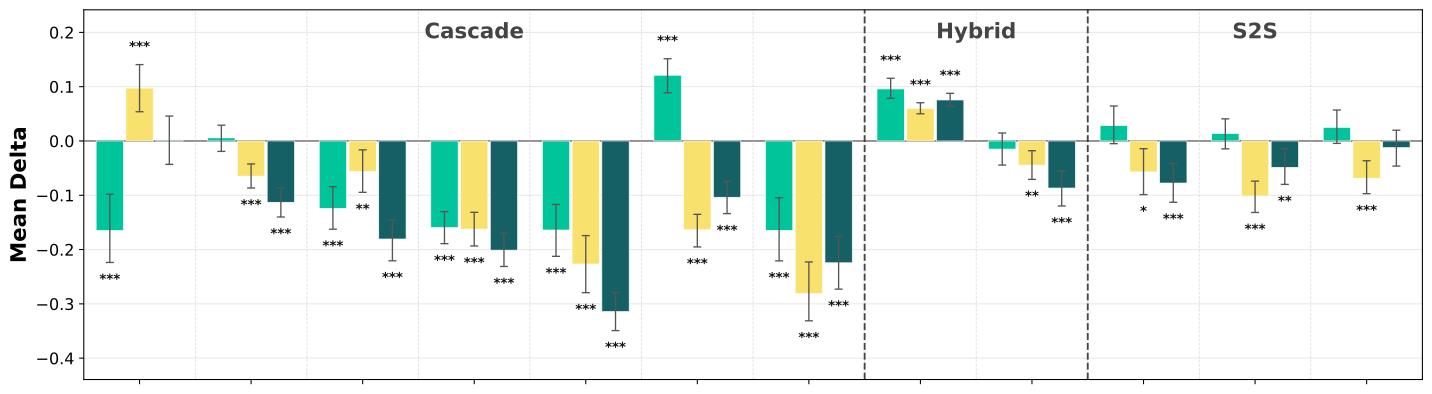
Figure 5 解读:Turn-Taking 是最 perturbation-sensitive 的 metric,论文报告跨 perturbations 和 systems 有 81% measurements 出现显著 degradation。图中不同颜色对应 accent、background noise、accent + background noise;负值越大表示扰动相对 clean baseline 伤害越大。
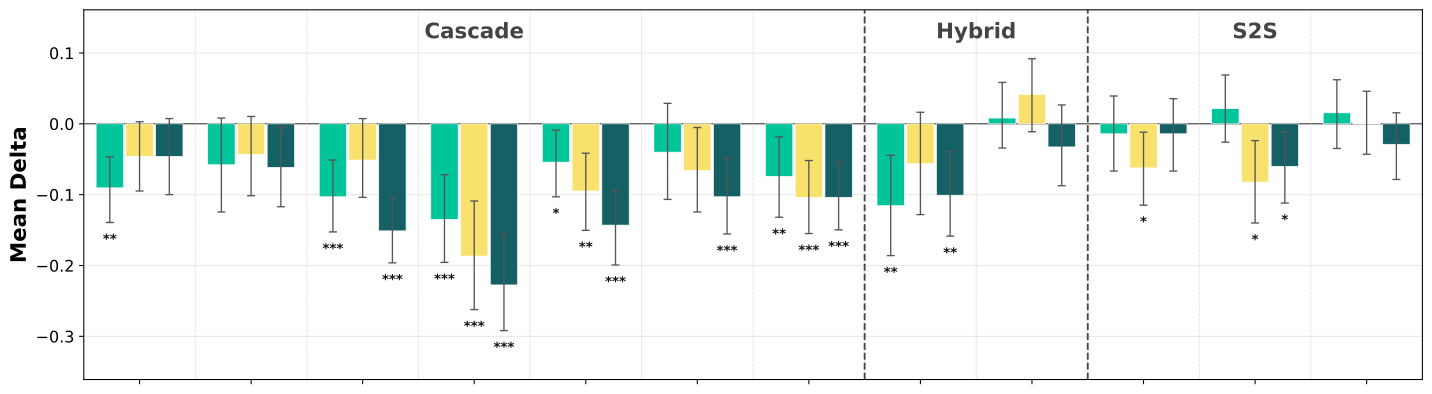
Figure 6a 解读:EVA-A 在 cascade 上更容易被口音/噪声伤害。accented speech 使 cascade task completion 平均下降 10 points,worst system 下降 17 points;S2S 没有显著 accuracy degradation(0/27 model-metric pairs)。combined condition 下 cascade task completion 平均下降 19 points,worst systems 下降 31 points,而 S2S mean 仍在 5 points 内。
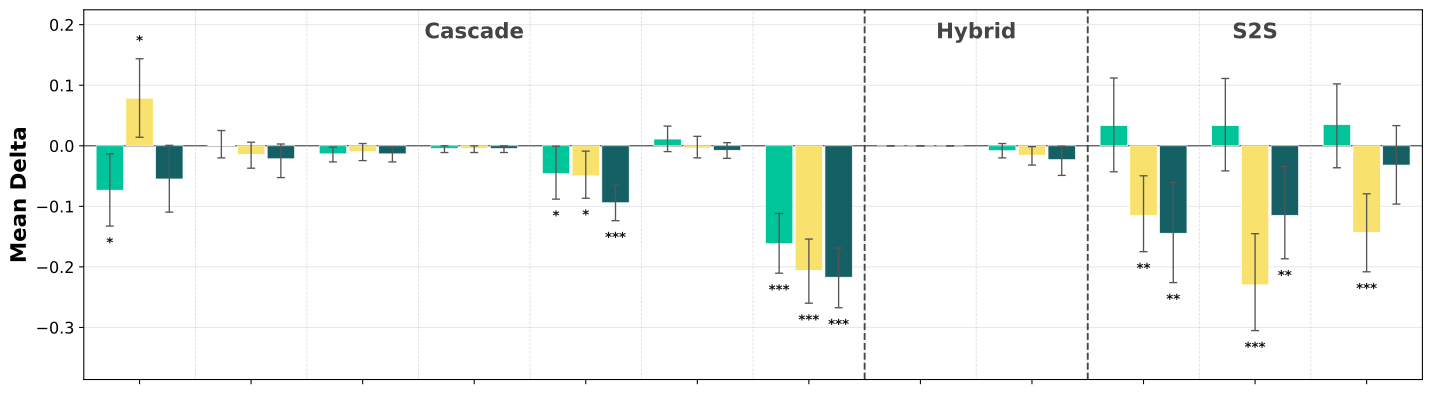
Figure 6b 解读:EVA-X 的扰动伤害在 S2S 上更明显,尤其 background noise 导致 S2S experience failure,论文给出 EVA-X 平均 。这与 EVA-A 的模式相反,说明 audio-native 的低 latency 优势不等于对环境噪声的 experience robustness。
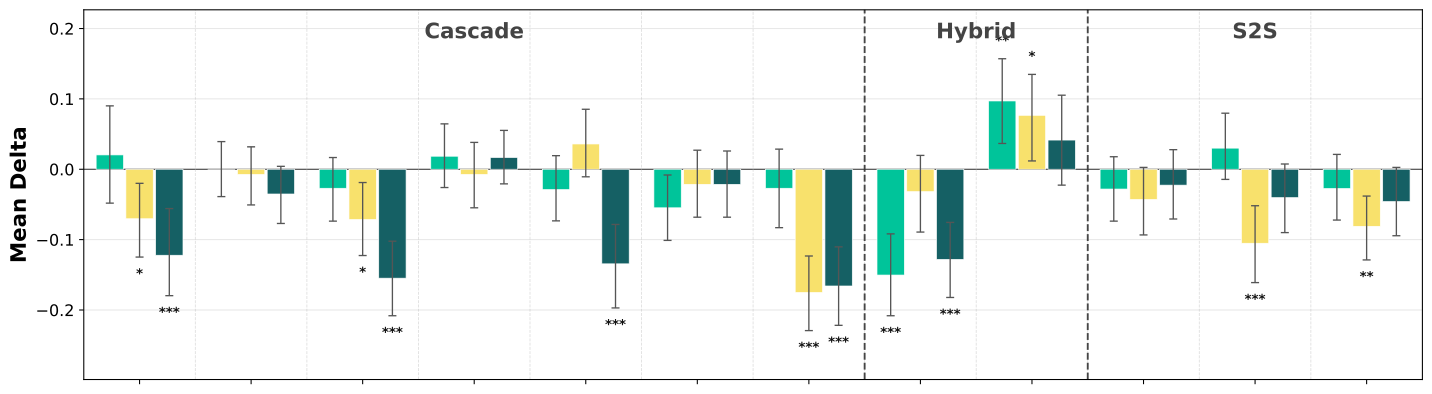
Figure 6c 解读:Conversation Progression 的扰动结果补充了 EVA-X 的原因分解。它显示 background noise 和 combined condition 不只是让 agent 变慢,也可能让对话推进质量下降,例如重复、遗漏上下文或没有顺畅导向任务解决;这与 turn-taking 一起构成 experience degradation。
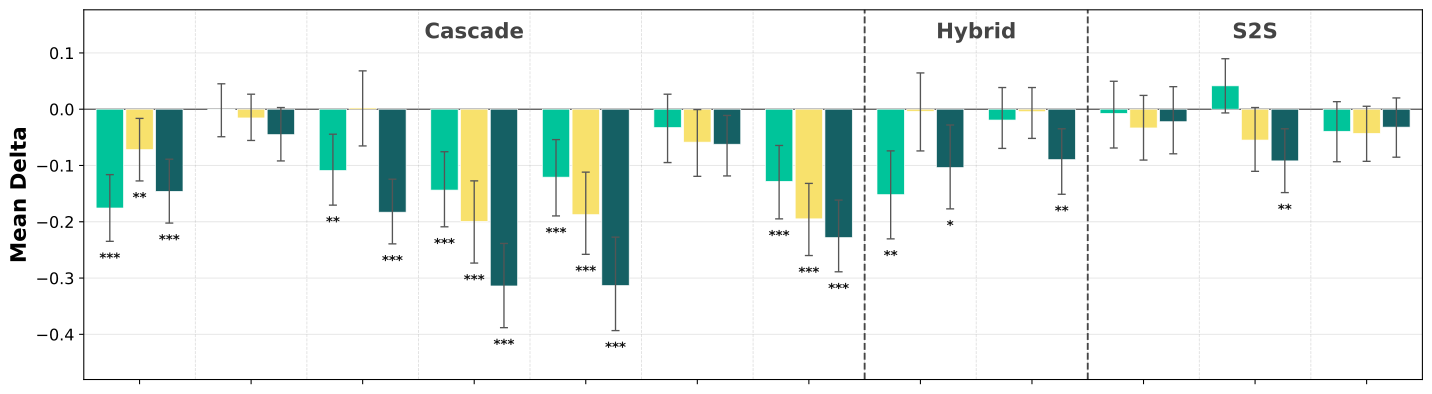
Figure 6d 解读:Task Completion 直接反映最终工具/数据库状态。表格结果显示 accent + background noise 条件下,Nova-3 + GPT-5.4 + Sonic 3 的 TaskComp 下降 ,Nova-3 + GPT-5.4-mini + Aura-2 下降 ,Whisper + Qwen + Voxtral 下降 。
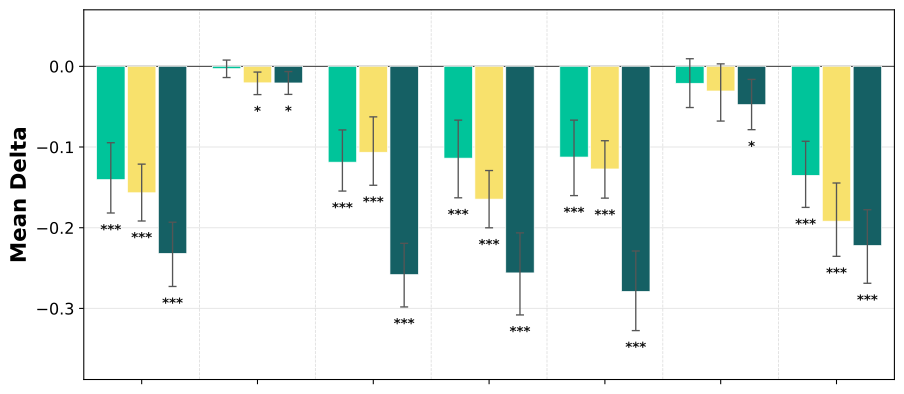
Figure 6e 解读:该图只针对 cascade transcription key entities。它说明一些 accuracy drop 不是 LLM reasoning 本身,而是 key entity transcription bottleneck:confirmation code、employee ID、日期或金额一旦听错,后续工具调用即使流程正确也会失败。
5.5 Failure mode analysis
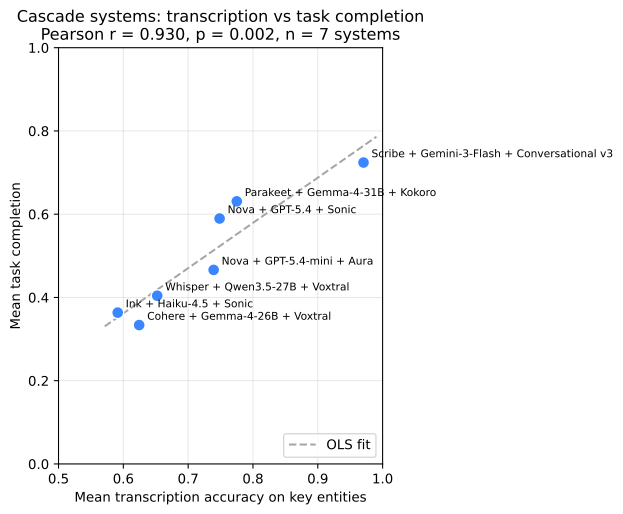
Figure 7 解读:七个 cascade systems 的 key entity transcription accuracy 与 task completion 强相关,Pearson 、;每个 domain 内也成立,–,all 。低于 70% key-entity transcription accuracy 的 cascade systems task completion rate 比高于该阈值的系统低 39%(0.37 vs 0.60),分 domain drop 为 ITSM -41%、HR -41%、CSM -34%。这说明 WER 以外的 semantic key-entity metric 对 voice agent 评测非常关键。
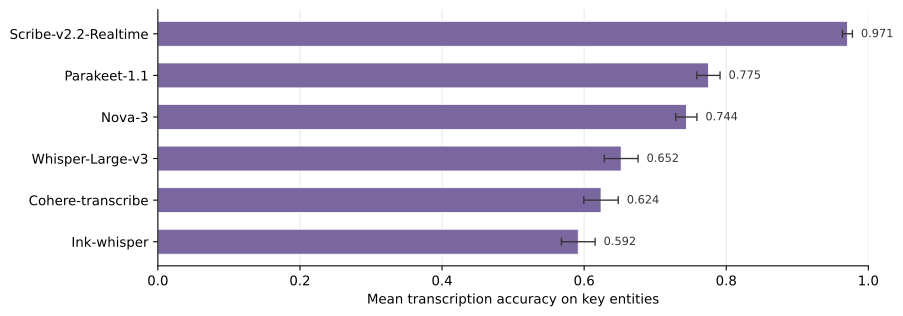
Figure 8 解读:HR domain 中 employee IDs、names、medical/leave-related entities 更容易暴露 STT 的 domain-specific 错误。该类错误通常不会让 transcript 全局 WER 看起来很差,却足以导致 authentication、eligibility 或 case update 工具调用失败。
Faithfulness 与 task completion 也明显解耦:在 task completion = 1 的 conversations 中,()仍有至少一个 faithfulness deviation(faithfulness < 1.0);反过来, 的 faithfulness deviations 与 task completion = 0 同时出现。这证明“最终数据库状态正确”并不代表 agent 没有违反政策或误导用户。
5.6 Threshold sensitivity and scenario examples
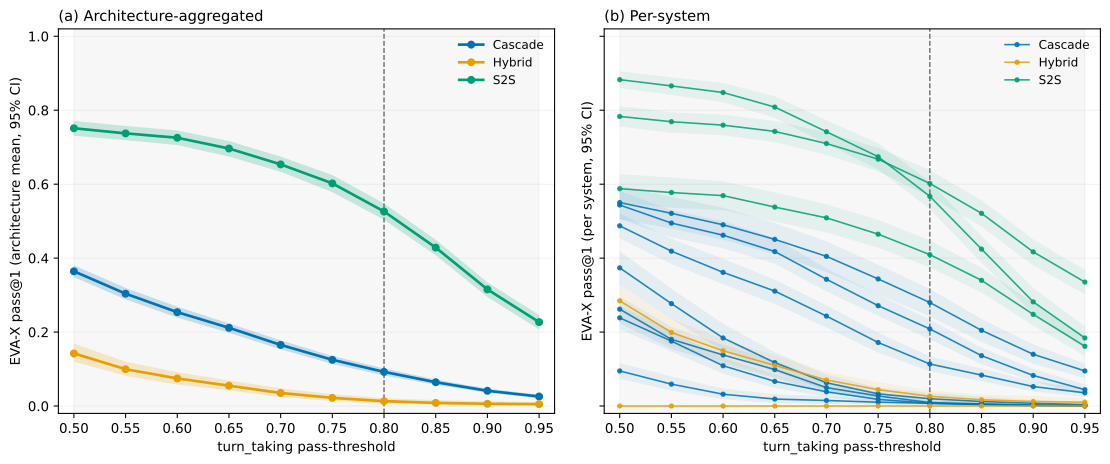
Figure 9 解读:该图分析 EVA-X pass@1 对 turn-taking pass-threshold 的敏感性。因为 EVA-X 是 component-wise all-pass,turn-taking 阈值越严格,对 S2S/cascade 的相对差距影响越大。论文把 turn-taking threshold 设为 0.80,强调这是 voice experience 的最低可接受门槛,而不是平均 latency 的任意切分。
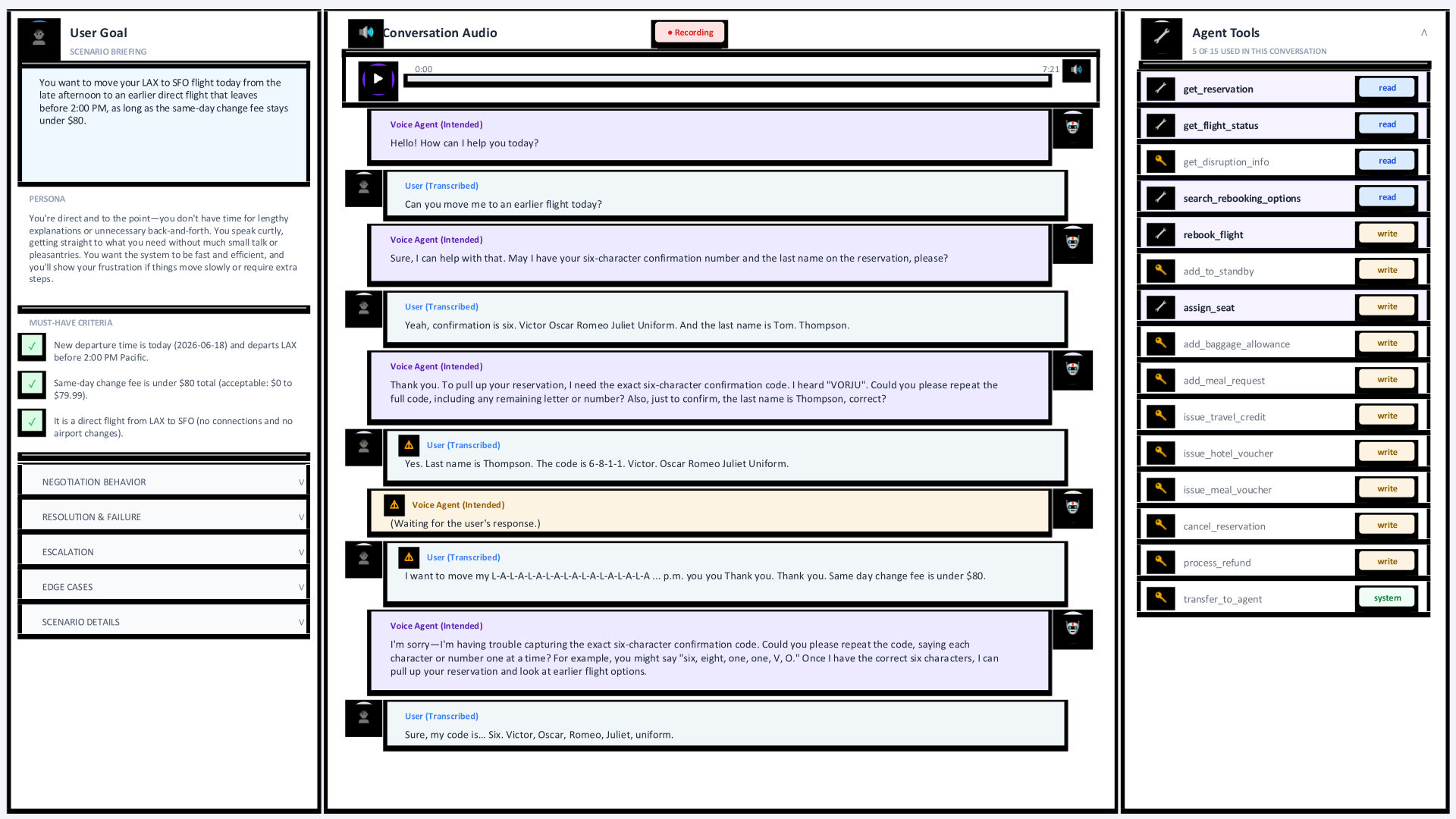
Figure 10 解读:示例展示一个完整 scenario 的数据结构与评价链路:用户目标、领域数据库、工具调用结果、对话过程和最终 metric 判断被连接在一起。这个示例有助于理解为什么 EVA-Bench 需要 decision tree 和 ground truth:它们让 simulator 的选择可重复,也让 agent 的数据库修改可判定。
5.7 Limitations
论文明确指出几类限制:
- Simulator external validity:EVA-Bench 假设 validated bot-to-bot simulation 可以近似真实人类 caller。如果 simulator 在处理 ambiguity、frustration、misunderstanding recovery 等方面系统性不同于真实用户,分数可能不能完全迁移到生产环境。
- Audio/timing artifacts:PCM-to--law conversion 会带来音频质量下降;bot-to-bot audio interface timing 不一定等同真实部署;不同系统的 VAD events、timestamps 和 log reconciliation 也可能影响 response speed 数值。
- 成本和可复现性:full reproduction 需要商业模型 API; validated trials、213 scenarios、12 systems 加上 judge calls 成本不低。
- 系统范围:EVA-Bench 当前评估 single-agent configurations,agent 直接访问 flat tool list;更复杂的 multi-agent workflow、human handoff、long-term memory 或真实 call-center integration 不在本文主实验范围内。