Code as Agent Harness: Toward Executable, Verifiable, and Stateful Agent Systems
Paper: arXiv:2605.18747 Code: YennNing/Awesome-Code-as-Agent-Harness-Papers(官方 companion repo:文献清单、网页与图资源;不是可执行实现) Code reference:
main@06b0d447(2026-05-20)
1. Motivation(研究动机)
这篇 102 页 survey 的核心动机是:LLM agent 的瓶颈已经不只是“模型会不会写代码”,而是“模型被放在什么样的可执行、可检查、可持久化的软件环境里工作”。传统 code-generation 视角把 code 当作最终输出:模型写一段程序,评测器检查是否正确。论文指出,在真实 agentic systems 中,code 越来越像 agent 的 operational substrate:它承载推理过程、动作接口、环境状态、执行反馈、测试、日志、权限、记忆和多 agent 协作,而不仅是任务结束时交付的 artifact。
现有研究的断裂点在于,很多工作分别讨论 Program-of-Thought、tool use、software engineering agent、GUI agent、robot policy、multi-agent coding、sandbox、memory、test feedback,但缺少一个把它们放进同一系统层的框架。论文借用“agent harness”这个概念:harness 是包在 LLM 外面的软件层,包括 tools、APIs、sandboxes、memory、validators、permission boundaries、execution loops 和 feedback channels;它把无状态模型变成能长期执行任务的 agent。本文进一步强调,agent 自己创建、执行、观察、修改和持久化的 code artifact,是这个 harness 中最关键但相对缺少统一讨论的一层。
为什么这个问题值得研究?因为真实 agent 的可靠性通常不是靠一次生成决定的,而是靠闭环:计划下一步、读写 repo 或环境、运行命令、观察错误、保存状态、触发验证、必要时回滚或请求人类批准。如果把 code 只看成 output,就会漏掉 agent 的实际控制面;如果把 harness 只看成“工具列表”,又会漏掉 code 的三个独特属性:executable(可以运行并得到外部反馈)、inspectable(中间状态可被读取、审计和复用)、stateful(任务进展能以文件、repo、trace、test、memory 的形式持久存在)。这也是论文标题中 executable、verifiable、stateful 的来源。
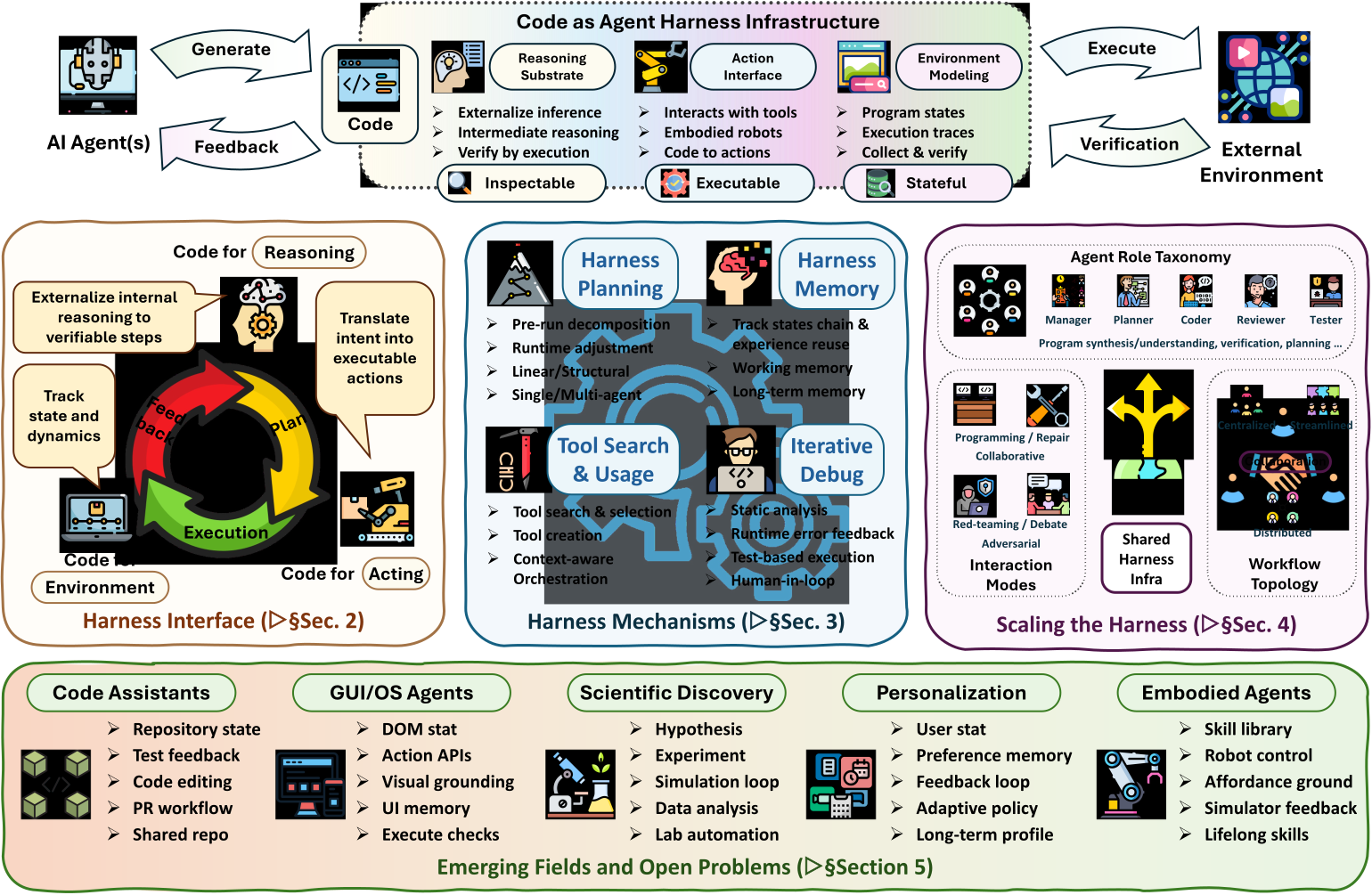
Figure 1 解读:这张 taxonomy 图把全文组织成三层。第一层 Harness Interface 解释 code 如何把模型连接到 reasoning、acting 和 environment modeling;第二层 Harness Mechanisms 解释 planning、memory、tool use、PEV control 和 adaptive optimization 如何让 agent 在长程任务中保持可靠;第三层 Scaling the Harness 解释多个 agent 如何围绕 shared code artifacts、tests、logs、blackboards 和 workflow states 协作。图的重点不是列一个 agent 工具箱,而是说明 code 正在成为 agent 系统的“运行介质”。
2. Idea(核心思想)
核心思想可以概括为:code 不只是 LLM 生成的程序,而是 agent harness 的可执行、可检查、可持久化中介层。模型通过 code 外化推理、发起动作、表示环境、保存状态、接受执行反馈,并把这些 artifact 交给 tests、validators、human review 或其他 agents 继续处理。这个视角把“agent 能力”从模型内部推理扩展到模型—代码—工具—环境—反馈构成的完整闭环系统。
论文的主要创新不是提出一个新模型或新 loss,而是提出一个统一 taxonomy:先看 code 如何作为 interface 进入 agent loop;再看 planning、memory、tool use、PEV loop、telemetry 和 harness optimization 如何把 interface 变成可靠机制;最后看 shared code artifacts 如何支撑 multi-agent coordination、review、verification 和 convergence。这个 taxonomy 覆盖 450+ cited works,把过去分散在 code reasoning、software agents、GUI/OS automation、embodied agents、scientific discovery、personalization 和 multi-agent systems 中的技术放到同一张系统图里。
与普通 code-generation survey 的根本差别在于,本文不把“程序正确性”当作唯一终点,而把“程序作为 agent 所处世界的一部分”当作研究对象。以 SWE-agent / OpenHands / Claude Code 这类系统为例,关键并不是模型一次性生成 patch,而是 harness 是否能提供 repo evidence、shell、tests、logs、permission tier、memory summary、review gate 和 rollback path。以 Voyager / CaP / GUI agents 为例,code 也不是最终答案,而是可执行 policy、skill library 或 DOM/API action interface。
3. Method(方法)
3.1 Overall framework:三层 code-as-harness taxonomy
论文的整体方法是 survey taxonomy construction,而不是训练算法。它把“code as agent harness”拆成三层,并在每层内部继续细分出机制、代表方法和开放问题。为了便于理解,可以把一个 code-centric agent loop 记成: 其中 表示 planning / orchestration,把 goal 转成可执行意图; 表示 sandboxed execution / tool action,让 code 或工具改变环境; 表示 verification / sensors,用 tests、linters、traces、human review 等检查新状态。这个式子是笔记中的概念化记法,不是论文给出的 formal loss;论文强调的是这种 closed-loop harness view。
3.2 Harness Interface:code 作为 reasoning、acting、environment modeling 的接口
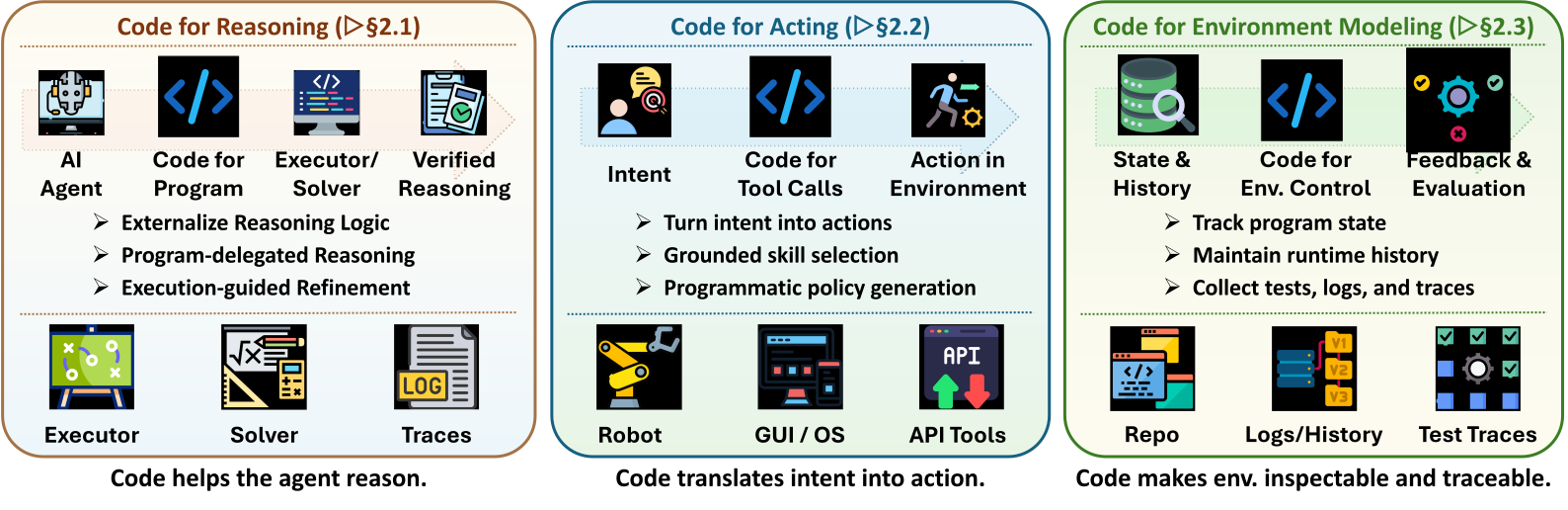
Figure 2 解读:这张图解释 interface 层:code 把 LLM 的自然语言意图变成可执行结构。左侧是 reasoning substrate,例如 Program-of-Thought / PAL 把中间计算交给 Python interpreter;中间是 action interface,例如 robot policy、GUI command、tool call、shell command;右侧是 environment representation,例如 repository state、execution trace、simulator、test suite 和 structured world model。三者共同说明:code 的价值不是语法本身,而是它能被执行、被检查、被持久化。
Code for Reasoning
Code for Reasoning 指 model 把推理过程外化成程序,由 interpreter、symbolic solver 或 runtime trace 给出反馈。Program-delegated reasoning 的代表是 Program-of-Thought / PAL:LLM 负责构造逻辑,具体算术、搜索或状态更新交给程序执行,从而减少纯自然语言 Chain-of-Thought 的计算错误。Formal verification 和 symbolic reasoning interface 则把 graph-of-thought、symbolic planner、SAT/SMT-like checks 或 visual control-flow representation 纳入 harness,让中间状态能 branch、merge、reuse 和 verify。Iterative code-grounded reasoning 进一步把 execution trace 当作训练或修正信号,使 reasoning 不是一次性文本输出,而是生成—执行—观察—修复的轨迹。
Code for Acting
Code for Acting 关注 code 如何把高层意图落成外部世界动作。这里的 code 不是最终答案,而是 action policy:在 embodied setting 中可能是 robot control script、behavior tree、API sequence;在 GUI/OS setting 中可能是 DOM event、accessibility action、adb command、Playwright script;在 software setting 中可能是 shell commands、file edits、test invocation。论文把这部分分成 grounded skill selection、programmatic policy generation 和 lifelong code-based agents。前者从已有 skill/API 中选择可行动作;中者直接生成可执行 policy;后者把生成过的 policy 和 skill library 持久化,让 agent 随任务积累能力。
Code for Environment Modeling
Code for Environment Modeling 把环境本身表示成可执行或可检查的程序状态。Structured world representations 用 repo structure、knowledge graph、scene graph 或 formal state 表示环境对象与约束;execution-trace world modeling 从 runtime traces 中学习或预测状态转移;code-grounded evaluation environments 把 benchmark 变成交互式 runtime,例如 InterCode / SWE-bench / CRUXEval 类环境,其中 action 是 code 或 command,observation 是 execution feedback,success 由 tests 或 validators 给出;verifiable environment construction 则强调构造能被 oracle / tests / simulator 检查的任务世界。
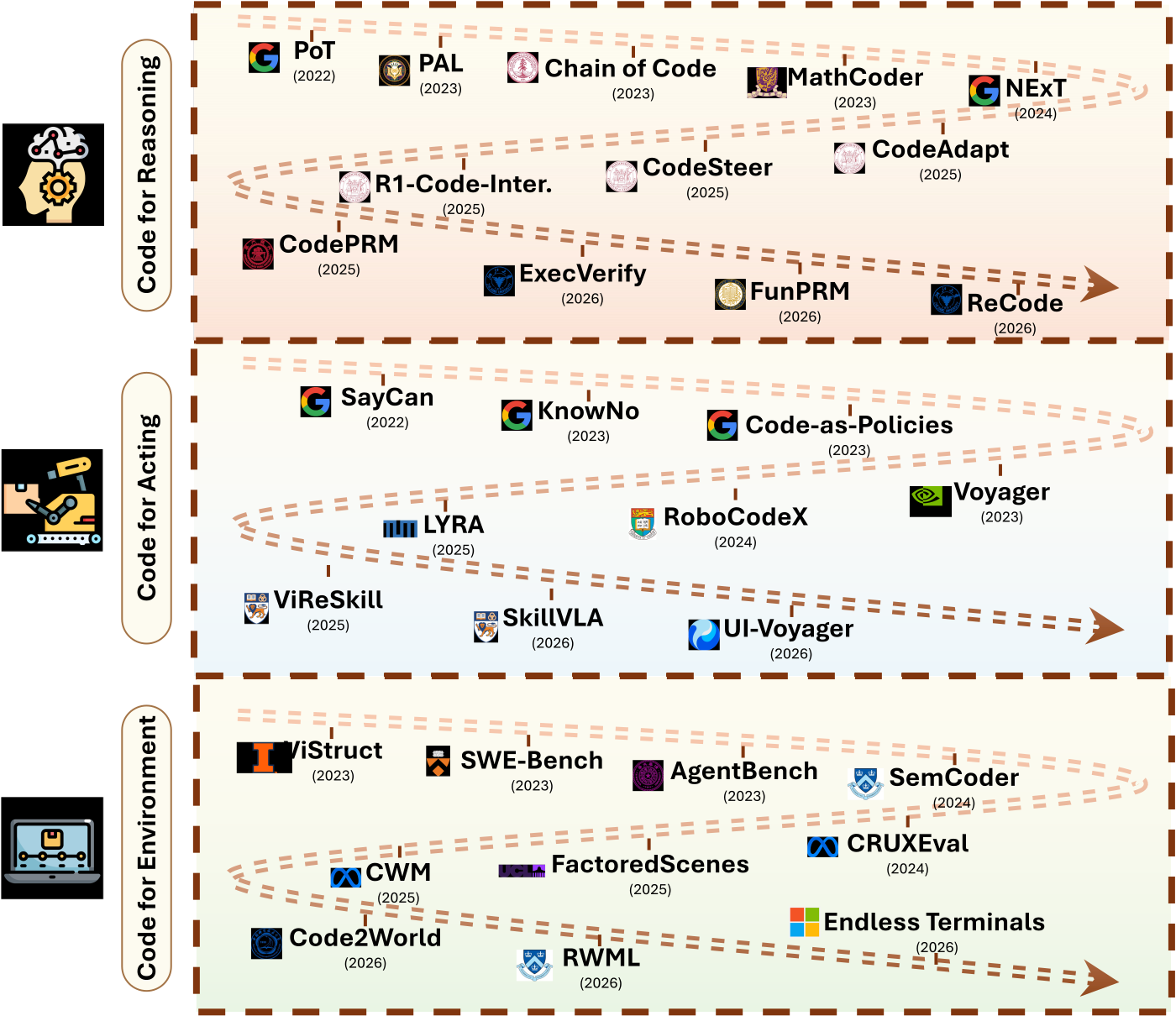
Figure 3 解读:这张 roadmap 按时间和角色列出 interface 层的代表工作。它展示了一个演化趋势:早期 code 主要服务数学/逻辑 reasoning;随后进入 robot、GUI、tool-use action;再进入 repository、simulator、test suite 和 execution traces 构成的 environment model。也就是说,code 在 agent 系统中的角色从“帮模型算东西”扩展到“定义模型能看见什么、能做什么、如何被检查”。
3.3 Harness Mechanisms:planning、memory、tool use 与 PEV control
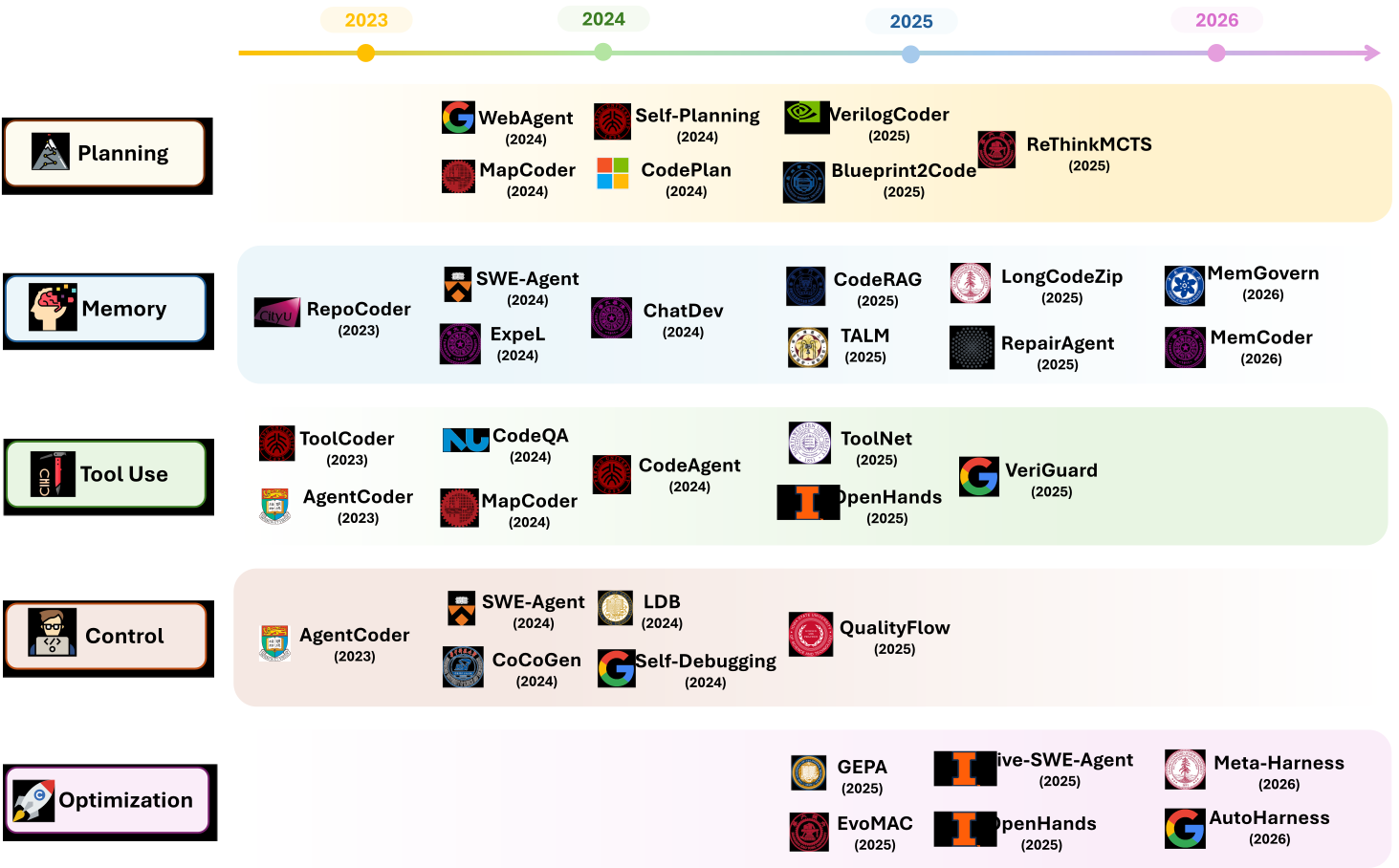
Figure 4 解读:这张图把机制层分成 planning、memory/context、tool use、verification/control 和 adaptive harness engineering。它的重点是:一旦 code 进入 agent loop,问题就不再是单次生成正确程序,而是如何治理一个会不断读写状态、调用工具、运行测试、压缩上下文、修复失败的长程系统。
Planning as harness control
Planning 在这里不是模型内部“想一想”,而是 harness artifact:它把用户目标转成下一次状态转移的 contract,包括要读哪些文件、允许改哪些组件、保持哪些 invariants、如何验证、哪些操作需要 rollback 或 human approval。论文区分四类 planning:linear decomposition planning 把任务拆成串行步骤;structure-grounded planning 用 dependency graph、repo graph、circuit graph 或 knowledge graph 约束行动顺序;search-based planning 用 tree search / MCTS / multiple candidate trajectories 分配 inference-time compute;orchestration-based planning 通过角色分工、阶段路由和 feedback loop 组织多 agent 或多模块系统。
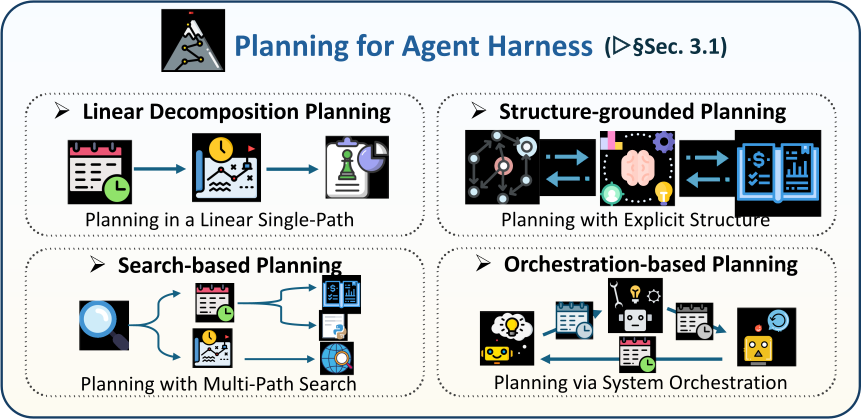
Figure 5 解读:这张图把 planning 从简单 step list 推到更系统的 harness control。linear plan 适合短任务,但容易在失败后卡死;graph-grounded plan 能利用代码结构;search-based plan 能保留多条候选路径;orchestration-based plan 则把 planning 变成 workflow topology 的一部分,例如 manager/planner/coder/tester/reviewer 的流转。
Memory and context engineering
Memory 的核心问题不是“能存多少 token”,而是“哪些状态应该留在 active context,哪些应该 offload 到 durable artifacts”。论文把 memory 分为 working memory、semantic memory、experiential memory、long-term memory、multi-agent memory,以及跨类别的 context compaction / state offloading。Working memory 保存当前任务轨迹中的关键失败、文件、约束和下一步;semantic memory 检索 repo-specific evidence,如 class/function/config/docs/issue;experiential memory 复用跨任务失败案例和 repair trajectory;long-term memory 解决压缩失真、漂移和长期检索治理;multi-agent memory 则让 planner、coder、tester、reviewer 共享意图、证据和状态。
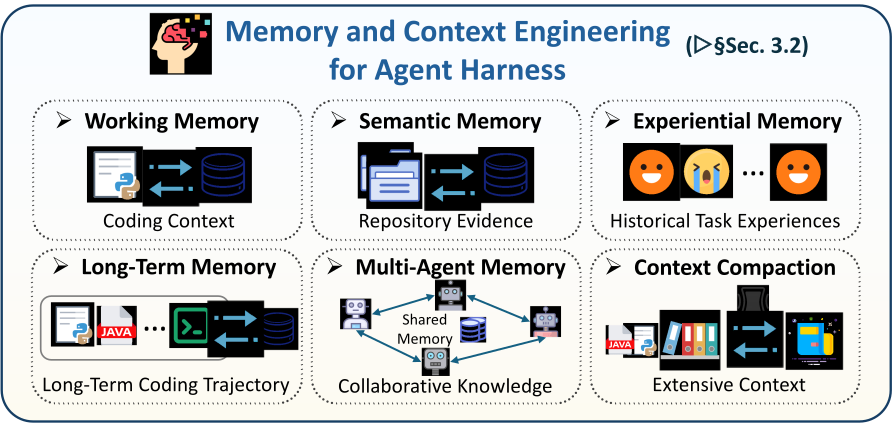
Figure 6 解读:这张图展示 memory 不等于一个 vector DB。对 code agent 来说,memory 包括当前 shell/test 状态、repo 语义证据、过去调试经验、长期任务状态、多 agent shared memory 和 context compaction。真正困难的是 memory governance:如何保证被压缩或检索出的状态仍然忠实、可验证、可追踪。
Tool use as action and observation layer
Tool use 是 harness 的 action/observation 层。Function-oriented tools 补足 API、library、documentation 等模型知识缺口,减少 hallucinated API;environment-interaction tools 让 agent 真正进入 repo、shell、browser、IDE 或 simulator;verification-driven tools 把 compiler、tests、linters、static analyzers、runtime traces 当作 deterministic sensors;workflow-orchestration tools 负责什么时候检索、什么时候编辑、什么时候测试、什么时候升级权限或请求人类批准。论文的判断是:tool use 正从“给模型加 API”演化为“用工具治理一个可执行闭环”。
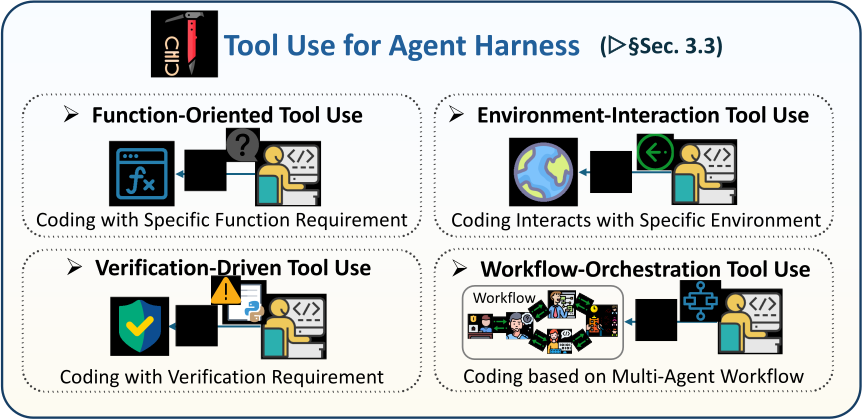
Figure 7 解读:这张图把 tools 按边界和用途分层。单个 API search 只能减少知识缺口;repo/shell/browser tools 让 agent 能行动;tests/linters/trace tools 让行动可被检查;workflow tools 决定这些能力如何串成闭环。对于真实 agent,最后一类往往决定可靠性,因为它控制权限、上下文、重试和停止条件。
Plan-Execute-Verify loop
PEV loop 是论文最像“控制系统”的部分。Plan 阶段外化目标、scope、validation criteria 和 rollback point;Execute 阶段在 sandbox / permission tier 中执行状态转移;Verify 阶段用 deterministic sensors 和 human-review gates 检查结果。论文强调 verification 不只是末尾打分,而是 repair、reflection、termination 和 escalation 的证据来源。失败的 test trace、lint warning、security alert、coverage gap 或 runtime exception 应该决定 agent 是继续本分支、检索新证据、重写 patch、转交 reviewer,还是停止。
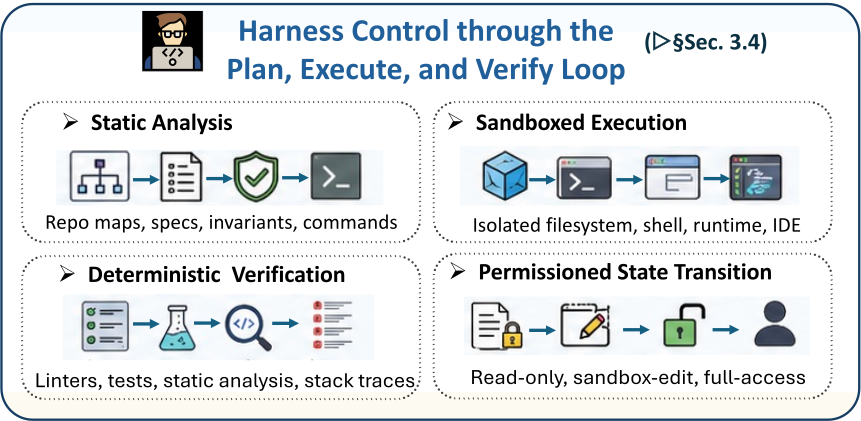
Figure 8 解读:这张图把 debugging 重新解释为 harness-level control。传统 debugging 像是模型犯错后再读错误;PEV 视角下,计划、沙盒执行、权限边界、测试、静态分析、human approval 都是同一个控制回路的组件。它也解释了为什么 agent harness 需要 read-only / sandbox-edit / full-access 等权限层,而不是给模型一个无限制 shell。
Agentic Harness Engineering (AHE)
AHE 把 harness 本身当作可优化对象。Prompt engineering 改 instructions;context engineering 改 evidence packing;AHE 则改 tool schema、planning artifact、memory policy、retrieval strategy、sandbox config、verification sensor、permission tier、routing rule、multi-agent workflow 和 human-review gate。论文提出 deep telemetry 作为 AHE 的基础:记录 prompts、retrieved context、token/cost、tool latency、tool args、permission requests、edited files、sandbox snapshots、commands、test results、stack traces、branch decisions、rejected alternatives、human interventions 和 final outcome。Evolution Agent 可以基于这些 traces 诊断失败、提出 harness mutation、在 held-out tasks 或 replayed traces 上验证,再用 regression suite 和 HITL gate 推广。
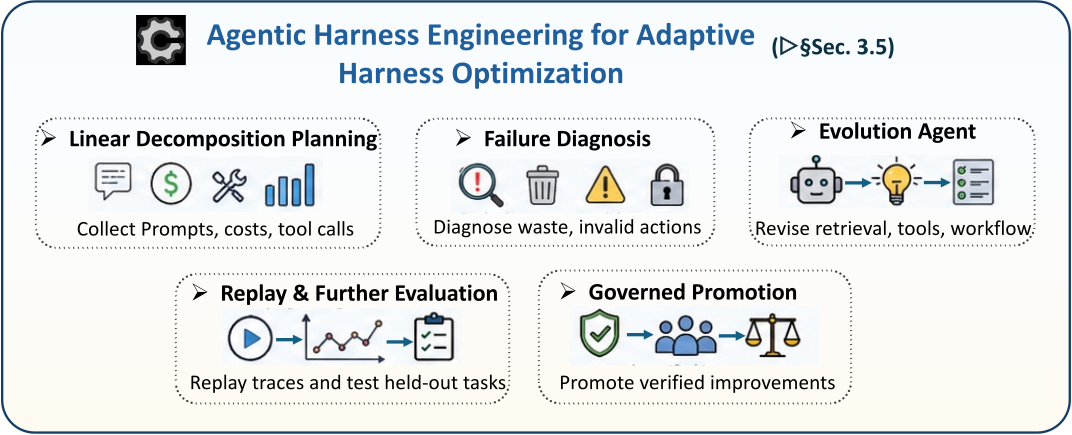
Figure 9 解读:这张图展示了“优化 agent”不是只调 prompt。Telemetry 先把 agent 失败定位到 retrieval、memory、tool schema、sandbox、permission、verification 或 workflow;Evolution Agent 再提出 harness change;最后需要用 regression tests 和 human governance 防止 harness 自我修改引入更大风险。这里的核心风险是 regression-free improvement:不能为了解决新任务 silently break 旧任务。
3.4 Scaling the Harness:multi-agent orchestration over shared code
单 agent 在复杂代码任务中会遇到三个限制:context window 容不下完整 codebase、长历史和 execution trace;一个 generalist 同时做 planning/synthesis/testing/review/debugging 效率低;缺少 shared state 时,任务一长就容易发生隐性状态分叉。论文因此把 multi-agent systems 看作 code-centric harness 的扩展:多个角色围绕 shared artifacts 协作,包括 source files、diffs、tests、logs、schemas、blackboards、review comments 和 workflow states。
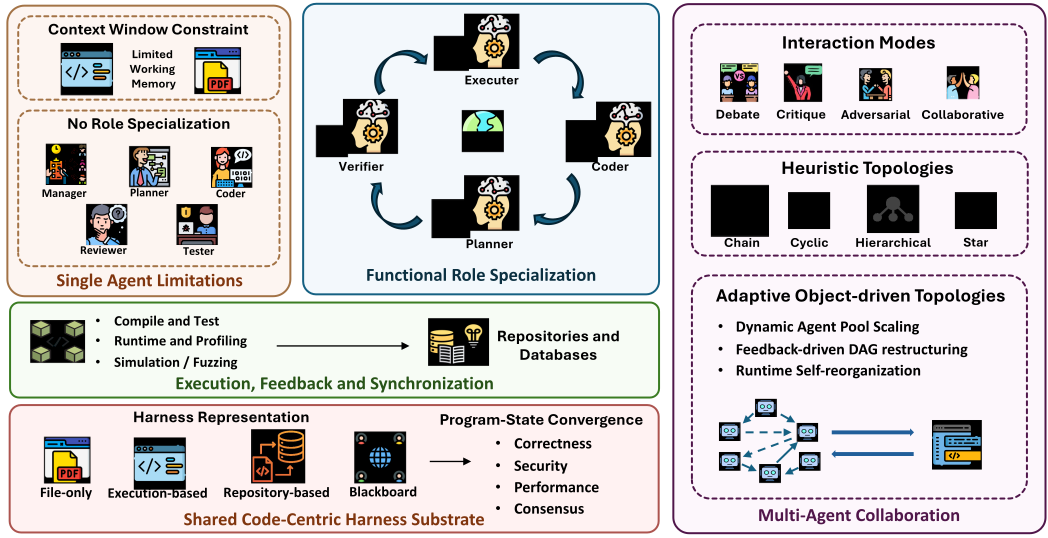
Figure 10 解读:这张图显示 multi-agent harness 的基本模式:manager/planner/coder/reviewer/tester/security/human 等角色不只是互相聊天,而是围绕同一个可执行状态工作。代码、测试、日志和环境反馈提供客观共同参照;如果只有 message passing,没有共享程序状态和验证信号,multi-agent 很容易变成多轮主观讨论。
Role specialization、interaction modes 和 topology
论文把 multi-agent code systems 的角色分成 program synthesis agents、program understanding agents、verification agents、execution agents 和 planning agents。Interaction modes 包括 collaborative synthesis、critique and repair、adversarial validation、reasoning debate 等。Workflow topology 则决定谁和谁通信、按什么顺序、循环几次:pre-defined heuristic topology(waterfall、iterative、hierarchical、star)容易实现但僵硬;objective-driven / adaptive topology 会根据任务状态、失败信号或 verifier feedback 动态调整 agent 路由。
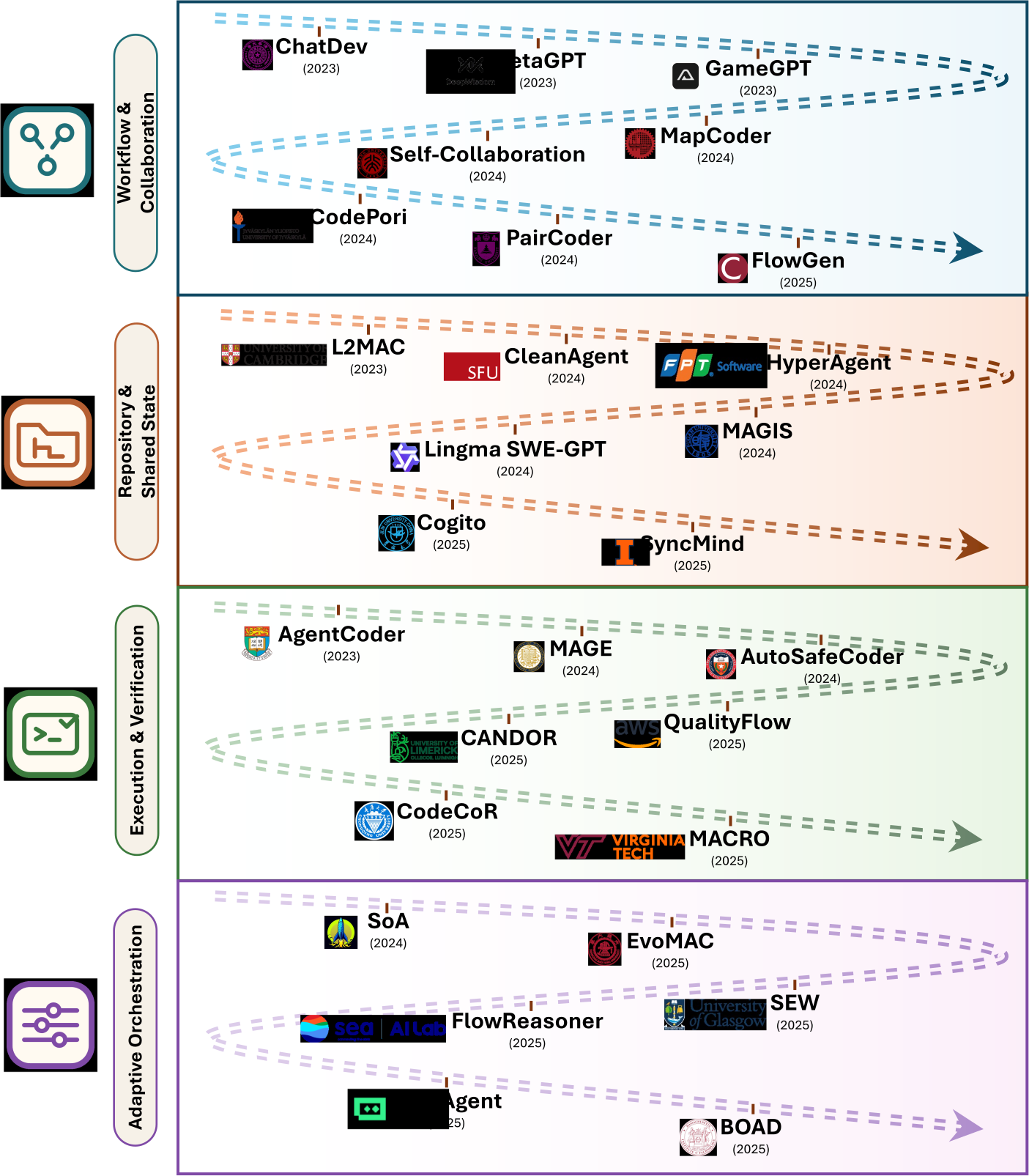
Figure 11 解读:这张 roadmap 把 multi-agent 扩展拆成四类问题:workflow collaboration、shared repository state、execution verification 和 adaptive coordination。它说明“多 agent”不是数量更多,而是 harness 要解决状态同步、冲突检测、验证收敛和拓扑选择。图中纵向结构也提醒读者:如果没有 shared harness representation,多 agent 系统只能靠消息历史维持一致性。
Shared-harness synchronization 和 convergence
Shared-harness synchronization 的难点是让多个 agent 对程序状态有一致视图。最简单的是 sequential handoff:每个 agent 只接前一个 artifact;更复杂的是 shared blackboard、parallel branches with merge、structured context scheduling、hierarchical memory 和 agent pool scaling。论文进一步提出 shared code-centric harness substrate:不仅保存文件,还要保存 read set、write set、assumptions、version dependencies、verifier obligations 和 conflict policy。Convergence 也不应只靠“大家同意”或迭代次数,而应由 executable substrate 提供的 signals 决定:test-gated correctness、security convergence、performance convergence、score-based convergence、consensus convergence 和 implicit convergence。
3.5 Applications and open problems
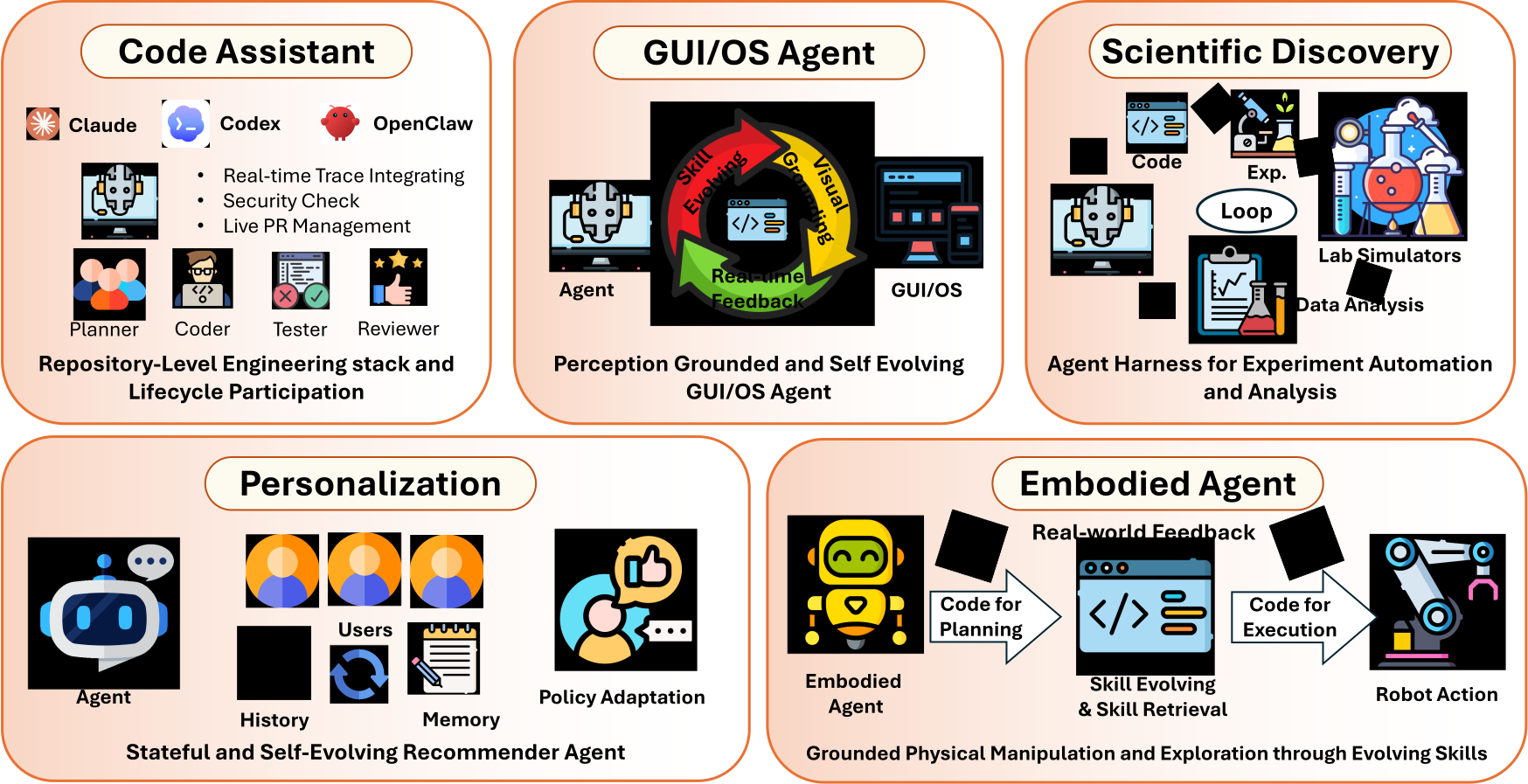
Figure 12 解读:这张图把 code-as-harness 放进应用场景。Code assistants 最直接,因为 repo、tests、CI 和 PR review 天然是 code harness;GUI/OS agents 面对的是 DOM、accessibility tree、event loop 和 rendered state;embodied agents 用 policy code、skills 和 simulator/robot feedback 连接物理世界;scientific discovery agents 把 hypothesis、experiment、analysis 和 reporting 变成可执行 pipeline;personalization agents 则把用户偏好和反馈变成可编辑、可治理的 state artifact。
开放问题主要有七类。第一,harness-level evaluation:只看 final task success 不足以区分 base model、retrieval、tool schema、retry policy、sandbox 和 verifier 的贡献。第二,oracle adequacy:可执行反馈可能给人虚假的正确感,unit tests、GUI checkers、scientific scripts 和 robot simulators 都可能不完备。第三,self-evolving harnesses without regression:harness 自动优化必须有 regression suite 和审计。第四,transactional shared program state:多 agent 协作需要读写集、版本、假设和冲突策略,而不只是共享聊天记录。第五,HITL safety/accountability:部署、网络、credential、finance、healthcare、robot control 等高风险动作必须成为 harness state 和 approval gate。第六,multimodal code-harness systems:GUI screenshot、depth、tactile、plot、microscope image 等非文本状态需要和 code/test 共同对齐。第七,harness engineering science:需要能暴露长程失败、可审计 telemetry 和可比较设计原则的 benchmark。
3.6 Code search and companion-repo mapping
代码搜索结论:arXiv abstract 和 project page 都指向官方 GitHub YennNing/Awesome-Code-as-Agent-Harness-Papers;该 repo 是 companion reading-list / figure repository,包含 README.md、figs/*.png、MISSING_URLS.md 等,不包含模型训练、agent runtime、benchmark runner 或可执行实现。因此本文没有 released implementation 可以用于训练配置、loss、reward、agent loop 或 paper-vs-code formula 对齐;笔记不写基于实现的伪代码,也不声称 repo 是 executable implementation。代码搜索日志保存在本次 scratch dir 的 code_search_log.md。
Code reference:
main@06b0d447(2026-05-20) — official companion repo only; no executable implementation found
| Paper Concept | Source File | Key Class/Function |
|---|---|---|
| Overall taxonomy / citation / project links | README.md | # Awesome Code as Agent Harness Papers, badges, BibTeX block |
| Harness Interface literature organization | README.md | ## 🧩 Harness Interface, Code for Reasoning, Code for Acting, Code for Environment Modeling headings |
| Harness Mechanisms literature organization | README.md | ## 🛠️ Harness Mechanisms, planning, memory, tool usage, feedback-guided debugging headings |
| Scaling multi-agent harness taxonomy | README.md | ## 👥 Scaling the Harness: Multi-Agent Code-Centric Systems and subheadings for roles, topology, synchronization, convergence |
| Application taxonomy | README.md | ## 🚀 Applications and Emerging Fields, code assistants, GUI/OS, embodied, scientific, personalization headings |
| Companion visual assets | figs/*.png | overview / harness_interface / harness_mechanism / scaling_harness / applications images for the project page |
论文公式与 released code 实现差异:本文是 survey,几乎没有算法 loss 或 training recipe;官方 GitHub 又不是实现仓库,所以不存在可逐项 grep 的 loss/code gap。需要显式记录的 gap 是 paper-vs-repo role gap:paper/arXiv 把 GitHub 作为 companion artifact 发布,但 repo 内容是文献 taxonomy 与图资源,不是 agent harness implementation。复现或工程实现不能从该 repo 期待训练脚本、agent loop、sandbox 或 verifier 代码。
4. Experimental Setup(实验设置)
本文没有传统意义上的实验设置:没有新模型训练、没有 baseline comparison、没有 benchmark leaderboard、没有 reported accuracy / pass rate / ablation 指标。它是 survey / position-style taxonomy paper。可被视为“设置”的部分是文献组织范围:截至 2026 年,论文围绕 450+ cited works,把 code-centric agentic AI 分成 Harness Interface、Harness Mechanisms、Scaling the Harness 三层,并在应用层覆盖 coding assistants、GUI/OS agents、autonomous embodied agents、scientific discovery agents 和 personalization / recommendation agents;摘要和网页还把 DevOps、enterprise workflows 等放入更广义应用范围。
因此,本节按 survey 口径记录:
- Data / corpus:论文引用并组织 450+ works;PDF 102 pages;arXiv primary categories 为 cs.CL 与 cs.AI;官方 project page 与 GitHub companion repo 提供 taxonomy / reading-list 入口。
- Baselines:无传统 baselines。论文对比的是研究范式:code-as-output / tool-use-as-addon / message-passing MAS 等旧视角,相对本文的 code-as-harness 视角。
- Metrics:无数值指标。论文反复强调 future harness evaluation 不应只看 final task success,还应评估 intermediate state、trace quality、repair attempts、oracle adequacy、safety gates、shared-state consistency 和 regression-free improvement。
- Artifacts:arXiv PDF/source、project webpage、官方 GitHub reading list;没有 released executable implementation。
5. Experimental Results(实验结果)
因为本文是 survey,没有实验表格结论;“结果”主要是 taxonomy findings 和 research agenda。最重要的结论是:code 在 agent 系统中的角色已经从 final output 演化为 harness substrate。它可以作为 reasoning trace、action policy、environment representation、memory artifact、tool boundary、verification target、shared multi-agent state 和 harness-optimization object。这个结论把许多看似不同的研究方向连接起来:Program-of-Thought、Voyager skill library、SWE-bench-style repo environment、OpenHands/SWE-agent tool loop、GUI/OS automation、scientific discovery pipeline、multi-agent coder-reviewer-tester workflow,都可以被解释为不同层级的 code harness。
第二个结论是,可靠 agent 的关键不是“工具越多越好”,而是工具、记忆、权限、执行和验证是否形成可治理闭环。PEV loop 给出一个清晰的系统模式:plan 必须变成可检查 contract;execute 必须在 sandbox 和 permission tier 中发生;verify 必须通过 deterministic sensors / human review 产生可用于修复或停止的证据。这个视角也解释了为什么现代 agent 工程越来越重视 AGENTS.md、hooks、test gates、context compaction、scratch files、review packets、CI logs、rollback 和 audit trail。
第三个结论是,多 agent 的难点不在“让更多模型说话”,而在 shared harness state。Planner、coder、tester、reviewer、security agent 和 human 需要围绕同一个 executable substrate 协作,并且每次修改都应带有读写集、版本依赖、验证义务和冲突策略。否则,多 agent 只是把单 agent 的上下文漂移和状态不一致放大。论文把 shared code-centric harness substrate 作为下一代多 agent intelligence 的核心抽象,这一点对 repo-level software agents 尤其重要。
最后,论文的开放问题很实际:evaluation 需要超越最终成功率;verification oracle 必须处理不完备 tests 和语义正确性;harness 自动优化不能破坏已有能力;multi-agent state 需要 transaction / conflict resolution;高风险动作需要 HITL safety 和 accountability;多模态 agent 需要把 screenshot、sensor、plot、robot state 等和 code/test 对齐;整个领域需要从 prompt tricks 走向可测量、可审计、可复现的 harness engineering science。对于工程读者,这篇 paper 的最大价值是给了一个诊断 checklist:当 agent 失败时,不要只问“模型不够强吗”,还要问 planning artifact、memory boundary、tool schema、permission tier、sandbox、verifier、telemetry、review gate 和 shared state 哪一层出了问题。