WebSailor: Navigating Super-human Reasoning for Web Agent
Paper: arXiv:2507.02592
Code: Alibaba-NLP/WebAgent
Code reference:main@f72f75d8(2026-02-27)
1. Motivation (研究动机)
WebSailor 关注的不是普通问答或单次搜索,而是接近 DeepResearch 这类 proprietary browsing agent 的复杂信息寻址能力:给定一个带有大量模糊约束的问题,agent 必须在开放互联网中反复搜索、访问、验证和综合证据,逐步压缩不确定性,最后给出一个可验证答案。论文的核心判断是,现有 open-source web agent 在 BrowseComp-en/zh 上接近零分,并不是因为底座模型完全没有知识,而是因为训练数据和训练范式很少显式塑造“在巨大信息空间中系统降低极端不确定性”的策略。传统 single-search、multi-hop QA、甚至很多 ReAct 轨迹都有相对清晰的推理链:先找实体 A,再找属性 B,最后拼接答案。BrowseComp 一类任务则没有预定义路径,错误搜索分支会快速膨胀,tool call 会吞掉上下文,agent 需要决定何时探索、何时剪枝、何时交叉验证。
论文把信息寻址任务按两维划分:初始不确定性高低,以及不确定性是否容易被规约。Level 1 是低不确定性任务,模型内化知识或一次 web search 即可回答;Level 2 是高初始不确定性但路径明确的 multi-hop QA,虽然步骤多,但每步实体连接关系较清楚;Level 3 是本文目标,问题同时具有高不确定性和高规约难度,实体关系非线性耦合、约束被模糊化、搜索入口不明显,需要 creative exploration 而不是固定脚本。这个划分解释了为什么“给模型接 search/visit 工具”不够:工具只是外部接口,真正缺失的是长期浏览中的策略性信息压缩能力。
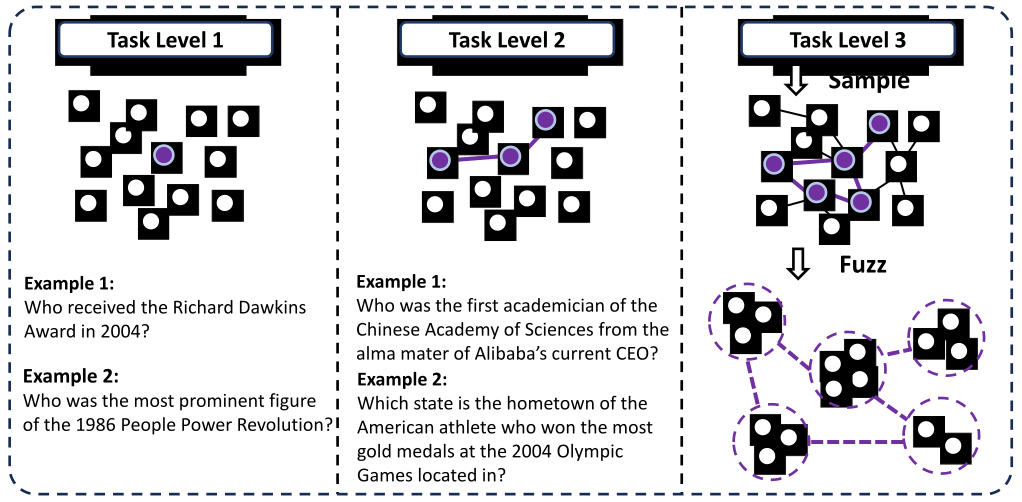
Figure 2 解读:这张图把任务难度从简单事实查询推进到 Level 3 的 fuzzed graph sample。Level 1 的关键是答案附近信息几乎直接可见;Level 2 的关键是实体链条固定,agent 主要执行已知路线;Level 3 则通过 sample + fuzz 把多个实体、时间、属性和关系耦合起来,问题表述中还会把精确信息改写为模糊描述。WebSailor 的训练目标正是让模型熟悉这种“没有显式路线图”的探索模式。
这项工作试图解决三个互相耦合的瓶颈。第一,复杂训练数据难以人工构造。高质量 Level 3 问题必须足够难、真实、可验证,并且不能退化成模板化多跳问答;如果数据只覆盖线性路径,训练出的 agent 在 BrowseComp 上仍然会缺乏探索能力。第二,完整监督轨迹难以获得。强 open-source LRM 如 QwQ-32B 和 DeepSeek-R1 可以解出部分复杂问题,但它们的原生 reasoning 往往冗长、风格化,直接 SFT 会把 verbosity 和 stylistic prior 蒸馏给学生模型,并在几十轮 tool call 后触发 context overload。第三,agentic RL 成本极高。每个 rollout 都不是一次 forward,而是多轮 Thought-Action-Observation 与搜索环境交互;如果沿用 DAPO 式逐批动态补样,慢 rollout 会成为主要瓶颈。
值得研究这个问题的原因在于,一旦 open-source agent 能掌握 Level 3 信息寻址,它不仅能在 BrowseComp 上追近 proprietary agent,还能把这种训练迁移到更简单任务。论文声称 WebSailor 只在高难度数据上训练,却在 GAIA、XBench-DeepSearch 和 SimpleQA 上也保持竞争力,这说明“极端不确定性规约”不是单个 benchmark trick,而可能是 web agent 的基础能力:面对未知问题,先构建探索空间,再用工具收集证据,再用推理压缩候选集合,最后通过交叉验证确认答案。
2. Idea (核心思想)
WebSailor 的核心 insight 是:不要把 deep research 能力看成“更大模型 + 浏览工具”的自然涌现,而应把它拆成可训练的三件事:用 SailorFog-QA 合成 Level 3 高不确定性问题,用 expert LRM 的成功 action-observation trace 重构短而有效的 reasoning supervision,再用 RFT cold start + DUPO 进行低效率环境下的 agentic RL。这个组合直接针对复杂 web navigation 的两个本质难点:数据必须逼近真实互联网中的模糊信息拓扑,训练必须在稀疏奖励和慢交互下仍能筛出有学习价值的样本。
与 WebDancer、Search-o1、R1-Searcher 等已有 open-source web/search agent 相比,WebSailor 的差别不只是换了底座或 prompt,而是把训练集本身推向 Level 3。WebDancer 训练轨迹在论文 Figure 3 中超过 50% 只需两个 tool calls,几乎没有超过十次交互的 long-tail;WebSailor 的 SailorFog-QA 则保留大量超过五次、甚至二十次以上 tool call 的正确轨迹,使模型在训练时就暴露于长程探索、剪枝和综合。与 DeepResearch、Doubao-Search、Grok-3 等 proprietary agent 相比,WebSailor 的目标是把类似推理模式用 open-source 模型和可复现后训练流程逼近出来。
方法上的关键创新可以概括为三层:数据层,随机游走式知识图 + subgraph sampling + information obfuscation 产生真实、模糊、非线性的 QA;监督层,只保留 expert LRM 的成功 action-observation sequence,再用另一个 instruction-following model 补写 short-CoT thought,避免直接模仿长而风格化的 LRM 输出;RL 层,在 RFT 后使用 Duplicating Sampling Policy Optimization (DUPO),先过滤 rollout 全对的简单 case,再在训练 batch 内复制有非零 reward 方差的样本填坑,替代慢速 sequential resampling。
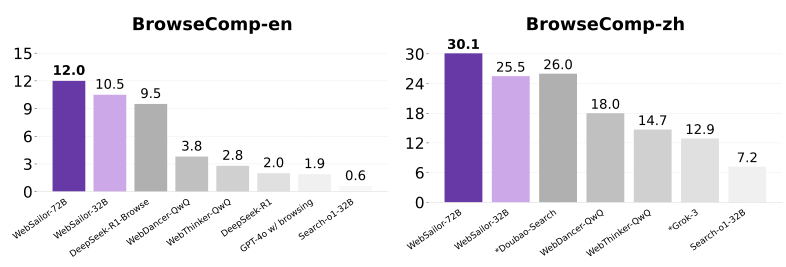
Figure 1 解读:图 1 展示 WebSailor 在 BrowseComp-en/zh 上相对 open-source agents 和 proprietary browsing agents 的位置。论文正文的 Table 1 给出精确值:WebSailor-72B 在 BrowseComp-en/zh 上为 12.0/30.1,WebSailor-32B 为 10.5/25.5,均明显超过 WebDancer-QwQ 的 3.8/18.0 和 WebThinker-RL 的 2.8/7.3;在 BrowseComp-zh 上,WebSailor-72B 接近 Doubao browsing 的 26.0,并缩小与 DeepResearch 42.9 的差距。图的重点不是绝对分数已经超过 DeepResearch,而是 open-source agent 从近零推进到能与部分 proprietary browsing 系统同台比较。
3. Method (方法)
3.1 问题形式化:ReAct 轨迹和 Level 3 搜索空间
WebSailor 采用 ReAct 框架。给定问题后,agent 反复生成 Thought、执行 Action、接收 Observation;Action 空间包含 final answer、search 和 visit。search 接收若干查询并返回每个 query 的 top-10 titles/snippets/URLs;visit 接收 URL 及访问目标,先用 Jina 获取网页内容,再由 summary model 根据 goal 抽取相关信息。完整轨迹写成: 其中 分别是第 轮 thought、action 和 observation;第 步的 thought 与 action 来自策略 。这一定义很重要,因为 WebSailor 的训练不是只优化 final answer,而是优化中间决策:在上下文、历史搜索结果和网页摘要都不断变化时,模型如何产生下一步搜索、访问或收束答案。
从直觉上看,Level 3 任务的难点不在“知识点很偏”本身,而在搜索空间组合爆炸。一个模糊时间描述可能对应多个年份,一个带首字母的机构描述可能对应很多实体,一个定性数量约束可能对应多个候选。agent 如果像 multi-hop QA 一样线性前进,就会被错误实体带偏;如果暴力展开,则会需要成百上千次 tool call 并超出 context window。WebSailor 因而把训练目标定位为:让 agent 学会把部分证据组织成候选集合、主动寻找区分性约束、丢弃低置信分支,并在最终答案前执行 cross-check。
3.2 SailorFog-QA:用图结构和模糊化合成 Level 3 QA
SailorFog-QA 的构造从“rare entity”开始。论文 Appendix A.2 说明,作者先用 Wikidata SPARQL 根据数据库规则拿到稀有实体,然后通过 search/visit 获取初始节点的特征,把它设为 expansion node。接着从 expansion node 的特征中抽取相关实体和关系,形成图中的新节点与边;每轮以一定概率选择新相关实体作为下一个 expansion node,或回到历史节点继续扩展,直到图边数达到预设值。这个随机游走式过程会天然生成非线性、重叠、耦合的实体关系,避免只得到 Level 2 那种直链 multi-hop。
在有了复杂 graph 后,系统会采样不同 topology 的 subgraph,并基于这些 coupled entities and relations 生成 question-answer pair。关键步骤是 information obfuscation:把精确日期改成“early 2010s”或“around the mid-5th century”,把名称改成“someone with the initial F”这类部分遮蔽,把数量属性改成“less than 1%”这类定性描述。这样问题仍然 grounded in real-world internet,但初始不确定性被刻意放大,agent 不能直接 lookup,而必须比较多个候选并综合关系。
SailorFog-QA 有三点方法价值。第一,数据来自真实互联网实体和网页信息,训练分布更接近 web agent 的部署环境。第二,subgraph topology 多样,会自然产生 deduction、composition、comparison 等不同 reasoning pattern,而不是手写模板。第三,潜在问题数量随图大小非线性增长,适合 scale。论文给出的示例包括:通过“late antique writer around mid-5th century death year”和“scientific chronology”交叉定位答案,或者通过南美首都相关歌曲、地方 civic honor、Colombia arts institution 等模糊约束定位音乐作品。这些问题在人类两小时检索约束下也很难,因为一开始没有显然入口。
def build_sailorfog_qa(seed_rules, max_edges, web_tools, obfuscator):
    graph = Graph()
    seed = wikidata_sparql_sample_rare_entity(seed_rules)
    graph.add_node(seed, features=web_tools.search_and_visit(seed))
    frontier = [seed]

    while graph.num_edges() < max_edges:
        node = random.choice(frontier if random.random() < 0.5 else graph.nodes())
        features = web_tools.search_and_visit(node)
        related_entities = extract_related_entities_and_relations(features)
        for entity, relation in related_entities:
            graph.add_edge(node, entity, relation=relation)
            graph.nodes[entity]["features"] = web_tools.search_and_visit(entity)
            frontier.append(entity)

    subgraph = sample_diverse_topology_subgraph(graph)
    clean_question, answer = formulate_qa_from_subgraph(subgraph)
    foggy_question = obfuscator.mask_dates_names_quantities(clean_question)
    return {"question": foggy_question, "answer": answer, "subgraph": subgraph}
这段伪代码对应论文 §3.1 和 Appendix A.2;released repo 在 WebAgent/WebSailor/dataset/sailorfog-QA.jsonl 提供样例数据,但当前 main@f72f75d8 没有公开完整数据生成脚本,因此这里的构造逻辑是 paper-derived pseudocode,而不是逐行复现代码。
3.3 Expert trajectory reconstruction:保留 action-observation,重构 short-CoT
合成 QA 后,下一步是生成可用于 cold start 的轨迹。直接使用 QwQ-32B 等 expert LRM 的完整输出有两个问题:一是 stylistic contamination,模型会模仿 teacher 冗长而强风格的推理;二是 context overload,几十次 tool call 的长 reasoning 会迅速挤占上下文,使后续训练和推理不可控。因此 WebSailor 采取“去思维、留行动、再补短思维”的方案。
具体做法是先提示 expert open-source LRM 生成完整解题轨迹,然后丢弃原始 verbose thoughts,只保留成功的 action-observation sequence 。这条序列保留了解题路径的 what/how,但缺少 why。接着对每一步 ,给定历史 以及 expert 的动作 和观察 ,用另一个强 instruction-following model 生成简洁 thought: 最终轨迹为 。这个设计的直觉是,agent 需要学会“为什么下一步要查这个、访问那个、排除某候选”,但不需要复制 teacher 的长篇内心独白。short-CoT 让监督信号更接近 action-oriented planning,也为后续长程 agentic RL 留出上下文预算。
def reconstruct_short_cot(expert_trace, thought_model):
    actions_observations = [(step.action, step.observation) for step in expert_trace]
    rebuilt_history = []
    for action, observation in actions_observations:
        thought = thought_model.generate(
            history=rebuilt_history,
            chosen_action=action,
            next_observation=observation,
            style="concise action-oriented short-CoT",
        )
        rebuilt_history.append({"thought": thought, "action": action, "observation": observation})
    return rebuilt_history
3.4 RFT cold start:少量高质量轨迹先建立 tool-use skeleton
论文虽然引用了近期“跳过 SFT、直接 RL”的趋势,但在 web agent 场景中明确反驳了这种做法。原因是 Level 3 browsing reward 极稀疏:初始 policy 往往不会得到正确答案,RL feedback 接近零;同时 rollout 慢,靠 self-exploration 从零发现长程策略成本太高。因此 WebSailor 先做一个 modest RFT cold start,使用略多于 2k 条高质量样本,让模型掌握基本 tool-use 格式和 long-horizon reasoning skeleton。
RFT 过滤有三层。第一,只保留最终答案正确的 expert trajectory,保证监督信号可靠。第二,丢弃超过 32k tokens 的轨迹,因为 expert model 的长上下文能力可能高于 policy model,过长样本会导致训练和推理不可承受。第三,只保留超过 5 次 tool calls 的轨迹,因为复杂 planning strategy 通常出现在较长决策序列中;这也与 Figure 3 的 long-tail 复杂度分布一致。训练目标只增强 agent 生成 thoughts/actions 的能力,环境 observations 对应 tokens 会被 mask,不进入 loss。
def filter_and_train_rft(trajectories, model, optimizer):
    kept = []
    for traj in trajectories:
        if not traj.final_answer_is_correct:
            continue
        if traj.token_count > 32_000:
            continue
        if traj.num_tool_calls <= 5:
            continue
        kept.append(traj)

    for batch in dataloader(kept, batch_size=32):
        input_ids, labels = format_react_trajectory(batch)
        labels = mask_environment_observation_tokens(labels, tags=("<tool_response>", "</tool_response>"))
        loss = model(input_ids=input_ids, labels=labels).loss
        loss.backward()
        optimizer.step()
        optimizer.zero_grad()
论文 Appendix A.4 给出训练配置:SFT 使用 Megatron,batch size 32,learning rate ,minimum LR ,warmup + cosine decay schedule,weight decay 0.1。当前 released repo 没有 Megatron SFT launch script 或 config 文件,因此这些训练数值只能锚定论文 Appendix A.4;released code 中可核验的是推理/评测脚本而非 SFT 训练脚本。
3.5 DUPO:用 batch 内复制替代慢速动态补样
RFT 后,WebSailor 使用 Duplicating Sampling Policy Optimization (DUPO) 做 agentic RL。Agent RL 与普通 reasoning RL 的不同在于 rollout 要与 search/visit 环境多轮交互,速度远慢于纯文本 generation。DAPO 的 dynamic sampling 会过滤全对或全错 case,再补入新的 QA;但在 agent 场景中,这可能要求同一 batch 内顺序跑更多新 case,进一步拖慢训练。DUPO 的解决思路是把筛选提前和本地化:训练前先去掉 8 个 rollouts 全对的简单 case;训练中如果某 case 的 group reward 标准差为 0,即全对或全错,就在当前 batch 中用其他 reward 方差非零的 case 随机复制填补空位,而不是重新 rollout 新 QA。论文称相对 DAPO 约有 2–3 倍 speedup。
DUPO 的目标继承 group-relative advantage 思路。对问题答案对 ,从 old policy 采样 个输出,目标近似为 token-level clipped policy gradient:
约束为 ,也就是同组不能全错或全对。重要性采样比率和 advantage 为:
这里 指模型生成 tokens,不是整条 tool trajectory;context 包含模型生成内容和 tool response。reward 是 rule-based format validation 和 answer validation 的加权和:
format score 检查 <think>、<tool_call> 等 tag 和 ReAct 序列是否合规;answer score 用 LLM-as-a-judge 判断最终答案是否正确。这个 reward 设计体现了 web agent 的双重需求:格式错会导致工具无法调用,答案错则表示不确定性没有被成功压缩。
def dupo_update(policy, old_policy, batch_qas, reward_fn, optimizer, group_size=8):
    # pretraining-time filter: remove cases that are too easy under 8 rollouts
    candidate_groups = []
    for qa in batch_qas:
        outputs = rollout_agent(old_policy, qa, n=group_size)
        rewards = torch.tensor([reward_fn(qa.answer, out) for out in outputs])
        if rewards.std() > 0:
            candidate_groups.append((qa, outputs, rewards))

    # in-batch duplication: fill removed slots with informative non-zero-std cases
    while len(candidate_groups) < len(batch_qas):
        candidate_groups.append(random.choice(candidate_groups))

    loss_terms = []
    for qa, outputs, rewards in candidate_groups:
        advantages = (rewards - rewards.mean()) / (rewards.std() + 1e-8)
        for output, advantage in zip(outputs, advantages):
            logp = policy.token_logprobs(output.generated_tokens, context=output.context)
            old_logp = old_policy.token_logprobs(output.generated_tokens, context=output.context)
            ratio = torch.exp(logp - old_logp)
            clipped = ratio.clamp(1 - eps_low, 1 + eps_high)
            token_loss = -torch.min(ratio * advantage, clipped * advantage).mean()
            loss_terms.append(token_loss)

    loss = torch.stack(loss_terms).mean()
    loss.backward()
    optimizer.step()
    optimizer.zero_grad()
RL 配置来自 Appendix A.4:每组 rollout number 为 8,temperature=1.0,top-p=1.0,batch size 128,mini batch size 32,learning rate 。论文还说明 RL 最多训练 50 steps,这是由 synchronous RL framework 的效率瓶颈限制;未来会迁移到 asynchronous training。当前 released repo 没有 DUPO/verl 训练脚本,因此伪代码按论文公式和描述重建;这不是逐行代码实现。
3.6 Released code:当前公开代码主要覆盖 inference/evaluation/tool wrappers
代码搜索结果显示,论文对应公共仓库是 Alibaba-NLP/WebAgent,本笔记锚定 main@f72f75d8 (2026-02-27)。仓库中 WebAgent/WebSailor/README.md、dataset/sailorfog-QA.jsonl 和 src/ 提供 WebSailor 介绍、样例数据、ReAct 推理、tool wrappers 与评测脚本;没有公开完整 SailorFog-QA 生成、RFT、DUPO 或 Megatron/verl training launch config。论文公式与 released code 实现差异:论文 §4.2 定义了 DUPO 目标和 batch duplication 策略,但 main@f72f75d8 的 WebAgent/WebSailor/src/ 未包含对应训练实现;因此本笔记对 DUPO 的伪代码以论文公式为准,对可执行推理/评测部分以 released code 为准。
react_agent.py 中的 MultiTurnReactAgent 是推理核心。它保存 llm_generate_cfg 和 llm_local_path,调用 OpenAI-compatible server,生成时使用 temperature 和 top_p,并设置 stop sequences 避免模型直接生成 <tool_response>。_run 函数从数据中取 question/answer,拼接 system/user prompt,循环调用模型;如果 assistant content 中有 <tool_call>...</tool_call>,就解析 JSON,调用 _call_tool,再把结果包在 <tool_response>...</tool_response> 中作为 user message 追加;如果出现 <answer>...</answer>,就停止并抽取 prediction。若达到调用次数上限仍未回答,则记录 exceed available llm calls 或触发最终回答提示。
class WebSailorReactLoop:
    def run(self, question, answer, model, tools, max_llm_calls=100):
        messages = [
            {"role": "system", "content": SYSTEM_PROMPT_MULTI + current_date()},
            {"role": "user", "content": USER_PROMPT + question},
        ]
        for _ in range(max_llm_calls):
            content = call_openai_compatible_server(
                model=model,
                messages=messages,
                temperature=0.6,
                top_p=0.95,
                stop=["<tool_response>"],
            )
            messages.append({"role": "assistant", "content": strip_tool_response(content)})

            if has_tool_call(content):
                call = json.loads(extract_between(content, "<tool_call>", "</tool_call>"))
                result = tools[call["name"]](**call["arguments"])
                messages.append({"role": "user", "content": f"<tool_response>\n{result}\n</tool_response>"})

            if has_answer(content):
                return {"prediction": extract_answer(content), "messages": messages, "termination": "answer"}

        return {"prediction": "No answer found.", "messages": messages, "termination": "exceed available llm calls"}
run_multi_react.py 负责多轮 rollout 和并发评测。它支持 gaia、browsecomp_zh、browsecomp_en、simple_qa、xbench-deepsearch、hle 等 dataset,默认 temperature=0.6、top_p=0.95、max_workers=20、roll_out_count=3。脚本按 output_base/model_name_sglang/dataset_name/ 建目录,每个 rollout 写 iter{idx}.jsonl,会跳过已处理 question,并用 ThreadPoolExecutor 并发调用 MultiTurnReactAgent._run。llm_cfg 中还设 max_input_tokens=320000、max_retries=10、model_type='qwen_dashscope'。这些是 released inference/eval 代码中的实际覆盖值,不是论文 Appendix 的训练参数。
def run_parallel_rollouts(model, dataset_items, output_dir, roll_out_count=3, max_workers=20):
    for rollout_idx in range(1, roll_out_count + 1):
        output_file = output_dir / f"iter{rollout_idx}.jsonl"
        processed = load_processed_questions(output_file)
        tasks = [{"item": item, "rollout_id": rollout_idx} for item in dataset_items if item["question"] not in processed]
        agent = MultiTurnReactAgent(
            llm={"model": model, "generate_cfg": {"max_input_tokens": 320000, "max_retries": 10, "temperature": 0.6, "top_p": 0.95}},
            function_list=["search", "visit"],
            system_message=SYSTEM_PROMPT_MULTI + "\nCurrent date: " + today(),
        )
        with ThreadPoolExecutor(max_workers=max_workers) as pool:
            for result in as_completed([pool.submit(agent._run, task, model, USER_PROMPT) for task in tasks]):
                append_jsonl(output_file, result.result())
tool_search.py 注册 search 工具,参数是 query array;实现中使用 GOOGLE_SEARCH_KEY 调用 https://google.serper.dev/search,每个 query 请求 top-10 organic results,并用 ThreadPoolExecutor(max_workers=3) 并发多个 query。tool_visit.py 注册 visit 工具,参数是 URL(s) 和 goal;它通过 Jina 读取网页内容,再使用 extractor prompt 调用 summary model,从 webpage_content 中抽取 rational/evidence/summary。evaluate.py 使用不同 judge prompt 处理 GAIA/XBench/BrowseComp/SimpleQA,计算 Pass@1、Pass@3、Best Pass@1、Avg Pass@3,并统计 invalid、extra length、平均 tool action、visit/search action、answer length 与 thinking length。
Code reference:
main@f72f75d8(2026-02-27) — pseudocode and mapping based on this commit
| Paper Concept | Source File | Key Class/Function |
|---|---|---|
| WebSailor overview / model links / training paradigm summary | WebAgent/WebSailor/README.md | README sections: Introduction, Quick Start, Complete Training Paradigm |
| SailorFog-QA sample data | WebAgent/WebSailor/dataset/sailorfog-QA.jsonl | JSONL examples |
| ReAct inference loop | WebAgent/WebSailor/src/react_agent.py | MultiTurnReactAgent.__init__, call_server, count_tokens, _run |
| Parallel rollout generation | WebAgent/WebSailor/src/run_multi_react.py | argument parser, ThreadPoolExecutor, rollout JSONL writing |
| Search tool wrapper | WebAgent/WebSailor/src/tool_search.py | Search.google_search, Search.call |
| Visit + summarization wrapper | WebAgent/WebSailor/src/tool_visit.py | Visit.call, jina_readpage, call_server |
| Evaluation and pass@k | WebAgent/WebSailor/src/evaluate.py | call_llm_judge, calculate_pass_at_k, calculate_best_pass_at_1, aggregate_statistics |
| Evaluation launch defaults | WebAgent/WebSailor/src/run.sh | dataset/model/output env vars, TEMPERATURE=0.6 |
| DUPO / RFT training | released repo gap | paper §4 + Appendix A.4; no full training implementation in main@f72f75d8 |
4. Experimental Setup (实验设置)
模型方面,论文在 Qwen-2.5-3B、Qwen-2.5-7B、Qwen-2.5-32B、Qwen-2.5-72B 上执行 RFT 和 RL,得到 WebSailor-3B/7B/32B/72B。主要 benchmark 有四个:BrowseComp-en,用于评估 agent 在英文 hard-to-find、multi-faceted internet information 上的能力;BrowseComp-zh,是中文版本;GAIA,要求 tool use 和 multi-modality,论文只使用 text-only validation subset 中的 103 cases;XBench-DeepSearch,是动态、professional-aligned 的 deep information retrieval 与复杂 search benchmark。额外分析中还用 SimpleQA 验证 Level 1 兼容性;完整 SimpleQA 有 4,326 QA,论文随机采样 200 QA 进行评测。
Baseline 分三组。Direct Inference 包括 Qwen-2.5-32B、Qwen-2.5-72B、GPT-4o、GPT-4.1,以及 reasoning models QwQ-32B、o4-mini、DeepSeek-R1;小模型没有列入 direct baseline,因为它们在 BrowseComp 上基本为零。Proprietary Browsing Agents 包括 OpenAI DeepResearch、Grok-DeepResearch、Doubao with Deep Think and Search;由于 API 可访问性或成本,并非所有 benchmark 都覆盖。Open-source Agents 包括 Search-o1、WebThinker、R1-Searcher、WebDancer 等;这些是 WebSailor 需要正面超越的 open-source web/search agent。
评测指标默认 pass@k。pass@1 在非零 temperature 下报告,温度和 top-p 设置为 0.6 和 0.95;accuracy 由 LLM-as-a-judge 判断。pass@1 公式为:
其中 表示第 个 response 是否正确;当 时重复生成 次。Released code 中 evaluate.py 对 calculate_pass_at_k 的实现是:对每个 query 检查前 个 round 的 judgement 中是否包含 Correct,若包含则该 query 计为通过;calculate_best_pass_at_1 则取三轮中单轮 Pass@1 的最大值。
训练配置需要区分论文训练和 released inference/eval 代码。论文 Appendix A.4:SFT 使用 Megatron,batch size 32,LR ,minimum LR ,warmup + cosine decay,weight decay 0.1;RL 使用 verl,group rollout number 8,temperature 1.0,top-p 1.0,batch size 128,mini batch size 32,LR 。Released code 中没有对应训练 launch script;
实际可核验的 eval defaults 是 WebAgent/WebSailor/src/run_multi_react.py 的 temperature=0.6、top_p=0.95、max_workers=20、roll_out_count=3、max_input_tokens=320000、max_retries=10,以及 WebAgent/WebSailor/src/run.sh 的 TEMPERATURE=0.6。
工具实现方面,Appendix A.1 与代码一致地说明 search 返回每个 query top-10 结果,visit 用 Jina 读取网页并用 Qwen-2.5-72B summary model 按 goal 总结。
实验设计还有两个关键 analysis。第一,用 expert-generated correct trajectories 的 tool call 数量作为复杂度 proxy,比对 SailorFog-QA、BrowseComp-en 和 WebDancer-QA。第二,比对 RFT 后 RL 的 Pass@1/Pass@3 增益,以及直接 RL 与 RFT cold-start + RL 的收敛差异,以验证 RFT 和 DUPO 不只是工程加速,而是确实改变了 long-horizon tool-use 行为。
5. Experimental Results (实验结果)
主结果见 Table 1。Direct Inference 在 BrowseComp-en/zh 上普遍很低:Qwen-2.5-32B 为 0.6/3.9,Qwen-2.5-72B 为 0.6/7.0,GPT-4o 为 0.6/6.2,GPT-4.1 为 1.5/14.4;reasoning models 稍好,o4-mini 为 6.1/15.2,DeepSeek-R1 为 2.0/26.3,但它们没有 browsing 时仍不能稳定解决复杂信息寻址。Proprietary browsing agents 中 DeepResearch 在 BrowseComp-en/zh 和 GAIA 上为 51.5/42.9/67.4,Doubao browsing 在 BrowseComp-zh 为 26.0,Grok-3 browsing 在 BrowseComp-zh 为 12.9。Open-source baselines 中 WebDancer-QwQ 为 3.8/18.0/39.0/51.5,WebThinker-RL 为 2.8/7.3/24.0/48.5。
WebSailor 的主要提升集中在 open-source agent 维度。WebSailor-3B 在 BrowseComp-en/zh、XBench-DeepSearch、GAIA 上为 3.3/9.7/27.7/33.0;WebSailor-7B 为 6.7/14.2/34.3/37.9;WebSailor-32B 为 10.5/25.5/53.3/53.2;WebSailor-72B 为 12.0/30.1/55.0/55.4。尤其 WebSailor-7B 在 BrowseComp-en 上达到 6.7,超过 WebDancer-32B 的 2.5 和 WebThinker-RL 的 2.8,说明提升不只是参数规模,而来自数据与训练范式。GAIA 上优势相对小,作者人工检查认为是因为相当一部分 GAIA 任务需要数学和计算能力,而 WebSailor 主要优化 information retrieval;但纯信息检索子集上仍较强。
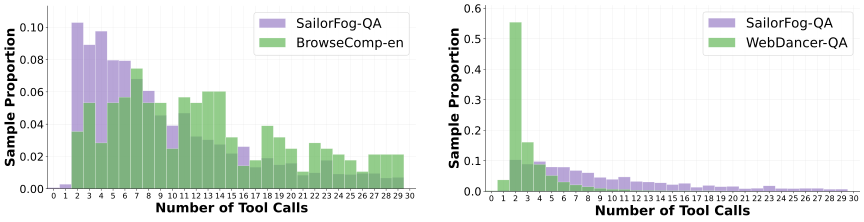
Figure 3a–3b 解读:左图把 SailorFog-QA 与 BrowseComp-en 的正确轨迹 tool call 分布相对照,右图把 SailorFog-QA 与 WebDancer-QA 相对照。论文的结论是 WebDancer-QA 严重偏简单,超过 50% 轨迹只需要两次 tool call,几乎没有超过十次;SailorFog-QA 则有明显 long-tail,大量样本超过五次,甚至超过二十次 tool call,并且与 BrowseComp-en 的复杂度轮廓更接近。注意图中展示的是最终过滤前的数据,之后 RFT 会保留超过五次 tool call 的轨迹。
SailorFog-QA 的 pass rate 分析进一步说明数据难度。Table 2 中,o4-mini 在 SailorFog-QA、WebDancer-QA、BrowseComp-en 上的 pass@1 分别为 47.3、90.2、26.3;DeepSeek-R1 分别为 38.9、84.4、9.5。也就是说,SailorFog-QA 比 WebDancer-QA 难得多,但仍比 BrowseComp-en 略容易,因为 BrowseComp-en 自身过滤了简单 case。作者也指出,低准确率部分来自任务固有歧义:某些模糊条件可能有多个交叉点,类似 BrowseComp-en 的情况;但他们会确保答案满足 question 指定约束。
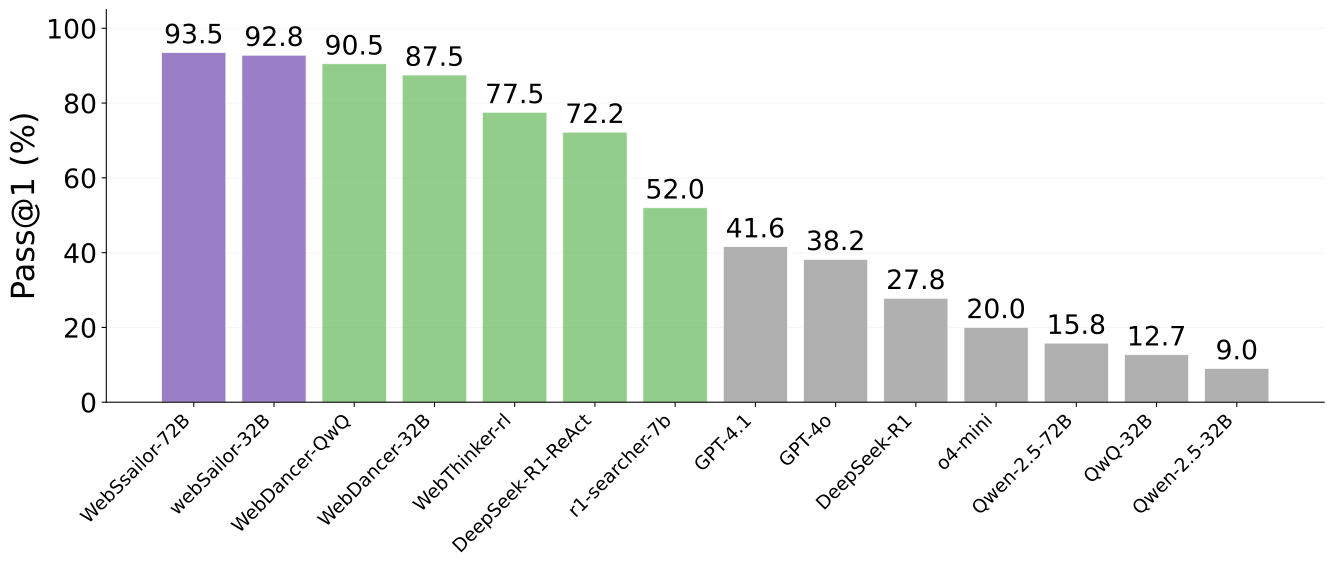
Figure 4 解读:WebSailor 只用高难度数据训练,但在 SimpleQA 这个更接近 Level 1 的事实问答抽样上仍排在前列。论文报告完整 SimpleQA 有 4,326 QA,实验随机采样 200 条;图中 WebSailor-72B 达到 93.5,WebSailor 系列和多个 agent-based 方法明显优于 direct answering baseline。这个结果支持“从复杂不确定性训练中学到的搜索-验证习惯可以向简单任务下兼容”的观点,但也暗示可能存在 over-thinking 风险。
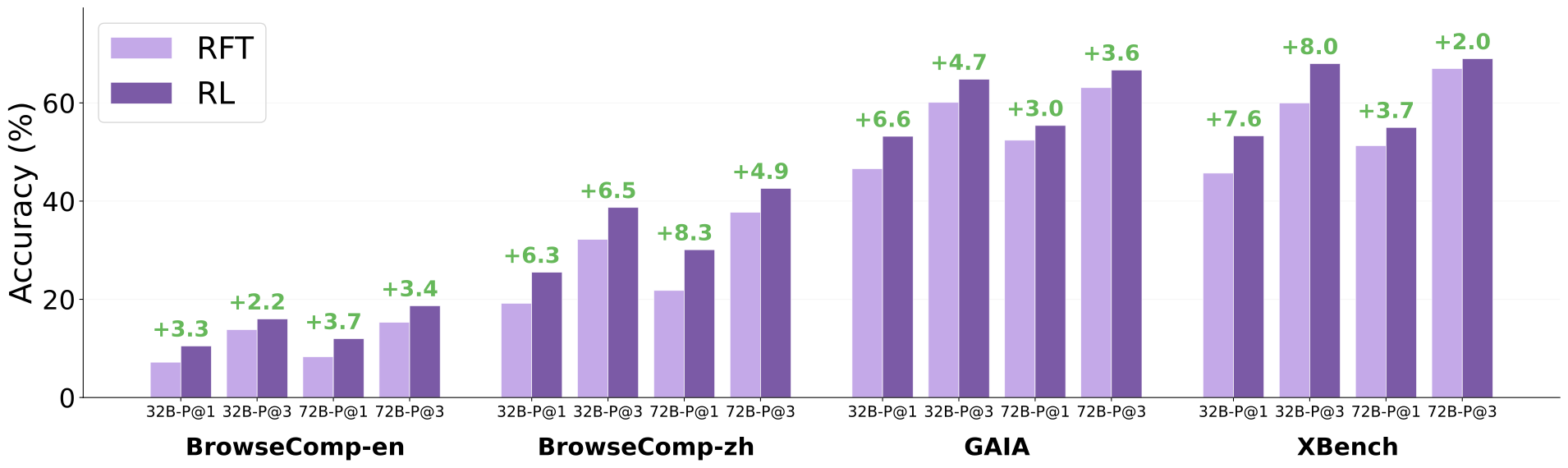
Figure 5 解读:图 5 比较 RFT 阶段和 RL 阶段在 Pass@1、Pass@3 上的增益,覆盖 BrowseComp-en、BrowseComp-zh、GAIA、XBench。可见 RL 在所有 benchmark 上都有提升,BrowseComp-en/zh 这类最难任务增益更突出;正文解释为,复杂任务的成功轨迹更长更不稳定,初始 Pass@1 与 Pass@3 gap 更大,RL 通过强化成功策略和剪掉无效策略,提高单次采样时的稳定性。因此 RL 对 Pass@1 的相对增益通常大于 Pass@3,说明 sample efficiency 被改善。
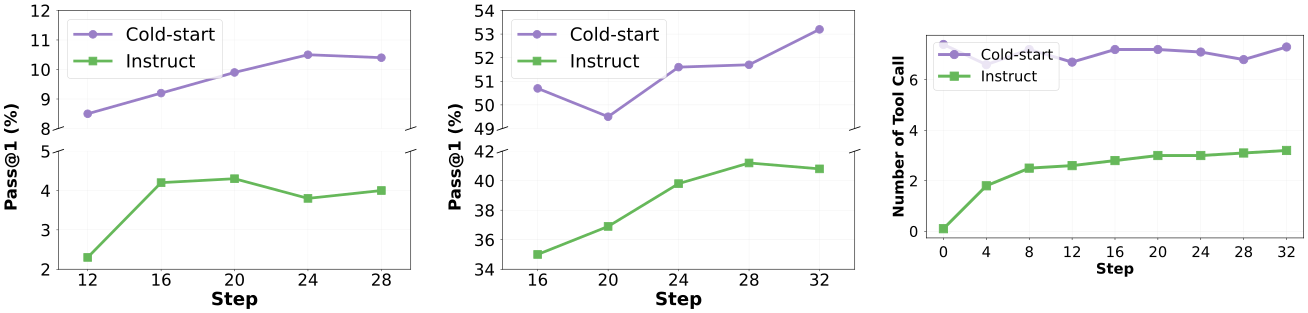
Figure 6a–6c 解读:图 6 对比 Qwen-2.5-instruct-32B 直接 RL 与 RFT cold start 后 RL。直接 RL 的 Pass@1 提升幅度可能更大,但最终收敛性能显著低于 cold-start 模型;工具调用数也显示差异,cold-start 模型的 tool call count 高且稳定,而 direct RL 虽然逐渐增加,仍明显偏低,说明它难以通过自探索学会 long-horizon reasoning。BrowseComp-en 上差距更大,支持论文关于“少量高质量 RFT 是复杂 web agent 的必要 bootstrap”的论断。
方法限制也很明确。第一,过滤掉超过 32k tokens 的训练轨迹是工程上必要的,但会限制模型处理更复杂问题;失败案例中许多错误来自 context limit,且 inference length 增大时性能可能下降。第二,WebSailor 会 over-thinking,对简单问题也可能执行多步 tool call;作者认为这不完全是坏事,因为某些情况下 agent 是在 cross-verification,但在成本敏感场景仍需控制。第三,RL 仅训练 50 steps,主要受 synchronous RL framework 效率限制;即使 DUPO 有 2–3 倍 speedup,agentic RL 仍慢,未来需要 asynchronous training。综合来看,WebSailor 的贡献是把 open-source web agent 推向 Level 3 复杂信息寻址,但 released code 当前还不支持完整复现训练流程,复现者更容易从模型权重、数据样例和 inference/eval pipeline 入手。