Cognitive Kernel-Pro: A Framework for Deep Research Agents and Agent Foundation Models Training
Paper: arXiv:2508.00414 Code: Tencent/CognitiveKernel-Pro Code reference:
main@827eea52(2026-04-29)
1. Motivation(研究动机)
Cognitive Kernel-Pro 解决的问题不是单一网页问答或单一工具调用,而是“深度研究 agent”在开放环境中如何同时具备网页交互、文件处理、代码执行、长链路推理和可训练性。论文的出发点很明确:当前强 agent 系统要么闭源,要么依赖 Jina Reader、FireCrawl、Chunkr、Whisper、付费浏览/文件解析服务等专有工具,导致研究者很难复现系统级效果,也很难把 agent 轨迹转化为可公开训练的 Agent Foundation Model 数据。作者希望把两件事合在一起做:第一,给出一个尽量开源、尽量免费、模块清晰的 deep research agent 框架;第二,围绕这个框架整理 query、trajectory、verifiable answer,并探索 SFT、RL、test-time reflection/voting 等训练和推理扩展策略。
这篇论文的关键背景是 GAIA 等 benchmark 已经把 agent 从“会搜索”推到“跨网页、文件、表格、图像和推理”综合能力评测。GAIA 任务通常要求多步搜索、信息聚合、文件下载与阅读、数值计算、答案格式控制;如果一个开源 agent 只能做网页搜索,或者只支持 PDF fetching 但没有通用 file agent,就很容易在真实任务里断链。论文因此强调“工具不是越多越好”,而是要把工具能力纳入同一套可训练的认知内核:主 agent 负责任务分解、子任务委派、信息聚合、代码生成和工具调用;Web/File 子 agent 负责各自资源域内的观察与动作;同一个 agent foundation model 驱动主 agent 与子 agent,从而使训练轨迹具有统一格式。
另一个动机是训练数据本身。很多 deep research 数据只给最终问答,缺少可验证的中间过程;也有一些数据来自真实网页或文件,但答案不稳定、互联网上可直接检索、或者过程不唯一,难以作为 SFT/RL 样本。作者把数据构造拆成四类域:web、file、code/general reasoning,并强调 query 必须依托可验证来源、需要跨来源综合、答案稳定且简短、不能只是网页原文拷贝。这个标准直接服务于后续训练:SFT 需要高质量轨迹,RL 需要确定、可验证、可打分的 reward;如果 query 本身歧义大或答案随时间变化,训练信号会变成噪声。
论文还把“模型能力”和“系统能力”分开看。CK-Pro-8B 是基于 Qwen3-8B 的 fine-tuned agent foundation model,但完整 Cognitive Kernel-Pro framework 也可以用 Claude-3.7-sonnet 或 GPT-4.1 作为 backbone。这个设置说明作者不是只追求一个 8B 模型在单一 benchmark 上刷分,而是想证明:即便使用较小开源模型,只要 agent 框架、数据构造和推理时反思/投票设计得当,也能接近或超过 WebDancer/WebSailor 这类开源 7B agent;而在使用 Claude-3.7 作为 backbone 时,框架本身也能在不依赖专有付费工具的条件下和更强闭源/半闭源 agent 系统竞争。
本文最值得关注的矛盾是“开放可复现”与“高性能 deep research”之间的张力。开放 agent 系统如果完全不用专有工具,文件解析、网页渲染、图像理解、搜索质量都会受限;但如果大量借助付费工具,模型训练和系统复现又不可控。Cognitive Kernel-Pro 的折中是:Google Search API 被视为搜索任务中几乎不可避免的基础搜索接口,其他能力尽量用开源实现替代;网页交互用 Playwright,文件处理用内部 file agent,代码动作统一成 Python 函数调用,模型训练数据也围绕可验证来源构造。这个取向使论文更像一篇 agent 系统 + agent model training recipe 的技术报告,而不是单纯的模型论文。
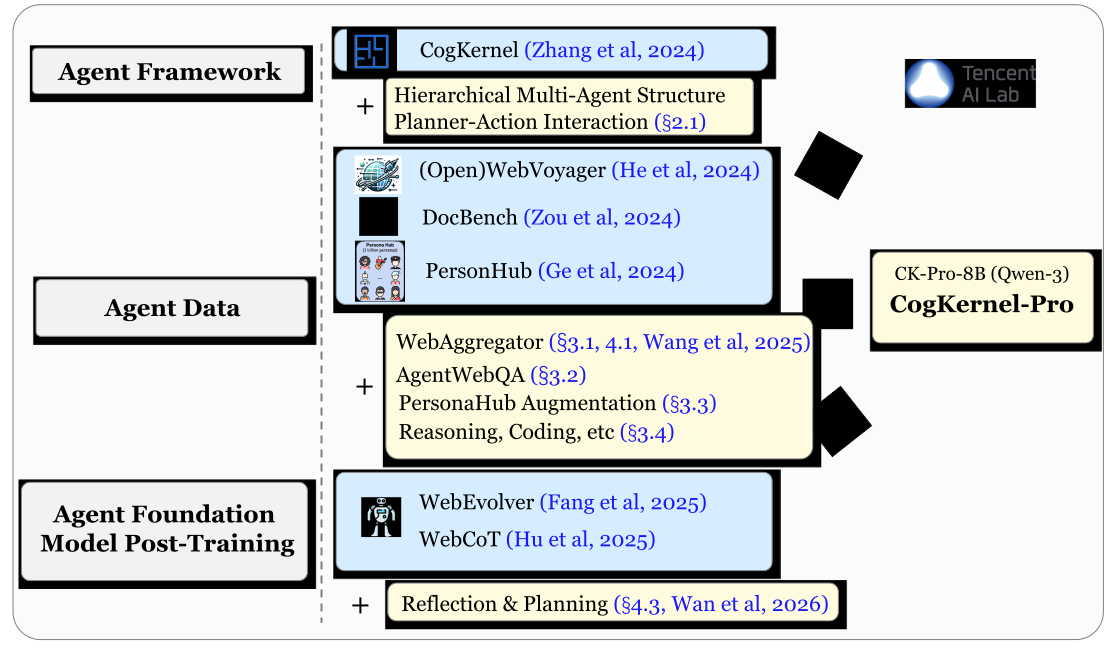
Figure 2 解读:这张 roadmap 把 Tencent AI Lab 之前的 Cognitive Kernel、WebVoyager 等工作汇总为三个方向:agent framework development、agent data construction、agent foundation model training。黄色块对应本文新增贡献:把多模块 agent 框架、可验证训练数据、SFT/RL 与推理时 scaling 组合成一个完整 pipeline。它也提示读者不要把 CK-Pro 只理解成一个 GitHub agent runtime;论文真正想表达的是从系统执行到数据再到模型训练的闭环。
2. Idea(核心思想)
核心思想可以概括为:把 deep research agent 设计成一个“可执行 Python 动作空间上的分层多模块系统”,再用同一套系统产生可监督、可验证、可强化学习的轨迹。主 agent 不直接把所有网页、文件、代码细节塞进一次 LLM 推理,而是在一个状态增强的循环里维护 completed_list、todo_list、experience、information 等状态,由 planner 更新计划,由 action generator 生成 Python 代码。这个代码可以直接作为 code agent 执行,也可以调用 web_agent(...)、file_agent(...)、ask_llm(...)、search(...)、stop(...) 等函数。这样,agent 的“动作”不是自然语言标签,而是可执行的函数调用;观察结果通过 print 返回,进入下一轮上下文。
本文的新意不在于提出某个单独工具,而在于把系统设计、数据构造和训练目标对齐:系统里主 agent/子 agent 的 action-observation trace 正好可以变成 SFT 轨迹;query 生成时保留中间结果和 hint,又能提高 trajectory sampling 成功率;RL 时把长轨迹拆成 subgoal 并对 subgoal-level 与 final-task reward 分别归一化,缓解长链路 deep research 中 reward 稀疏和 reward collapse 的问题。换句话说,Cognitive Kernel-Pro 的“kernel”不是一个静态模块,而是一个能产生、过滤、训练、反思和投票的 agent 循环。
直观上,CK-Pro 试图解决三个 failure mode。第一,单层 agent 在复杂任务中容易把计划、网页搜索、文件阅读、计算和最终答案混在一起,导致工具调用难以约束;分层主/子 agent 把网页和文件操作封装成专业函数,降低主 agent 的局部复杂度。第二,SFT 数据如果只含最终答案,会让模型学不到如何调用工具;作者用 gpt-4.1 在 CK-Pro framework 内采样 trajectories,并用 rejection sampling 筛掉错误轨迹。第三,RL 对 deep research 特别难,因为最终答案 reward 延迟太长;Subgoal-GRPO 在 subgoal phase 内比较局部成败,再和 final reward 组合,给模型更密集的 credit assignment。
这也解释了为什么论文强调 reflection 和 voting。Reflection 不是简单让模型“再想一遍”,而是把轨迹整理为 action-observation 格式,用 DeepVerifier 的五类 rubric 检查:finding sources、reasoning、problem understanding and decomposition、action execution、trajectory efficiency。如果某个维度出现问题,agent 带着结构化反馈重试。Voting 则让同一任务多次运行,汇总多个 trajectory,再选择最符合 rubric 的结果。它们都属于 inference-time scaling:不改训练参数,而是用额外推理成本提高鲁棒性。
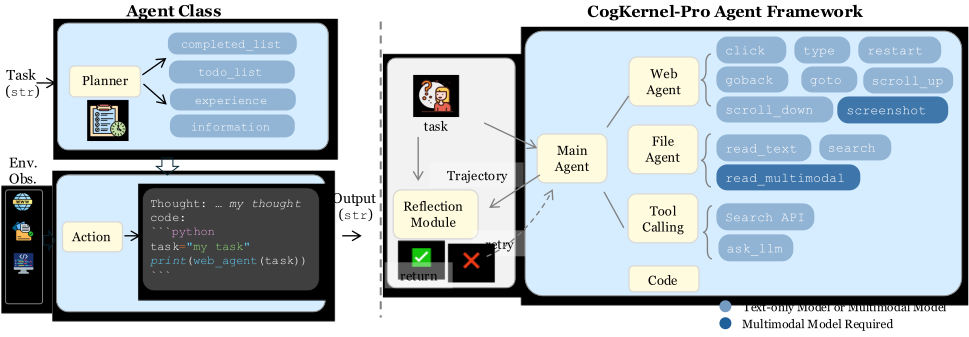
Figure 3 解读:左侧是所有 agent 继承同一个 base class 的抽象,核心状态包括已完成事项、待办事项、经验和信息;action generator 输出 Python code,代码既可以调用子 agent 函数,也可以执行普通 Python 逻辑。右侧列出 main/web/file agent 的函数层级,并把 reflection module 接到任务完成检查之后。图中最重要的设计点是“统一动作接口”:Web/File 不是外置黑盒,而是主 agent 可调用的 Python 函数,因此轨迹能统一记录并用于训练。
3. Method(方法)
3.1 系统框架:两层多模块 agent
Cognitive Kernel-Pro 的运行时由 main agent 和若干 sub-agent 组成。Main agent 负责全局任务分解、子任务委派、信息聚合、工具调用和代码生成;sub-agent 负责局部资源域内的操作,例如 Web Agent 在浏览器中点击、输入、滚动和保存文件,File Agent 阅读 PDF、表格和图片。论文和代码都显示,主 agent 与子 agent 继承同一类 multi-step agent 抽象:输入是 task string,输出是 response string,中间动作是 Python code execution。
开源代码中的 ck_pro/agents/agent.py 定义 MultiStepAgent,其主要流程是:run() 创建/复用 session,循环调用 step(),直到达到正常结束、最大步数或最大时间;step() 先生成 plan,再生成 action;_parse_output() 从模型输出中抽取 Thought: 与 Code:,并用 CodeExecutor.extract_code() 解析代码块;step_action() 用 CodeExecutor 执行模型生成的 Python 代码,并把所有注册函数放进 executor 的 global vars。关键实现是 python_executor.add_global_vars(**self.ACTIVE_FUNCTIONS) 与 python_executor.run(action_res["code"], catch_exception=True, timeout=...),这与论文“all actions are Python functions and executed directly”的描述一致。
ck_pro/ck_main/agent.py 中的 CKAgent 组合了 WebAgent、FileAgent、AskLLMTool、SimpleSearchTool 和 StopTool。它还实现了 step_mrun 的多次执行与聚合:如果 action 代码中包含 web_agent(、file_agent( 或 ask_llm(,且配置允许多次运行,主 agent 会用 multiprocessing pool 运行多个候选结果,再调用模型对候选进行聚合选择。这个机制对应论文里的 voting/inference-time scaling 思路,不过代码仓库暴露的是 runtime 层面的多候选执行与选择,而不是完整 RL 训练代码。
Web Agent 的开源实现位于 ck_pro/ck_web/agent.py。它注册了 click、type、scroll_up、scroll_down、wait、goback、restart、goto、stop、save、screenshot 等函数。screenshot 会切换到多模态模型处理网页图像;默认情况下,agent 主要基于网页 accessibility tree / HTML markdown 观察。File Agent 位于 ck_pro/ck_file/agent.py,暴露 load_file、read_text、read_screenshot、search、stop 等动作,适配 PDF、Excel、CSV、图片等文件。两个 sub-agent 的接口都返回 dict-like 结果,使主 agent 可以把局部处理结果继续纳入全局推理。
代码搜索结论:论文给出的 GitHub 仓库已公开,当前检索到的 commit 为 main@827eea52。仓库主要包含 agent runtime、web/file agent、evaluator、SFT 数据转换和 GAIA scorer;论文第 4 节中 Subgoal-GRPO / verl 训练的完整 RL 代码未在该仓库中直接暴露。因此下面的代码映射以已开源 runtime 为准,RL 伪代码依据论文公式和流程复原,不声称来自 repo 源码。
| Paper Concept | Source File | Key Class/Function |
|---|---|---|
| Base multi-step agent loop | ck_pro/agents/agent.py | MultiStepAgent.run, step, _parse_output, step_action |
| Main agent orchestration | ck_pro/ck_main/agent.py | CKAgent, step_action, ck_step_action |
| Web sub-agent | ck_pro/ck_web/agent.py | WebAgent, web_click, web_type, web_goto, _my_save, _my_screenshot |
| File sub-agent | ck_pro/ck_file/agent.py | FileAgent, _my_load_file, _my_read_text, _my_read_screenshot, _my_search |
| Built-in tools | ck_pro/agents/tool.py | StopTool, AskLLMTool, SimpleSearchTool |
| Reflection / scoring utilities | ck_pro/agents/evaluator.py | Evaluator.cot_qa_evaluate, evaluate_with_answer, detect_failure, ensemble |
| SFT data conversion | data/convert_sft.py | trajectory/message conversion utilities |
# Pseudocode 1: repo-backed MultiStepAgent loop, simplified from ck_pro/agents/agent.py
class MultiStepAgent:
    def run(self, task, max_steps):
        session = Session(task)
        state = self.init_state(session)
        for step_id in range(max_steps):
            plan_prompt = self.templates["plan"].format(task=task, state=state)
            plan_output = self.model(plan_prompt)
            plan = self._parse_output(plan_output)
            state = self.update_plan_state(state, plan)

            action_prompt = self.templates["action"].format(task=task, state=state)
            action_output = self.model(action_prompt)
            action = self._parse_output(action_output)  # Thought + Python Code

            executor = CodeExecutor()
            executor.add_global_vars(**self.ACTIVE_FUNCTIONS)
            timeout = self.exec_timeout_with_call if self.calls_subagent(action["code"]) else self.exec_timeout_wo_call
            executor.run(action["code"], catch_exception=True, timeout=timeout)
            observation = executor.get_print_results()
            state["information"].append(observation)

            if self.has_final_result():
                break
        return self.finalize(session, state)
# Pseudocode 2: repo-backed CKAgent multi-run aggregation, simplified from ck_pro/ck_main/agent.py
class CKAgent(MultiStepAgent):
def __init__(self):
self.web_agent = WebAgent()
self.file_agent = FileAgent()
self.tools = [StopTool(self), AskLLMTool(), SimpleSearchTool()]
def step_action(self, action_res, action_input_kwargs):
needs_multi = any(name in action_res["code"] for name in ["web_agent(", "file_agent(", "ask_llm("])
if self.step_mrun <= 1 or not needs_multi:
return super().step_action(action_res, action_input_kwargs)
candidates = parallel_map(
lambda seed_id: super().step_action(action_res, action_input_kwargs),
range(self.step_mrun),
)
select_prompt = self.templates["aggr"].format(
current_step=action_res["code"],
result_list=format_candidates(candidates),
)
select_code = self._parse_output(self.model(select_prompt))["code"]
selected_index = parse_printed_index(select_code)
return candidates[selected_index]# Pseudocode 3: repo-backed Web/File delegation pattern
def solve_deep_research_question(question: str):
state = {"todo_list": [question], "information": [], "experience": []}
# Main agent delegates volatile browsing to WebAgent.
web_result = web_agent(
task="Find authoritative sources and download any relevant files.",
target_url=None,
)
print(web_result)
state["information"].append(web_result)
# If a PDF/CSV/XLSX/image was saved, main agent delegates content reading to FileAgent.
if "local_path" in web_result.get("log", ""):
file_result = file_agent(
task="Read the downloaded files and extract evidence for the answer.",
file_path_dict={"./downloaded/file.pdf": "source evidence"},
)
print(file_result)
state["information"].append(file_result)
# Main agent can then execute Python for calculation or formatting.
answer = aggregate_evidence_and_compute_final_answer(state["information"])
stop(output=answer, summary="answer grounded in browsed and file evidence")3.2 Agent Foundation Model 的数据构造与 SFT
论文把 SFT 训练 recipe 建在可验证 agent 轨迹上。训练数据表显示,总体覆盖 Web、File、Reasoning 三大类,其中 Web 部分包括 OpenWebVoyager、Multihop URLQA、AgentWebQA with hint、PersonaHub-Aug、WebWalkerQA;File 部分包括 DocBench 与 TableBench;Reasoning 部分包括 NumiaMath、BAAI/TACO、RiddleSense、LogiCoT。对应 query/step 规模如下:OpenWebVoyager 1,259 queries / 9,098 steps;Multihop URLQA 4,225 / 25,589;
AgentWebQA with hint 2,721 / 32,231;PersonaHub-Aug 1,000 / 2,088;WebWalkerQA 1,904 / 18,116;DocBench 300 / 1,566;TableBench 1,000 / 9,482;NumiaMath 616 / 524;BAAI/TACO 225 / 730;RiddleSense 179 / 165;LogiCoT 1,400 / 1,400。这个表说明 CK-Pro-8B 的训练不是只靠网页搜索轨迹,而是混入了文件、表格、数学、代码/谜题、逻辑推理等多种动作类型。
Query 构造的约束来自 Appendix B:每个 query 必须基于可验证来源,例如 Wikipedia、arXiv、Papers With Code、GitHub 或明确可下载文件;必须要求跨来源 reasoning;最终答案不应在互联网上原文存在;答案要稳定、无歧义、通常是数字或短语;query 本身要自包含,并明确答案格式。这些要求看似偏数据工程,但对 agent 训练很关键:它们让 SFT 轨迹可以被自动或半自动验证,也让 RL reward 不会因为答案漂移而失真。
Trajectory sampling 使用 gpt-4.1 作为 CK-Pro framework 的 backbone 来采样。对于构造好的 query-answer pair,系统先用 agent 生成轨迹,再用 LangChain 的 cot_qa 和 gpt-4.1 进行基于相似度的 rejection sampling。每个 query 最多采样三次,直到成功;hint-based sampling 中,中间结果被放在 <secret>...</secret> 中帮助采样成功,但在实际训练前会从输入输出中移除,避免模型直接看到答案线索。这个设计的取舍是:训练数据收集阶段可以使用“教师提示”提高成功率,但最终 SFT 样本必须恢复为真实任务条件。
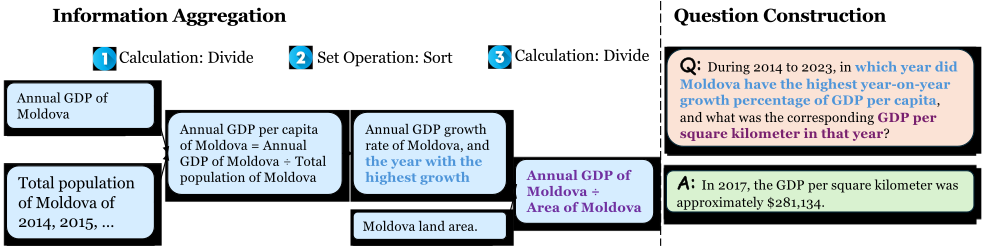
Figure 4 解读:这张图展示 URLQA 创建中的 information aggregation:query 不应是单网页检索,而要聚合多个可验证来源后得到稳定答案。它与本文的数据原则一致,即 source-based、cross-source、novel、stable、self-contained。对训练而言,这种构造会迫使 agent 学习“找证据—整理证据—计算/归纳答案”的轨迹,而不是只学习搜索关键词。
3.3 Subgoal-Conditioned GRPO:长链路 RL 的 credit assignment
RL 部分针对 deep research agent 的典型问题:轨迹长、工具多、最终答案 reward 稀疏且延迟。作者首先构造 RL 样本为 <Question, Answer, Reference Solution, Grounded URLs>,并做多阶段过滤。过滤流程包括:检查 reference solution 是否能逻辑地推出 reference answer;让 agent 验证外部来源有效性和推理步骤正确性;对每个候选样本用 CK-Pro SFT checkpoint 进行四次独立 rollout,只保留 rollout 表现出 partial correctness 的 400 个高质量样本;再用这些结果形成 curriculum signal,使训练从高一致性样本开始,逐步转向更复杂、低一致性的任务。
Subgoal recovery 的目标是把长轨迹拆成可评估阶段。论文把主 agent 的每一步定义为: 其中 是主 agent state,包含当前观察 和累计 memory/context ; 是主 agent 动作,包括 reasoning、plan 和可执行 Python code; 是该动作诱导的 sub-agent trajectory,即 lower-level agent 的状态—动作序列; 是当前 subgoal phase; 是该步或 subgoal 的局部 reward; 是最终 outcome reward。这个定义把“主 agent 生成一段代码并调用子 agent”显式纳入 RL 状态/动作/轨迹,而不是把整个交互当成一个不可分割 episode。
Subgoal-GRPO 的关键是 decoupled normalization。给定一组 条 trajectories,某个 phase 的 cumulative subgoal reward 记为 ,最终任务 reward 记为 。先在同一 subgoal phase 内计算 和 ,得到: 最终任务 reward 则在全组 trajectory 上计算: 二者组合为: 这里 控制局部 subgoal execution 与全局 task alignment 的权衡。与把所有 reward 先相加再统一归一化相比,这种做法保留了 subgoal-level 信号,避免 final reward 方差过大时吞没局部进展。论文把这称为缓解 reward collapse;直观上,一个 agent 即使最终答案错误,也可能已经正确完成网页检索或文件定位,Subgoal-GRPO 能把这些阶段性进展转化为可学习优势。
# Pseudocode 4: paper-derived Subgoal-GRPO advantage construction
def compute_subgoal_grpo_advantages(trajectories, lambda_final=1.0, eps=1e-6):
    # trajectories: group of rollouts for the same question
    # each rollout has steps h_t with subgoal phase k_t, subgoal rewards, and final reward
    phase_to_rewards = collect_rewards_by_phase(trajectories, reward_name="subgoal")
    final_rewards = torch.tensor([traj.final_reward for traj in trajectories])
    final_adv = (final_rewards - final_rewards.mean()) / (final_rewards.std(unbiased=False) + eps)

    for i, traj in enumerate(trajectories):
        for step in traj.steps:
            k = step.subgoal_id
            rewards_k = torch.tensor(phase_to_rewards[k])
            sub_adv = (step.subgoal_reward - rewards_k.mean()) / (rewards_k.std(unbiased=False) + eps)
            step.advantage = sub_adv + lambda_final * final_adv[i]
    return trajectories

def grpo_update(policy, old_policy, trajectories, clip_eps, beta_kl):
    loss_terms = []
    for traj in trajectories:
        for step in traj.steps:
            logp = policy.log_prob(step.state, step.action_tokens)
            old_logp = old_policy.log_prob(step.state, step.action_tokens).detach()
            ratio = torch.exp(logp - old_logp)
            clipped = torch.clamp(ratio, 1 - clip_eps, 1 + clip_eps)
            surrogate = torch.minimum(ratio * step.advantage, clipped * step.advantage)
            kl_penalty = beta_kl * kl_to_reference(policy, step.state, step.action_tokens)
            loss_terms.append(-(surrogate - kl_penalty).mean())
    return torch.stack(loss_terms).mean()
3.4 Reflection、Voting 与 verifier
Inference-time scaling 包括 reflection with verification 和 voting。Reflection 会把完整 action trajectory 摘要成 action-observation 格式,再用 DeepVerifier 的 rubric 评价答案与轨迹。五个维度分别是:finding sources,检查是否使用具体且权威的证据;reasoning,检查逻辑一致性和对证据的忠实性;problem understanding and decomposition,检查任务解释和子目标拆解;action execution,检查工具、格式、模态使用是否正确;trajectory efficiency,检查是否能在步数预算内到达有效答案。每个维度分为 excellent、good、needs improvement、poor。如果发现违规,agent 带着 per-rubric score 和 targeted error localization 重试,直到得到满意答案或达到 retry limit。
Voting 则不是简单多数票,而是“多轨迹生成 + rubric-based 选择”。agent 对同一任务多次尝试,汇总所有轨迹,再选出最符合 reflection rubric 的输出。这个策略尤其适合 GAIA 这类开放任务,因为不同 rollout 可能找到不同来源或走不同文件处理路径;单次失败可能来自网页状态、搜索结果、文件解析或最终格式,而多次尝试可以提高至少一条轨迹成功的概率。论文中的结果也显示,CK-Pro-8B pass@3 明显高于 pass@1,说明 inference-time sampling 对小模型 agent 很重要。
4. Experimental Setup(实验设置)
4.1 模型、工具与 benchmark
实验主要围绕 GAIA dev set、GAIA text-only subset 和 xbench-DeepSearch。完整 GAIA dev set 有 ,text-only subset 有 ,xbench-DeepSearch 有 。框架级比较中,作者把 agent 分成 closed-source、open-source with paid tools、open-source without paid tools,并特别标注 reproduced results。Cognitive Kernel-Pro 的强 backbone 设置使用 Claude-3.7-sonnet;CK-Pro-8B 是基于 Qwen3-8B fine-tuned 的 agent foundation model,部分 multimodal 功能由 GPT-4.1 或 Qwen-2.5-VL-72B 支持。
工具设定上,论文认为 Google Search API 是搜索任务中几乎所有 agent 框架都需要的基础搜索接口,因此在“proprietary tools”比较中排除了 Google Search API;其他专有工具如 Chunkr、FireCrawl、Jina Reader、Whisper、Baidu/Bing API 等会被计入 paid/proprietary tools。CK-Pro 的核心主张是在不使用这些额外专有工具的条件下,用 Playwright、file agent、Python code execution 和统一 tool function interface 支撑 web/file/code/general reasoning。
SFT 轨迹采样的 backbone 是 gpt-4.1,采样时最多重试三次;rejection sampling 使用 cot_qa 与 gpt-4.1。README 中的 trajectory sampling 示例也给出与论文一致的配置:--sampling-mode --evaluation-method llm_score --max_retry_num 3,Web Agent 默认最大步数示例为 25,File Agent 为 20,并通过 MAX_FILE_READ_TOKENS=10000、MAX_FILE_SCREENSHOT=5 控制文件读取。注意这些是仓库 README 的运行示例,不应误读为论文所有实验的固定训练超参。
RL 实验使用 verl 作为核心 RL library,agent runtime 部署在 GPU clusters。由于 web 环境波动,训练中使用 Browserless 做 remote Playwright execution,以提高网页导航稳定性。论文还报告一次 Bing Search firewall policy update 导致 web-agent environment 退化,因此 vanilla RL checkpoint 表现受影响;这点很重要,因为它解释了为什么 RL pass@1 不一定单调优于 SFT,但与 pass@3/verifier 结合后提升明显。
4.2 数据规模与训练 recipe
训练 recipe 的数据统计如下:
| Type | Data Name | Data Type | Query | Steps |
|---|---|---|---|---|
| Web | OpenWebVoyager | Web Browsing | 1,259 | 9,098 |
| Web | Multihop URLQA | Web Information Seeking | 4,225 | 25,589 |
| Web | AgentWebQA (w/ hint) | Web Information Seeking | 2,721 | 32,231 |
| Web | PersonaHub-Aug | No Ground Answer | 1,000 | 2,088 |
| Web | WebWalkerQA | Web Information Seeking | 1,904 | 18,116 |
| File | DocBench | 300 | 1,566 | |
| File | TableBench | CSV/XLSX | 1,000 | 9,482 |
| Reasoning | NumiaMath | Math Reasoning | 616 | 524 |
| Reasoning | BAAI/TACO | Code/Puzzle | 225 | 730 |
| Reasoning | RiddleSense | Riddle/Puzzle | 179 | 165 |
| Reasoning | LogiCoT | Logical Reasoning | 1,400 | 1,400 |
这个 recipe 的设计偏“覆盖 agent 能力面”而不是单纯堆网页数据。Web 数据负责信息 seeking 与浏览器动作,File 数据负责文档和表格处理,Reasoning 数据补足数学、代码谜题和逻辑推理。PersonaHub-Aug 的特点是没有 ground answer,因此论文通过 cross-validation of trajectory outcomes 和少量人工/系统验证引入 1k synthetic queries;作者也承认对这些 synthetic queries 的 manual validation 和 response annotation 工作量很大,尚未完全纳入。
4.3 评测指标和对比对象
主要指标是 Pass@1 和 Pass@3,并按 GAIA Level 1/2/3 分层报告。Pass@1 反映单次 agent run 的稳定性;Pass@3 更接近允许多次尝试/投票时的上限。对于小模型 agent,Pass@3 特别重要,因为一次轨迹失败可能只是某个工具动作或搜索路径失败,而多次运行能覆盖更多候选。论文还报告 reflection ablation 和 multimodal ablation,用来区分提升来自 reflection model、voting、还是多模态模型差异。
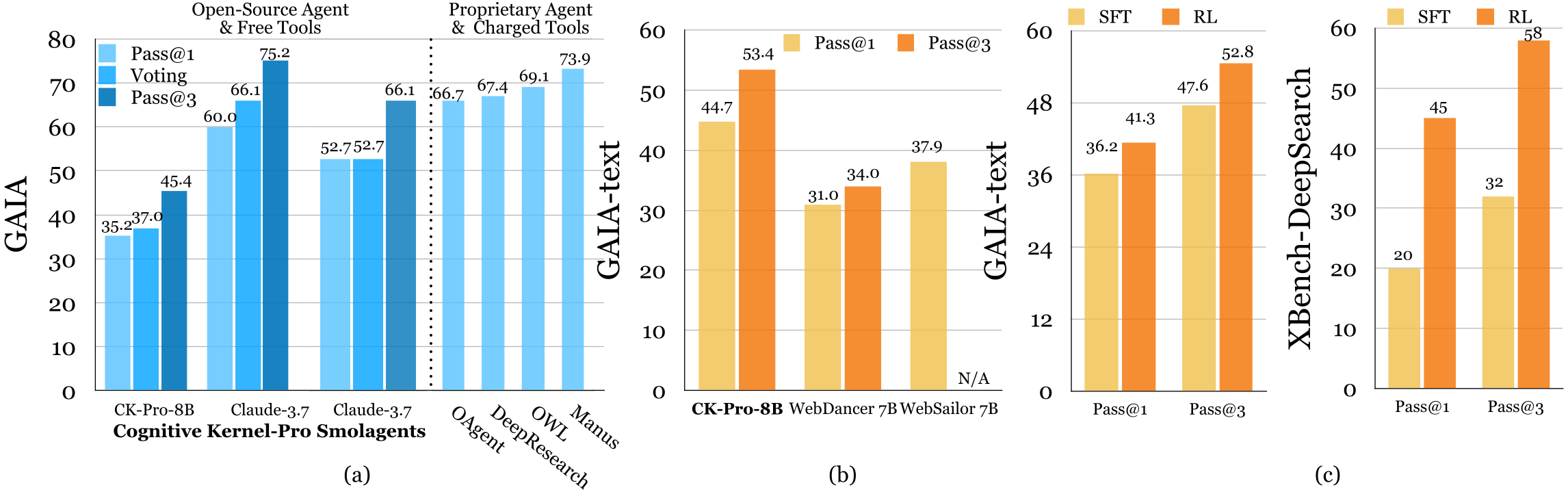
Figure 1 解读:这张总览图把三个结果放在一起:完整 GAIA dev set 上 CK-Pro framework 与 proprietary/free-tool agent 的对比;GAIA text-only subset 上 CK-Pro-8B 与 WebDancer/WebSailor 7B family 的对比;以及 RL 相对 SFT 在 GAIA-text 和 XBench-DeepSearch 上的提升。它是论文结论图,但阅读时要注意不同 panel 的 backbone 和工具设定并不完全相同:Claude-3.7 framework、CK-Pro-8B SFT、Subgoal-GRPO RL 是三个不同层面的结果。
5. Experimental Results(实验结果)
5.1 完整 GAIA dev set:框架级效果
在完整 GAIA dev set () 上,Cognitive Kernel-Pro 使用 Claude-3.7 且不使用额外 paid tools 时,Pass@1 Avg. 为 57.58,Level 1/2/3 分别为 77.36 / 54.65 / 26.92;Voting 后 Avg. 达到 63.64,Level 1/2/3 为 69.81 / 65.12 / 46.15;Pass@3 达到 70.91,Level 1/2/3 为 83.02 / 68.60 / 53.85。相同区域内,reproduced Smolagents* with Claude-3.7 的 Pass@1 Avg. 为 52.10,Voting 为 53.99,Pass@3 为 63.64。论文据此称 CK-Pro 在相同 backbone/search/API 条件下超过 Smolagents:Pass@1 约高 5 个点,Pass@3 约高 7 个点。
与依赖付费工具的开源框架相比,OWL—Workforce* reproduced with Claude-3.7 and without whisper 的 Avg. 为 60.61,Level 1/2/3 为 73.58 / 62.79 / 26.92;OAgent with Claude-3.7、Jina Reader、Whisper、Baidu/Bing API 的 Avg. 为 66.67,Pass@3 为 73.93。CK-Pro Claude-3.7 Pass@3 的 70.91 接近这些 paid-tool systems,同时避免了 Chunkr/FireCrawl/Jina/Whisper 等额外专有依赖。这支持论文“框架本身有效”的主张,但也说明最高分仍可能来自更强工具栈与闭源系统,例如 Manus 报告 Avg. 73.3。
CK-Pro-8B 在完整 GAIA dev set 的 Pass@1 Avg. 为 32.73,Level 1/2/3 为 43.40 / 32.56 / 11.54;Voting 后 Avg. 为 34.54;Pass@3 为 38.18,Level 1/2/3 为 50.94 / 38.37 / 11.54。论文指出 CK-Pro-8B Pass@3 与 Claude-3.7 state-of-the-art 仍有约 30 个点差距,说明 8B agent foundation model 还有很大提升空间。这个结果不应被解读为 8B 已接近闭源最强 agent,而应理解为在开放模型和免费工具约束下建立了可训练 baseline。
5.2 GAIA text-only subset:8B agent 与 WebDancer/WebSailor 对比
在 GAIA text-only subset () 上,CK-Pro-8B 的 Avg. 为 43.7,Level 1/2/3 为 56.4 / 42.3 / 8.33。对比 7B 系列,Search-o1 7B 为 17.5,R1-Searcher 7B 为 20.4,WebDancer 7B 为 31.0,WebSailor 7B 为 37.9。因此 CK-Pro-8B 在 text-only GAIA 上超过 WebDancer/WebSailor 7B family,尤其在 Avg. 上比 WebSailor 7B 高 5.8 个点,比 WebDancer 7B 高 12.7 个点。
与更大模型相比,WebDancer 32B 的两组结果为 40.7 和 51.5,WebSailor 32B/72B 为 53.2/55.4,WebThinker-RL 32B 为 48.5。CK-Pro-8B 的 43.7 强于部分 32B baseline(如 WebThinker-Base 44.7 非常接近、Search-o1 32B 28.2、WebDancer 32B 40.7),但仍低于 WebSailor 32B/72B 和 WebDancer 32B 的较强设置。这说明 CK-Pro-8B 的贡献更准确地说是“在 7B/8B 开源 agent model 档位建立强 baseline”,而不是全面超过大模型 agent。
Reflection ablation 显示,w/o Reflection 的 Avg. 为 27.0;用 CK-Pro-8B reflection 后为 28.5;用 Qwen-3-32B reflection 后为 31.5;用 GPT-4.1 reflection 后为 32.7。Level 3 从 7.7 提升到 11.5 只出现在 GPT-4.1 reflection 设置中,说明更强 verifier/reflection model 对困难任务有价值,但整体收益主要体现在 Level 1/2。Multimodal ablation 显示 CK-Pro-8B pass@1 使用 Qwen-2.5-VL-72B 时 Avg. 33.94,使用 GPT-4.1 时 Avg. 32.67;pass@3 分别为 37.56 和 38.12。作者据此认为结果提升不完全来自更强 multimodal model,Qwen-2.5-VL-72B 已能达到接近 GPT-4.1 的多模态支撑效果。
5.3 RL:Subgoal-GRPO、Verifier 与 inference-time scaling
RL 结果表明,单纯 RL checkpoint 受 web 环境波动影响,Pass@1 不一定比 SFT 更好。GAIA-text 上,Cognitive Kernel-Pro SFT Pass@1 Avg. 为 43.68,Level 1/2/3 为 56.40 / 42.30 / 8.33;SFT Pass@3 Avg. 为 47.55,Level 1/2/3 为 61.50 / 44.20 / 16.70。Cognitive Kernel-Pro RL Pass@1 Avg. 只有 36.24,Level 1/2/3 为 50.85 / 30.45 / 13.89;这说明 RL 在不结合 pass@3/verifier 时会受到训练环境和策略漂移影响。
真正的提升来自 Subgoal-GRPO 与 verifier / Pass@3 组合。GAIA-text 上,GRPO pass@3 Avg. 为 49.51,Level 1/2/3 为 58.97 / 48.07 / 25.00;Subgoal-GRPO pass@3 Avg. 为 52.67,Level 1/2/3 为 63.72 / 46.92 / 41.67;Subgoal-GRPO pass@3 + Verifier Avg. 进一步到 54.61,Level 1/2/3 为 68.46 / 47.21 / 41.67。Level 3 的改善尤其明显:从 SFT Pass@1 的 8.33 和 SFT Pass@3 的 16.70,到 Subgoal-GRPO pass@3 的 41.67,说明 finer-grained subgoal credit assignment 对困难多步任务更有帮助。
在 xbench-DeepSearch 上,SFT Pass@1 为 20.00,SFT Pass@3 为 32.00;GRPO + Verifier 为 38.00,Subgoal-GRPO + Verifier 为 45.00;GRPO pass@3 和 Subgoal-GRPO pass@3 都是 56.00,Subgoal-GRPO pass@3 + Verifier 达到 58.00。这个趋势支持论文结论:RL 使 agent 更擅长解决 challenging deep research tasks,而 inference-time scaling 会放大 RL 的收益。但也要注意,xbench 表中 Subgoal-GRPO pass@3 和 GRPO pass@3 同为 56.00,说明 subgoal 分解的优势不是所有指标上都绝对领先,主要体现在 GAIA-text Level 3 和 verifier 组合后的稳健性。
5.4 局限与复现注意事项
第一,论文和代码之间存在范围差异。GitHub 仓库公开了 agent runtime、web/file agent、evaluator、GAIA scorer、SFT 转换等,但没有完整公开 Subgoal-GRPO / verl 训练实现。因此如果读者想复现第 4 节 RL,需要自行实现 reward filtering、subgoal recovery、decoupled advantage normalization 和 GRPO update,不能只依赖当前 Tencent/CognitiveKernel-Pro 仓库。
第二,web-agent RL 对外部环境很敏感。论文脚注说明 Bing Search firewall policy update 造成 baseline performance decline,这不是小问题:deep research agent 的 reward 依赖网页可访问性、搜索结果排序、文件下载稳定性和浏览器执行状态。即使模型和代码固定,运行时间不同也可能影响 trajectory 成败。因此 CK-Pro 的实验结论更适合看作 framework/training recipe 的相对趋势,而不是完全环境无关的静态分数。
第三,CK-Pro-8B 的能力仍显著低于 Claude-3.7 framework 设置。完整 GAIA dev 上 8B Pass@3 为 38.18,而 Claude-3.7 framework Pass@3 为 70.91;这个差距意味着 agent foundation model training 仍处在早期阶段。论文的积极意义在于给出开放训练路线和强 7B/8B baseline,不是宣称小模型已经替代闭源大模型。
第四,工具依赖的边界需要明确。论文把 Google Search API 排除在 proprietary tool 比较之外,认为它可由 DuckDuckGo 等免费 API 替换;但实际复现时,搜索 API 的质量、限流、地区差异会显著影响 GAIA 和 deep research。File Agent 支持 PDF/CSV/XLSX/image,但复杂文档、扫描件 OCR 和表格解析仍可能成为瓶颈。对于需要严格评测的复现,必须记录搜索后端、浏览器服务、文件解析版本和模型 endpoint。
总体来看,Cognitive Kernel-Pro 的主要价值是把 deep research agent 的“系统执行结构”和“agent model training 数据结构”对齐:统一 Python 动作空间让轨迹可记录,source-based query 让训练样本可验证,hint/rejection sampling 提高 SFT 数据收集成功率,Subgoal-GRPO 处理长轨迹 credit assignment,reflection/voting 提升推理时鲁棒性。它不是最完整的 RL 代码 release,但作为开放 deep research agent 的 framework + recipe,提供了可继续扩展的基线。