V-GRPO: Online Reinforcement Learning for Denoising Generative Models Is Easier than You Think
1. Motivation(研究动机)
- 现有方法的问题: 把 policy-gradient online RL 直接用于 diffusion / flow matching 模型时,精确 通常不可得。主流绕法是把采样轨迹建成 MDP,逐步优化 reverse transition kernel;这虽然稳定,但有三个具体瓶颈:收敛慢、被绑定到一阶随机 SDE 采样、优化目标与 rollout transition kernel 强耦合,导致 MixGRPO / BranchGRPO 等方法不得不用更复杂的采样树、滑窗或 ODE-SDE 混合设计来补效率。
- 本文要解决的问题: 重新启用与 diffusion ELBO / pretraining loss 相连的 likelihood surrogate,把它放进 GRPO 里直接优化最终样本的“原子动作”概率,同时修复先前 DDPO / FPO 式 surrogate 在视觉生成上不稳定、欠收敛的问题。
- 为什么重要: 如果 ELBO surrogate 可稳定工作,就能把 pretraining objective、高阶 ODE rollout 与 online RL 对齐到同一框架里,避免 MDP 化带来的 per-step policy coupling;在多 reward 图像对齐任务上,这意味着更少 function evaluations、更少梯度步、更简单的实现,同时保持或超过强基线质量。
2. Idea(核心思想)
- 核心洞察: ELBO surrogate 本身不是失败根因,失败主要来自 surrogate 的相对量级方差过大:不同时间步、不同噪声样本造成的 loss scale 变化会淹没 group-relative reward signal。只要让同组样本在可比较的 timestep-noise basis 上估计 likelihood,并控制更新步幅,ELBO surrogate 可以比 MDP-based GRPO 更简单、更快。
- 关键创新: V-GRPO 用 negative weighted pretraining loss 近似 ,再用 GRPO 的 importance ratio 做 online update;同时引入三类 surrogate variance reduction:group-shared timestep-noise pairs、stratified timestep sampling、adaptive loss weighting,并按场景使用 importance ratio clipping / KL penalty / advantage soft-clipping 控制步幅。
- 与代表性方法的本质区别: 相比 MixGRPO / BranchGRPO 把 generation 建成 MDP 并优化 trajectory transitions,V-GRPO 把完整生成结果当作一个 atomic action,用 ELBO-style surrogate 直接近似 final-output likelihood;相比 DiffusionNFT 的正负策略对比,它不需要维护两套模型权重。
3. Method(方法)
总体框架
直觉段落。 传统 MDP 化的视觉 RL 把每个 denoising step 都当作 action,这让 policy gradient 可计算,但也把训练强行锁进一阶 stochastic sampler:rollout 生成时的每个 transition kernel 必须和优化时的 log-prob 对齐。V-GRPO 反过来利用 diffusion / flow matching 预训练本来就在估计“给定数据样本在某个 noise level 下的重构误差”这一事实:对于固定生成样本 ,其 weighted denoising loss 可看成 negative likelihood surrogate。问题在于 raw surrogate 的 scale 很不均匀,因此本文的核心不是发明复杂策略梯度,而是把这个 surrogate 的估计方差压到 group-relative advantage 能稳定发挥作用的范围。
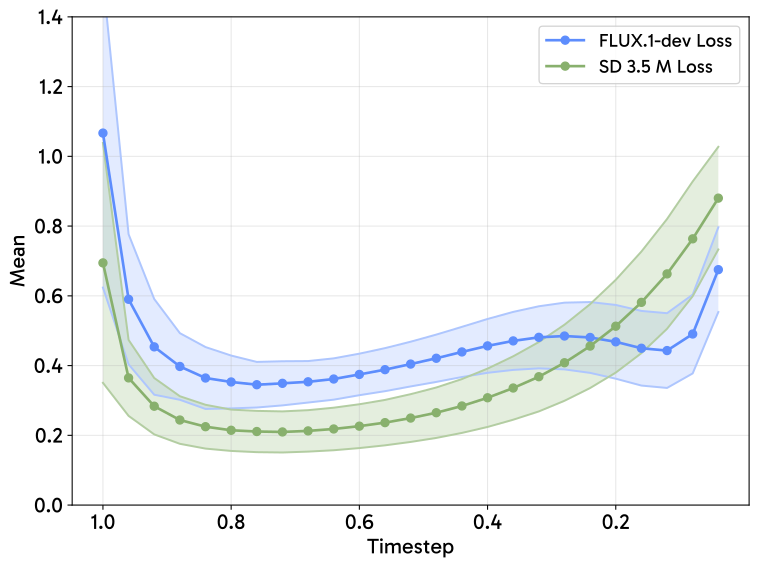
Figure 1 解读: 图中统计同一类 per-sample loss term 在不同 timestep 上的均值与方差。它显示 raw ELBO surrogate 的量级随 timestep 明显变化;若每个 output 独立抽 timestep / noise,同组样本之间的 surrogate 差异会混入大量采样噪声,导致 advantage 排序不再可靠。
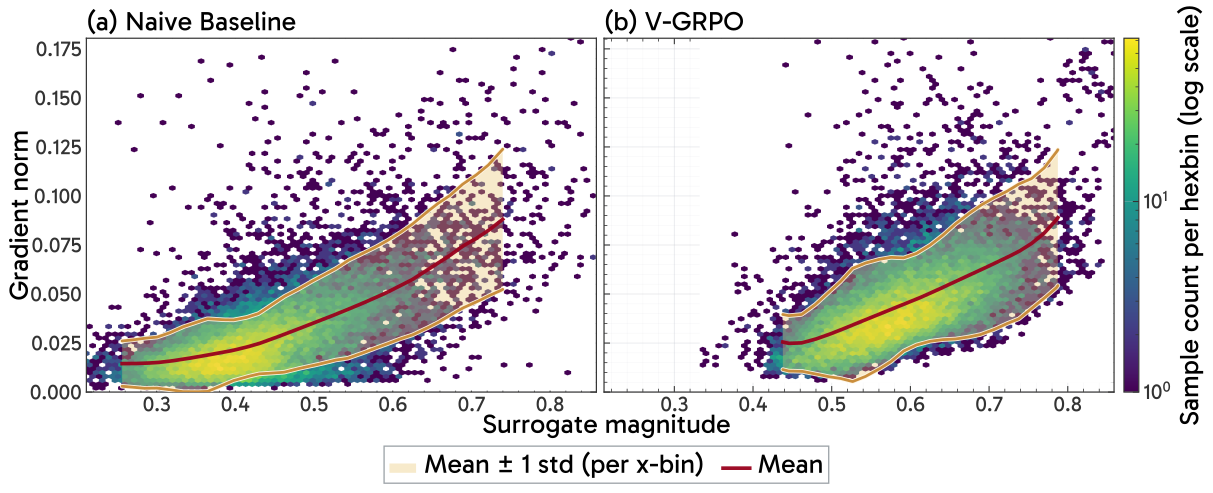
Figure 2 解读: 该图把 surrogate magnitude 与 gradient norm 关联起来,说明 surrogate 方差会进一步转化为梯度方差。应用三种 variance-reduction 技术后,组内 CV 从 0.170 降到 0.038,overall surrogate CV 从 0.230 降到 0.128,gradient norm 对 surrogate magnitude 的二次拟合 从 0.406 降到 0.328。
ELBO-based likelihood surrogate
预训练 denoising / flow matching 模型通常最小化 weighted regression:
V-GRPO 将最终输出 和 prompt 条件化后,把 negative loss 替代 log likelihood:
对应 importance ratio 为:
实际用 个 timestep-noise pair 估计:
三个 surrogate variance reduction 组件
- Group-shared timestep-noise pairs: 对同一个 prompt 下的 个输出,共享同一组 ,避免同组样本因随机抽样 basis 不同而不可比较。
- Stratified timestep sampling: 把 schedule 分成 个等长区间,每个区间抽一个 timestep,保证每个样本覆盖完整噪声时间轴。
- Adaptive loss weighting: 先把 model output 重参数化成 -prediction,如 rectified flow 中 ,再用 self-normalized loss:
三类 gradient-step regulation
- Importance ratio clipping: 默认最常用,按 PPO/GRPO 形式限制 ,在 FLUX.1-dev 主实验中足以防止 loss spikes。
- KL penalty: 不额外维护 reference model,而对 behavior policy 罚偏离,只需存旧 surrogate:
- Advantage soft-clipping: 对 fully on-policy 或采样步数很少的设置,用
平滑限制极端 advantage;在 SD 3.5 M Stage-1 与 FLUX 16-step 设置更有用。
论文算法伪代码(非源码实现)
代码搜索说明:论文脚注写明 https://github.com/tang-bd/v-grpo,但当前公开访问为 404;GitHub 用户 tang-bd 的公开 repo 列表中未出现 v-grpo;WebSearch / GitHub code search 也未找到可核对官方实现。因此下面是按 Algorithm 1 和公式整理的论文级 PyTorch-style 伪代码,不是源代码复刻。
import torch
import torch.nn.functional as F


def group_relative_advantages(rewards: torch.Tensor, eta: float | None = None):
    # rewards: [batch, group, num_rewards] or [batch, group]
    if rewards.dim() == 3:
        rewards = rewards.mean(dim=-1)
    mean = rewards.mean(dim=1, keepdim=True)
    std = rewards.std(dim=1, keepdim=True).clamp_min(1e-6)
    adv = (rewards - mean) / std
    if eta is not None:
        adv = eta * torch.tanh(adv / eta)
    return adv
import torch
def sample_shared_stratified_pairs(batch_size, group_size, n_mc, latent_shape, device):
# one shared basis per prompt group, then expanded to all outputs of that prompt
bins = torch.linspace(0, 1, n_mc + 1, device=device)
u = torch.rand(batch_size, n_mc, device=device)
t = bins[:-1] + u * (bins[1:] - bins[:-1])
eps = torch.randn(batch_size, n_mc, *latent_shape, device=device)
t = t[:, None].expand(batch_size, group_size, n_mc)
eps = eps[:, None].expand(batch_size, group_size, n_mc, *latent_shape)
return t, epsimport torch
def adaptive_elbo_surrogate(model, sample_o, prompt_emb, t, eps, schedule):
# sample_o: generated clean image/latent o_i; t, eps shared within prompt group
z_t = schedule.noise(sample_o, eps, t)
pred = model(z_t, t, prompt_emb)
x_pred = schedule.to_x_prediction(z_t, pred, t)
l2 = (x_pred - sample_o).pow(2).flatten(2).sum(dim=-1)
l1 = (x_pred - sample_o).abs().flatten(2).mean(dim=-1).detach().clamp_min(1e-8)
return (l2 / l1).mean(dim=-1) # average over N_MCimport torch
def v_grpo_update(model, old_model, batch, rewards, optimizer, beta, eps_clip, eta, n_mc):
prompts, old_outputs = batch["prompts"], batch["outputs"]
t, noise = sample_shared_stratified_pairs(
batch_size=old_outputs.size(0),
group_size=old_outputs.size(1),
n_mc=n_mc,
latent_shape=old_outputs.shape[2:],
device=old_outputs.device,
)
with torch.no_grad():
old_loss = adaptive_elbo_surrogate(old_model, old_outputs, prompts, t, noise, batch["schedule"])
new_loss = adaptive_elbo_surrogate(model, old_outputs, prompts, t, noise, batch["schedule"])
ratio = torch.exp(-new_loss + old_loss)
adv = group_relative_advantages(rewards, eta=eta)
clipped = torch.clamp(ratio, 1 - eps_clip, 1 + eps_clip) * adv
objective = torch.minimum(ratio * adv, clipped)
kl = (batch["schedule"].to_x_prediction_current(model, old_outputs, prompts, t, noise)
- batch["schedule"].to_x_prediction_current(old_model, old_outputs, prompts, t, noise)).pow(2).mean()
loss = -(objective.mean() - beta * kl)
optimizer.zero_grad()
loss.backward()
optimizer.step()
return loss.detach()Code reference: no public code found (2026-04-28) — paper footnote URL
https://github.com/tang-bd/v-grporeturned 404; pseudocode and mapping are paper-derived, not implementation-anchored.
| Paper Concept | Source File | Key Class/Function |
|---|---|---|
| ELBO surrogate replacing | 论文 Section 4.1 / Eq. before Eq. (loss_term) | adaptive_elbo_surrogate(上方论文级伪代码) |
| Group-shared stratified timestep-noise pairs | Algorithm 1 + Section 4.3 | sample_shared_stratified_pairs(上方论文级伪代码) |
| Advantage soft-clipping | Algorithm 1 + Section 4.4 | group_relative_advantages(..., eta)(上方论文级伪代码) |
| Importance ratio + GRPO clipped objective + KL penalty | Algorithm 1 + Eq. for / | v_grpo_update(上方论文级伪代码) |
关键图表解读
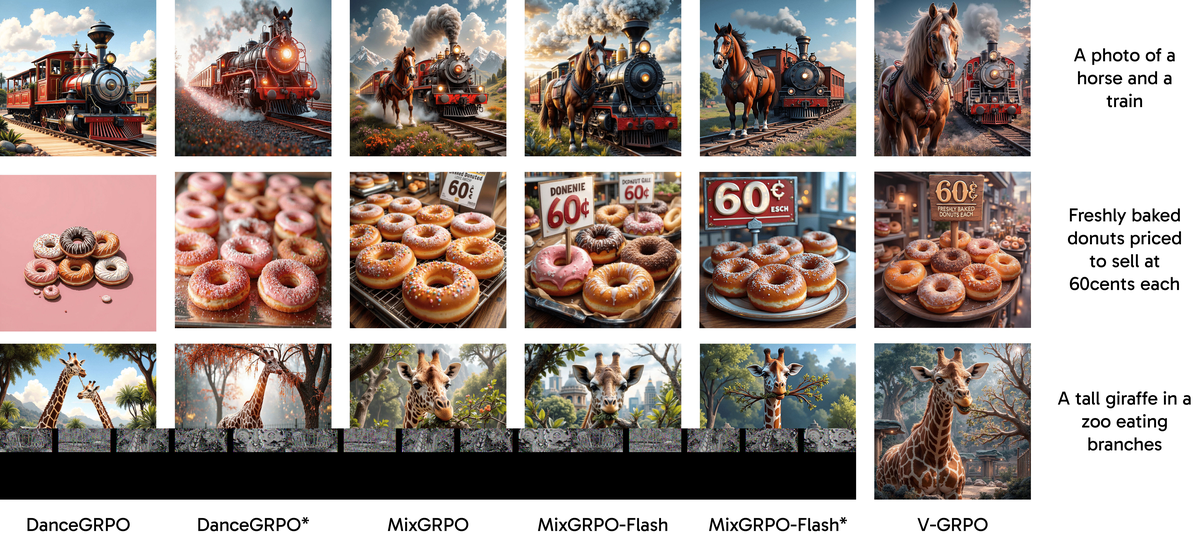
Figure 3 解读: FLUX.1-dev 主实验定性图展示 V-GRPO 在 alignment、coherence、style 上优于 baseline;第二个例子突出其未使用 OCR reward / task-specific dataset 也能改善 text rendering。
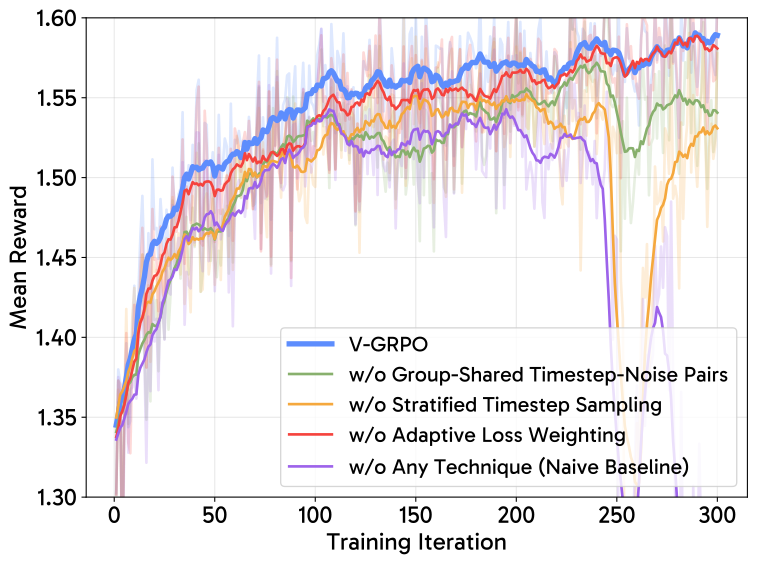
Figure 4 解读: FLUX 消融显示 naive ELBO-GRPO 明显不稳定;去掉 group-shared pair 或 stratified sampling 都会破坏收敛,去掉 adaptive weighting 则略降性能,说明稳定性主要来自 surrogate basis 的可比较性。
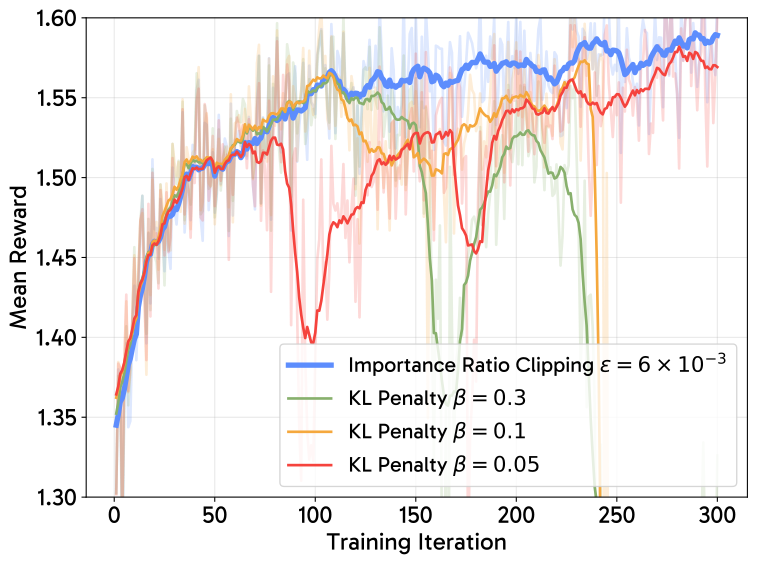
Figure 5 解读: 对 FLUX 来说,单独 KL penalty 无法抑制 loss spikes;importance ratio clipping 更适合作为常规稳定器。
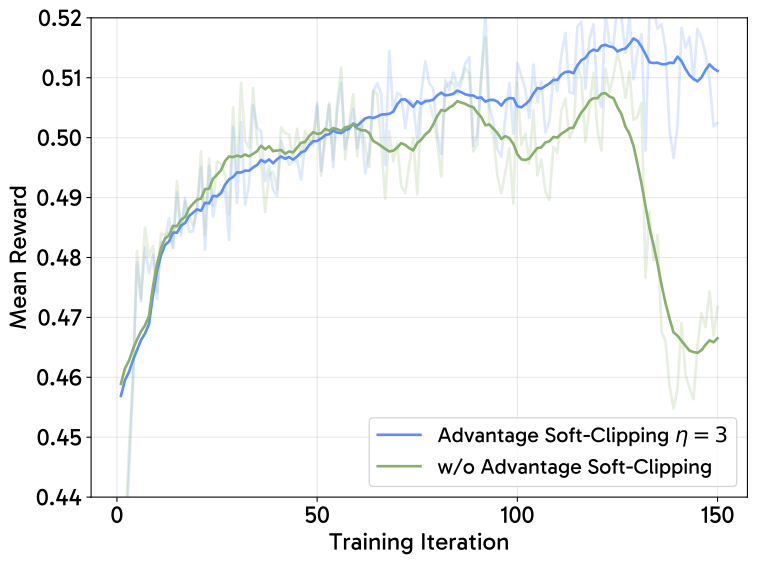
Figure 6 解读: 在 SD 3.5 M fully on-policy Stage-1 中,soft-clipping advantage 可以稳定训练;这是因为只有 1 个 gradient step 时 ,importance ratio clipping 不再起作用。
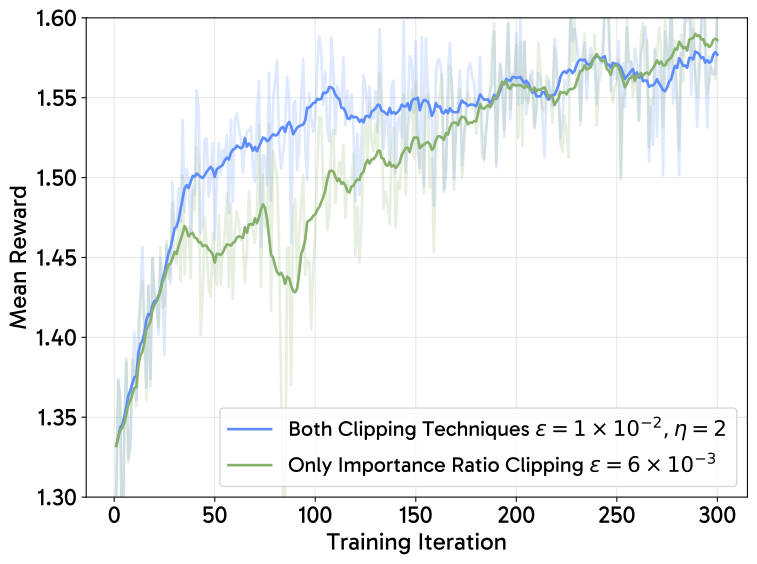
Figure 7 解读: 采样步数降到 16 时,advantage soft-clipping 对 FLUX 训练也有稳定效果,说明它适合“每次 rollout 信息更稀疏 / 更新更激进”的场景。
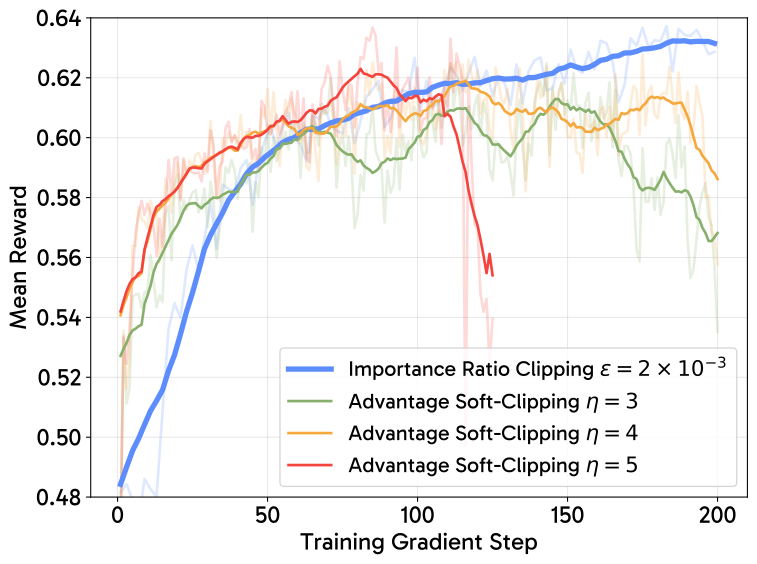
Figure 8 解读: 在 SD 3.5 M Stage-2 的粗粒度 GenEval reward 任务中,importance ratio clipping + 2 gradient steps 优于 advantage soft-clipping,说明不同 reward granularity 需要不同 update regulator。
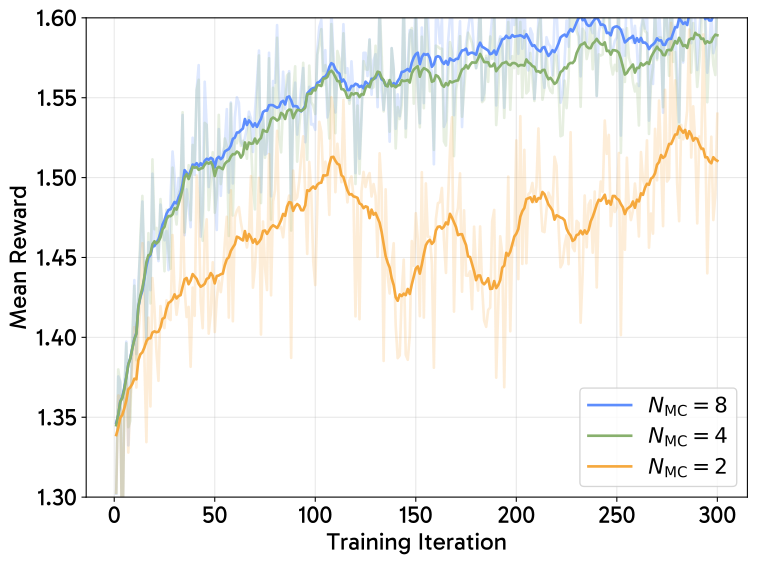
Figure 9 解读: 不足以收敛, 已较好,增到 8 只有边际收益;这与 MDP-based 方法中“optimized timesteps”饱和现象一致。
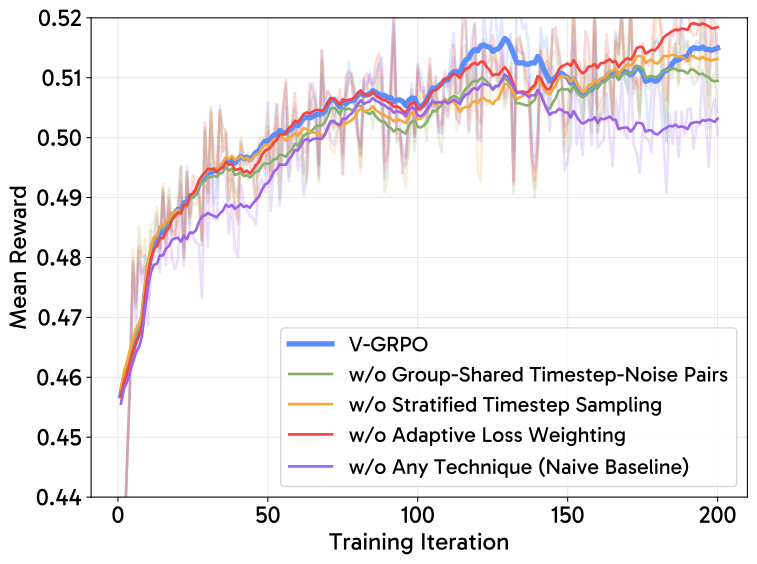
Figure 10 解读: SD 3.5 M 对 ELBO surrogate 更鲁棒;去掉单个组件影响不如 FLUX 剧烈,但三项技术整体仍有收益。
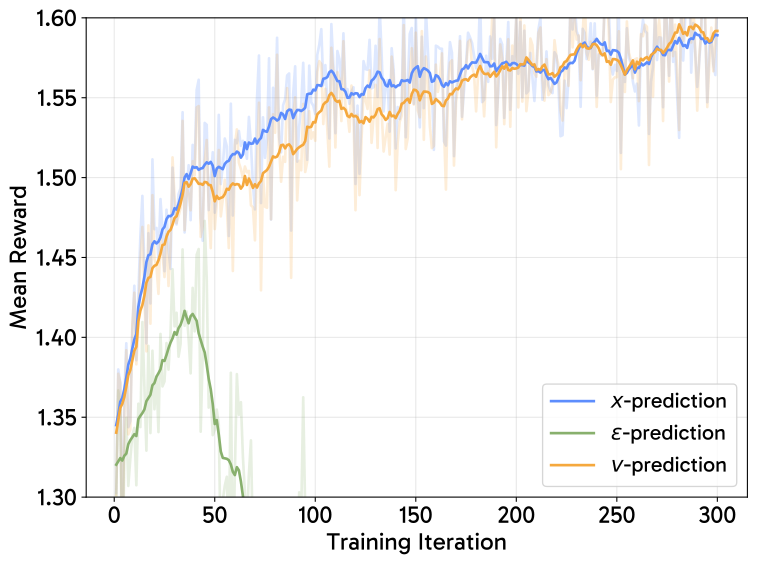
Figure 11 解读: adaptive loss weighting 中使用 -prediction 最优;-prediction 会训练 collapse,-prediction 稳定但收敛略慢。

Figure 12 解读: 补充 FLUX 定性图表明 V-GRPO 不只提升局部美学,也能改善复杂世界知识和 prompt coherence。

Figure 13 解读: SD 3.5 M 多阶段训练的定性图展示 V-GRPO 在 alignment、coherence、style 上达到与 DiffusionNFT 接近或更好的结果,同时训练步数更少。
4. Experimental Setup(实验设置)
- Base models: FLUX.1-dev(guidance-distilled,通常不显式使用 CFG)与 Stable Diffusion 3.5 Medium(训练与评估均关闭 CFG;作者观察 online RL 可起到 guidance distillation 作用)。
- Datasets / prompts: FLUX.1-dev 实验使用 HPDv2 prompts;SD 3.5 M 按 DiffusionNFT,GenEval / OCR 用 Flow-GRPO prompt sets,其余训练用 Pick-a-Pic,评估用 DrawBench。论文未在正文列出每个 prompt set 的完整样本数;只明确训练设置与评估协议跟随对应 baseline。
- Rewards / metrics: 规则类 GenEval(组合图文对齐)、OCR(文字渲染);模型类 HPSv2.1、PickScore、CLIPScore、ImageReward、UnifiedReward、Aesthetics,评估 image quality、image-text alignment 与 human preference。
- Training config: FLUX 主实验训练 300 iterations,每轮 4 gradient steps,global batch size 8/step,group size 12,AdamW lr=1e-5、weight decay 1e-4,,720×720 rollout,16 或 25 sampling steps,评估 1024×1024 / 50 steps,并用 MixGRPO hybrid sampling()。SD 3.5 M 使用 LoRA r=32, alpha=64,AdamW lr=3e-4、weight decay 1e-4,global batch size 48,group size 24,五阶段总 580 gradient steps,512×512 / 40 steps;BF16 rollout,master weights、surrogate 与 backward 用 FP32。
5. Experimental Results(实验结果)
Teaser speed / average reward(Table 1)
| Method | Steps | Reward | ||
|---|---|---|---|---|
| FLUX.1-dev | — | — | — | 1.25 |
| + BranchGRPO | 300 | 13.68 | 13.68 | 1.40 |
| + MixGRPO | 300 | 25 | 4 | 1.41 |
| + V-GRPO | 150 | 16 + 4 | 4 | 1.42 |
| + V-GRPO | 300 | 16 + 4 | 4 | 1.45 |
| SD 3.5 M (w/o CFG) | — | — | — | 0.95 |
| + DiffusionNFT | 1.7K | 40 + 40 | 40 | 1.71 |
| + V-GRPO | 580 | 40 + 6.9 | 6.9 | 1.71 |
FLUX.1-dev multi-reward(Table 2)
| Method | HPS-v2.1 | PickScore | ImageReward | UnifiedReward | ||
|---|---|---|---|---|---|---|
| FLUX.1-dev | — | — | 0.313 | 0.227 | 1.088 | 3.370 |
| DanceGRPO | 25 | 4 | 0.334 | 0.225 | 1.335 | 3.374 |
| DanceGRPO* | 25 | 4 | 0.333 | 0.229 | 1.235 | 3.325 |
| DanceGRPO | 25 | 14 | 0.356 | 0.233 | 1.436 | 3.397 |
| BranchGRPO-WidPru | 13.68 | 8.625 | 0.364 | 0.231 | 1.609 | 3.383 |
| BranchGRPO-DepPru | 13.68 | 8.625 | 0.369 | 0.235 | 1.625 | 3.404 |
| BranchGRPO-Mix | 13.68 | 4.25 | 0.363 | 0.230 | 1.598 | 3.384 |
| BranchGRPO | 13.68 | 13.68 | 0.363 | 0.229 | 1.603 | 3.386 |
| MixGRPO-Flash* | 8 | 4 | 0.357 | 0.232 | 1.624 | 3.402 |
| MixGRPO-Flash | 16 | 4 | 0.358 | 0.236 | 1.528 | 3.407 |
| MixGRPO | 25 | 4 | 0.367 | 0.237 | 1.629 | 3.418 |
| V-GRPO | 16 + 4 | 4 | 0.372 | 0.241 | 1.731 | 3.437 |
| V-GRPO | 25 + 4 | 4 | 0.372 | 0.241 | 1.749 | 3.436 |
SD 3.5 M multi-stage multi-reward(Table 3)
| Method | Steps | GenEval | OCR | PickScore | CLIPScore | HPSv2.1 | Aesthetics | ImgRwd | UniRwd | ||
|---|---|---|---|---|---|---|---|---|---|---|---|
| SD XL† | — | — | — | 0.55 | 0.14 | 0.2242 | 0.287 | 0.280 | 5.60 | 0.76 | 2.93 |
| SD 3.5 L† | — | — | — | 0.71 | 0.68 | 0.2291 | 0.289 | 0.288 | 5.50 | 0.96 | 3.25 |
| SD 3.5 M (w/o CFG) | — | — | — | 0.24 | 0.12 | 0.2051 | 0.237 | 0.204 | 5.13 | -0.58 | 2.02 |
| + CFG | — | — | — | 0.63 | 0.59 | 0.2234 | 0.285 | 0.279 | 5.36 | 0.85 | 3.03 |
| + FlowGRPO | >5K | 40 | 40 | 0.95 | 0.66 | 0.2251 | 0.293 | 0.274 | 5.32 | 1.06 | 3.18 |
| + FlowGRPO | 2K | 40 | 40 | 0.66 | 0.92 | 0.2241 | 0.290 | 0.280 | 5.32 | 0.95 | 3.15 |
| + FlowGRPO | 4K | 40 | 40 | 0.54 | 0.68 | 0.2350 | 0.280 | 0.316 | 5.90 | 1.29 | 3.37 |
| + DiffusionNFT | 1.7K | 40 + 40 | 40 | 0.94 | 0.91 | 0.2380 | 0.293 | 0.331 | 6.01 | 1.49 | 3.49 |
| + V-GRPO | 580 | 40 + 6.9 | 6.9 | 0.91 | 0.91 | 0.2350 | 0.298 | 0.341 | 6.02 | 1.52 | 3.43 |
KL 保留旧能力(Table 4)
| Method | GenEval | OCR |
|---|---|---|
| Importance ratio clipping | 0.87 | 0.93 |
| KL penalty | 0.91 | 0.91 |
训练效率(Appendix Table 5)
| Stage | DiffusionNFT Steps | DiffusionNFT NFE | V-GRPO Steps | V-GRPO NFE |
|---|---|---|---|---|
| 1 Human Preferences | 800 | 120 | 150 | 48 |
| 2 GenEval | 300 | 120 | 200 | 60 |
| 3 Human Preferences | 200 | 120 | 150 | 48 |
| 4 GenEval | 200 | 120 | 50 | 60 |
| 5 OCR | 100 | 120 | 30 | 60 |
| Total | 1700 | 120 | 580 | 53.8 |
SD 3.5 M single-reward(Appendix Table 6)
| Setting / Method | Steps | GenEval | OCR | PickScore | CLIPScore | HPSv2.1 | Aesthetic | ImgRwd | UniRwd |
|---|---|---|---|---|---|---|---|---|---|
| SD 3.5 M (w/o CFG) | — | 0.24 | 0.12 | 0.2051 | 0.237 | 0.204 | 5.13 | -0.58 | 2.02 |
| + CFG | — | 0.63 | 0.59 | 0.2234 | 0.285 | 0.279 | 5.36 | 0.85 | 3.03 |
| GenEval / FlowGRPO | 4K | 0.97 | 0.30 | 0.2178 | 0.277 | 0.248 | 5.15 | 0.74 | 2.87 |
| GenEval / DiffusionNFT | 1K | 0.98 | 0.36 | 0.2192 | 0.271 | 0.251 | 5.33 | 0.68 | 2.91 |
| GenEval / V-GRPO | 600 | 0.97 | 0.34 | 0.2150 | 0.280 | 0.225 | 5.20 | 0.35 | 2.80 |
| OCR / FlowGRPO | 1K | 0.66 | 0.96 | 0.2194 | 0.280 | 0.257 | 5.18 | 0.31 | 2.86 |
| OCR / DiffusionNFT | 150 | 0.54 | 0.97 | 0.2163 | 0.281 | 0.246 | 5.19 | 0.37 | 2.81 |
| OCR / V-GRPO | 25 | 0.47 | 0.98 | 0.2170 | 0.277 | 0.243 | 5.21 | 0.28 | 2.83 |
| PickScore / FlowGRPO | 4K | 0.54 | 0.60 | 0.2362 | 0.257 | 0.295 | 6.42 | 1.17 | 3.17 |
| PickScore / DiffusionNFT | 2K | 0.53 | 0.64 | 0.2403 | 0.270 | 0.315 | 6.17 | 1.29 | 3.40 |
| PickScore / V-GRPO | 300 | 0.66 | 0.62 | 0.2403 | 0.267 | 0.308 | 6.42 | 1.30 | 3.26 |
关键发现与局限
- 主要结论: V-GRPO 在 FLUX 主实验四项 reward 指标全领先或并列最优;在 SD 3.5 M 上以 580 steps 匹配 DiffusionNFT 1.7K steps 的综合 reward,并以更低 达到 3× 梯度步加速。
- 消融结论: surrogate variance reduction 是 FLUX 成败关键; 存在饱和,4 是主要实验折中;KL penalty 适合保留旧能力,importance ratio clipping 适合抑制 spikes,advantage soft-clipping 适合 fully on-policy 或低采样步数场景。
- 作者明示边界: 结论指向“robustness and scalability”仍需进一步研究;官方源码当前未公开可访问,复现需要等待或自行实现 Algorithm 1。