1. Motivation (研究动机)
这篇论文研究的是 Streaming Video LLM 在边缘设备上的实时推理加速。Streaming Video LLM(如 VideoLLM-Online)需要持续接收视频帧并实时回答用户问题,其核心瓶颈在于 KV Cache 随视频流持续增长。
作者从三个层面指出了现有方案的根本问题:
- KV Cache 内存爆炸:KV Cache 以 复杂度增长( 为空间分辨率, 为时间长度)。在 10FPS、batch=4 的 edge GPU 设定下,几分钟的视频就会超出 32GB 显存容量;
- 现有 KV Cache Retrieval 算法在 Prefill 阶段失效:InfiniGen 等方法仅优化 generation 阶段,而 streaming video LLM 的主要瓶颈在 iterative prefill 阶段。在 40K KV Cache 长度时,83% 的延迟来自 prefill 阶段,其中 74% 来自 KV retrieval;
- 固定 Top-K 选择策略不灵活:GPU-oriented 的算法(FlexGen、InfiniGen、ReKV)依赖固定 top-k 选择。但不同 transformer 层和 attention head 的 token 重要性分布差异巨大(4.2%~44.0%),固定 k 要么浪费带宽、要么损失精度。
因此,论文提出的核心问题是:如何在资源受限的边缘设备上,实现 streaming video LLM 的实时推理(>2 FPS),同时保持几乎无损的精度?
2. Idea (核心思想)
V-Rex 的核心思想可以概括为:软硬件协同设计(SW-HW Co-design),通过算法层面的 ReSV 减少 KV Cache 检索量,通过硬件层面的 DRE 加速不规则的检索计算。
更具体地说,V-Rex 的创新在三个关键维度:
- ReSV 算法(Training-free):利用视频帧间的时空相似性,通过 hash-bit key clustering 把相似 token 聚类到一起,再通过 WiCSum thresholding 动态选择最重要的 cluster,而非固定 top-k。这使得不同 layer/head 可以自适应地选择不同数量的 token;
- DRE 硬件引擎:专门为 ReSV 的不规则计算(bit-level XOR、条件分支、early-exit sorting)设计的紧凑硬件单元,仅占芯片面积的 2.0% 和功耗的 2.4%;
- 层次化 KV Cache 管理(KVMU):基于 hash cluster 的内存映射策略,使同一 cluster 的 token 在存储中连续排列,最大化 PCIe 带宽利用率。
与 ReKV / InfiniGen 等纯软件方案相比,V-Rex 的根本差异在于:它不是在 GPU 上勉强适配检索算法,而是为检索操作设计了专用硬件,从而将 KV prediction 延迟从总计算的 23% 降低到 0.5%。
3. Method (方法)
3.1 Streaming Video LLM 架构与工作流
Streaming Video LLM 由三个核心模块组成:Vision Tower(如 SigLIP-ViT-L-384)、MLP Projector、LLM(如 Llama-3 8B)。
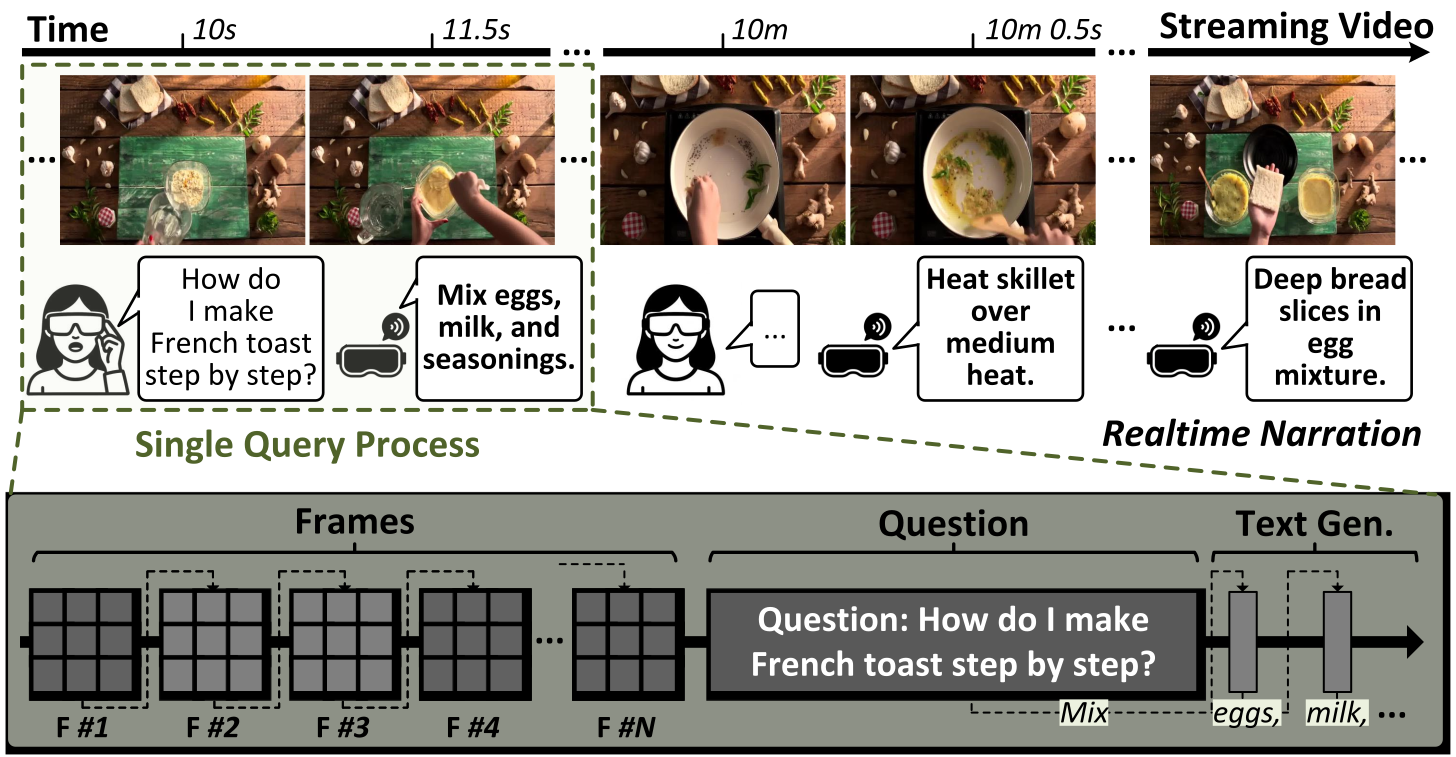
Figure 2 解读: Figure 2 展示了 streaming video LLM 的工作流程。视频流持续输入,用户可以在任意时刻提出问题(如”How do I make French toast step by step?“),模型需要实时生成回答。与 offline video LLM 不同,streaming 模式下帧是逐个到达的,每帧都需要做一次 iterative prefill。
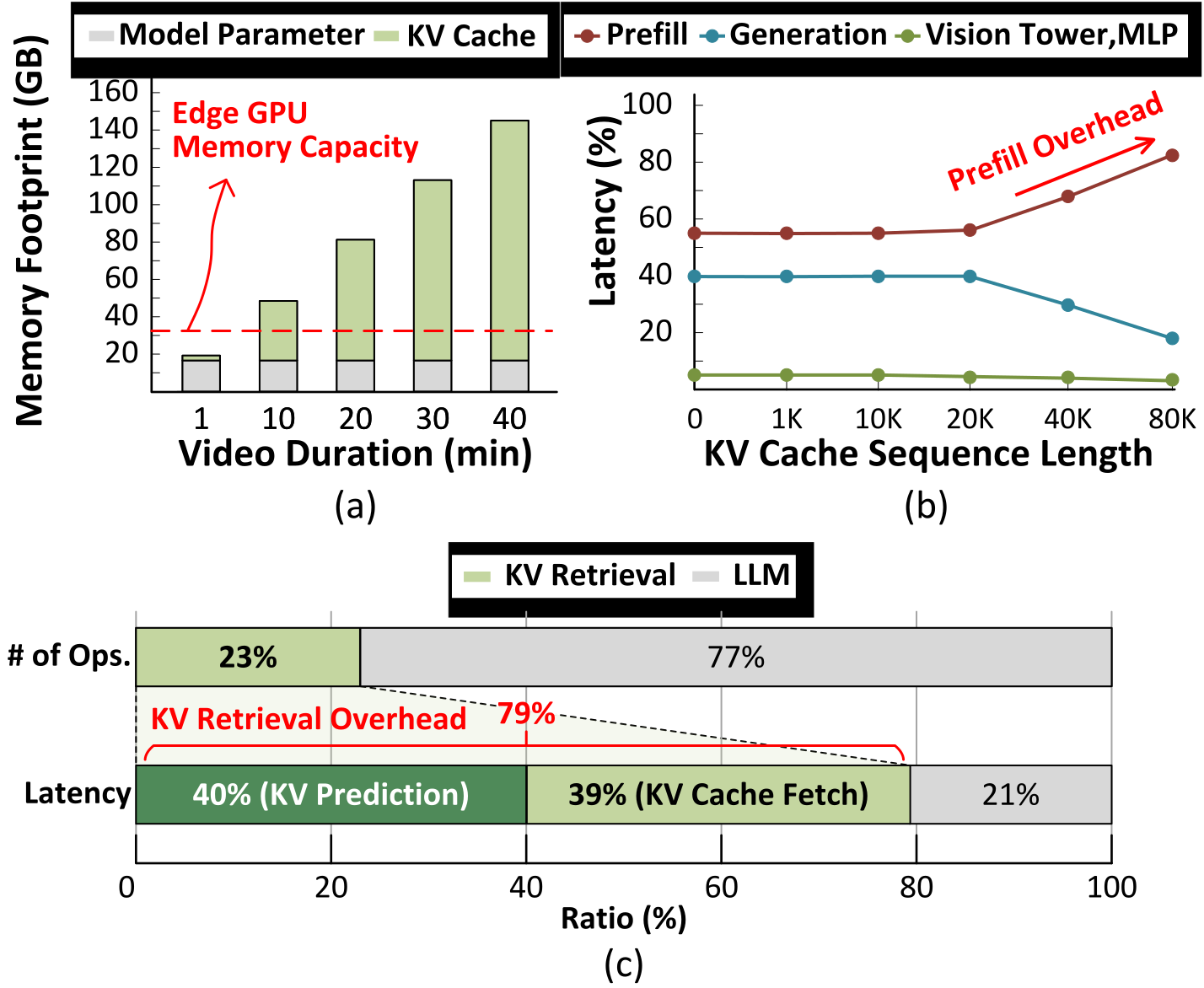
Figure 3 解读: Figure 3 展示了 streaming video LLM 的模型架构细节。每帧经过 Vision Tower 和 MLP 后生成视觉 token,然后进入 LLM 做 iterative prefill。关键点在于:每帧的 prefill 都要 attend 到之前所有帧的 KV Cache,这使得 KV Cache 不断累积,直到视频结束。在 generation 阶段,模型只基于累积的 frame KV Cache 和 question token 来生成回答。
3.2 现有 KV Cache Retrieval 的挑战
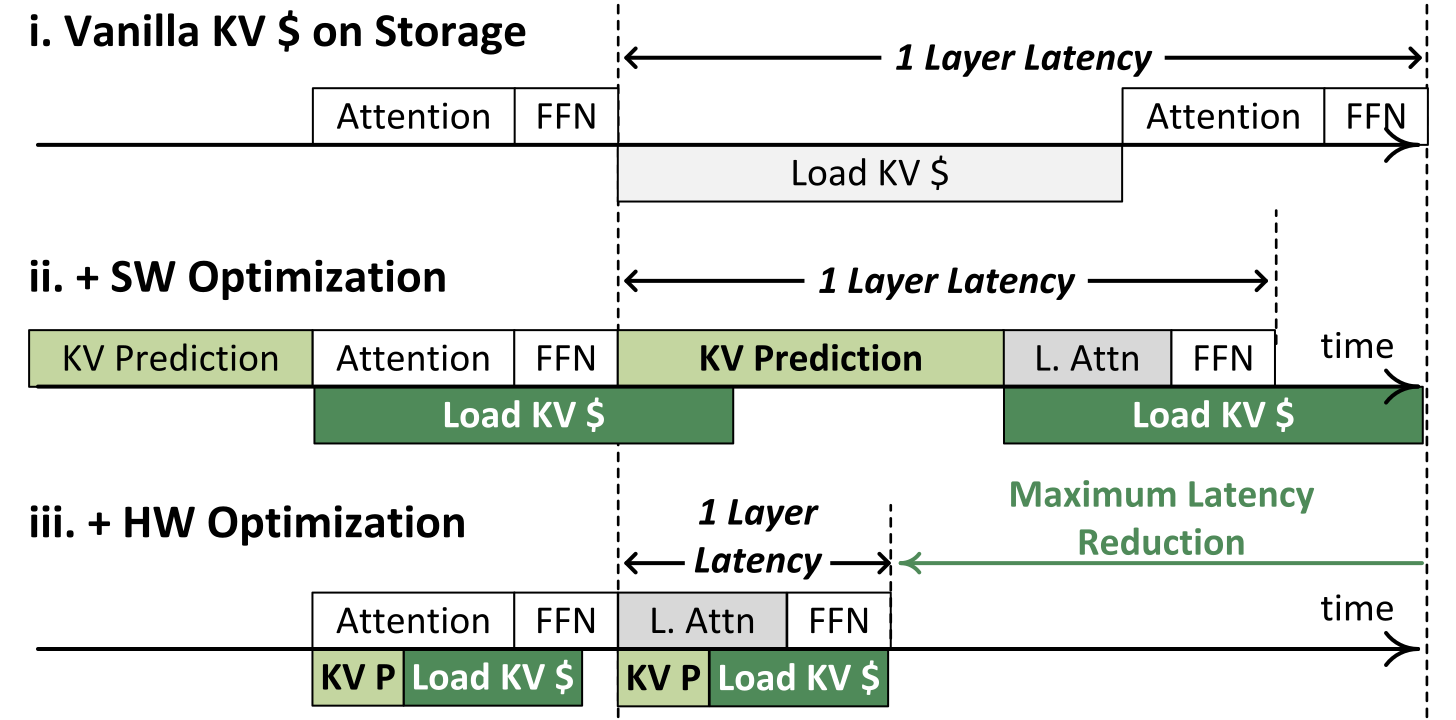
Figure 4 解读: Figure 4 用三组数据揭示了 streaming video LLM 的核心瓶颈。(a) KV Cache 的内存占用随视频时长线性增长,在 10FPS、batch=4 时几分钟就超出 edge GPU 的 32GB 显存;(b) 随着 KV Cache 序列长度增加,prefill 在端到端延迟中的占比从60% 飙升到83%(在 80K 时);(c) 在 40K KV Cache 下,InfiniGen 的 KV retrieval 操作数虽然只占 23%,但延迟占比达到 79%,其中 40% 是 KV prediction 计算,39% 是 KV Cache fetch。
现有方案的三大痛点:
痛点 1:Retrieval 算法在 Prefill 阶段效果差。 InfiniGen 等方法设计用于 generation 阶段(每次只有一个 query token),但 streaming video LLM 的 prefill 阶段有多个 query token(一帧图片的所有 visual token),导致 KV prediction 计算量大幅增加。
痛点 2:GPU-oriented 算法的计算和传输开销大。 在 prefill 阶段,KV prediction 需要做 的全矩阵乘法来评估每个 token 的重要性,这本身就是高开销操作。加上 CPU-GPU 之间的 PCIe 传输(4-32 GB/s 远小于 GPU 内存带宽 1-2 TB/s),延迟进一步恶化。
痛点 3:固定 Top-K 的不灵活性。 不同 layer 和 head 需要的 token 数量差异巨大。固定 k 值要么导致 over-fetching(浪费带宽和能耗),要么导致 under-fetching(损失精度)。
3.3 V-Rex 的软硬件协同设计策略
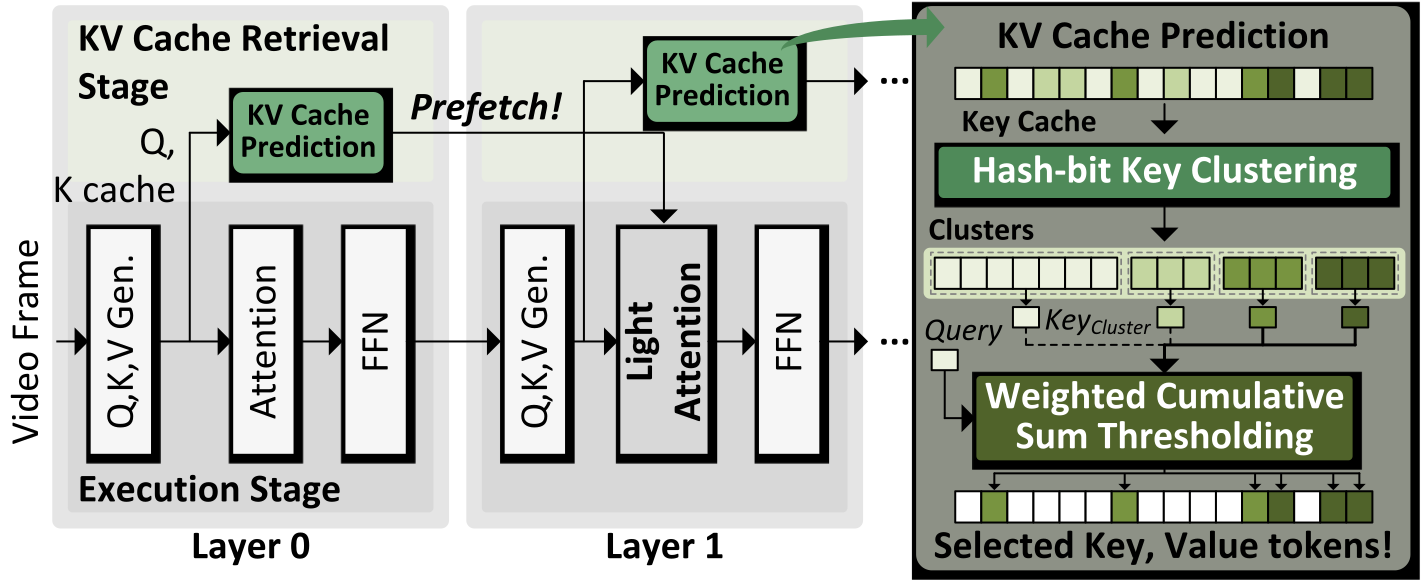
Figure 5 解读: Figure 5 展示了 V-Rex 的三层优化策略。(i) Vanilla KV Cache on Storage:最简单的 offloading,每层先 load KV,再做 Attention+FFN;(ii) +SW Optimization(加 ReSV):在 load KV 的同时做 KV Prediction,预测下一层需要的 token,实现 pipeline 重叠,但 KV prediction 本身仍有开销;(iii) +HW Optimization(加 DRE):KV Prediction 由专用硬件 DRE 执行,可以与 LLM 的 Attention+FFN 完全重叠,实现最大延迟缩减。
3.4 ReSV 算法
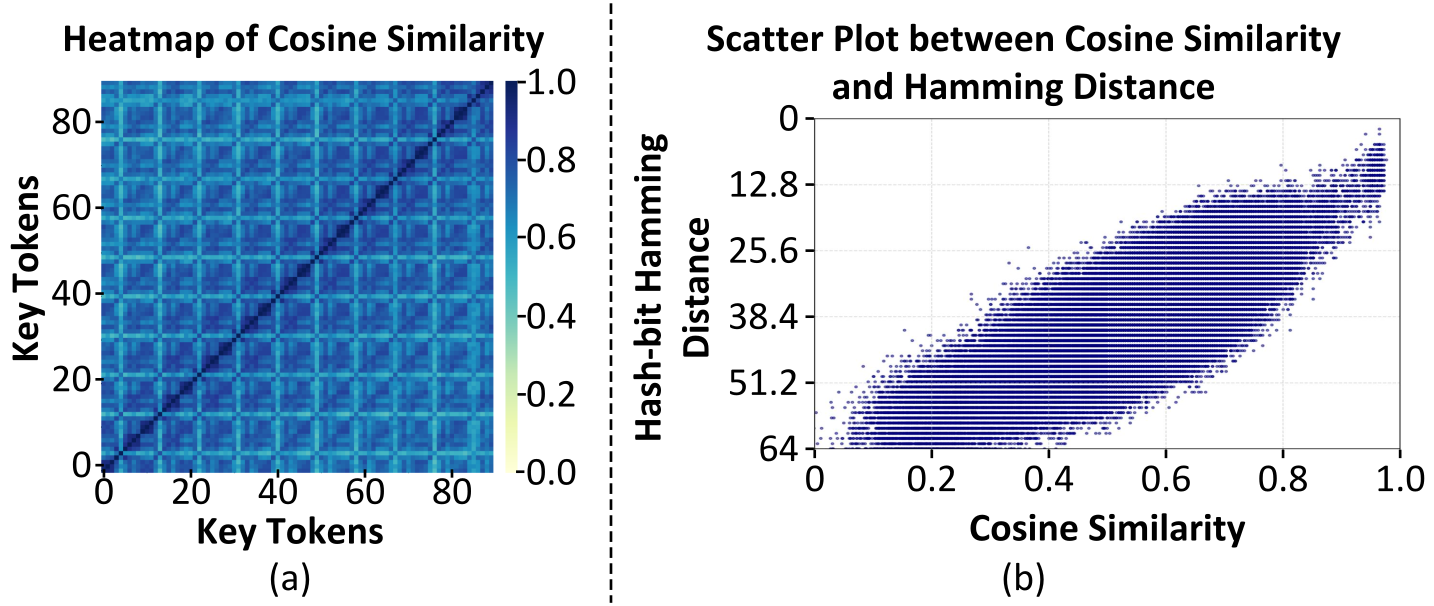
Figure 6 解读: Figure 6 是 ReSV 算法的整体流程图。算法分为两个阶段:(1) KV Cache Retrieval Stage(在当前层的 QKV 生成后立即执行,为下一层预取 KV)和 (2) Execution Stage(用检索到的 KV 做 light attention)。KV prediction 的核心是两步:先用 hash-bit key clustering 将相似 token 聚类,再用 WiCSum thresholding 动态选择最重要的 cluster。
ReSV 的两个核心步骤:
3.4.1 Hash-bit Key Clustering
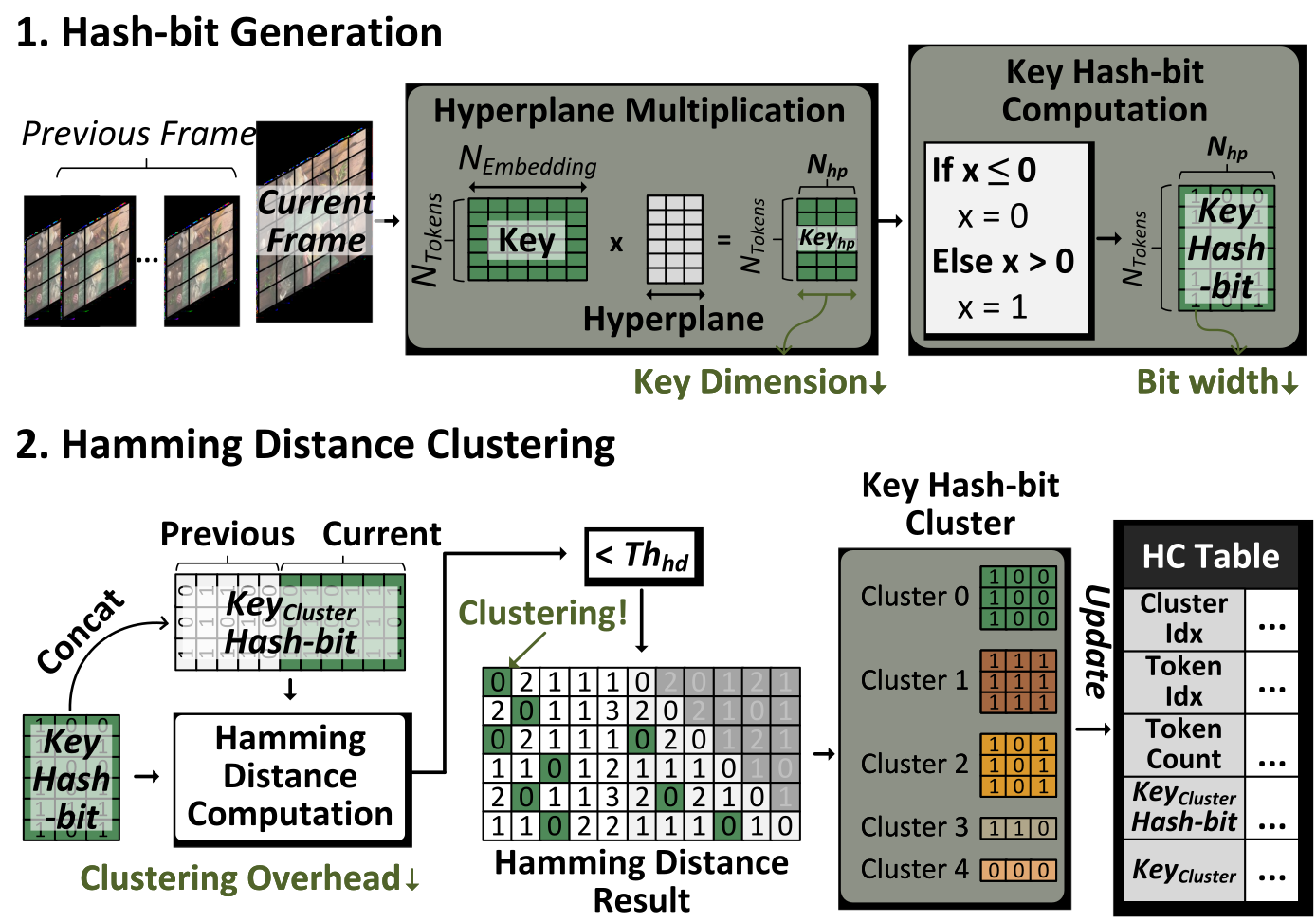
Figure 7 解读: Figure 7 提供了 hash-bit clustering 的理论依据。(a) 相邻帧 key token 之间的 cosine similarity heatmap 显示对角线上有很强的相似性,说明视频帧间 token 存在高度时空相似性,可以被有效聚类;(b) Scatter plot 展示 cosine similarity 与 hash-bit hamming distance 之间有 0.8 的相关性,证明用低维 hash-bit 的 hamming distance 可以近似高维 cosine similarity,从而大幅降低计算开销。
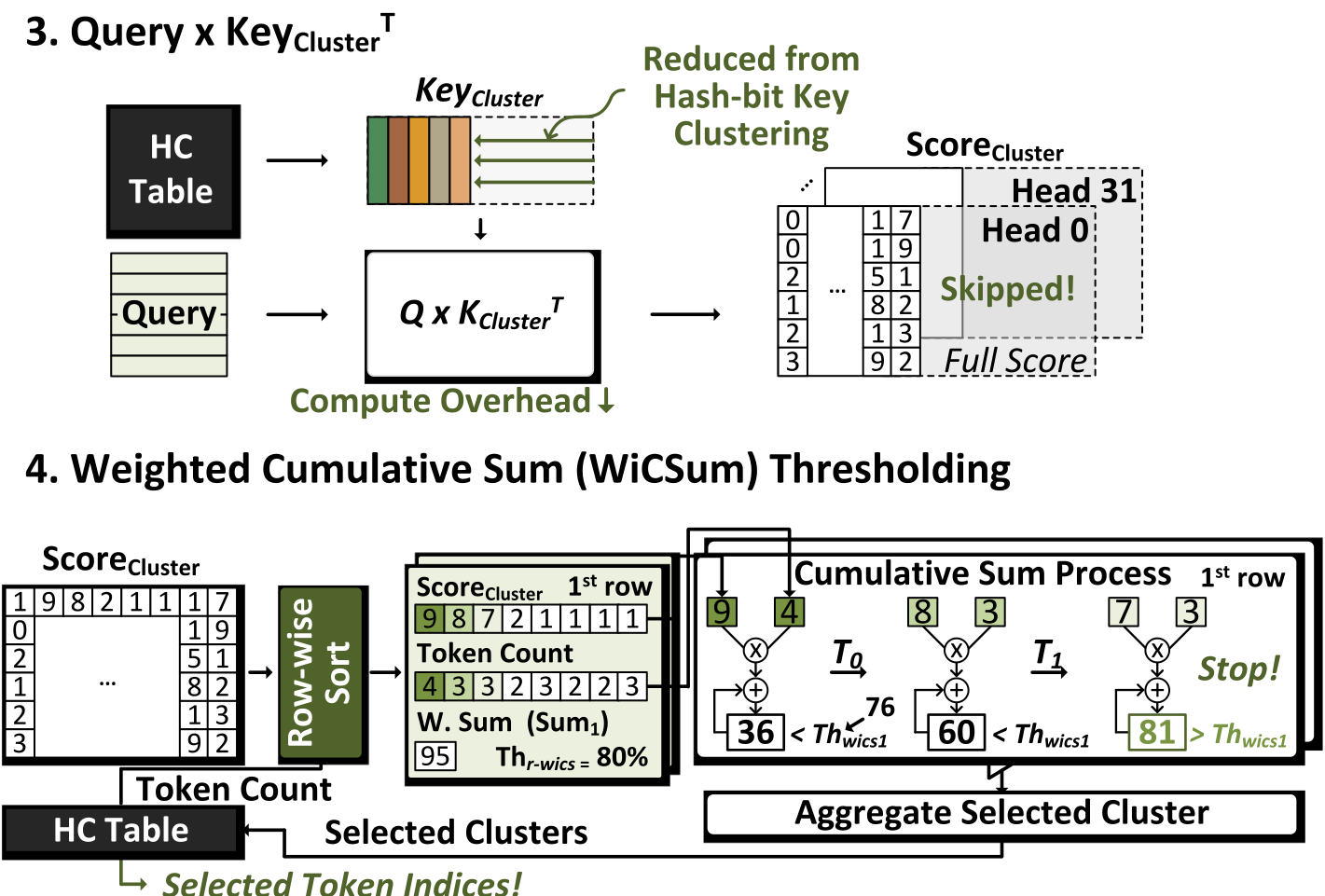
Figure 8 解读: Figure 8 详细展示了 hash-bit key clustering 的数据流。分两步:(1) Hash-bit Generation:Key 矩阵乘以 个随机超平面,然后二值化(,),得到 Key hash-bit,维度仅为原始 key 维度的 ;(2) Hamming Distance Clustering:对当前 key 的 hash-bit 与已有 cluster 的 hash-bit 做 XOR 运算计算 hamming distance,低于阈值 的 token 被归入同一 cluster。最终结果存入 Hash Cluster (HC) Table,包含 cluster index、token index、(cluster 内 key 均值)、hash-bit、token count。
Hash-bit generation 的计算复杂度极低:
- 原始 key 维度 被压缩到 个 bit()
- Hamming distance 通过 bit-wise XOR + popcount 计算,无需浮点运算
- Clustering 在每帧到达时增量更新,不需要重新计算
3.4.2 WiCSum Thresholding
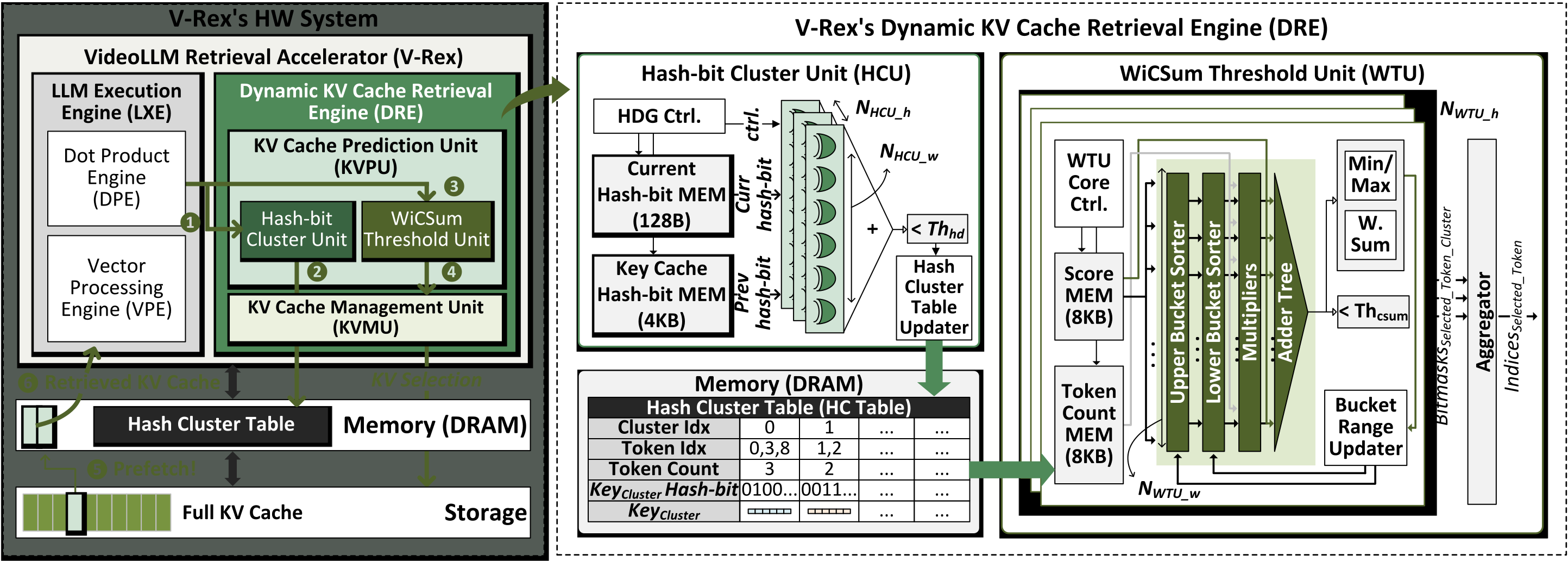
Figure 9 解读: Figure 9 展示了 WiCSum thresholding 的完整数据流。分两步:(1) 计算 得到 矩阵(因为只用 cluster 代表 key,维度大幅降低);(2) 对每行做 weighted cumulative sum thresholding:先按 score 降序排列 cluster,然后累加 score token count,直到超过阈值 ,即停止选择。
核心公式如下:
加权求和(Equation 1):
阈值计算(Equation 2):
累加阈值检查(Equation 3):
其中 是按 降序排列的排列函数, 是第 个 cluster 的 token count。
WiCSum 的关键优势在于:不同 layer、不同 head 会自动选择不同数量的 token,因为阈值是基于当前 query 与所有 cluster 的 score 分布动态计算的。这使得 retrieval ratio 在不同层之间可以从 4.2% 变化到 44.0%。
3.5 V-Rex 硬件架构
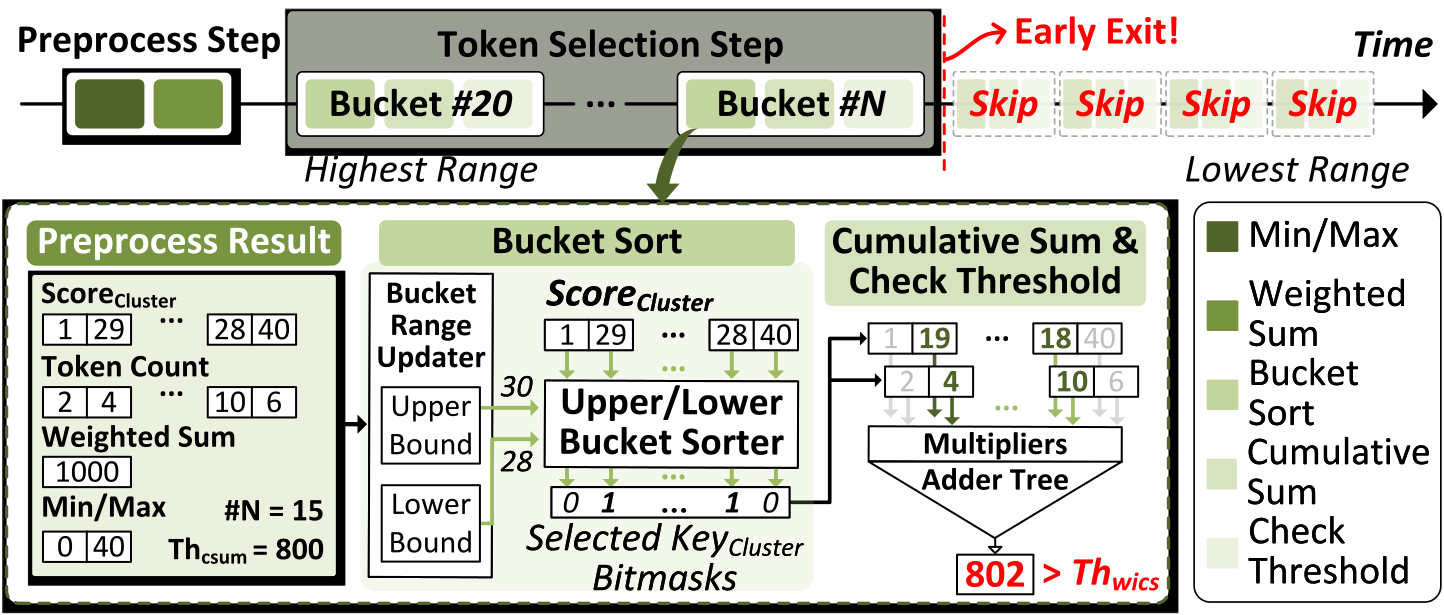
Figure 10 解读: Figure 10 是 V-Rex 的完整硬件架构图。左侧是系统级视图:V-Rex 加速器包含 LLM Execution Engine (LXE) 和 Dynamic KV Cache Retrieval Engine (DRE),DRE 又分为 KV Cache Prediction Unit (KVPU) 和 KV Cache Management Unit (KVMU)。右侧展示了 DRE 的内部结构:KVPU 包含 Hash-bit Cluster Unit (HCU,用 XOR accumulators 做 hamming distance 计算) 和 WiCSum Threshold Unit (WTU,用 bucket sorters + early-exit 做动态阈值选择)。执行流程为:(1) LXE 生成 hash-bit → (2) HCU 做 hamming distance clustering → (3) LXE 计算 → (4) WTU 做 WiCSum thresholding → (5) KVMU prefetch 选中的 KV → (6) 检索到的 KV 用于 attention。
硬件参数(每个 V-Rex core):
- DPE: (BF16 MAC trees)
- VPE:
- HCU: (XOR accumulators)
- WTU: (bucket sorters + adder trees)
3.5.1 Early-Exit Sorting
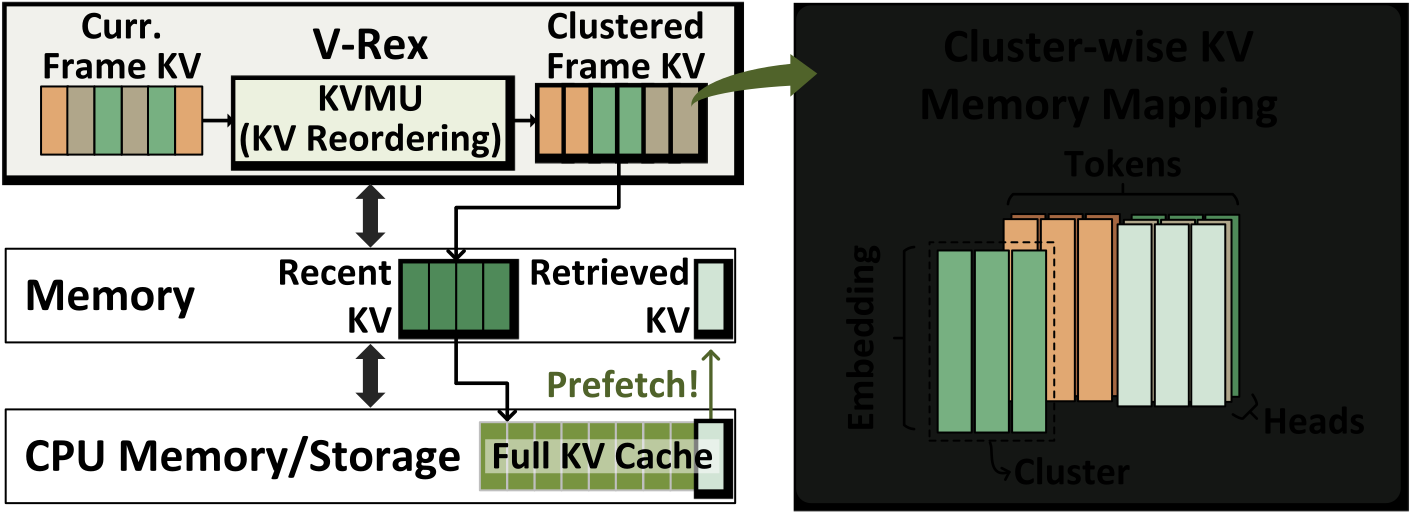
Figure 11 解读: Figure 11 展示了 WTU 中的 early-exit sorting 机制。WTU 先做预处理(计算每行的 weighted sum、min/max、token count、),然后从最高分的 bucket 开始做 bucket sort + cumulative sum。一旦累积和超过阈值 ,就提前终止排序。这非常高效,因为少量高分 cluster 通常就能占到 weighted sum 的大部分(平均只需处理 16% 的 cluster)。
3.5.2 层次化内存系统与 Cluster-wise Memory Mapping
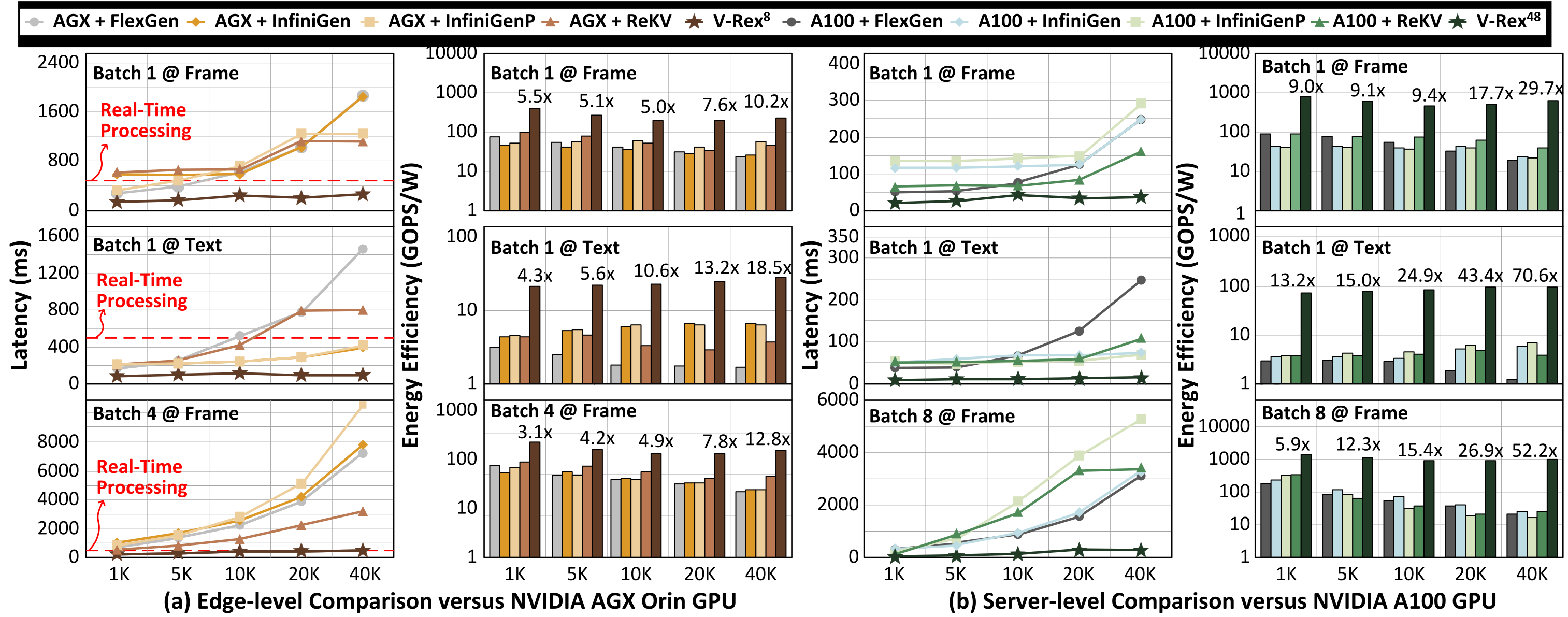
Figure 12 解读: Figure 12 展示了 V-Rex 的层次化内存系统。V-Rex 的 on-chip memory 存放最近的 KV Cache,超出容量的旧 KV 被 offload 到 CPU memory 或 storage。KVMU 的关键创新在于 cluster-wise memory mapping:同一个 hash cluster 内的 token 在存储中被连续排列,使得 prefetch 一个 cluster 时可以一次性传输,最大化 PCIe 带宽利用率。这个 reordering 在 V-Rex 内部以 streaming 方式完成,不需要访问 CPU/storage。
3.6 Pseudocode
3.6.1 ReSV 整体流程
def resv_kv_prediction(query, kv_cache, hc_table, hyperplanes, th_hd, th_r_wics):
    """ReSV: 为当前 query 预测需要检索的 KV token indices"""

    # ---- Step 1: Hash-bit Key Clustering (增量更新,每新帧执行一次) ----
    # 对新帧的 key 做 hash-bit 生成
    key_hp = key_new @ hyperplanes          # [N_tokens, N_hp]
    key_hashbit = (key_hp > 0).int()        # 二值化: [N_tokens, N_hp]

    for token_idx, hashbit in enumerate(key_hashbit):
        # 计算与所有已有 cluster 的 hamming distance
        distances = xor_popcount(hashbit, hc_table.cluster_hashbits)  # bit-wise XOR + count
        min_dist, min_cluster = distances.min(dim=0)

        if min_dist < th_hd:
            hc_table.add_to_cluster(min_cluster, token_idx)  # 归入已有 cluster
            hc_table.update_key_cluster(min_cluster)          # 更新 Key_cluster 均值
        else:
            hc_table.create_new_cluster(token_idx, hashbit)   # 创建新 cluster

    # ---- Step 2: WiCSum Thresholding ----
    # 用 cluster 代表 key 计算 score(维度大幅降低)
    score_cluster = query @ hc_table.key_clusters.T     # [N_query, N_cluster]
    token_counts = hc_table.token_counts                # [N_cluster]

    selected_indices = []
    for i in range(score_cluster.shape[0]):              # 逐 query row
        # 计算 weighted sum 和阈值
        weighted_sum = (score_cluster[i] * token_counts).sum()
        threshold = weighted_sum * th_r_wics

        # 按 score 降序排列 cluster
        sorted_idx = score_cluster[i].argsort(descending=True)

        # 累加直到超过阈值(early-exit)
        acc = 0.0
        for j in sorted_idx:
            acc += score_cluster[i, j] * token_counts[j]
            selected_indices.extend(hc_table.get_token_indices(j))
            if acc > threshold:
                break

    return list(set(selected_indices))  # 去重后返回
3.6.2 V-Rex 端到端推理 Pipeline
def vrex_streaming_inference(video_stream, questions, vrex_accelerator):
    """V-Rex streaming video LLM 推理主循环"""
    kv_cache = HierarchicalKVCache(on_chip=vrex_accelerator.memory,
                                    off_chip="cpu_memory_or_storage")
    hc_table = HashClusterTable()

    for frame in video_stream:
        # ---- Iterative Prefill Stage ----
        visual_tokens = vision_tower(frame)               # SigLIP-ViT-L-384
        projected_tokens = mlp_projector(visual_tokens)

        for layer_idx in range(num_layers):
            # 当前层:生成 QKV
            q, k, v = compute_qkv(projected_tokens, layer_idx)

            # 【并行执行 1】LXE: 用已检索的 KV 做 light attention + FFN
            if layer_idx > 0:
                output = light_attention(q, retrieved_kv[layer_idx], k, v)
                output = ffn(output, layer_idx)

            # 【并行执行 2】DRE: 为下一层预测需要的 KV
            # HCU: hash-bit clustering (bit-level XOR, 硬件加速)
            vrex_accelerator.hcu.update_clusters(k, hc_table)
            # LXE: Q × Key_cluster^T
            score_cluster = q @ hc_table.key_clusters.T
            # WTU: WiCSum thresholding with early-exit (硬件加速)
            selected = vrex_accelerator.wtu.threshold_select(score_cluster, hc_table)
            # KVMU: prefetch selected KV from off-chip
            retrieved_kv[layer_idx + 1] = kv_cache.prefetch(selected)

            # 更新 KV Cache(自动 offload 旧数据)
            kv_cache.append(k, v, layer_idx)

    # ---- Generation Stage (用户问题到来时) ----
    for question in questions:
        question_tokens = tokenize(question)
        # generation 阶段同样使用 ReSV 检索,但 retrieval ratio 更低 (1.4%-2.9%)
        answer = generate_with_resv(question_tokens, kv_cache, hc_table)
        yield answer
3.7 代码映射表
| 论文概念 | 说明 | 备注 |
|---|---|---|
| ReSV Algorithm | Training-free KV cache retrieval 算法 | 未开源,paper Section IV |
| Hash-bit Key Clustering | 利用随机超平面 + 二值化 + XOR hamming distance 聚类 | HCU 硬件加速 |
| WiCSum Thresholding | 加权累积和动态阈值选择 | WTU 硬件加速,early-exit |
| DRE (Dynamic Retrieval Engine) | 专用硬件引擎:HCU + WTU | 仅占 2.0% 面积,2.4% 功耗 |
| LXE (LLM Execution Engine) | 主 LLM 计算引擎:DPE + VPE | BF16,384KB on-chip memory |
| KVMU | KV Cache 管理单元 | Cluster-wise memory mapping |
| HC Table | Hash Cluster Table | 存储 cluster info,仅占 KV Cache 的 1.67% |
| VideoLLM-Online | 基线 streaming video LLM | 使用 Llama-3 8B + SigLIP-ViT-L-384 |
| COIN Benchmark | 主要评估数据集 | 5 个 benchmark 的 Top-1 Accuracy |
注意:本文为软硬件协同设计论文(HPCA 2026),未公开源码。上述伪代码基于论文描述重构,不对应真实代码仓库。
4. Experimental Setup (实验设置)
4.1 实验设置
| 配置项 | Edge (V-Rex) | Server (V-Rex) |
|---|---|---|
| V-Rex Cores | 8 | 48 |
| Peak Throughput (TFLOPS) | 53.3 | 319.5 |
| Memory Bandwidth | LPDDR5: 204.8 GB/s | HBM2e: 1935 GB/s |
| Memory Capacity | 32 GB | 80 GB |
| PCIe Bandwidth | 4 GB/s | 32 GB/s |
| Power | 35 W | 203.68 W |
| Process | 14nm, 0.8V, 800MHz | 14nm, 0.8V, 800MHz |
对比基线:AGX Orin + FlexGen / InfiniGen / InfiniGenP / ReKV,以及 NVIDIA A100 GPU。
模型:Llama-3 8B + SigLIP-ViT-L-384(VideoLLM-Online)。
评估数据集:COIN(5 个 benchmark)。
KV Cache sizes:1K, 5K, 10K, 20K, 40K tokens。
ReSV 超参数:,,。
5. Experimental Results (实验结果)
5.1 延迟与能效
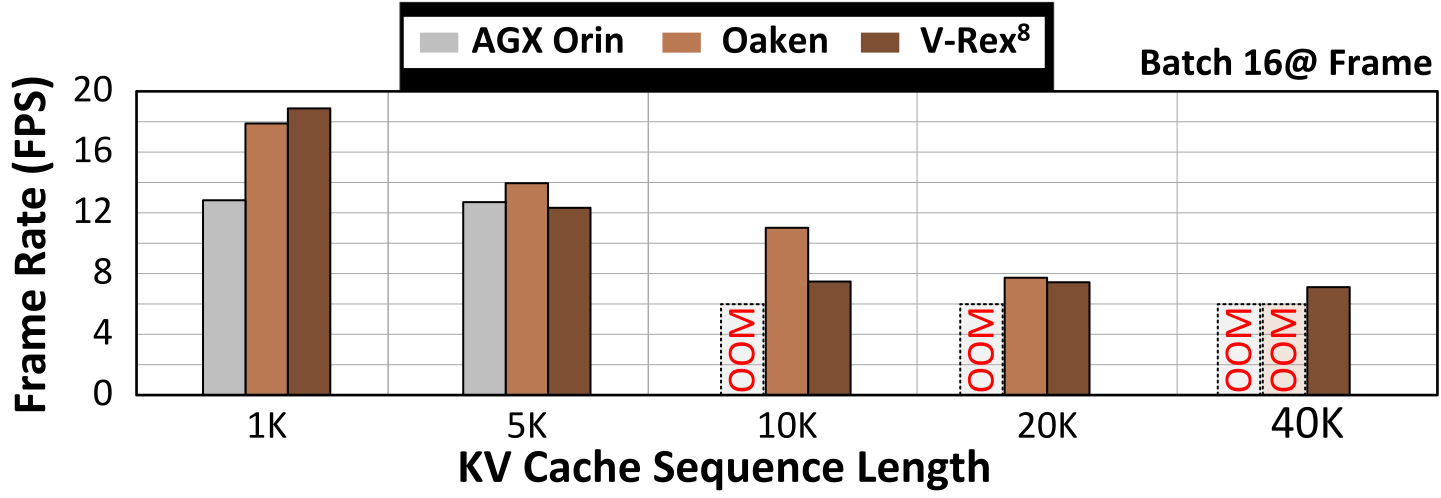
Figure 13 解读: Figure 13 是论文最核心的性能对比图,分 Edge GPU (AGX Orin) 和 Server GPU (A100) 两组。左侧两列是延迟,右侧两列是能效(log scale)。
Edge GPU 结果:
- Frame processing (Batch 1):V-Rex 的 per-frame latency 为 121-254ms(1K-40K),对应 3.9-8.3 FPS,是唯一能在所有 KV Cache 大小下保持实时( FPS)的方案。AGX+FlexGen 在 40K 时延迟达~2400ms;
- Text generation (Batch 1):TPOT 为 89-97ms,加速 1.9-15.1;
- Batch 4 @ Frame:加速 2.1-13.8;
- Energy efficiency:Frame processing 达 5.5-10.2 能效提升,Text generation 达 4.3-18.5。
Server GPU 结果:
- Batch 1:20-48ms per-frame,加速 2.6-7.3;
- Batch 8:加速 3.4-19.7,TPOT 14-15ms;
- Energy efficiency:Frame processing 达 9.0-29.7(Batch 1),Text generation 达 13.2-70.6(Batch 8)。
5.2 端到端延迟分解
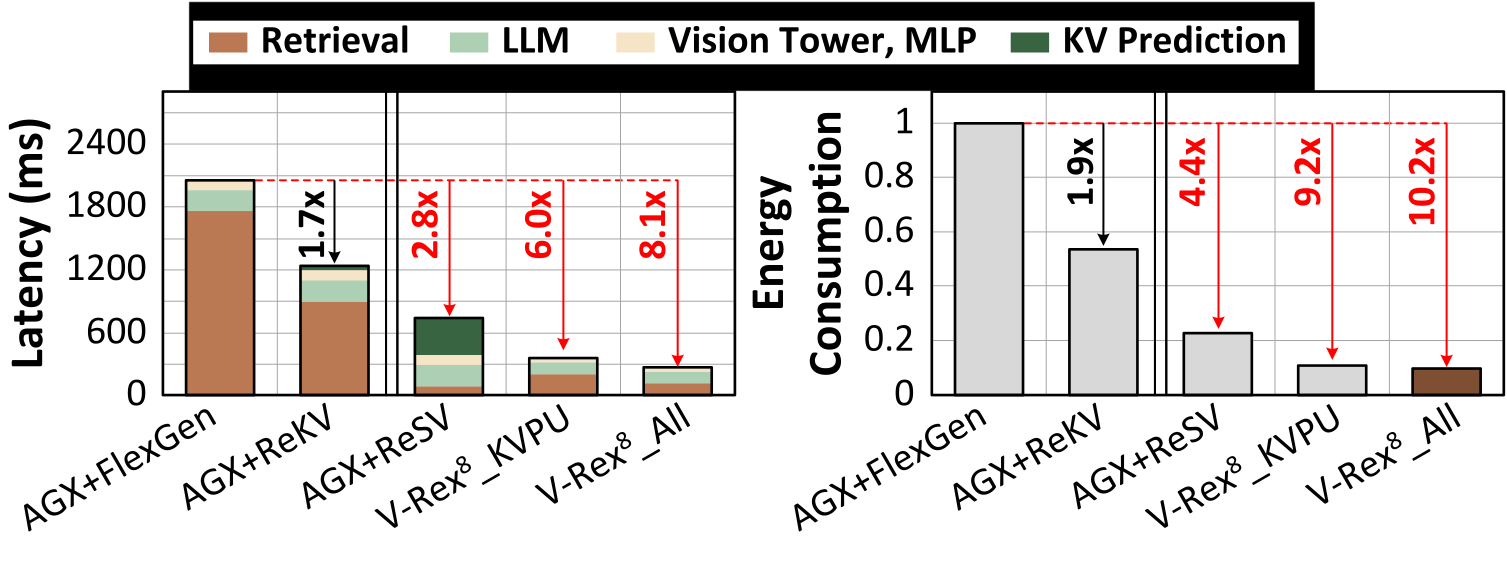
Figure 14 解读: Figure 14 对比了 AGX Orin 和 V-Rex 在不同 KV Cache 长度下的端到端延迟分解。关键发现:AGX+FlexGen 的延迟随 KV Cache 增长而爆炸,且 prefill 占比越来越高;纯软件优化(InfiniGenP、ReKV)在 1K-20K 范围内甚至比 FlexGen 更慢(因为 KV prediction 开销);V-Rex 通过硬件卸载将 KV prediction 延迟降到可忽略,在 40K 时实现了 5.4 的端到端延迟缩减。
5.3 与 SOTA 加速器对比
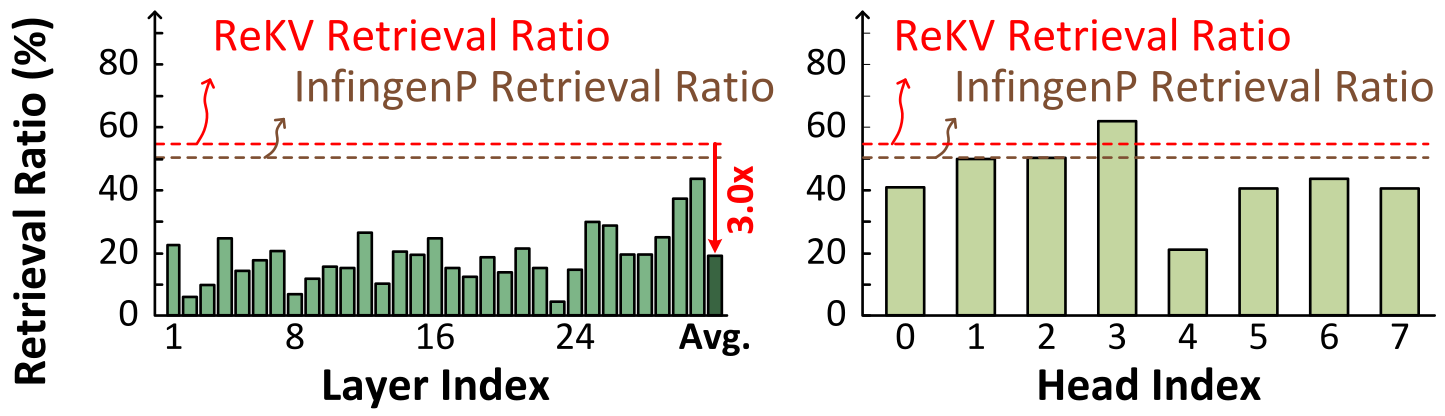
Figure 15 解读: Figure 15 将 V-Rex 与 Oaken(基于 4-bit KV cache quantization 的 SOTA LLM 加速器)在 AGX Orin 上进行吞吐量对比(Batch 16 @ Frame)。在 1K 序列长度时,V-Rex 比 AGX Orin 快 1.5,比 Oaken 快 1.1;但在 20K 以上,Oaken 因为量化 KV cache 仍然增长到 OOM,而 V-Rex 通过 retrieval + offloading 可以持续运行到 40K+,维持约 7 FPS。这证明了 V-Rex 在长序列场景的核心优势。
5.4 消融实验
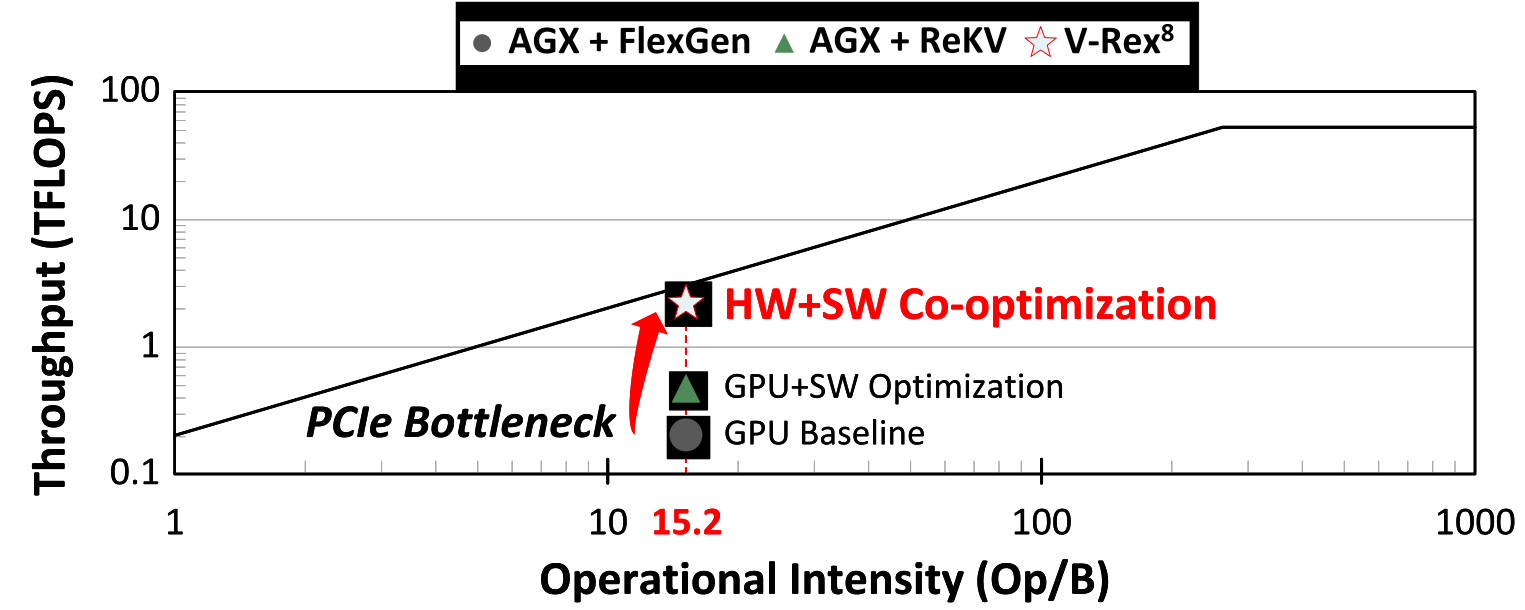
Figure 16 解读: Figure 16 展示了 V-Rex 各组件的消融实验(40K KV Cache, Batch 1)。左侧是延迟和加速比:AGX+FlexGen 作为基线,AGX+ReSV 通过软件优化实现 2.8 加速,V-Rex_KVPU(加 DRE 硬件)实现 6.0 加速,V-Rex_All(加 KVMU 优化 PCIe 带宽)实现 8.1 加速。右侧是能耗:V-Rex_All 实现 10.2 能效提升。关键结论是:纯软件优化(ReSV on GPU)只能解决一半问题,硬件加速(DRE)是必要的。
5.5 带宽分析
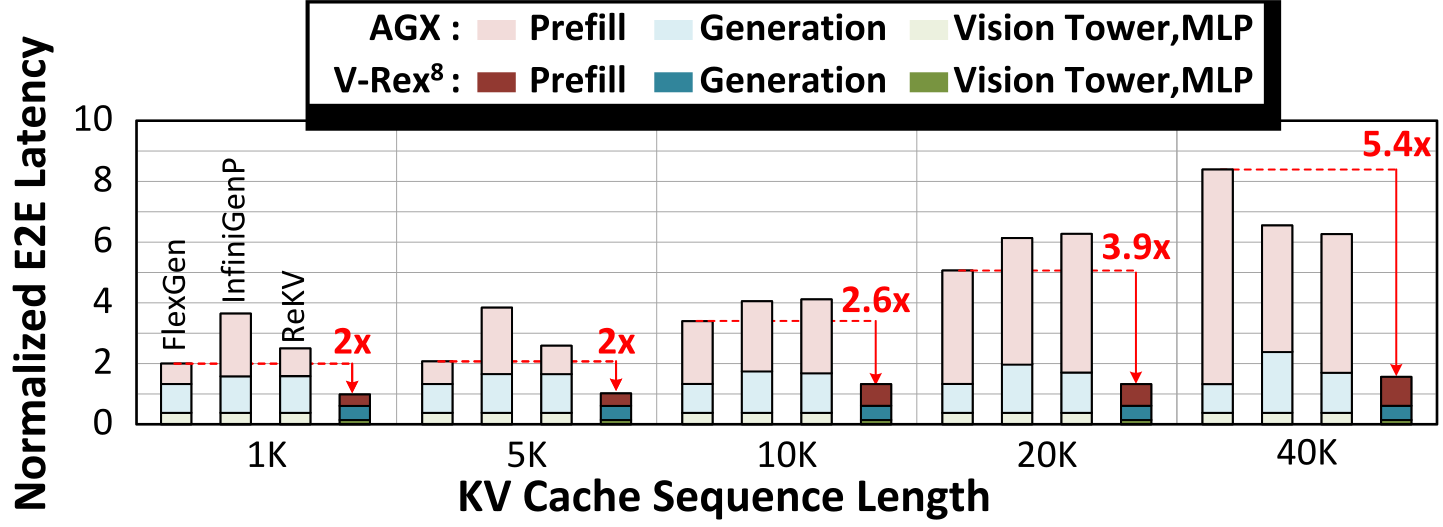
Figure 17 解读: Figure 17 分析了 V-Rex 在一层 frame processing 中的 DRAM 带宽使用。KV prediction 虽然瞬时带宽飙升到600 GB/s,但持续时间很短,可以完全被 attention/FFN 隐藏。KV retrieval(从 CPU memory 到 DRAM)走 PCIe 通道,仅占 DRAM 带宽的1%,因此可以与 LLM 计算完全并发执行。
5.6 Roofline 分析
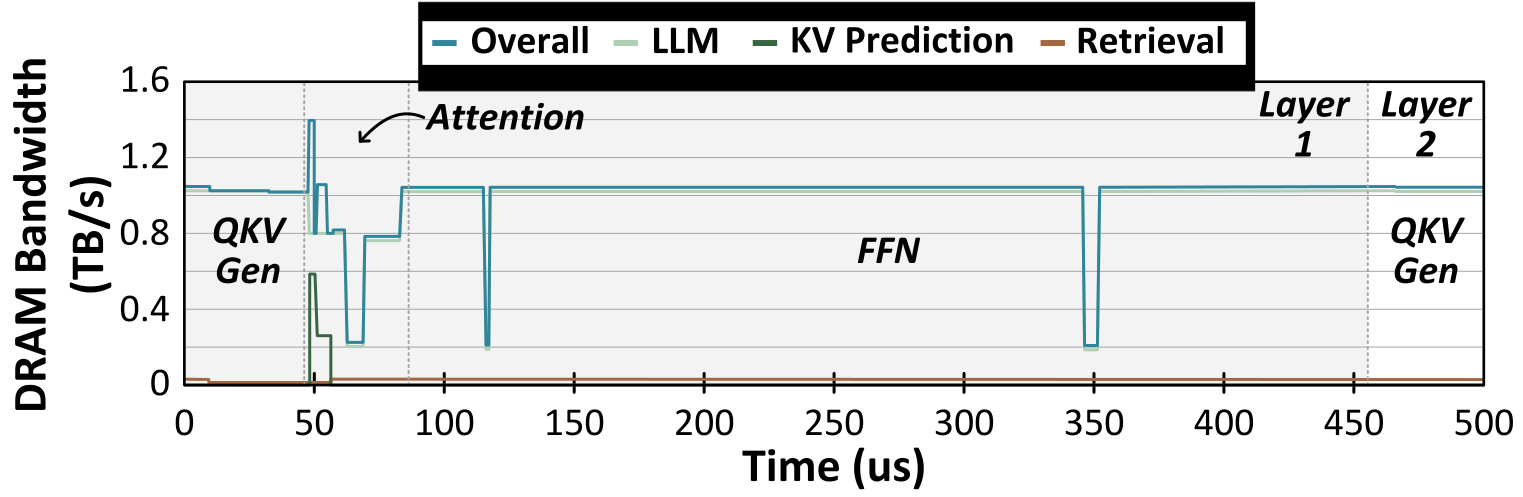
Figure 18 解读: Figure 18 是 AGX Orin 和 V-Rex 的 roofline model 分析(40K KV Cache, Batch 4, operational intensity 15.2 Op/B)。AGX+FlexGen 仅达到理论峰值的 6.6%(受 PCIe 瓶颈限制),AGX+ReKV 达到 15%(仍受 GPU+SW 优化限制),V-Rex 达到 71.5%(10.8 改善),从 I/O-bound 成功转移到 compute-bound 区域。
5.7 精度分析
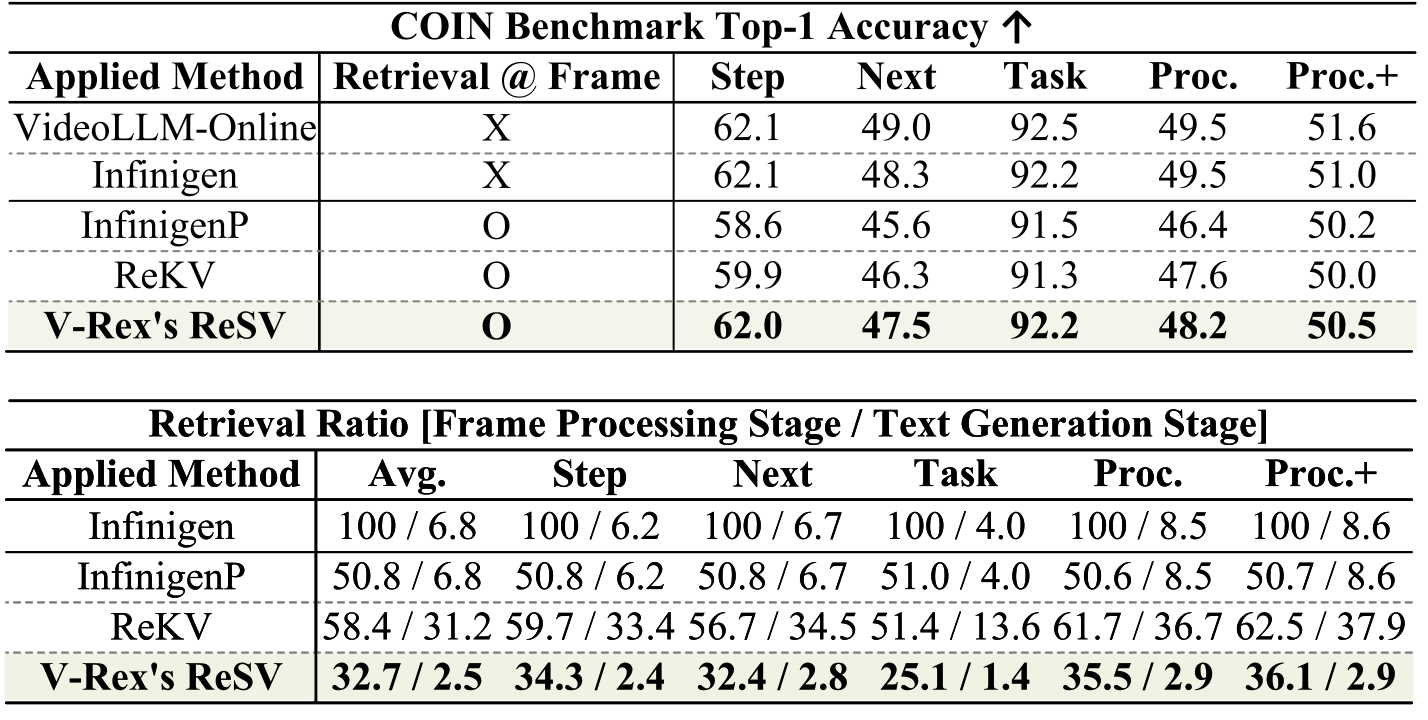
Figure 19 解读: 这是最重要的精度结果表。上半部分是 COIN 5 个 benchmark 的 Top-1 Accuracy:VideoLLM-Online(无 retrieval)平均 50.5%,V-Rex 的 ReSV 达到 50.5%(平均仅 0.8% 精度损失)。InfiniGen 精度无损但无法加速 prefill,InfiniGenP 有 3.4% 精度损失,ReKV 精度接近但 retrieval ratio 高得多。下半部分是 retrieval ratio:ReSV 在 frame processing 阶段为 25.1%-36.1%,text generation 阶段仅 1.4%-2.9%,远低于 InfiniGenP (50.8%/50.8%) 和 ReKV (58.4%/31.2%)。
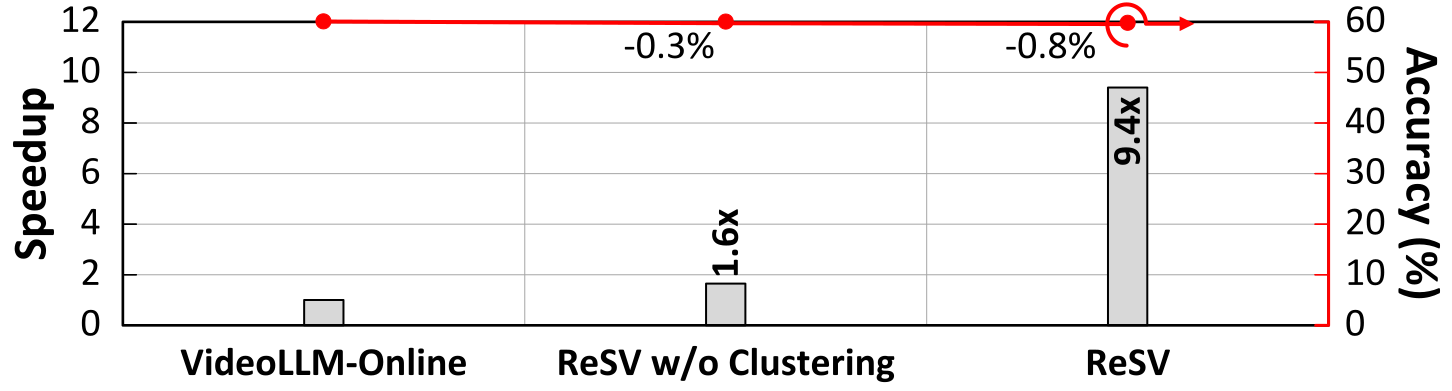
Figure 20 解读: Figure 20 是 ReSV 算法的消融实验(40K KV Cache)。三种配置:VideoLLM-Online(无 retrieval,基线)、ReSV w/o Clustering(只用 WiCSum thresholding,不做 hash-bit clustering)、ReSV(完整版)。不做 clustering 时,speedup 为 1.6,精度损失 0.3%;加上 clustering 后,speedup 飙升到 9.4(因为计算量从 降到 ),精度损失增加到 0.8%。这证明 hash-bit clustering 是加速的关键。
5.8 Per-layer/Per-head Retrieval Ratio 分析
Per-layer/Per-head Retrieval Ratio 分析: 论文 Figure 20 对比了 ReSV、InfiniGenP 和 ReKV 在不同 layer 和不同 head 上的 retrieval ratio。InfiniGenP 和 ReKV 在所有层/头上都使用固定 50% 的 retrieval ratio,而 ReSV 展现出丰富的多样性:某些层仅需 4.2% 的 token,关键层则需要 44.0%,不同 head 之间也有显著差异。平均而言,ReSV 比 ReKV 少检索 3.0 的 token。这验证了 WiCSum 动态阈值的核心优势。
5.9 硬件开销
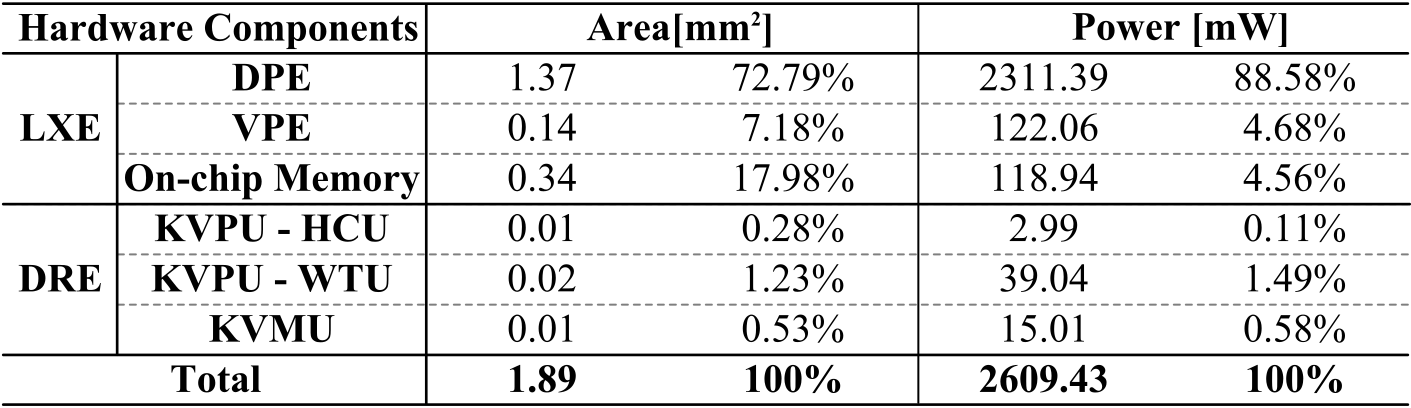
Figure 21 解读: 每个 V-Rex core 面积 1.89 mm,功耗 2.61W。其中 DRE(HCU+WTU+KVMU)仅占面积的 2.0% 和功耗的 2.4%,说明专用检索引擎的硬件开销极小。V-Rex 总面积 15.12 mm(远小于 AGX Orin 的 200 mm),功耗 35W(低于 AGX Orin 的 40W,节省 11.4%)。V-Rex 面积 90.57 mm(远小于 A100 的 826 mm),功耗 203.68W(低于 A100 的 300W,节省 32.1%)。
5.10 核心贡献与总结
核心贡献
- 首个 streaming video LLM 软硬件协同加速器:V-Rex 同时从算法和硬件两个层面解决 KV Cache 的内存和计算瓶颈,而非仅做软件优化;
- ReSV 算法:Training-free,利用视频帧间时空相似性做 hash-bit clustering + WiCSum dynamic thresholding,实现自适应的 per-layer/per-head token selection,平均精度损失仅 0.8%;
- DRE 硬件引擎:以极小的芯片面积(2.0%)和功耗(2.4%)开销,将 KV prediction 延迟从 23% 降到 0.5%,使检索计算可以与 LLM 推理完全重叠;
- 实时边缘推理:在 edge device 上实现 3.9-8.3 FPS,加速 1.9-19.7,能效提升 3.1-18.5。
局限性与思考
- 评估范围有限:仅在 COIN 数据集上评估,缺少更多样化的 streaming video benchmark(如 EgoSchema、ActivityNet-QA);
- 模型固定:仅测试了 Llama-3 8B + SigLIP,未验证在更大模型(70B)或不同架构(Qwen3)上的表现;
- 硬件仿真而非真实流片:使用 custom cycle-level simulator + DRAMSim3 + MQSim 仿真,未进行真实芯片验证;
- 与纯软件 KV Cache 压缩的交叉使用:论文未探讨 ReSV 与 quantization(如 Oaken 的 4-bit KV)是否可以结合获得更大收益;
- Clustering 超参数敏感性:, , 这些超参是否对不同视频内容/模型敏感,论文未做系统分析。
对后续研究的启示
V-Rex 的核心 insight 是:streaming video LLM 的瓶颈不在 LLM 计算本身,而在 KV Cache 的管理和检索。这意味着:
- 未来的 video LLM 加速器设计应该重点关注 memory hierarchy 和 data movement,而非仅仅堆叠更多的计算单元;
- Hash-bit clustering 利用视频帧间相似性的思路,可以推广到其他需要处理时序冗余的场景(如 robotics、autonomous driving);
- WiCSum 的动态阈值机制比固定 top-k 更适合异质性强的 attention pattern,这对长上下文 LLM 推理也有参考价值。